
India industrial revolution 1440x1080 1

India; sourcing opportunity

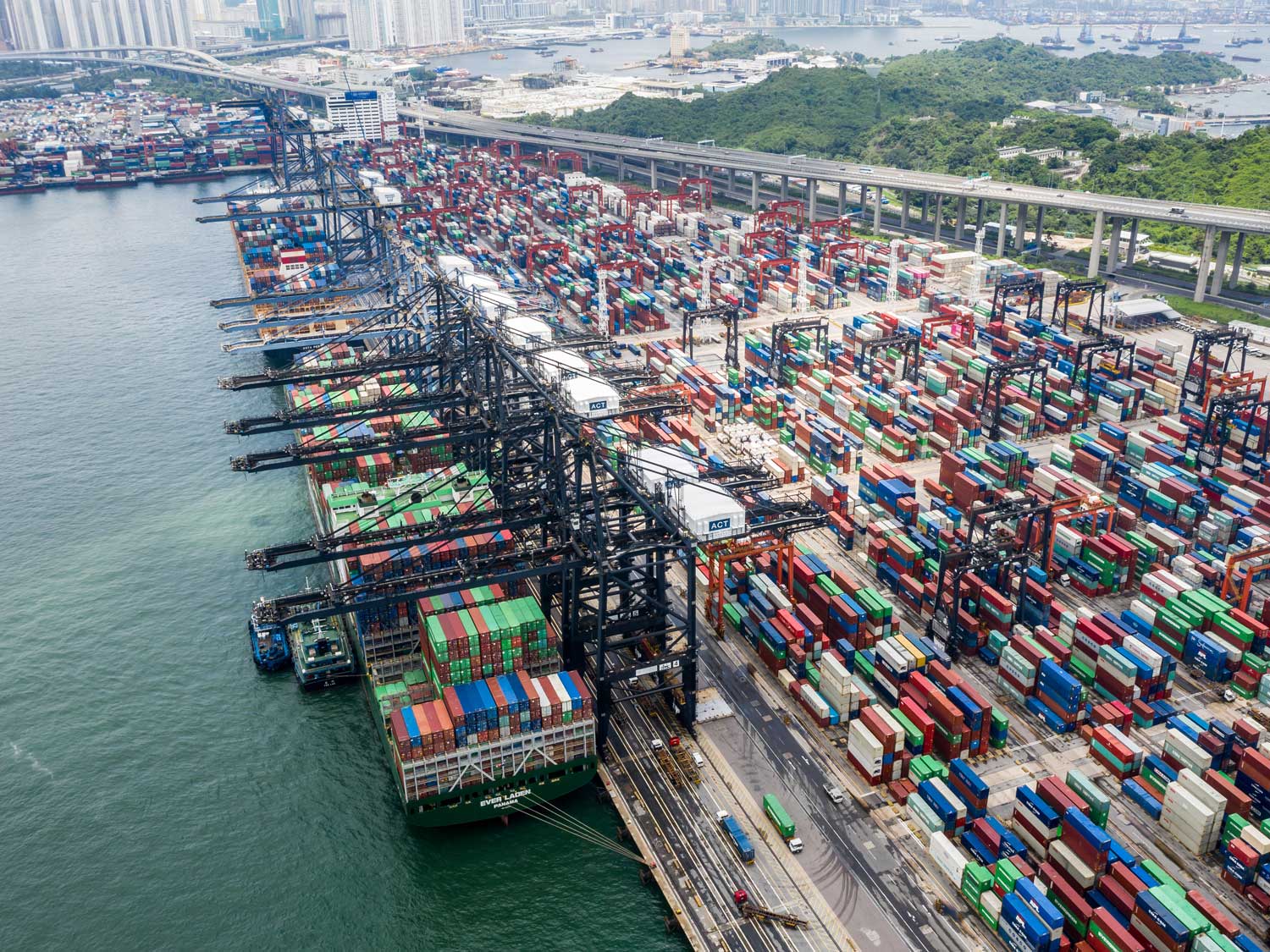
For years India has been looked to as the next global manufacturing powerhouse and it now appears to be finally becoming the manufacturing power and sourcing alternative to China that it has long promised to be.

India’s Prime Minister Narendra Modi inherited an economy that was teetering on an economic precipice a decade ago.

Immediately after his victory in 2014, the prime minister launched an ambitious ‘Make In India’ campaign to turn India into the world’s factory.

Foxconn – which makes iPhones for Apple – are moving their supply chain to India and other major global giants like Tesla, Micron and Samsung have also been enthused to invest in manufacturing.

And while investment in manufacturing has not reached the highest expectations, India’s growth is outpacing other major economies, overtaking the UK as the fifth largest economy and it’s on track to leapfrog Japan and Germany and hit the third spot by 2027.

India has been heralded as the next global manufacturing powerhouse, only to be outshone in trade diversification initiatives by Vietnam, and more recently by Mexico, but over the last decade, US imports from India have doubled, to the 1 million TEU range, with East Coast ports reaping the largest gains.

Retailers and fashion brands have been shifting their focus to India for many years, in a bid to speed up supply chains, keep costs down and spread out sourcing to other countries.

Carrier commitment
Container shipping lines are expanding services and local presence, with ONE launching a service to the US East Coast and HMM securing slots on the new loop.

In December, MSC acquired a 49% stake in a container terminal, near Chennai, while CMA CGM and Hapag-Lloyd are also targeting Indian port opportunities.

Last year, Hapag-Lloyd invested in local ports and logistics and Maersk also has a significant footprint inland, with marine terminal operations at Nhava Sheva and Pipavav.

OOCL and APL have invested in rail services and container freight stations for nearly two decades.

The current supply chain
Despite the investment and presence of the shipping lines, Indian exporters are turning to air freight as ‘Red Sea’ vessel diversions around southern Africa have choked off capacity, by omitting Indian subcontinent port calls, making air cargo and sea/air the viable alternatives.

In a further complication fashion products are moving in trucks from Bangladesh into India, which is adding further demand for air freight.

Another significant contributing factor to elevated export air cargo rates is the shortage of capacity as big Chinese eCommerce marketplaces buy up as much space as they can find at premium rates.

With high rates on offer, capacity has moved from the Indian subcontinent to the Chinese market and as capacity dwindles rates out of India, Pakistan and Bangladesh go up even faster.

Overall, rates to Europe from South Asia are up 120% from the same time last year, with India to Europe spot rates up 174%.

There is also strong underlying economic growth in India, with HSBC reporting that the economy’s rate of expansion the strongest since July 2023, led by the strongest manufacturing output in nearly three and a half years, with export orders showing improved robustness.

India’s next decade could resemble China’s hyper growth, analysts from Morgan Stanley wrote and other trends like digitalisation, clean energy and growth in global offshoring will propel future growth, say experts.

For over 40 years Metro has helped customers open up new export markets and diversify sourcing across Asia and India.

Integrated on our MVT supply chain platform, our commercial and operations teams work closely with our partners across India and surrounding regions, processing air, ocean and sea/air shipments.

If you have any questions, rate requests or would like any further information on our capability in India, please EMAIL our Chief Commercial Officer, Andy Smith.
HKG truck

Ocean demand outweighs supply

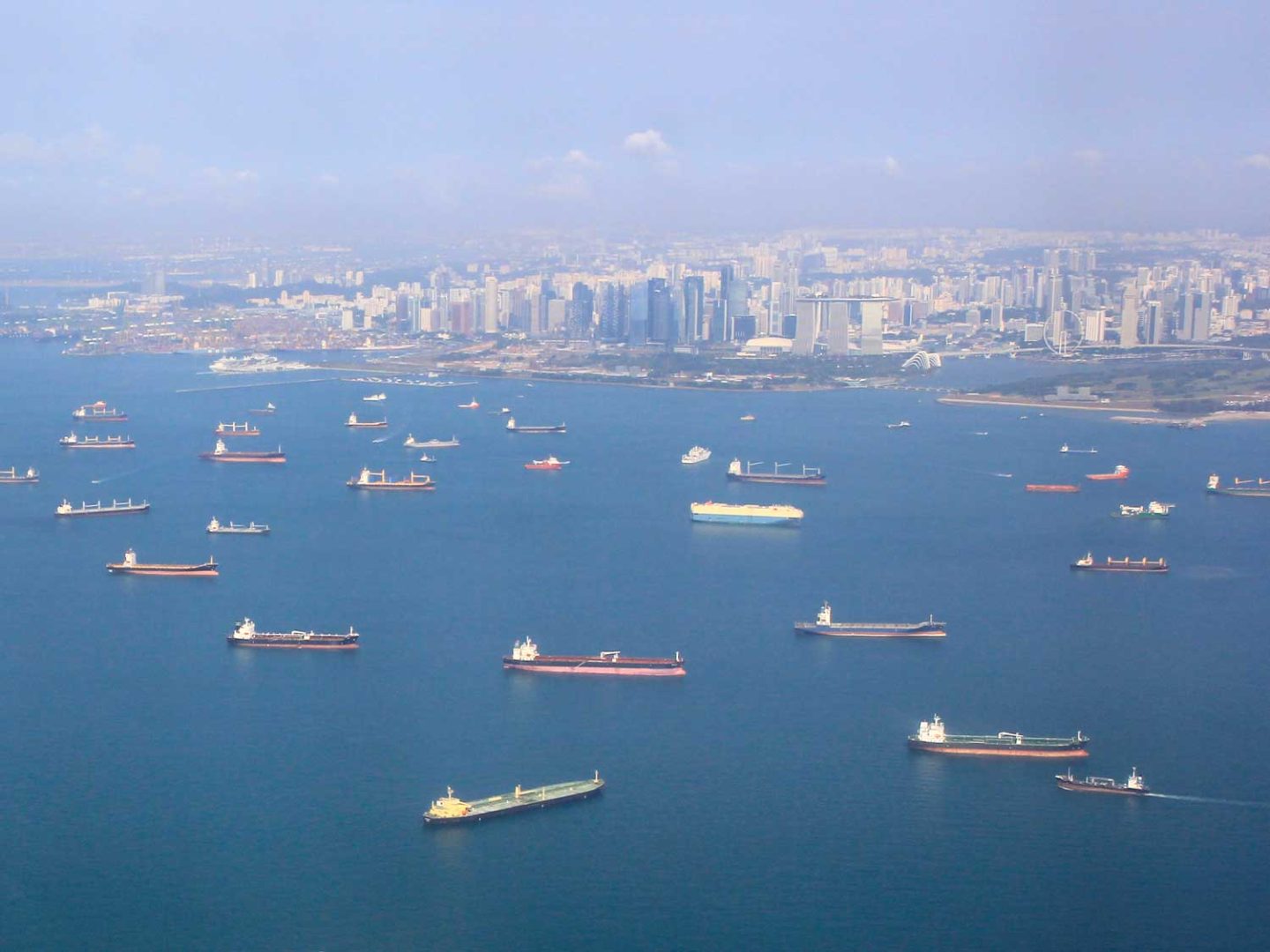
The ongoing impact of vessel diversions as a result of the Red Sea conflict continues to absorb available capacity at a time when demand is rapidly increasing. Container volumes are already higher than many predicted and there is a possibility that we have already entered a peak season market environment.

Container shipping lines are deploying maximum numbers of their fleets and new vessel deliveries and sailing them faster to offset the longer transits around southern Africa, but there is a finite limit on how much space they can throw at the market.

The additional two weeks it takes for ships to sail around the Cape of Good Hope effectively reduces available vessel capacity, with an average of 11 weekly scheduled voyages from Asia to Northern Europe in the coming weeks. Compared to the typical average of 17 voyages through the Suez Canal.

With spot rates rising as capacity tightens, it is clear that unwary shippers’ cargo will not get shipped, as capacity hits an increase in demand, extending the booking window to a minimum of 21 days ahead of cargo ready date.

The situation is further complicated by blanked sailings, smaller capacity vessels being used to fill schedule gaps and carriers restructuring their networks to support new sailing schedules.

The overall impact means that in recent weeks there has been anything up to a 50%-80% capacity cut on certain lanes, with carriers implementing additional blank sailings around this week’s Bank Holidays in China.

The intelligence that we are receiving from our network and carrier partners is that May and June could be tough in terms of equipment and space across the whole of Asia for all the major container shipping lines and this is in what would usually be the quieter period ahead of the peak season.

European imports from the Far East are up 12% year on year and US imports up 24%, which means strong Westbound and transPacific peak seasons are assured. However, demand into other markets is even more pronounced, with Asia to Middle East/India and Asia to Oceania’s both up nearly a third.

The demand explosion means more equipment is going to these regions than forecast, with some lines imposing priority surcharges, rolling cargo and others restricting equipment for contracted clients.

China’s factory activity has been growing for six straight months, suggesting that the rebound in the world’s second-biggest economy can be sustained, with export orders surging and a significant peak period looking certain.

We urge you to provide us with forecasts ahead of time, ensure shippers book 21 days ahead of cargo ready date and to communicate with us if you have any urgent/high priority orders.

We negotiate long-term and protected contracts with shipping lines across the alliances to secure space and rates, so that we can provide the best alternatives and options, whatever the situation.

To learn how we can support your Far East, transPacific or transAtlantic trade, or to learn more about our ocean capability and solutions, please EMAIL our Chief Commercial Officer, Andy Smith. 

Sea Air aerial

State of the air freight market

The effective closure of the Red Sea and the Suez Canal to container ships is adding around two weeks to supply chain transit times and creating a backlog of manufacturing components, late shipments and inventory replenishment, with critical consignments reliant on air solutions. While Iran’s attack on Israel has led to major carriers rerouting or cancelling flights and causing potential bottlenecks and price hikes.

Traffic ex-South Asia has been particularly driven by the Red Sea push to air, with spot rates climbing significantly. 

Contributing significantly to demand has been a massive spike in eCommerce volumes out of China, which is pushing prices well above typical levels for non-peak periods.

Average spot prices to North America have nearly doubled since mid-December, while Europe rates have climbed over 120%.

The eCommerce spike has seen Heathrow (LHR) imposing restrictions on ad-hoc freighters and charters from Shanghai, which has resulted in diversions to alternative gateways, including Birmingham International, with at least one charter operator transferring their slots away from LHR to Birmingham (BHX).

Traffic ex-South Asia has been particularly driven by the Red Sea push to air, with spot rates climbing significantly. Average spot prices to North America have nearly doubled since mid-December, while Europe rates have climbed over 120%.

The recent loosening of US restrictions on the number of weekly flights to the US allotted to Chinese carriers will increase China to US air capacity and could ease some pressure on rates.

The closure of Iranian airspace, due to safety concerns, following Iran’s attack on Israel has led to major carriers rerouting or cancelling flights and causing potential bottlenecks and price hikes for shipments from India.

Carriers operating to Europe are using alternative routes; primarily through Turkey and Azerbaijan, for Middle-East and Chinese carriers or via Egypt and Saudi Arabia for European/Western carriers. While major carriers, including Air India, Emirates, Qatar Airways and Lufthansa Cargo are temporarily suspending flights to Israel and other affected destinations.

The need to carry (and buy) additional fuel for the extended flights means that there will be a payload impact to passenger flights operating from India to Europe and vice versa, as they will need to significantly restrict the cargo payload, which reduces capacity and increases cost.

The seizure of the MSC Aries by Iran in the Strait of Hormuz raises concerns about the accessibility of the Dubai port, a crucial hub for sea-air transshipments, because if Hormuz is considered a high-risk area, it could mean sea-air shipments being diverted to alternative hubs like Colombo or Bangkok.

Whether rates will soften, or supply vs demand become an issue in the next quarter and beyond depends on world geopolitical events improving, the Red Sea re-opening up and no other global crisis occurring.

If there are no further global events then the market is very likely to soften, however, if the Israeli/Iran situation deteriorates airspace could be closed for the foreseeable future and that will cause huge issues to all logistics activities including airfreight, sea/air, ocean and rail.

For urgent, valuable and sensitive shipments we have a range of airfreight and sea/air solutions, with block space agreements (BSA) and capacity purchase agreements (CPA) that protect space and capacity on the busiest routes.

Regardless of your cargo type, size and requirements, we have extremely competitive rate and service combinations, to meet every deadline and budget.

EMAIL Elliot Carlile, Operations Director, for insights, prices and advice. 

factory emissions

China makes too much, but production is moving

The West says China makes too much, but many manufacturers have moved production to other countries to cut costs, leaving once prosperous manufacturing hubs like Dongguan struggling to adjust.

In recent years workers began to demand higher wages, while companies began cutting prices in order to win contracts, squeezing profits further and when Donald Trump began slapping tariffs on Chinese products companies searching for cheaper running costs and protection from the US-China trade wars – began to look elsewhere.

The “Made in China” slogan that was once ubiquitous on t-shirts, tables and TVs is now at the heart of the electric cars that are pouring into Europe, and the solar panels that are powering our renewable policies. And that is worrying Western politicians.

Rising trade tensions with the United States, strict Covid lockdowns and a global downturn mean that manufacturers who once flocked to Chinese shores are looking elsewhere, with foreign investment in the country at a 30-year low.

The old industrial pillars of furniture, clothing and electrical goods are struggling and have been replaced by high-tech products like solar panels, lithium batteries and electric cars, which are being exported in massive quantities to Europe, Africa, Australia, South America, North America and South East Asia.

But China’s new industries are far less labour-intensive than the ones that once fuelled its spectacular growth – and they require specialised, high-skilled workers and, increasingly, robots. 

The US, UK and European Union believe this is how China is trying to save its economy – producing cut-price and state-subsidised green technology that is being ‘dumped’ abroad. They say it’s a tactic that is driving down the cost of solar panels and other emerging technology and driving Western firms out of business.

It is clear that there is a shift away of some lower-cost production from China to alternative sources, including Vietnam and India, with some companies also looking at near-shore options like Turkey, as a way of managing risk and enhancing supply chain resilience.

There is no doubt that production moving away from China has benefited many countries around Asia, including Bangladesh, Thailand and Cambodia, while other EMEA countries including Turkey, Egypt and Morocco provide opportunities to shorten lead times and carrier costs.

For over 40 years Metro has managed supply chains and helped customers extend and diversify sourcing across Asia and EMEA.

Metro’s integrated transport networks are designed to support JIT manufacturing requirements across Asia, the EU, sub-Saharan Africa and Turkey and are ideally positioned to support the new sourcing requirements that de-risk supply chain operations.

We see diversification and near-shoring as a simple extension of a client’s sourcing strategy, so that if there is disruption in one area, inherent flexibility means the supply chain will continue to flow. 

Our global partner network, strategic carrier alliances and MVT supply chain platforms are all geared towards supporting the widest spectrum of supply chains. 

If you would like to learn how we can boost your ability to source from alternative global manufacturing regions, EMAIL our Chief Commercial Officer, Andrew Smith, to arrange a consultation and scoping discussion.