Digital contract 1440x1080 1

BIFA’s 2025 Standard Trading Conditions: A Strategic Update for UK Freight Forwarding

The British International Freight Association (BIFA) has unveiled its 2025 edition of the Standard Trading Conditions (STC), replacing the 2021 version under which Metro and the wider UK forwarding industry currently operate. 

The 2025 revision represents one of the most comprehensive updates in recent years.
BIFA has sought to future-proof the framework against a more volatile trading environment, incorporating lessons learned since Brexit and adapting to the increasing frequency of customs-related responsibilities handled by forwarders.

The new STC also strengthens legal robustness, ensuring compliance with the Unfair Contract Terms Act 1977, and updates terminology to align with modern commercial practice and current UK contract law.

Key Changes in the 2025 STC

  • Updated liability framework – Clarified definitions of loss, damage, delay, and consequential loss, with adjustments to how liability limits apply to multimodal transport and ancillary services.
  • Enhanced customs provisions – Expanded clauses covering declarations, indirect representation, and data accuracy, reflecting the critical role forwarders play in UK border compliance.
  • Digital documentation and e-commerce – Introduction of language recognising electronic records, digital communication, and automation tools as valid and binding forms of documentation.
  • Improved clarity on lien and payment rights – Modernised wording on forwarders’ entitlement to retain goods or documentation until payment is received, ensuring consistency with case law.
  • Force majeure and sanctions – Strengthened references to trade sanctions, embargoes, and extraordinary disruptions such as pandemics or cyber incidents.
  • Modernised terminology – Simplified and standardised language throughout to reduce ambiguity and prevent misinterpretation in contractual disputes.

Collectively, these revisions make the 2025 STC more aligned with the realities of today’s international trade, providing forwarders and their clients with a transparent and fair contractual framework.

What Shippers Should Do

  • Familiarise themselves with the new conditions and note how these may affect contractual responsibilities, especially regarding customs declarations and documentation accuracy.
  • Review existing contracts to ensure consistency with the updated terms ahead of implementation.
  • Engage with account managers for clarification on any specific service implications under the new framework.

Transition and Implementation

The 2025 Standard Trading Conditions take effect on 31 December 2025, replacing the 2021 edition.

BIFA has published the revised terms well in advance to give members and their customers time to prepare, review contractual documentation, and ensure a seamless transition.

The full text for the 2025 edition can be found here, and the 2021 edition here.

The 2025 BIFA Standard Trading Conditions introduce important legal and operational changes that affect all freight forwarding contracts. EMAIL Laurence Burford, Chief Financial Officer, to discuss the details, potential implications, and how Metro can help ensure your trading agreements remain fully compliant and commercially protected.

Long Beach 1

Tariff Front-loading Pushes US Imports from Record Highs to Year-End Declines

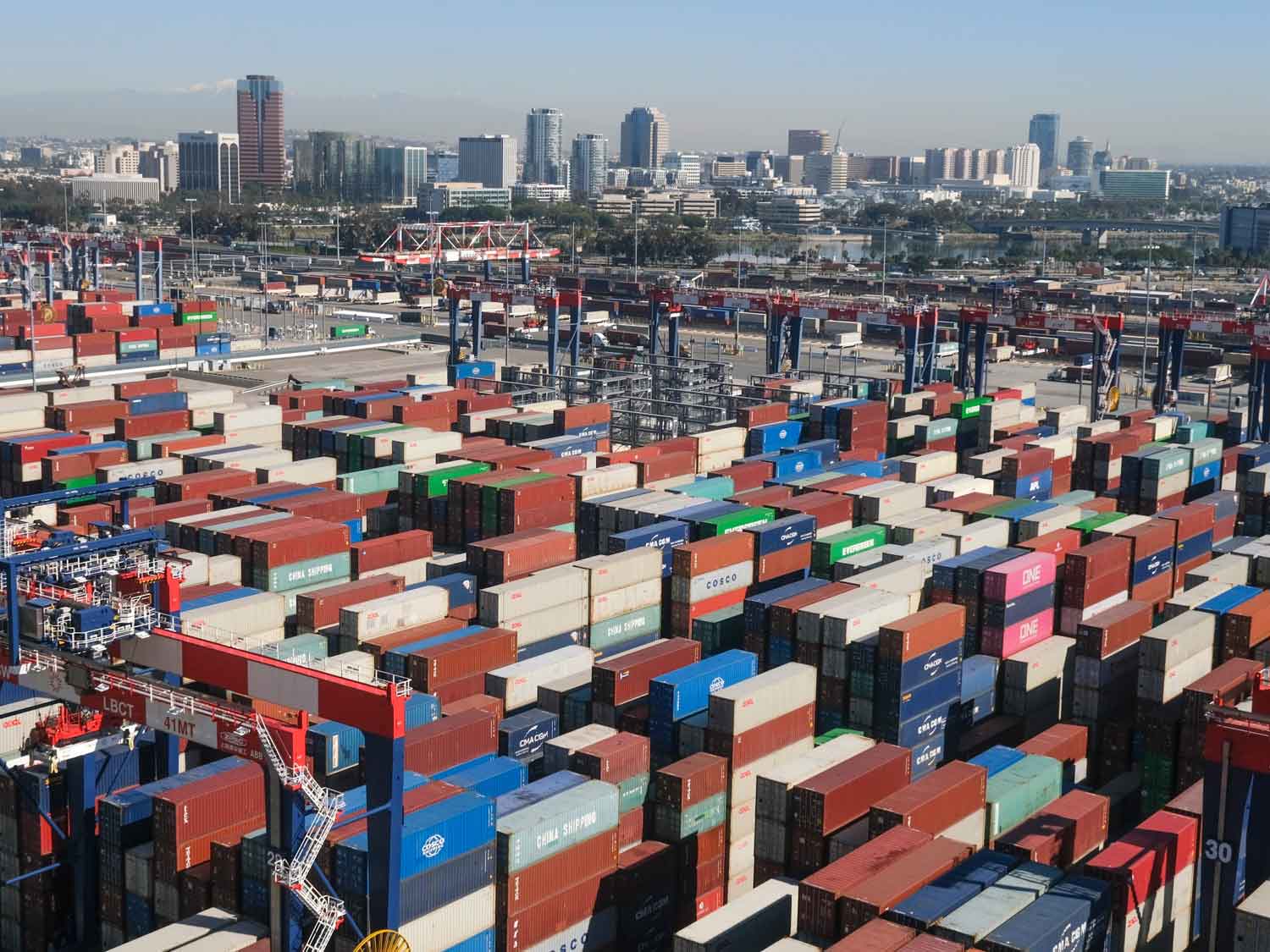
After setting an all-time monthly record for container imports in July, US retailers are bracing for a sharp reversal to close out 2025, with volumes projected to tumble nearly 20% year on year through the holiday season.

The National Retail Federation’s (NRF) latest Global Port Tracker shows that front-loading tied to tariff deadlines and labour fears has left supply chains overstocked heading into the final quarter. As a result, the NRF forecasts full-year imports will be down almost 6% on 2024.

September’s forecast suggest that inbound containerised cargo will be down 20% on last year, while October and November are predicted to be almost 20% below 2024 levels. November would mark the lowest monthly total since April 2023. December imports are also set to fall nearly 20% year over year.

This comes in stark contrast to July, when tariff-driven front-loading propelled US imports to 2.609 million TEUs. The highest monthly figure ever recorded. Ports such as Los Angeles and Houston reported double-digit growth compared with June, as shippers rushed to beat potential duty increases. Imports from Southeast Asia and the Indian subcontinent set new records, while China’s volumes rebounded 36% month on month, even if still down compared with 2024.

But analysts caution that the surge represented a distortion, not a sustainable trend. “Friends, allies and foes are all being hit by distortions in trade flows as importers try to second-guess tariff levels by pulling forward imports before the tariffs take effect,” warned one. “This will certainly lead to a downturn in trade volumes by late September because inventories for the holiday season will already be in hand.”

The tariff backdrop remains fluid. Washington and Beijing recently extended their trade truce until November, keeping tariffs at 30% on Chinese goods entering the US and 10% on American exports to China. That temporary pause avoided the escalation to triple-digit duties threatened earlier in the year, but left shippers in limbo.

Jonathan Gold, NRF’s vice president for supply chain and customs policy, said the figures underline how tariffs are reshaping supply chains. “Tariffs are beginning to drive up consumer prices, and fewer imports will eventually mean fewer goods on store shelves,” he noted.

With consumer demand uncertain and trade policy still in flux, retailers are preparing for a far quieter peak season than the record-breaking summer surge suggested.

From record highs to steep year-end declines, many supply chains are overstocked and exposed to policy uncertainty.

In this volatile environment, shippers need more than capacity, they need agility and control.

Metro’s dedicated sea freight team and expanding US footprint, helps businesses navigate these swings with confidence. From proactive capacity management and efficient routing to supply chain visibility and inventory optimisation, we ensure your cargo keeps moving smoothly across the Pacific, whatever the market conditions.

EMAIL Andy Smith, Managing Director, to discuss how Metro can safeguard your transpacific supply chain.

computer down 1440x1080 1

Security Alert: Sophisticated Email Scam Targeting Businesses

Metro has recently detected and blocked a highly targeted spear‑phishing campaign designed to deceive recipients and obtain sensitive information. 

The emails are sophisticated, imitating genuine correspondence and attempting to impersonate known contacts.

Our investigation shows that the campaign originated from a third‑party domain and compromised credentials. Thanks to our robust cyber‑security monitoring and the vigilance of our team, this activity was quickly identified, contained, and prevented. Metro’s systems, data, and banking details remain completely secure and  not compromised.

We are actively assisting the affected third party with their investigation and continue to strengthen our own security policies to protect against evolving threats.

How to Protect Yourself

To help safeguard your information and ensure secure communication with Metro, please keep the following in mind:

  • Bank account updates – Metro follows strict verification procedures before making any changes. We will never rely on instructions sent by email alone.
  • No banking changes – Metro’s bank details have not changed. Any message claiming otherwise is fraudulent.
  • Stay alert – Treat unexpected or suspicious emails with caution, especially those requesting sensitive information or payment details.
  • Verify requests – Always confirm any unusual request by contacting Metro directly using the official contact details you already have.
  • Report it – Forward any suspicious messages to our security team: servicedesk@myvisibilitytool.com

Protecting your information and ours is a top priority. We are continually monitoring for emerging threats, enhancing our security measures, and working closely with trusted partners to safeguard your business.

Thank you for your continued trust. If you have any questions or concerns, please contact Metro’s IT/Security team at servicedesk@myvisibilitytool.com.

CBP 1440x1080 1

US Customs Reforms Raise Questions on HTS Entries and Transshipped Goods

Businesses responsible for customs clearing goods into the US are adjusting to two significant Customs and Border Protection (CBP) changes that could affect classification practices and the treatment of goods in transit.

Firstly, CBP has expanded the number of Harmonised Tariff Schedule (HTS) codes allowed per entry line from 8 to 32. The change, which applies to both standard and reconciliation entries, is intended to streamline the entry process and improve digital efficiency across the Automated Commercial Environment (ACE).

The move to allow 32 HTS codes per line is a big shift, and speaks volumes about the uncertainty over future tariffs. It is clearly leaving the door open for further complexity, depending on how U.S. trade partners respond and while the largest brokers can technically handle it, those without automation or AI technology have voices concerns. 

For importers managing high-SKU consignments, the risk of misclassification or documentation errors increases significantly, potentially leading to delays, penalties or additional scrutiny.

Industry Seeks Clarity on Transshipment and Tariff Application
A second area of concern relates to the treatment of transshipped goods under the new tariffs introduced via the International Emergency Economic Powers Act (IEEPA) in April.

A coalition of 94 shipper, broker and forwarder organisations, including major retail and transport associations, has written to CBP and the Department of Homeland Security, urging them to clarify whether cargo transshipped via third countries remains eligible for tariff exemption if it left its origin before the April 5 deadline.

The industry points to longstanding CBP rulings that support exemption based on the original country of export, provided there is documentation such as bills of lading, purchase orders and invoices confirming that the US was the intended final destination.

However, it is reported that CBP’s responses have been inconsistent, with some entries flagged for duties despite meeting these criteria. Further guidance issued in May attempted to address this issue through a list of FAQs, but many in the trade community feel uncertainty persists, especially as tariff reviews continue and legal challenges to IEEPA enforcement remain unresolved.

Metro’s Support for UK Exporters and US Importers
In this changing environment, Metro’s customs brokerage services are designed to ensure that clients stay compliant, informed, and in control. Our AI, ML and automation driven brokerage platform – CuDoS is designed to handle the expanded 32-code entry structure, making it easier to manage complex multi-SKU shipments with speed and accuracy.

For exporters selling to US group companies or under Delivered Duty Paid (DDP) terms, our US-based team at Metro Global USA provides end-to-end clearance support, including documentation validation and tariff strategy. We continuously monitor CBP guidance and help structure entries to support exemption eligibility, including shipments routed via transshipment hubs.

Whether navigating classification changes or securing the right evidence for tariff relief, Metro combines local knowledge, intelligent systems, and customs expertise to simplify compliance and protect your business.

EMAIL our managing director Andrew Smith, to learn about our customs services and CuDoS platform: