US chess piece over map and graph 1440x1080 1

U.S. Power Plays Shape Global Climate and Asian Trade Policy

The United States exerted its influence on two critical stages this month, by blocking consensus on global maritime climate regulation in London and sealing a series of trade pacts across Southeast Asia. 

At the International Maritime Organization (IMO) in London, U.S. pressure proved decisive in delaying adoption of a new net-zero emissions framework for shipping. After weeks of tense negotiation, the vote to postpone the measure by one year passed narrowly, with 57 in favour and 49 against, derailing what would have been the industry’s first global carbon-pricing mechanism.

The U.S. argued that the proposed levy on maritime emissions would raise consumer costs by around 10%, and threatened sanctions, visa restrictions, and port fees against nations voting in favour. Backed by Saudi Arabia, Russia, and Venezuela, the U.S. successfully persuaded several key flag states to withdraw support, effectively halting progress on a binding framework.

The decision has angered environmental groups and investors seeking a predictable framework for green fuel investment. Analysts now warn of fragmented regional carbon schemes, slower progress on decarbonisation, and renewed dominance of liquefied natural gas (LNG) as the default transition fuel.

However, the delay appears to have done little to dent the industry’s confidence. In the two weeks since the IMO vote, shipping lines have continued to place significant new-build orders, with the containership order-book ratio surpassing 33% of the global fleet for the first time since 2009. 

More orders are expected in the coming weeks as carriers push ahead with long-term fleet renewal plans, signalling sustained appetite for capacity growth despite regulatory uncertainty.

Trump’s Asia Tour: Trade Wins and Strategic Balancing

Even as Washington disrupted global climate diplomacy, President Donald Trump was securing new trade concessions across Southeast Asia. During his recent tour, the U.S. concluded four separate deals aimed at deepening regional economic ties and diversifying away from China.

  • Vietnam agreed to maintain 20% tariffs on U.S. goods but will move toward zero tariffs on selected products. The two countries will also cooperate on digital trade, export-control enforcement and anti-evasion measures.
  • Thailand retained its 19% tariff rate but committed to eliminate duties on 99% of U.S. goods, opening a broad range of consumer and industrial markets.
  • Malaysia and Cambodia went further, signing comprehensive reciprocal agreements that cap ad valorem tariffs at no more than 19%.

U.S.–China: A Cautious Thaw

Trump’s whirlwind tour culminates on Thursday 30 October with a long-awaited meeting with Chinese President Xi Jinping, their first in six years. The two leaders will meet on the sidelines of an Asia-Pacific summit, where negotiators have already framed a tentative agreement that would halt new U.S. tariffs and ease Chinese export controls on rare-earth minerals, which are essential for EVs, semiconductors and defence technology.

With U.S. trade agreements, compliance requirements, and sustainability regulations evolving fast, Metro can help you assess exposure and opportunities, maintaining compliance and resilient supply chains. 

EMAIL Andrew Smith, Managing Director, to review the latest policy impacts and ensure your business stays aligned with shifting global trade and environmental frameworks.

Countdown 1440x1080 1

One Minute Late, Thousands Lost: U.S. Customs Tightens Enforcement Across All Modes

In U.S. trade compliance, even a one-minute delay can be costly. Recent cases show importers and logistics partners facing thousands of dollars in penalties simply because mandatory filings were completed moments after official cut-off times.

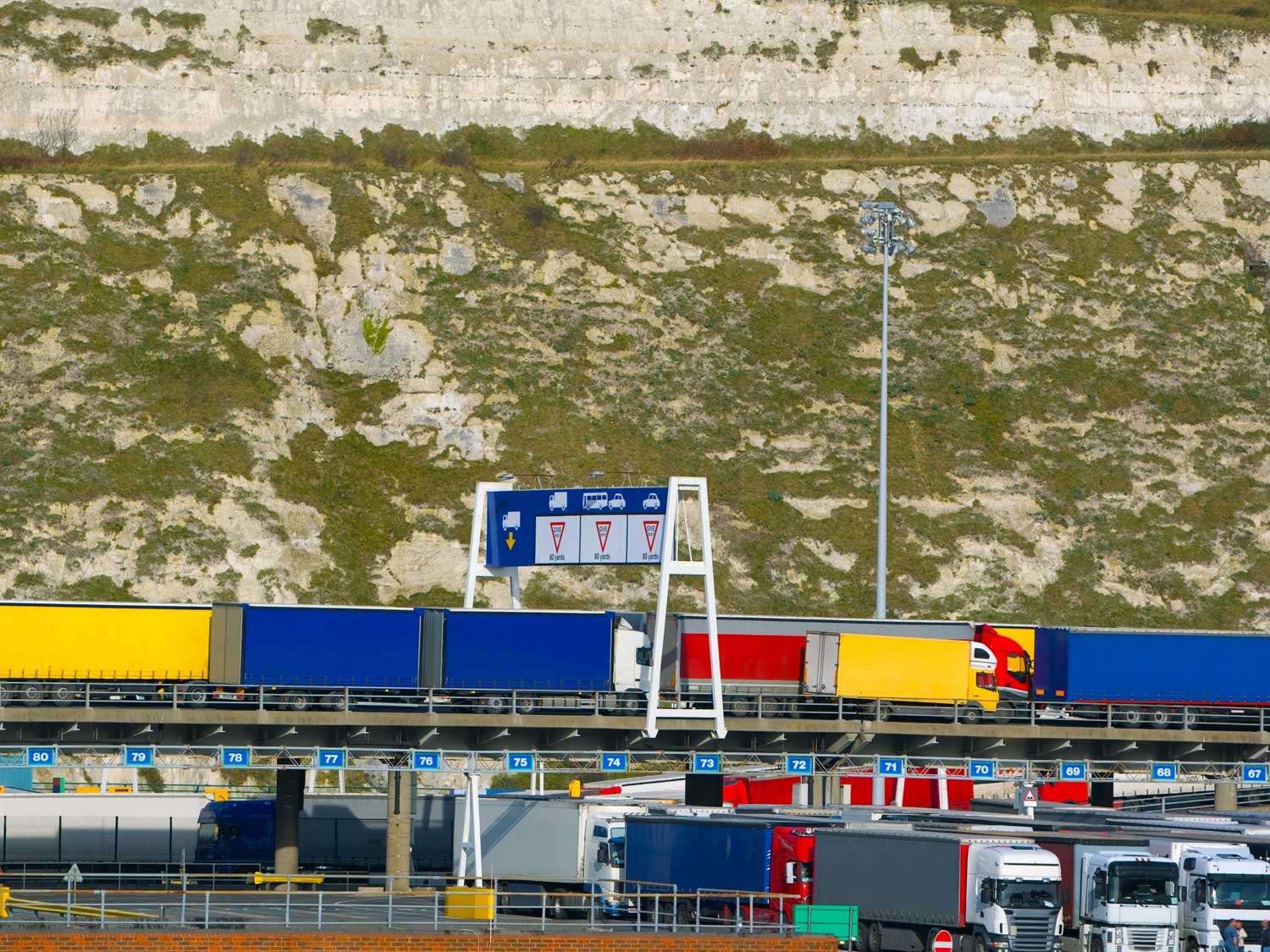
U.S. Customs and Border Protection (CBP) has stepped up automated monitoring across all major modes. For ocean freight, the Importer Security Filing (ISF-10) and manifest submissions must be lodged 24 hours before vessel loading. In airfreight, the Air Cargo Advance Screening (ACAS) system requires pre-departure data to be transmitted electronically before goods leave origin. And for trucking, particularly on north- and south-bound cross-border movements, the ACE eManifest must be filed at least one hour before arrival at the border. In all cases, late filings, even by seconds can trigger massive penalties or cargo holds.

The increased use of digital systems means there is now almost zero tolerance for timing errors. CBP’s automated compliance tools record submission times to the second, leaving little room for discretion or appeal.

This sharper focus on procedural precision comes amid a wider enforcement drive targeting customs fraud. In a separate case this month, two executives at a Los Angeles-based wholesale clothing importer were jailed and their company hit with a multi-million dollar fine for systematically under-valuing goods to reduce duties.

The message is clear: whether it’s filing times or declared values, compliance margins have all but disappeared.  To avoid finding yourself on the wrong side of a deadline lapse, it is critical that risks are mitigated:

  • Integrate automated alerts in your customs-filing systems so you’re aware of lead-time requirements well in advance.
  • Build a buffer into your internal processes: treat the submission cutoff as real time, and build in a buffer to allow for any delay.
  • Ensure your documentation and data (B/L numbers, consignee information, classification) are final and entered before the time cut-off — incomplete entries are a common cause of last-minute corrections and delay.

The Critical Take-Away

For businesses based in the UK or EU working with U.S. supply chains, this is a reminder that compliance deadlines are not just internal housekeeping, they carry real cost. When operational bottlenecks or last-minute changes push a filing even seconds late, the financial consequences can be large. Work closely with your U.S. customers and brokers to ensure that your entry process is streamlined, accurately filed and firmly upstream of any bottleneck.

Metro’s U.S. brokerage teams combine deep CBP compliance expertise with our advanced CuDoS customs automation platform, ensuring every declaration meets filing deadlines accurately and on time. EMAIL Andrew Smith, Managing Director, to learn how our integrated systems and on-the-ground U.S. presence can help safeguard your business and keep your supply chain fully compliant.

US DoT

U.S. Shutdown Strains Supply Chains as Key Agencies Go Offline

As it enters its 3rd week the U.S. government shutdown is squeezing every part of the country’s trade and logistics ecosystem, with air traffic control, ports and customs all under strain. While some critical functions persist, the uncertainty is already slowing imports, exports and regulatory oversight, with shippers scrambling for workarounds.

When Congress failed to pass funding for the new fiscal year, roughly 900,000 federal employees were furloughed, while another 700,000 remained working without pay under “essential services” status. Agencies handling cargo inspections, agricultural exports, customs clearances, and aviation safety have been forced to scale back or suspend operations.

Among the hardest hit is the Federal Aviation Administration (FAA). Though flights continue, staffing gaps at control towers have led to lengthier delays and, in some cases, temporary closures.  Air traffic controllers are being asked to continue working without pay, a situation already fuelling increased absences that further jeopardise flow.

Across U.S. seaports, cargo movement remains technically active, but growing friction is emerging. While U.S. Customs and Border Protection (CBP) has stated that it will continue tariff collections and core port entry functions, other agricultural certifications, regulatory and partner-agency bottlenecks may slow processing.

Those ports that are reliant on external agencies for sanitary inspections, agricultural checks, environmental clearances or supplementary certifications may see the greatest delays.

USTR has classified trade negotiation support, tariff administration and enforcement of trade agreements as national security relevant trade actions which are essential and continues to operate in that capacity.

Key Risks

  • Regulatory and clearance bottlenecks. With agencies operating at reduced capacity, goods may stall at ports, borders, or customs checkpoints until funding resumes.
  • Air-cargo delays intensify. Disruptions in air traffic control could cascade into longer handling times and rerouting risks for time-sensitive freight.
  • Critical staffing stress. Essential personnel working unpaid risk exhaustion and attrition, which is precarious.
  • Economic spillover. Delays ripple into production, inventory, and consumer markets, especially where just-in-time systems dominate.
  • Shutdown resolution timeline. The longer the impasse endures, the sharper the pressure on Congress to return vital infrastructure back to full operation.

Our North American offices, customs brokerage network, and local support teams are closely coordinating with CBP and partner agencies to maintain cargo flow and eradicate clearance delays.

EMAIL Andrew Smith, Managing Director, today to discover how we can protect your success in the U.S.

Seattle

Carriers Pull Sailings and Add GRIs as US Port Fees Add New Cost Layer

Container lines are tightening capacity to defend freight rates just as new U.S. port fees on China vessels start on 14 October—costs that carriers say will be passed through to shippers.

In the run-up to contracting season, the shipping alliances have stepped up blank sailings to support pricing. Between weeks 42–46, carriers withdrew 41 of 716 planned east–west sailings with the heaviest cuts on the transpacific and Asia–Europe corridors. It means that 6% of capacity, or 544,000 TEU have been stripped from transpacific and Asia–Europe trade-lanes over the past four weeks. 

Spot rates remain soft, with Drewry’s composite World Container Index dipping 1% in week 41, as carriers signal fresh GRIs of up to $2,300/teu and congestion/peak surcharges as they curb supply with voids and slow steaming.

USTR port fees are active

From 14 October, the United States is imposing USTR “special port service fees” on China-linked tonnage, with payment required in advance of arrival to avoid being denied lading, unlading or clearance.

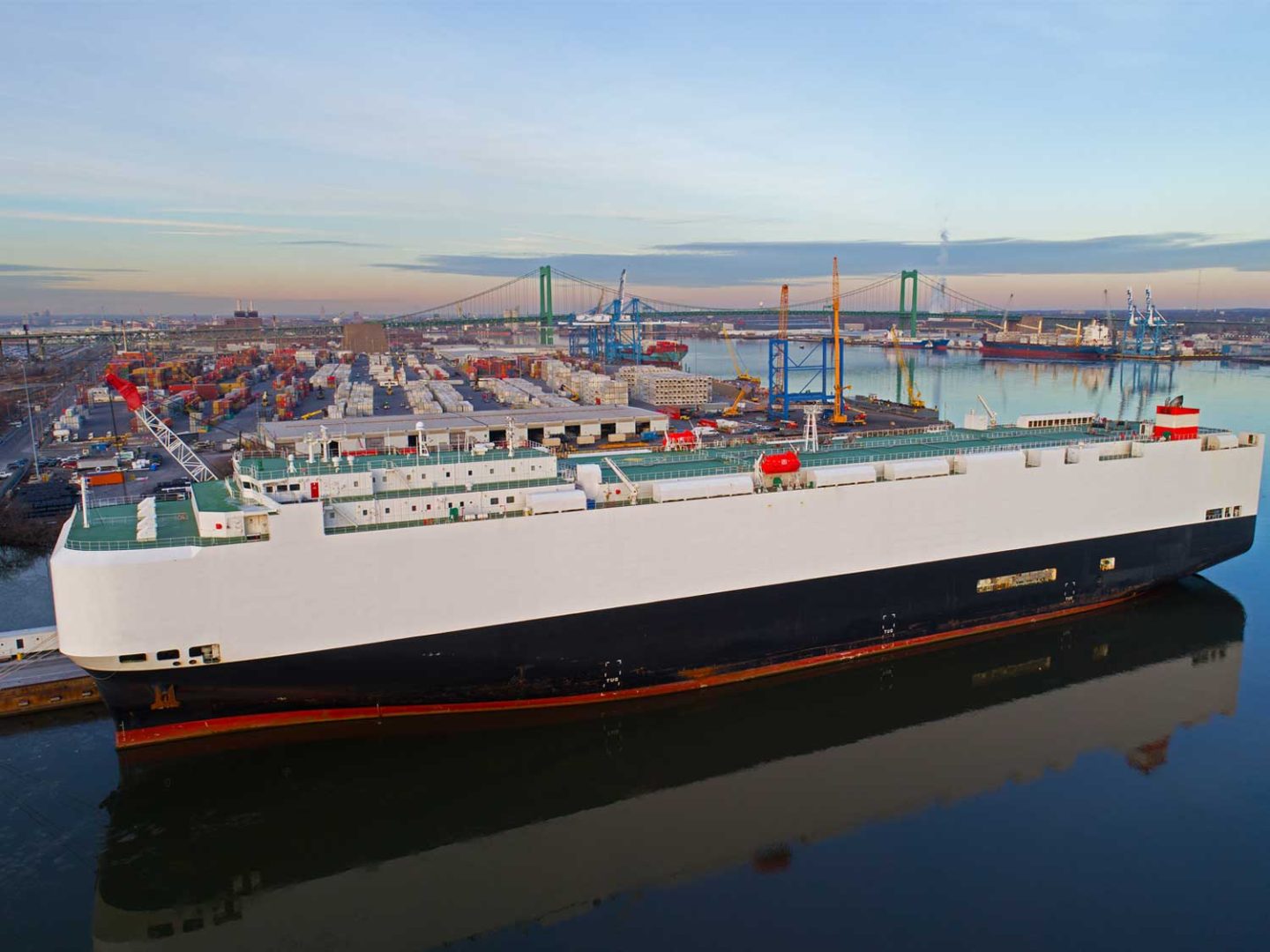
For Chinese-owned/operated vessels, the fee starts at $50 per net ton, stepping up annually to 2028. For Chinese-built ships (not China-operated), the fee is the higher of $18 per net ton or $120 per discharged container, while foreign-built vehicle carriers face $46 per net ton from today.

What it means for shippers

  • The USTR regime adds a new fixed cost per container on top of base ocean rates and surcharges, and carriers are preparing pass-throughs.
  • With 6% of departures already pulled on main east–west trades and more voids likely, load factors are rising on the sailings that remain, which will add upward price pressure.
  • U.S. rules emphasise USTR pre-payment and proof on arrival, with non-compliance risks of port denial, cascading delays to inland supply chains and additional cost.

The container shipping lines are using their capacity and surcharge levers to prop up rates, while the USTR/China port fees, effective from last Tuesday, inject a non-market cost that will filter through to shippers. Expect more targeted blanks, GRIs with short notice, and more surcharges on Asia–Europe and transpacific flows into November.

At Metro, we work hand-in-hand with our network and carrier partners to keep cargo moving, even when the market is disrupted.

From time-sensitive shipments to sudden blankings, our sea freight team secure the right space to safeguard your supply chains and shield you from GRIs.

EMAIL Andrew Smith, Managing Director, today to explore how we can protect your US supply chains and insulate you from threatened GRIs.