LA terminal 1440x1080 1

Carriers Sustain Transpacific Rate Momentum with Strategic Blanking

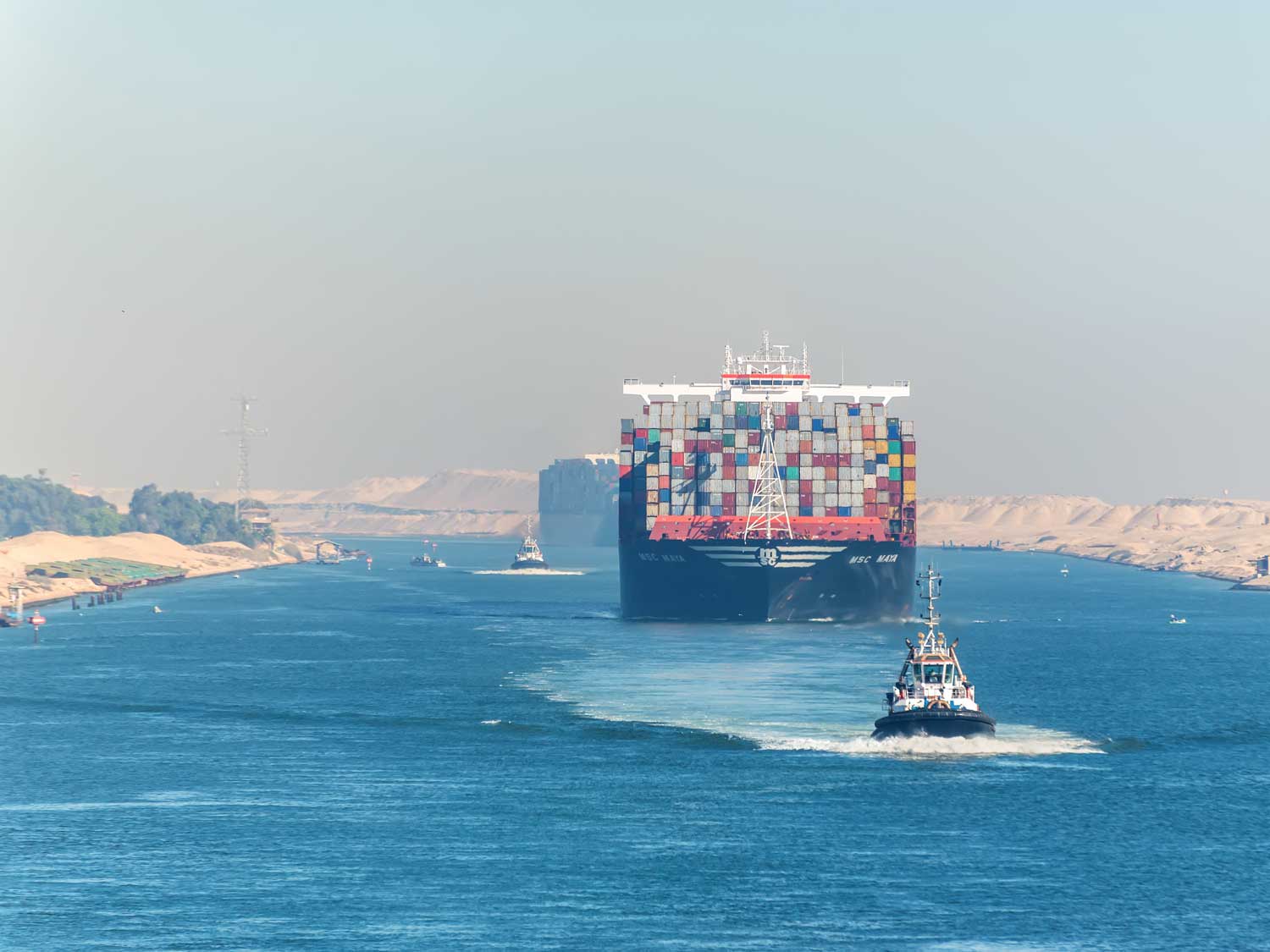
Transpacific carriers have achieved notable success this September in upholding spot freight rates despite softer volumes and ongoing market pressures. Through a mix of strategic blank sailings and well-timed general rate increases (GRIs), the main carriers have sustained a robust rate environment and prevented any steep downturn even as demand has moderated heading into Golden Week.

Even as US import volumes in the lead-up to Golden Week have remained below prior years, carriers have managed to stop spot rates from falling sharply, with major lines blanking about 10% of westbound and nearly 20% of eastbound transpacific sailings for September and October.

This level of discipline has limited rate erosion and positioned the market for further stability as more blank sailings are announced for October.

Recent Rate Developments

September’s rate surge was driven primarily by a combination of a general rate increase and capacity reductions. Spot rates saw weekly gains approaching 6% on key legs, and some increases were as much as 21% compared to late August. While these rate gains provided temporary lift, spot prices have started to moderate, trending back to levels seen before the September 1 GRI. Carriers have succeeded in keeping rates comfortably above the lows reached in August, typically sitting up to 20% above those levels.

Many carriers are now offering voyage-specific spot rates, targeting marketplace flexibility to fill remaining slots. This approach, alongside tactical blankings, enables lines to preserve market discipline and ensure spot prices do not undercut contracted rate benchmarks. The current spread between spot market and fixed contract rates reflects ongoing efforts to support yields while maintaining service options for shippers.

Outlook

In September, eastbound transpacific blankings removed approximately 10% of capacity on West Coast routes and nearly 13% on East Coast strings.

Forecasts for October foresee blankings of about 10% on the West Coast and almost 20% to the East Coast, reflecting a more aggressive stance in supporting additional GRIs post-Golden Week. 

Their active management has proven successful in supporting rates under challenging conditions, emphasising a preference for maintaining pricing power over chasing fleeting short-term volumes. As a result, the transpacific market continues to resist a downward spiral, demonstrating resilience and strategic discipline.

With strategic capacity management and long-established ocean carrier relationships, our team is helping clients secure space, optimise rates, and keep high-priority cargo moving on key transpacific lanes.

As blank sailings and new rate initiatives reshape the market, proactive planning and flexible routing have never been more important.

If your business depends on reliable Asia–US trade flows, EMAIL Andrew Smith, Managing Director, today to discover how expert guidance and tailored solutions can keep your supply chain agile and cost-effective, whatever the market brings.

Ho Chi Minh 1440x1080 1

Asia Pacific Freight Markets Reshape as Tariffs Shift Trade Flows

Air and sea freight in the Asia Pacific region is at the centre of global freight realignments, as eCommerce and feeder shipping operations are reshaped by recent policy changes in the US. 

Adjustments to tariff rules and the elimination of duty exemptions have pushed shippers to reconsider sourcing strategies, shifting some flows from China to other Asia Pacific markets while amplifying pressure on already-congested sea and air networks.

Air cargo: eCommerce realignment

The removal of de minimis exemptions on China–US eCommerce shipments has sharply reduced volumes from mainland China and Hong Kong to the US, while boosting flows from alternative Asia Pacific origins and into Europe.

Airlines across the region reported strong growth in July, as exporters diverted shipments to avoid tariff penalties and took advantage of front-loading opportunities during temporary pauses in tariff implementation.

This shift highlights the growing role of Asia Pacific beyond China in meeting US and European demand, with trade lanes from Southeast Asia and emerging eCommerce hubs gaining traction. While China remains dominant in cross-border online trade, its reduced share of US-bound volumes has accelerated diversification across the region.

Sea freight: Feeder bottlenecks

At the same time, feeder shortages in Southeast Asia are disrupting supply chains, delaying transshipments and creating congestion at major hubs including Singapore (operating near 90% yard capacity), Shanghai, Ningbo and Port Klang.

Shippers are being forced to secure space weeks in advance, with rolled cargo and high yard density compounding the disruption.

The surge in demand from Southeast Asia, partly driven by tariff-related cargo diversions, has stretched feeder capacity, with carriers prioritising direct lanes over transshipment-heavy routings. For US exporters, this has meant greater scrutiny over which cargoes are accepted, adding uncertainty to already fragile trade flows.

Implications for US and European businesses

For US and European importers, these developments underline the risks of over-reliance on single-source markets, as both regulatory shifts and operational pressures can disrupt established flows. For exporters, feeder constraints and selective carrier acceptance policies may limit market access and slow supply chains out of Asia.

Diversification of sourcing, earlier booking strategies, and closer collaboration with supply chain stakeholders is essential in navigating these disruptions. With eCommerce volumes continuing to grow and Asia Pacific playing a more pivotal role, freight strategies must evolve to maintain resilience and competitiveness.

Metro gives you the visibility, agility, and expertise to adapt to shifting trade flows and capacity constraints. EMAIL managing director, Andy Smith, today to strengthen your supply chain and secure your freight movements across Asia Pacific, the US and Europe.

Globe 1440x1080 1

US Tariffs Reshape Global Supply Chains

The wave of new US tariffs has triggered a recalibration across global trade and supply chains. While markets initially reacted with relative calm, the cumulative impact of the Trump administration’s layered tariff regime, now reaching more than 60 countries, is beginning to reshape sourcing strategies, cost structures, and trade flows worldwide.

The latest measures, including punitive tariffs of up to 50% on imports from India, and Switzerland, and a standardised 15% levy on most EU goods, follow months of negotiations, with the UK and US agreeing an Economic Prosperity Deal (EPD) on 8 May, as a framework for tariff reductions to 10% and sector-specific cooperation.

While the EU, UK and some other nations have secured temporary reprieves or reduced rates, others are facing some of the steepest trade barriers since the 1930s. Despite legal challenges and ongoing court reviews, the ‘reciprocal’ tariff framework remains in force until 14 October to give the administration time to appeal to the US Supreme Court.

Supply Chain Implications

With the average US tariff rate climbing to 15.2%, up from a pre-Trump level of just 2.3%, importers are confronted by significant new costs and operational uncertainties. Many rushed to ship goods before the new levies took effect, temporarily insulating American consumers from immediate price increases.

However, the landscape is growing more unpredictable. With distinct, sector-specific tariffs on items like semiconductors, consumer electronics, pharmaceuticals, and critical minerals forthcoming, importers face ongoing uncertainty around landed costs and logistical planning.

And while the legality of “reciprocal” tariffs continues under judicial review, it adds yet another layer of risk for firms engaged in international trading.

The structure of the new tariff regime is multi-layered. A base rate of 10% applies to most imports, with steeper levies of 15% to 41% on countries with trade surpluses or those targeted for geopolitical reasons. Sector-specific duties on copper, pharmaceuticals, semiconductors, and critical minerals are being introduced in stages, with transshipment clauses aimed at preventing circumvention.

India, Switzerland and Brazil have emerged among the hardest-hit economies, with duties on some goods now matching or exceeding those applied to China. 

The outlook for trade with China remains fluid. A 90-day truce has paused the imposition of previously announced three-digit tariffs, with further talks expected before the November deadline.

However, a new provision introducing a 40% tariff on suspected transshipped goods, potentially targeting Chinese exports routed through third countries, has introduced added further complexity for supply chain managers.

The EU, UK, Canada, Mexico, Japan, and South Korea, appear better positioned to weather the storm, with existing trade agreements and temporary negotiation windows providing some insulation. Yet, some of these buffers are time-limited, and broader economic impacts are still unfolding.

As tariffs shift the relative cost of sourcing and importing, businesses are actively reviewing their global footprints. For many, the focus is now on building resilience through diversification, friend-shoring, and regionalisation. However, continued tariff uncertainty is delaying investment decisions and complicating long-term planning, especially for industries reliant on integrated global supply chains.

US Tariffs are reshaping global trade. Whether you’re evaluating exporting or sourcing options, reviewing landed costs, or considering tariff engineering, EMAIL our managing director Andy Smith to discuss your exposure and build a future-proof compliance strategy.

Long Beach 1

Tariff Front-loading Pushes US Imports from Record Highs to Year-End Declines

After setting an all-time monthly record for container imports in July, US retailers are bracing for a sharp reversal to close out 2025, with volumes projected to tumble nearly 20% year on year through the holiday season.

The National Retail Federation’s (NRF) latest Global Port Tracker shows that front-loading tied to tariff deadlines and labour fears has left supply chains overstocked heading into the final quarter. As a result, the NRF forecasts full-year imports will be down almost 6% on 2024.

September’s forecast suggest that inbound containerised cargo will be down 20% on last year, while October and November are predicted to be almost 20% below 2024 levels. November would mark the lowest monthly total since April 2023. December imports are also set to fall nearly 20% year over year.

This comes in stark contrast to July, when tariff-driven front-loading propelled US imports to 2.609 million TEUs. The highest monthly figure ever recorded. Ports such as Los Angeles and Houston reported double-digit growth compared with June, as shippers rushed to beat potential duty increases. Imports from Southeast Asia and the Indian subcontinent set new records, while China’s volumes rebounded 36% month on month, even if still down compared with 2024.

But analysts caution that the surge represented a distortion, not a sustainable trend. “Friends, allies and foes are all being hit by distortions in trade flows as importers try to second-guess tariff levels by pulling forward imports before the tariffs take effect,” warned one. “This will certainly lead to a downturn in trade volumes by late September because inventories for the holiday season will already be in hand.”

The tariff backdrop remains fluid. Washington and Beijing recently extended their trade truce until November, keeping tariffs at 30% on Chinese goods entering the US and 10% on American exports to China. That temporary pause avoided the escalation to triple-digit duties threatened earlier in the year, but left shippers in limbo.

Jonathan Gold, NRF’s vice president for supply chain and customs policy, said the figures underline how tariffs are reshaping supply chains. “Tariffs are beginning to drive up consumer prices, and fewer imports will eventually mean fewer goods on store shelves,” he noted.

With consumer demand uncertain and trade policy still in flux, retailers are preparing for a far quieter peak season than the record-breaking summer surge suggested.

From record highs to steep year-end declines, many supply chains are overstocked and exposed to policy uncertainty.

In this volatile environment, shippers need more than capacity, they need agility and control.

Metro’s dedicated sea freight team and expanding US footprint, helps businesses navigate these swings with confidence. From proactive capacity management and efficient routing to supply chain visibility and inventory optimisation, we ensure your cargo keeps moving smoothly across the Pacific, whatever the market conditions.

EMAIL Andy Smith, Managing Director, to discuss how Metro can safeguard your transpacific supply chain.