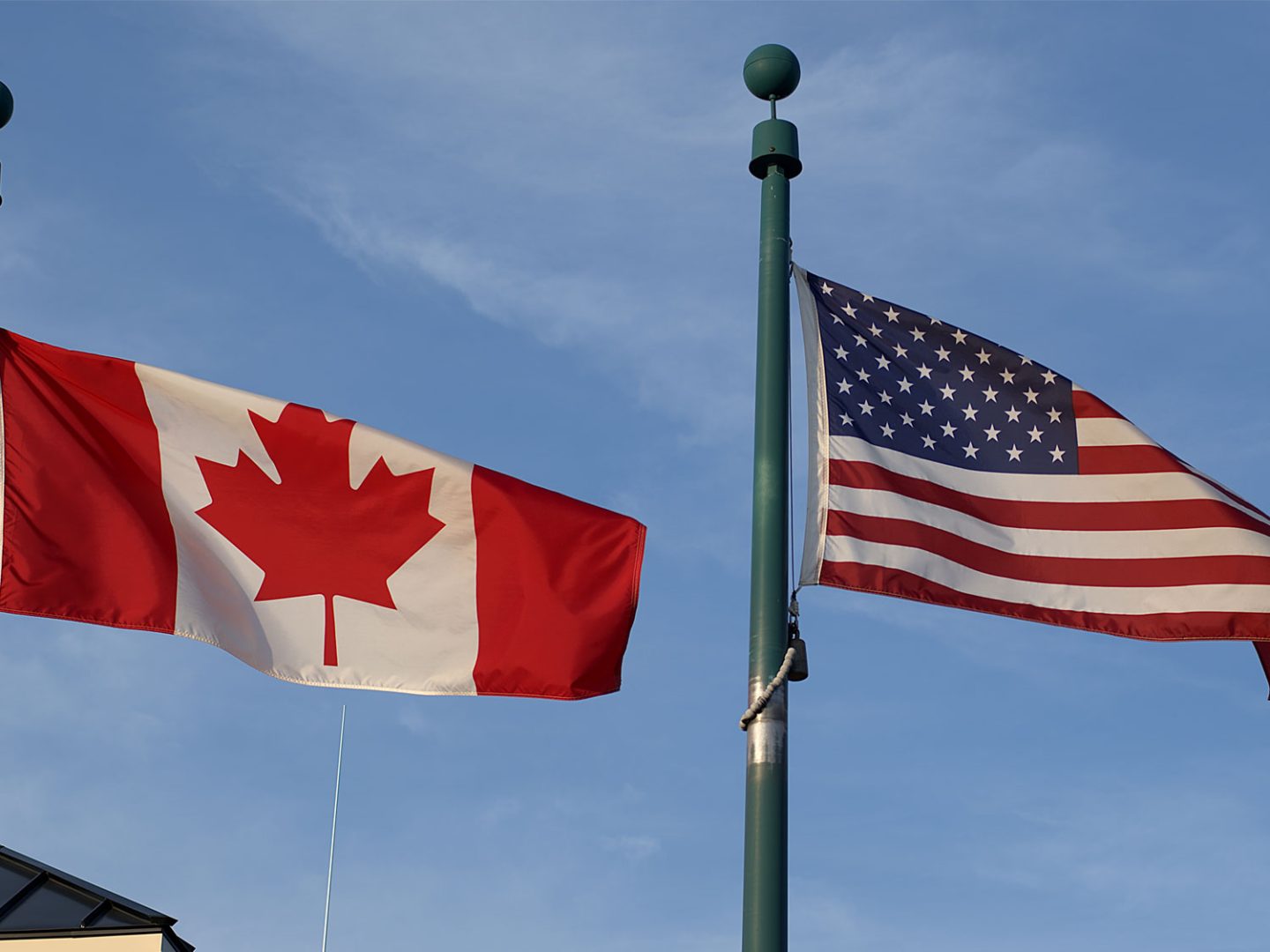
Canada and US flags 1440x1080 1

November: North American market update

The North American freight market faces a complex set of challenges as ongoing labour disputes, potential trade policy shifts, and evolving service offerings reshape the landscape.

Canadian port strikes strain supply chain
Labour disputes have disrupted operations at Canada’s east and west coast ports, with significant impacts on supply chains. At the Port of Montreal, the Maritime Employers Association (MEA) imposed a lockout after the Longshoremen’s Union CUPE Local 375 rejected their offer, halting operations since 31st October. On the west coast, stalled negotiations between the International Longshore and Warehouse Union (ILWU) and port authorities in Vancouver and Prince Rupert effectively paralysed these critical gateways for Canadian imports and exports.

The closures forced Canadian freight to be diverted to US west coast ports, including Seattle, Oakland, Los Angeles, and Long Beach, adding to congestion and creating backlogs that could take months to resolve.

Government intervenes to resume operations
In a decisive move on the 12th November, the Canadian government directed the Canada Industrial Relations Board (CIRB) to end the strikes at Vancouver and Montreal and impose binding arbitration. While business groups welcomed the intervention, union representatives criticised the move, arguing it undermines workers’ rights.

As operations begin to resume, the Montreal Port Authority announced plans to gradually clear terminal backlogs and restore fluidity, although it could take weeks to return to normal. Meanwhile, Vancouver’s container terminals remain delayed, with limited anchorage availability adding further challenges.

US east and gulf coast strike uncertainties persist
Following a brief three-day strike in October on the US east and Gulf coasts, concerns remain about potential further disruptions. The strike’s conclusion hinged on a provisional wage agreement between the International Longshoremen’s Association (ILA) and the United States Maritime Alliance (USMX), with more complex issues such as automation still unresolved.

Negotiations resumed with a new contract deadline of 15th January 2025, but ended early on the 12th November, when the ILA broke off talks with the USMX. According to ILA, the decision was made after USMX continued “pushing automation and semi-automation language in its Master Contract proposals that will eliminate ILA jobs.” The ILA added it “remains hopeful that USMX will alter its un-winnable strategy, and resume negotiations as soon as possible.”

The uncertainty surrounding contract outcomes is likely to push shippers to expedite shipments before January, amplifying capacity constraints across North American ports. The October strike impacted trans-Atlantic and Asia-US trade lanes, with trans-Atlantic westbound volumes falling by 15% and Asia-US east coast capacity expected to drop 17% in mid-November.

Potential tariff escalation under new US administration
The US presidential inauguration in January may bring significant trade policy changes, with proposed tariffs that could reach 60% on China and 20% on other countries.

While the EU, which has a $130bn trade surplus with the US, is preparing counter-tariffs, the UK, which enjoys a relatively modest surplus, appears unlikely to retaliate, favouring open trade instead.

This potential tariff escalation could lead to intense front-loading of shipments before January, creating a pre-inauguration shipping peak, which might align with the pre-Lunar New Year demand surge.

Metro’s expanding US focus
The United States is Metro’s 2nd largest origin/destination and client location, with a large number of customers also having their head office located in North America.

To better support this large and growing client base, Metro will open its first office in the US next year. The non-operational office will focus on local American customers, to enhance the level of service and support provided to them, including the oversight of 3rd country movements through the Americas.

In-house shipping line offers Express US service
Wholly-owned group subsidiary, Ellerman City Liners, has launched the weekly sailing United States Express Service (USX), delivering some of the fastest containerised transit times available. Direct to Philadelphia from just 13 days, USX utilises non-congested ports and terminals, to streamline port clearance and inland movements.

USX is the only direct service operating to and from Jacksonville, serving the Baltic, Scandinavia, Europe and the United States, with four calls on the East Coast, including Philadelphia.

Ellerman’s USX service offers fast and reliable transit times, with lots of flexibility and operates in cooperation with MSC. It is gratifying to see our group working closely with the world’s largest carrier, which underlines our continued commitment to supporting our partner carriers. Many of whom we have worked with for decades.

As North America’s sea freight market adapts to labour uncertainties and fluctuating trade policies, shippers face a complex landscape of demand pressures, capacity constraints, and fluctuating costs.

To discuss the current situation and how Metro can support your North American supply chain, please EMAIL Andrew Smith, Chief Commercial Officer.
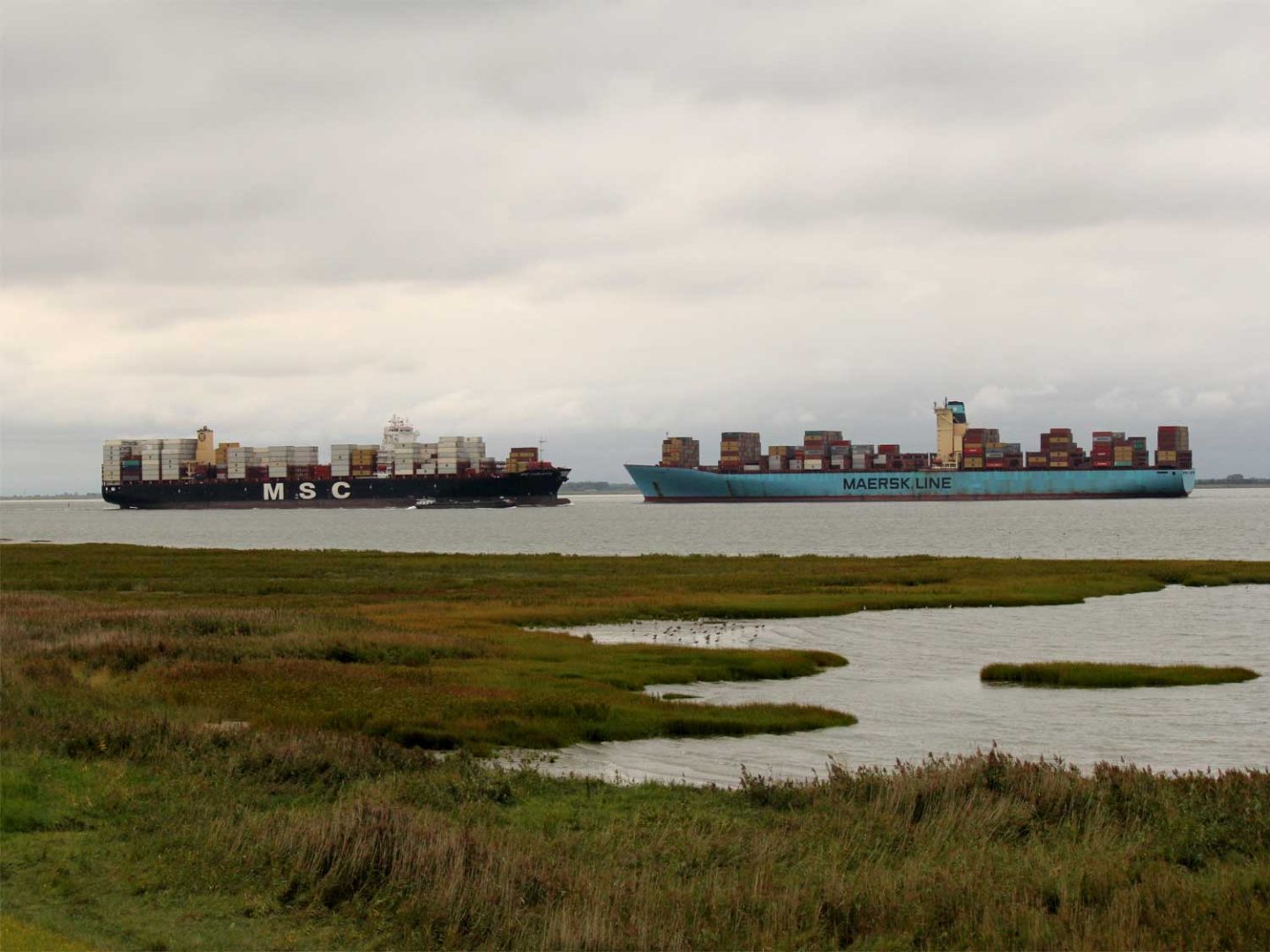
MSC and Maersk 1440x1080 1

New alliances reshape East-West trade container shipping

Container shipping faces a transformative year in 2025, as key East-West and transatlantic shipping routes are set for substantial realignment, with the dissolution of existing alliances and the formation of new ones.

Carriers are optimising their networks to enhance competitiveness and meet the evolving demands of global trade, with the emergence of two new alliances: the Gemini Cooperation, a partnership between Maersk and Hapag-Lloyd, and the Premier Alliance, a collaboration of Yang Ming, HMM, and ONE, alongside new slotting arrangements with MSC.

The Ocean Alliance remains unchanged, continuing with CMA CGM, Evergreen, Cosco, and OOCL. These shifts will impact service offerings, schedules, and direct port-pair connections across major East-West routes, providing shippers with a mix of increased options and competition.

New alliances drive service innovation
MSC’s standalone network, set to operate independently of the previous 2M Alliance with Maersk, offers massive connectivity across five key trade routes: Asia to North Europe, the Mediterranean, North America West Coast, North America East Coast, and the transatlantic. The network promises high direct connectivity through both the Suez and the Cape of Good Hope, featuring over 1,900 direct port pairs, making it a formidable standalone competitor.

In contrast, the newly formed Gemini Cooperation offers few direct port-port pairs, concentrating on transhipment and feeder services to optimise efficiency. On the Asia-Europe route, MSC offers three-and-a-half times more direct connections than Gemini, while the Premier Alliance has structured its services with a high frequency of calls on selected port pairs, adding competitive pressure, especially on the Asia-North America route.

Competitive corridors and service options
For Asia-Europe, key origins including Shanghai and Ningbo will see extensive service coverage, with MSC offering the most direct options, followed closely by Ocean Alliance. MSC’s standalone network is set to offer daily services along some of these high-demand corridors, which will include major destination ports in North Europe, such as Antwerp and Felixstowe.

The Ocean Alliance will leverage its consistent service network with regular calls to European hubs, meeting demand with a steady schedule. In contrast, the Gemini Cooperation will focus on select routes with a more streamlined approach, prioritising efficiency over frequency, while the Premier Alliance positions itself as a flexible choice with direct connectivity to both large and mid-size European ports.

On the transatlantic route, the landscape is also evolving. MSC’s expanded standalone service includes comprehensive transatlantic offerings, with high-frequency connections to both North American and European ports. These routes cater to demand for direct services between major East Coast ports in the US and destinations such as Hamburg, Antwerp, and Rotterdam. The Premier Alliance, through its slot exchanges with MSC, will also deliver enhanced transatlantic options, further enriching service choices on this important corridor. The Gemini Cooperation, however, has chosen to limit its transatlantic service focus, concentrating on key North European ports.

Flexibility and choice
While 36 key port pairs will see direct services from all alliances, offering shippers competitive choices, 139 port pairs will be exclusively serviced by a single alliance, providing unique service propositions.

The distinct approaches taken by each alliance highlight a shift towards service flexibility, with alliances focusing on varying service concepts, transit times, and reliability levels to cater to different market needs.

As new alliances settle into their operational structures and MSC advances as a powerful standalone force, the reshaped East-West trade-lanes, including transatlantic services, will give shippers a broader selection of service configurations.

Metro negotiate rates and volume agreements with a broad portfolio of carriers, including MSC and across the alliances, to offer our shippers the widest range of service offerings, port-pairings and rates.

Our bespoke solutions uniquely reflect our customers requirements and expectations. For further information please EMAIL Chief Commercial Officer, Andy Smith, who would be delighted to review your situation. 

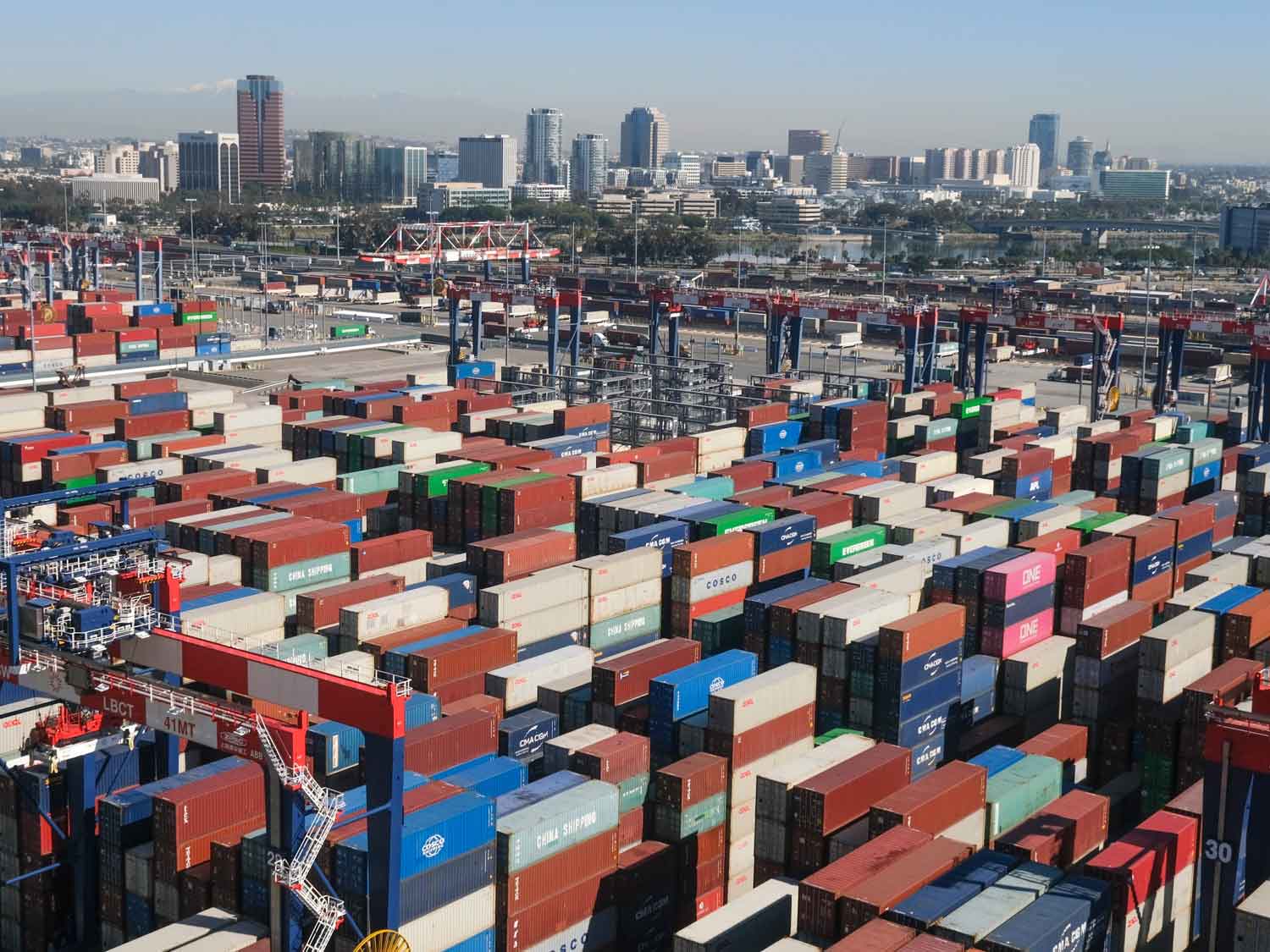
Long Beach 1

North American Sea Freight Market Strained

The North American sea freight market faces ongoing challenges, with recent labour actions on the US East Coast fuelling local anxieties and adding congestion and capacity pressures on the West coast.

The three-day strike by the International Longshoremen’s Association (ILA) on the US East Coast in early October sent ripples across the industry, as importers scrambled to reroute shipments to West Coast ports. Record-breaking import volumes in Los Angeles and Long Beach in September have strained rail and terminal operations, pushing rail container dwell times over nine days, their highest in two years.

The impact of the ILA strike is compounded by recent actions in Canada, with Montreal dockworkers initiated a 24-hour strike last Sunday the 27th October, following earlier disruptions that have halted overtime work across the port. 

This seasonal surge in imports is expected to taper off in November, as most holiday merchandise arrives in the US by late October to be available for Black Friday and other peak shopping events. However, if contract negotiations between the ILA and East Coast employers, which are due to resume in November, remain unresolved into December, West Coast ports could capture a larger share of shipments, keeping demand elevated longer than usual on the Pacific Coast.

The main issue outstanding between the ILA and USMX is the use of terminal automation. The previous contract permitted semi-automation with union and terminal agreement on staffing but banned full automation. In this bargaining cycle, the ILA is pushing for a complete ban on all automation types.

Montreal’s container volumes have already dropped by nearly a quarter since 2022, with a growing shift of cargo to US East Coast ports—though the labour situation in the US may ultimately reverse this trend if Canadian ports gain relative stability.

Impact of the US presidential election on container shipping
Looking ahead, next week’s US presidential election introduces potential regulatory and economic uncertainties for the container shipping market. A second term for Donald Trump could bring a more protectionist stance, with proposed tariffs of up to 20% on all imports and as high as 60% on goods from China. Such policies would likely dampen US demand for imports, reshaping sourcing and supply chain strategies across Asia, where countries like Vietnam and India are already gaining market share as businesses diversify away from China.

By contrast, a potential administration under Kamala Harris is expected to support US industries through subsidies rather than aggressive tariffs, reducing the immediate risk of sharp import declines. However, increased government support for domestic production could still influence trade patterns, with downstream effects on global shipping demand. In either scenario, US trade policies will continue to play a significant role in shaping the container shipping market, particularly in trans-Pacific routes.

As North America’s sea freight market adapts to labour uncertainties and fluctuating trade policies, shippers face a complex landscape of demand pressures, capacity constraints, and fluctuating costs.

As always, we will guide you through the most import strategic adjustments, such as diversifying shipping routes and anticipating regulatory changes, to maintain supply chain stability and manage costs in the months ahead.

To discuss the current situation and how Metro can protect your North American supply chain, please EMAIL Andrew Smith, Chief Commercial Officer.
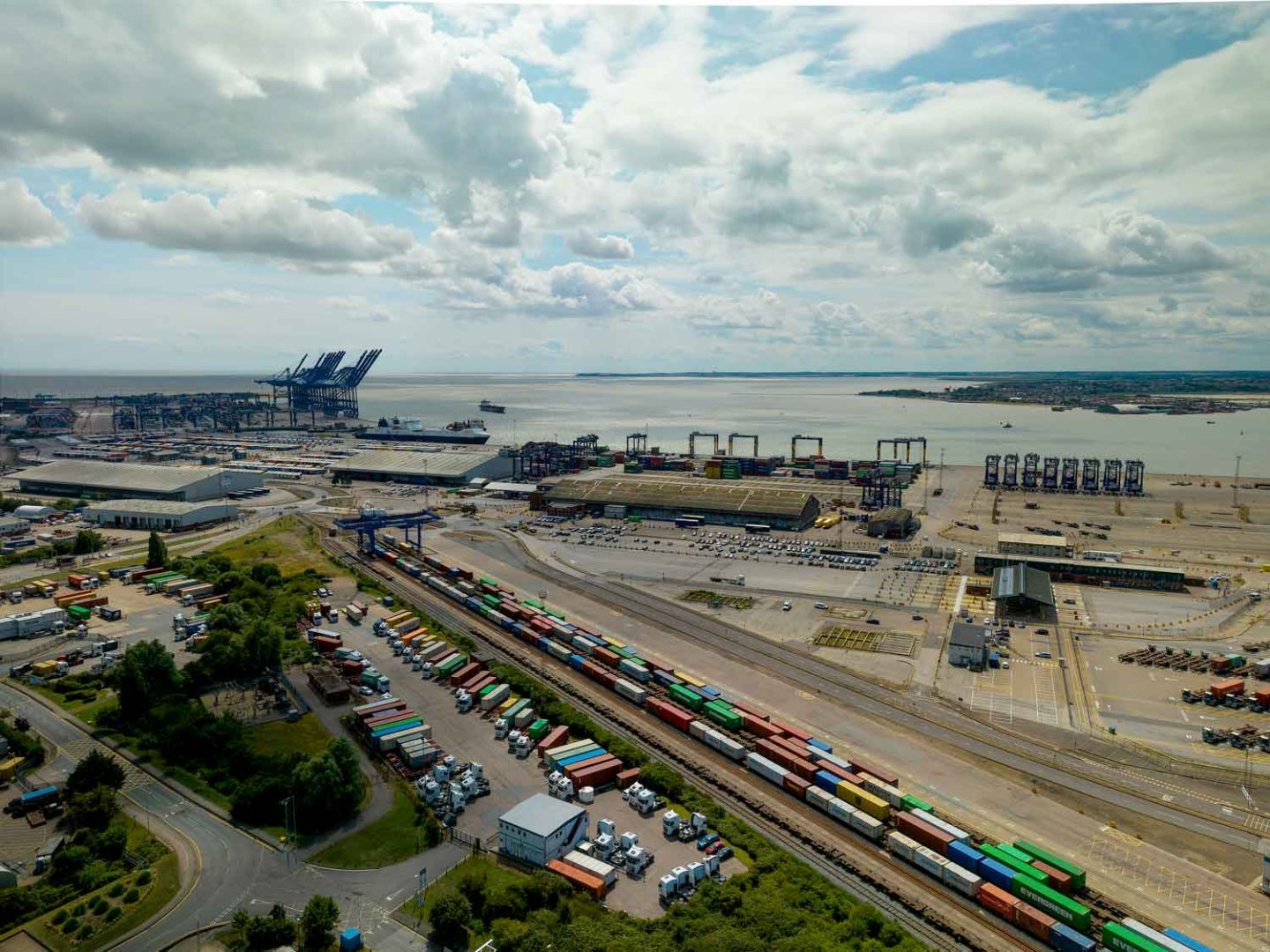
FXT aerial 1440x1080 1

UK Freeports Offer New Opportunities for Businesses

The new labour government has confirmed its commitment to the ‘Freeports’ initiative that aims to stimulate economic growth, by offering an array of incentives, from tax relief on investment to National Insurance contributions (NICs) relief on employee earnings.

With eight Freeports now operating in England and two each in Scotland and Wales, and further developments planned, the Freeports programme represents a promising approach to support industries, promote innovation, and create jobs in strategic locations.

Tax and Customs Advantages for Businesses
One of the most attractive features of Freeports is the tax relief on employer NICs. Employers can claim NICs relief on up to £25,000 of eligible employee earnings per year for up to 36 months, reducing operational costs and incentivising companies to grow their workforce locally.

Additionally, Freeports allow businesses to import materials tariff-free and defer customs duties until goods enter the domestic market. This creates an efficient system for businesses handling raw materials or intermediate goods, particularly those involved in exporting and manufacturing.

Regional Economic Regeneration
Freeports are designed to act as catalysts for regional development by attracting investment and encouraging innovation in specialised sectors. For instance, the Humber Freeport focuses on rare earth metals processing, supporting the UK’s green technology ambitions. Teesside Freeport, meanwhile, is set to become a hub for offshore wind turbine manufacturing, aligning with national renewable energy goals. In Wales, Freeports like the one on Anglesey are driving investments in solar and tidal power, helping to revitalise local economies that have been affected by industrial decline.

Freeports As Strategic Investment Zones
Beyond customs advantages, Freeports benefit from flexible investment rules and tax breaks on building and equipment investment. With recent government commitments to fund these areas as part of broader investment zones, Freeports provide businesses with opportunities to scale their operations, enhance productivity, and foster long-term economic impact.

The ongoing improvements are expected to create further incentives for businesses to establish themselves within Freeports, fostering an environment of innovation and competitiveness.

A Growing Attraction for Businesses
While initial uptake has been gradual, UK Freeports have already secured over £6 billion in investment and created around 7,000 jobs, with significant growth potential still untapped. The customs benefits, combined with substantial tax reliefs, make Freeports a compelling option for businesses looking to expand within strategically important sectors.

We are closely monitoring the development of Freeports and their potential benefits for our customers’ supply and value chains. Exploring cost-effective, value-added operations is always worthwhile, and some Freeport locations may present advantageous shifts in operations, provided that process, financial, and compliance factors align favourably.

Our supply chain, finance, and customs teams are ready to offer expertise, insights, and guidance on Freeport opportunities. For further insights, please EMAIL Elliot Carlile to discuss your situation and explore the most beneficial options.