Tariffs 2

UK exports hit by EU and US tariffs

Despite the tariff-free deal agreed with the EU, up to £3.5bn of British exports have already had taxes applied and the US has introduced new tariffs worth $2bn on European goods, including products from the UK.

British goods worth billions of pounds, accounting for about 10% of British exports to the EU, have faced tariffs since Brexit, according to an analysis of official EU statistics.

Some firms paid due to the complexity of claiming zero tariffs, or said they hoped to reclaim the fees later.

For exporters, maintaining zero tariffs under the post-Brexit deal is not automatic, it needs to be claimed on customs declarations that from January have had to accompany every export to the European Union.

Using European customs data from these declarations, an analysis for the BBC, by the University of Sussex's Trade Policy Observatory found that between £2.5bn and £3.5bn of British exports faced a tariff in the first three months of 2021.

Findings that were confirmed by the European Commission, who said that according to data collected by its customs authorities, €2.5bn of eligible UK exports did not use the zero-tariff agreement.

Tariff-free trade with the EU is only tariff-free if firms satisfy the rules of origin criteria and submit the appropriate declarations and information.

What the BBC’s analysis shows is that in the first quarter, around 27% of trade that could have entered tariff-free did not do so, either because they were uncertain how to comply, or did not realise they could avoid tariffs.

There are some complex arrangements for claiming zero tariffs and difficulties over the re-export to the EU of goods processed in Britain, but these are all clearly understood by our brokers and integrated in our CuDoS customs platform.

We can help you recover any duties you have paid and ensure you avoid the unnecessary expense in the future.

The Trade Policy Observatory has tried to quantify the effect of extra trade barriers with the EU on different sectors.

Although exports began to recover from a massive drop in January, over the quarter, the Observatory calculated that, of the worst affected sectors, textiles saw exports fall 63%, food suffered a 36% drop, and the automotive industry saw exports down 20%.

The US last week revealed a $2bn tariff threat over digital taxes, ahead of G7 discussions on global minimum tax on Friday.

The threat to slap tariffs on goods from the UK, Austria, India, Italy, Spain and Turkey as they argue about how to tax technology companies, is a move some fear may risk reigniting trade wars unless parties resolve thorny talks over a broader international tax agreement.

The office of the US trade representative said it was imposing but immediately suspending for six months the tariffs on as it wrapped up a series of investigations over the way the countries tax US tech giants.

President Biden’s gambit may have had some success, with the G7 reaching a “historic agreement” on taxing multinationals last week and marks a significant step forward in negotiations that started in 2013. 

The G7 pact is a stepping stone towards a deal in the formal negotiations taking place at the OECD in Paris and directed by the wider G20 countries.

We continue to monitor the evolving UK/EU customs regime situation, to offer advice and tailored customs brokerage solutions through our CuDoS platform.

The whole area of ‘rules of origin’ and duty refunds can be challenging, which is why our expert brokers can provide advice and guidance on your current situation and help you in developing the most appropriate EU customs compliance model to support your EU trading and business.

For further information please contact Elliot Carlile or Grant Liddell to organise a full review and discussion relating to current issues that you may be facing.

Brokerage small

Using rules of origin effectively

Rules of origin determine where goods originate from and which are covered in preference agreements. It is not just where goods have been shipped or bought from, with the potential for multiple origins to consider and there can be severe financial penalties for getting it wrong.

The origin is where goods have been produced or manufactured and is the economic nationality of goods being imported and exported and applies, whether they’re covered by preference agreements, the Generalised Scheme of Preferences, or are non-preferential.

When two or more countries have been involved in production, the goods are deemed to have originated in the country or territory where they were last substantially worked or processed, with three specific rules (value-added, classification, specific processes) deciding if goods are sufficiently worked or processed.

Increasingly, clients with substantially transformed products are asking us to look closely at the rules to determine exactly how they qualify; to ensure they are obtaining the most favourable outcomes, while remaining compliant.

The value added rule sets a limit on the value of non-originating materials, which can be used before the finished product is considered as not originating, while the change of tariff classification rule states that goods cannot have the same tariff classification as any of the non-originating materials used to make the final goods.

And while these two rules are quite specific and may be easily applied, we are seeing increasing incidences where they might not be fully applicable and are checking the application of product specific rules, which specify the non-originating materials used in manufacture, and the processes which need to have taken place, in order to get originating status.

With thousands of entries being processed every week, it is critical that accurate data is maintained and that brokers retain up to date information. Our CuDos customs platform’s product library retain’s each client’s product codes and associated detail, which automatically ensures preference can be applied.

Preference is established following trade agreements with individual countries, like Japan, or trading blocs, like the EU. Our customs experts can advise which countries have trade with agreements with the UK, or when other commitments have been agreed.

On the 1st January 2021, the UK moved to trading with the EU based on a new Free Trade Agreement (FTA) - the Trade and Cooperation Agreement (TCA) - with tariff-free goods meeting preferential rules of origin, which means that wholly originating goods and certain manufactured goods qualify for zero tariffs. 

Rules are set out in the TCA to determine the origin of goods based on where the products or materials (or inputs) used in their production come from, to ensure that preferential tariffs are only given to goods that originate in the UK or EU and the percentage by value of non-originating material remains under allowable tolerance.

Goods that do not meet the EU rules of origin will be subject to ‘Most Favoured Nation’ tariffs in the UK Global Tariff, which for some goods may be low or zero, but for other goods they can be much higher.

The Generalised Scheme of Preferences (GSP) removes import duties from products coming into the UK from around 50 vulnerable developing countries, which the UN classifies as Least Developed Countries, to boost their economies and support a self-sustaining infrastructure.

Metro continue to monitor the evolving UK/EU customs regime situation, to offer advice and tailored customs brokerage solutions through our CuDoS platform.

We have extensive transport and customs brokerage solutions across the Continent and can assist you in ensuring that your supply chain remains agile and responsive, in moving your products into, out of and within Europe.  

The whole area of duty liability and compliance can be a ‘minefield’. Let metro provide advice and healthcheck on your current operations and review your current structure and assist you in developing the most beneficial platform to ensure that the best fit and most appropriate model is in place for your global trading and business.

For further information please contact Elliot Carlile or Grant Liddell to organise a full review and discussion relating to current issues that you may be facing.
food checking

Food exporters highlight one of Brexit’s biggest impacts

This stunning article from The Grocer highlights the massive impact that the post-Brexit free trade agreement has had on one of our most vital business sectors.

Food exporters have spent a total of 58 years filling out export health certificates so far this year as a result of the new post-Brexit trade rules, the Chilled Food Association has claimed.

Export health certificates (EHC) are required when shipping live animals or animal products such as meat and fish from Great Britain to the EU, Northern Ireland, or any other third country.

Karin Goodburn, director general of the Chilled Food Association, said official figures show the UK has issued 89,000 certificates so far this year, up from 806 over the same period last year – a 110-fold increase. That’s really quite a lot when converted into additional administration and direct and indirect cost within the supply chain.

“If you take 89,000 certs and say it’s a couple of hours each… it comes out at 7,500 days so far this year spent signing certificates,” she told the independent Trade and Business Commission on Thursday, a new body made up of MPs and business figures to scrutinise UK trade deals.

“And that’s 24-hour days, not eight-hour days,” she added. “It’s 21,000 eight-hour days,” or 57-and-a-half years.

Only specially qualified vets – known as Official Veterinarians or OVs – are able to sign off export health certificates with the new requirements highlighting a national shortage.

Emily Rees, agricultural trade specialist and senior fellow at ECIPE, said the UK must look to develop an electronic certification process as quickly as possible. 

While much of the food industry has called for the UK to reach a veterinary agreement with the EU as a means to simplify border checks on food, Rees said it was also important to identify the “low hanging fruit”.

“Instead of looking at the negotiation of a big veterinary equivalency agreement, what are the low hanging fruit that can be sorted straightaway – that are product-specific, that are sector-specific – and can get done through an exchange of letters?”

EHC compliance is an arduous system of being able to qualify goods for export - either from the EU or UK - and one that cannot be circumvented or significantly simplified, but there are processes to build safeguards and ensure compliance to reduce delays.

We continuously monitor the evolving EU/UK trading legislation, regulations and processes, adapting our services and solutions to each new situation and development.

Our CuDoS customs brokerage platform is optimised, in line with the regimes in force on both sides of the Channel, automating and submitting customs declarations, for simple and compliant border processing in either direction. 

Please contact Andrew White, who is leading our customs and brokerage business unit, for further information and assistance on these or any other border controls, in our new trading environment with the EU.

“58 years spent on post-Brexit paperwork so far this year” was originally published in The Grocer and can be viewed in full HERE

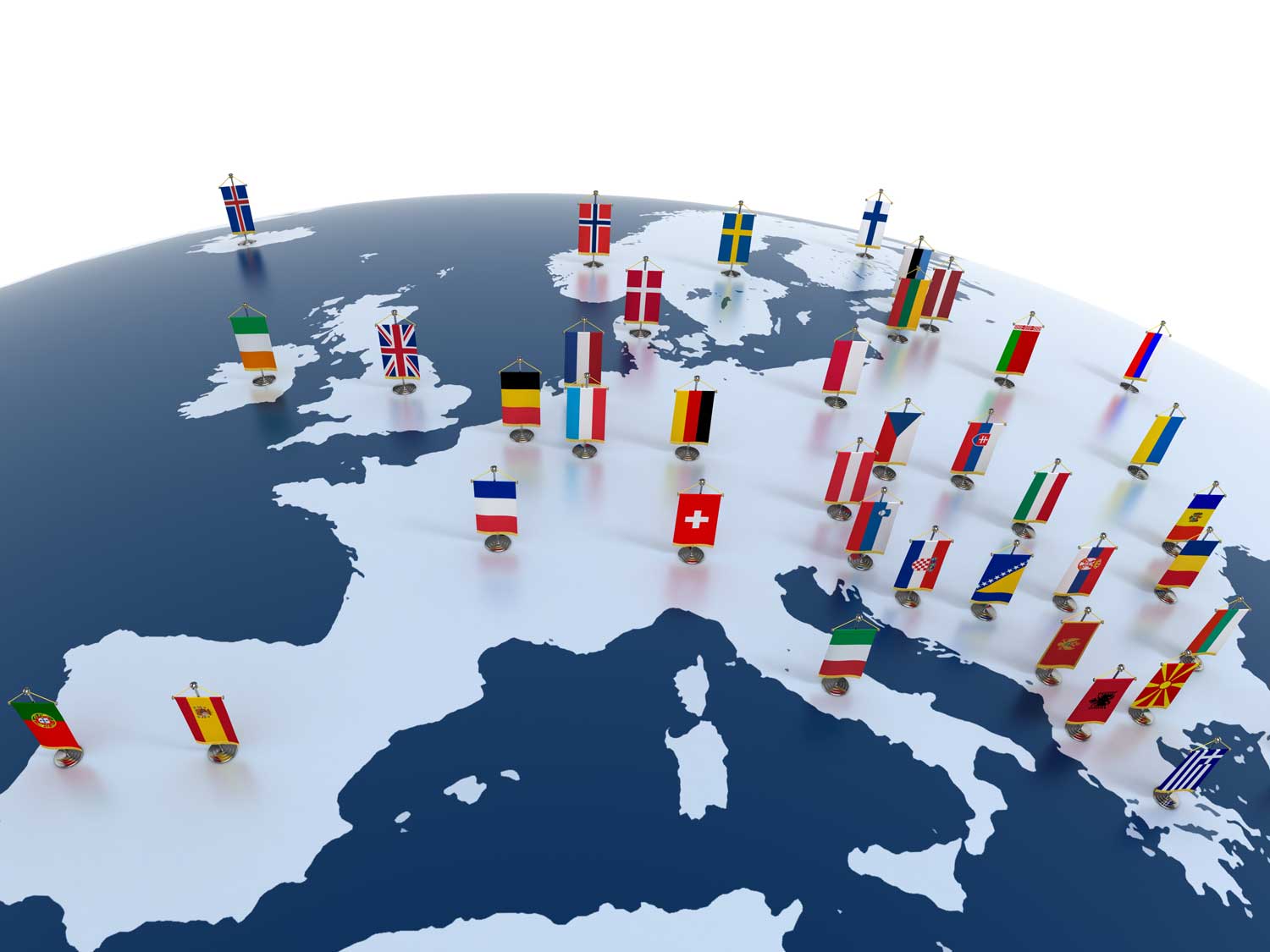
EU flags globe

Many UK exporters continuing to struggle with European trade post Brexit

Despite the UK economy edging 0.4% higher in February, helped by a partial rebound in trade with the EU as exporters learnt to deal with new Brexit border restrictions, many more are having to dramatically change their business model, or have simply stopped exporting to the bloc.

In the second month since the imposition of new EU/UK border regime and processes there was a £3.7bn rise in exports to the bloc following a £5.7bn drop in January, with imports from the EU showing a rise of £1.2bn in February after a record drop of £6.7bn in January.

By value exports to the EU were 22% lower and imports 26% lower than February 2019, before the impact of Brexit and Covid-19, and these movements were far greater than non-EU countries, indicating that Brexit is the most likely cause of the falls. 

The government insists that overall freight volumes between the UK and the EU have been back to their normal levels since the start of February, but freight industry groups insist that recent figures on freight volumes tally the number of vehicles and ferry movements, and many more lorries than before are actually returning to the EU empty. Similarly and practically this is also being seen by Metro with our own comparisons year on year.

The Federation of Small Business found that around 25% of exporters had paused sales to the EU and 11% were considering abandoning exports to the bloc completely.

With EU importers - particularly consumers - facing new and unwelcome charges for goods, UK exporters are struggling to get shipments through, with many orders returned and desperate businesses considering moving operations to the EU mainland, in a bid to circumvent border controls.

The fact is there are far simpler solutions available and usually a selection to choose from, but all too often the exporters struggling the most are those that have only been exporting to the EU and before the 1st January, they were not really exporting.

Many remain overwhelmed by the new processes, forms and regulations and hoping the government will simplify processes is unrealistic. Also the additional costs for the administration, customs declarations and time taken with additional resource required is hurting many traders with the EU.

To address this skills gap the government has set up a £20m Brexit Support Fund for small and medium-sized businesses and is also providing export helplines, and international trade webinars.

The provision of this support and training grants is acknowledgement on the part of the government that something that was once easy is now more difficult and given that the EU accounts for nearly half of all UK exports, it is critical that exporters increase their knowledge.

In the run up to Brexit and the eventual ending of the transition period Metro invested significantly in system development and the building of a dedicated Brokerage team, that has supported many of the UK’s largest exporting brands and manufacturers adjust seamlessly to our new European trading relationship.

The same digital and automated ‘CudDoS’ customs solutions that support these exporters are available to all customers, and are equally appropriate for SMEs.

Successful exporting requires expertise and all too often all exporters need to do, is to tap into our expertise, to successfully support their aspirations. 

For further information please contact Jade Barrow or Chris Carlile for a full health check and discussion on your current requirements and we will provide a bespoke and tailored solution – that works!