
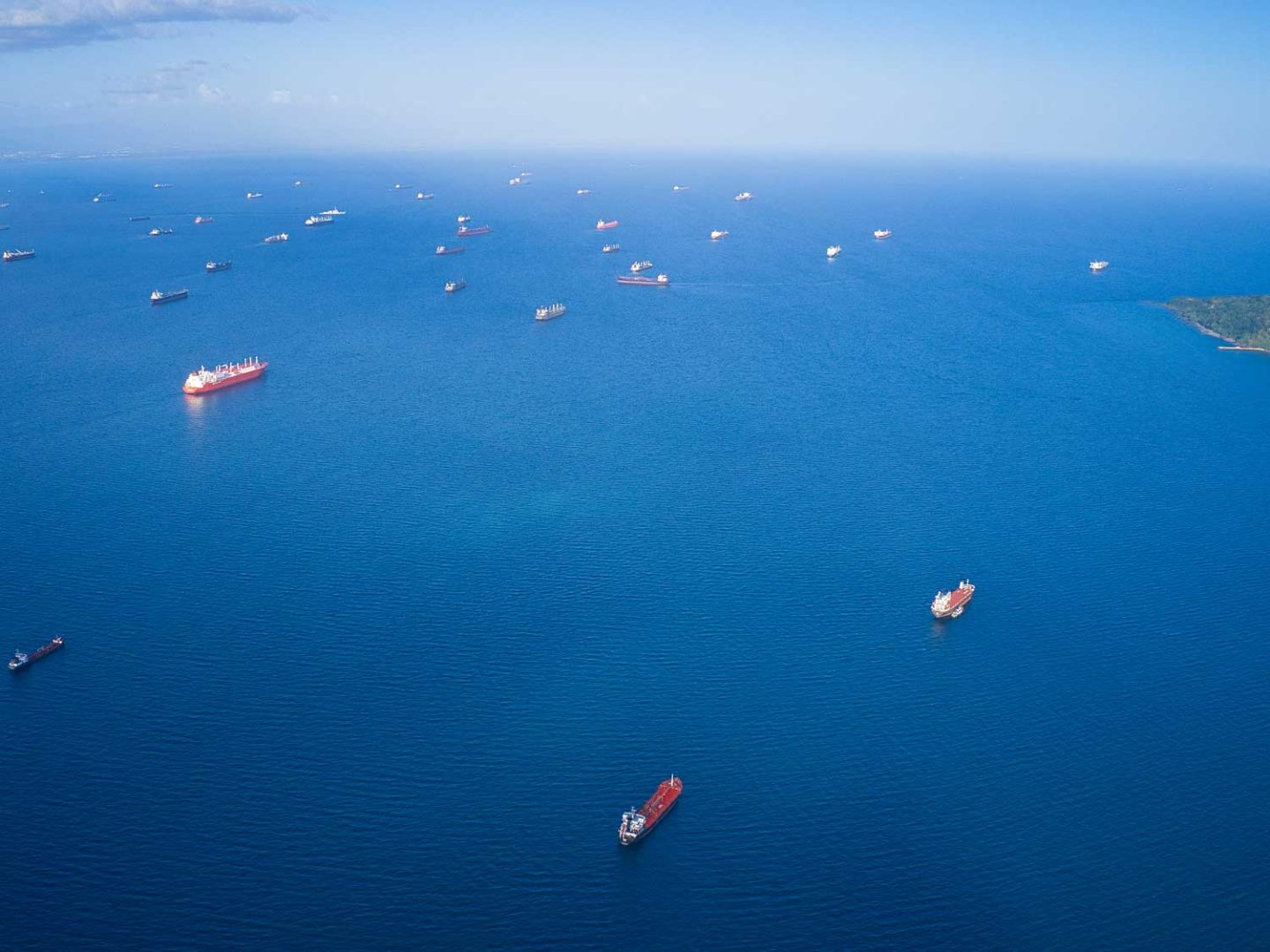
vessels at anchor 1440x1080 1

Research uncovers scale of Red Sea disruption

New research by the British Chambers of Commerce (BCC) has found that over half of importing manufacturers and retailers (53%) have been impacted by the disruption to shipping caused by the Red Sea crisis, with over half of exporters (55%) also experiencing increased costs and delays.

The issues highlighted by responding firms included increased costs of up to 300% for shipping, with transit delays adding up to three to four weeks to delivery times. Knock-on effects include cashflow difficulties and component shortages on production lines.

With a record-high new container ship order-book and constrained consumer demand in many markets, the container shipping sector has had ample spare capacity to respond to the challenge of diverting vessels around the southern top of Africa.

The Red Sea transit to the Suez Canal is the fastest sea route between Asia and Europe, but all the major container shipping lines have diverted vessels to the much longer route around Africa’s Cape of Good Hope, increasing costs and creating delays.

Recent ONS data suggest the ‘Red Sea effect’ has yet to filter through to the UK economy, with inflation holding steady in January. However, the longer the current situation persists the more likely it is that the cost pressures will start to build, with some sectors of the economy more exposed than others.

The UK economy saw a drop in its total goods exports for 2023, and with global demand weak, the BCC want the Government to look at providing support in the March Budget, including the establishment of an Exports Council to hone the UK’s trade strategy and a review of government funding for export support.

Week 12 of the Red Sea crisis
The war in Gaza, which according to the Houthis is the reason for their attacks on commercial shipping, shows no sign of abating and on Monday the Rubymar finally sank, the first total loss in the Houthis campaign.

Vessel schedule reliability data for January 2024 confirmed that global reliability dropped sharply due to the Red Sea impact and only slightly more than half of vessels arrived on time, compared to pre-pandemic normality of 70-80%.

Geopolitical risk
The wars in the Middle East and Ukraine are threatening flows of grain, oil and consumer goods, with climate change disrupting the Panama Canal and growing geopolitical tensions are making international supply chains ever more complex.

The World Economic Forum’s Global Risks Report (GRPS) for 2024 highlights how geopolitical tensions in multiple regions is contributing to an unstable global order, eroding trust and security.

GRPS 2024 results highlight a predominantly negative outlook for the world over the next two years, that is expected to worsen over the next decade, with supply chain disruption ranked 19th of severe global risks in the short term (2 years) and 25th for the long term (10 years).

Over the next two years, attention is likely to be focused on the war in Ukraine, the Israel-Gaza conflict and tensions over Taiwan, with any escalation likely to disrupt global supply chains.

All three areas stand at a geopolitical crossroads, where major powers have vested interests: oil and trade routes in the Middle East, stability and the balance of power in Eastern Europe, and advanced technological supply chains in East Asia.

If you have any questions or concerns about the impact of the Suez situation on your Asia supply chain, or would like to discuss its wider global implications, please EMAIL our Chief Commercial Officer, Andy Smith.

Manhattan skyline 1440x1080 1

US importers face inventory replenishment quandary

Many US companies, including big retailers, were successful over the course of 2023 in clearing out the stockpiles of inventory, that they built up during the pandemic to cope with shipping disruptions and changing buying patterns.

During the pandemic many retailers and manufacturers flipped from a “just-in-time” strategy to a “just-in-case” strategy of hoarding inventory to avoid losing sales.

The broad measure of inventories to sales ratio across US retailers stood at 1.30 for the last three quarters of 2023 and while this is still relatively high by historic levels it does suggest retailers have achieved some stability after the roller-coaster pandemic years.

With most inventories back to pre-pandemic levels, importers are pulling in fresh orders, but high interest rates make it more expensive to carry large inventories and could push some companies back toward a ”just in time” strategy, even as supply risks grow.

US holiday sales were up over 3% and many retailers have reported leaner inventories that reflected restraint rather than a rush to restock, but many now want to quickly adjust to new trends.

However the persistent lack of rainfall in Panama since early last summer has been forcing authorities there to reduce the number of vessel transits on the Panama Canal, a key corridor for trade between Asia and the US East Coast.

The Houthi rebel attacks on commercial shipping, that began last December continue, with container shipping lines diverting away from the Suez Canal, which also feeds routes to the US East Coast, with around 12% of US-bound cargo moving through the Canal.

The diversions past the Cape of Good Hope to avoid Red Sea attacks extend voyages by almost two weeks, and although the reroutings are having an impact on inventories, the situation will become increasingly manageable as schedule reliability recovers.

These disruptions are already reshaping inbound US freight flows, and the domestic supply chains that move goods from ports to factories and retail markets.

The National Retail Federation forecasts that US imports in February will increase 20.4% over February 2023, with March expected to grow over 5% and April up 3%.

Cargo volumes surged into West Coast ports during the final months of 2023, posting double-digit year on year gains as shipments into East and Gulf Coast gateways sagged.

West Coast ports in October handled almost 34% of worldwide container trade into the US up 3% on 2022.

That share could accelerate in 2024. The head of the union representing dockworkers at East Coast and Gulf Coast ports has warned members to prepare for a possible strike unless a new labor agreement can be reached to replace the current contract which expires in September.

If you have any questions or concerns about the issues raised in this article, we can review your situation and explain your options, including alternative carriers, ports and routes.

To discover how we can support your transpacific or transatlantic trade, or to learn more about our ocean solutions, please EMAIL Metro’s Chief Commercial Officer, Andy Smith.
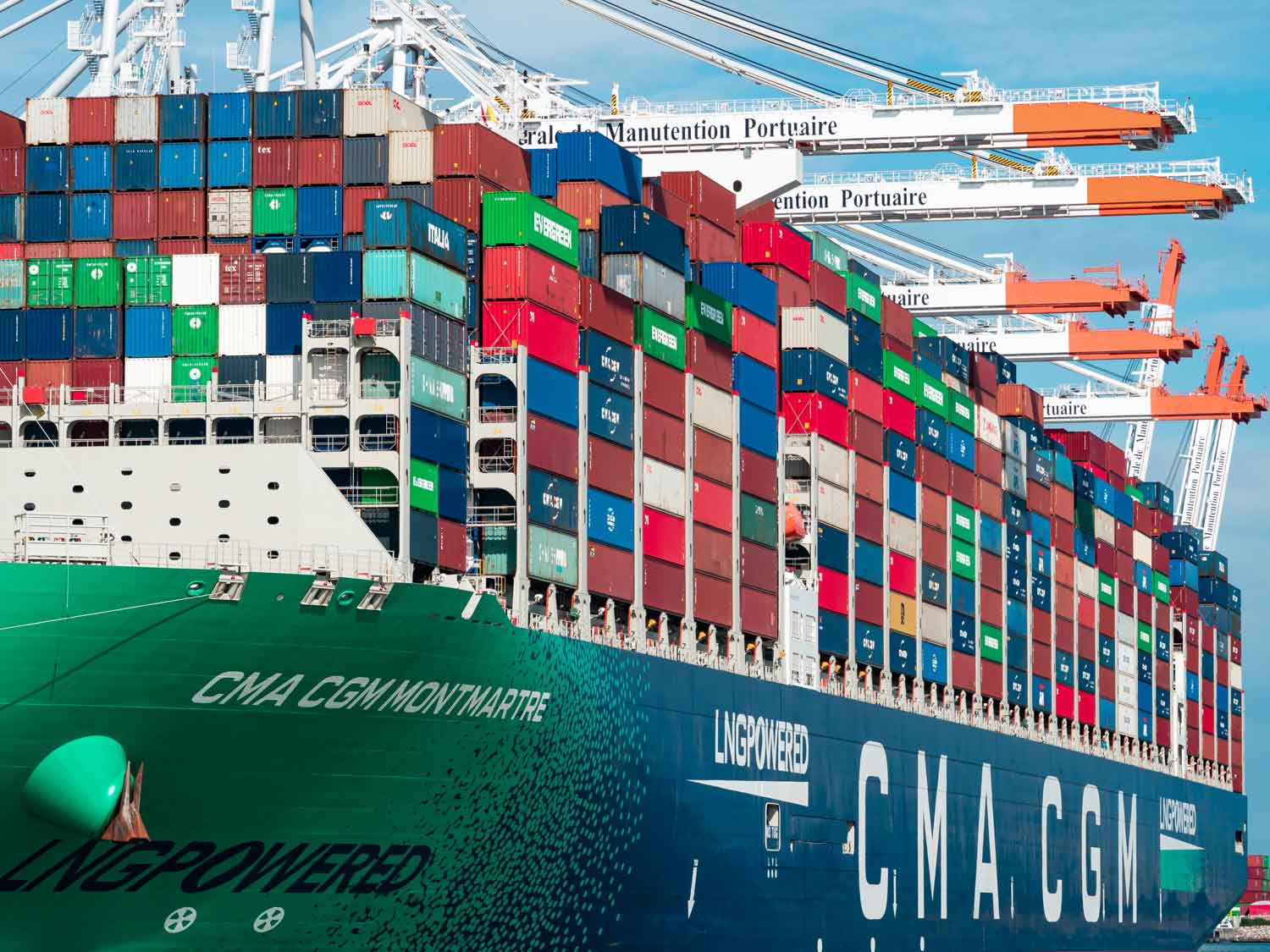
CMA CGM Montmarte

OCEAN Alliance seek stability

Although there was market speculation that a member of the OCEAN Alliance might be tempted to leave and join THE Alliance in 2027, a new agreement by the remaining members makes it very unlikely this decade.

Seeking to send a clear message of stability, after Hapag Lloyd’s defection to the Gemini Cooperation, the remaining OCEAN Alliance members – CMA CGM, Cosco Shipping, Evergreen and OOCL – have formally agreed to continue their alliance until at least 2032.

Founded in 2017 under a 10-year deal, the OCEAN Alliance members will now continue their vessel-sharing agreement until the end of March 2032, after their respective CEO’s signing a new agreement in Shanghai on the 27th February.

With the Gemini Cooperation and OCEAN Alliance structure and participants now agreed, it just leaves MSC and THE Alliance (THEA) members ONE, YangMing and HMM to confirm their intentions.

OCEAN Alliance will have the greatest number of east-west trade loops, with 40 across its network, followed by Gemini with 21, THEA with 19 and MSC with 15.

The OCEAN Alliance’s decision to extend their partnership does mean that as the largest alliance they might attract attention from EU regulators, when anti-trust exemption for container shipping lines expires at the end of April.

While the anti-trust expiration does not prohibit large alliances, should regulators be pressured by shipper lobby groups or politicians to open an investigation, OCEAN Alliance would be the obvious test case.

Everyone’s expectation is that MSC have the scale to largely go it alone and the freedom of not having to compromise with partners should give them flexibility, which could be leverage to create a strategic advantage.

With 12 ‘hub-and-spoke’ terminals in Asia, EMEA, North and South America, the Gemini Cooperation will clearly have fewer direct port-port combinations and ensuring that terminals manage high port calls, big exchanges and yard pressure effectively is going to be very challenging and If they don’t get it right, they will be in trouble.

So ONE, YangMing and HMM could decide to leverage THEA’s scale by designing their network to fit market niches and could consider differentiating with direct port-port calls, for shippers that want to avoid transhipments.

There is speculation that Wan Hai, with its fleet of 18 neo-panamax ships, may join the THEA and while sceptics may doubt they will plug the gap left by Hapag, who’s fleet recently passed 2Mteu, they are not the biggest tonnage contributor in THEA.

Hapag-Lloyd supplies 26% of all alliance capacity, which compares to 39% for ONE, 18% for Yang Ming and 17% for HMM.

THEA may also decide to extend alliance cooperation beyond their east-west partnership and move into the Intra-Asia, Middle East and African markets, but whichever route they choose, the pressure is clearly on ONE, HMM and YangMing.

We will keep you advised and updated on important developments within the container ocean freight market as they materialise.

If you have any questions or concerns about the OCEAN Alliance agreement, or would like to discuss the wider implications of the shipping alliances, please EMAIL our Chief Commercial Officer, Andy Smith.
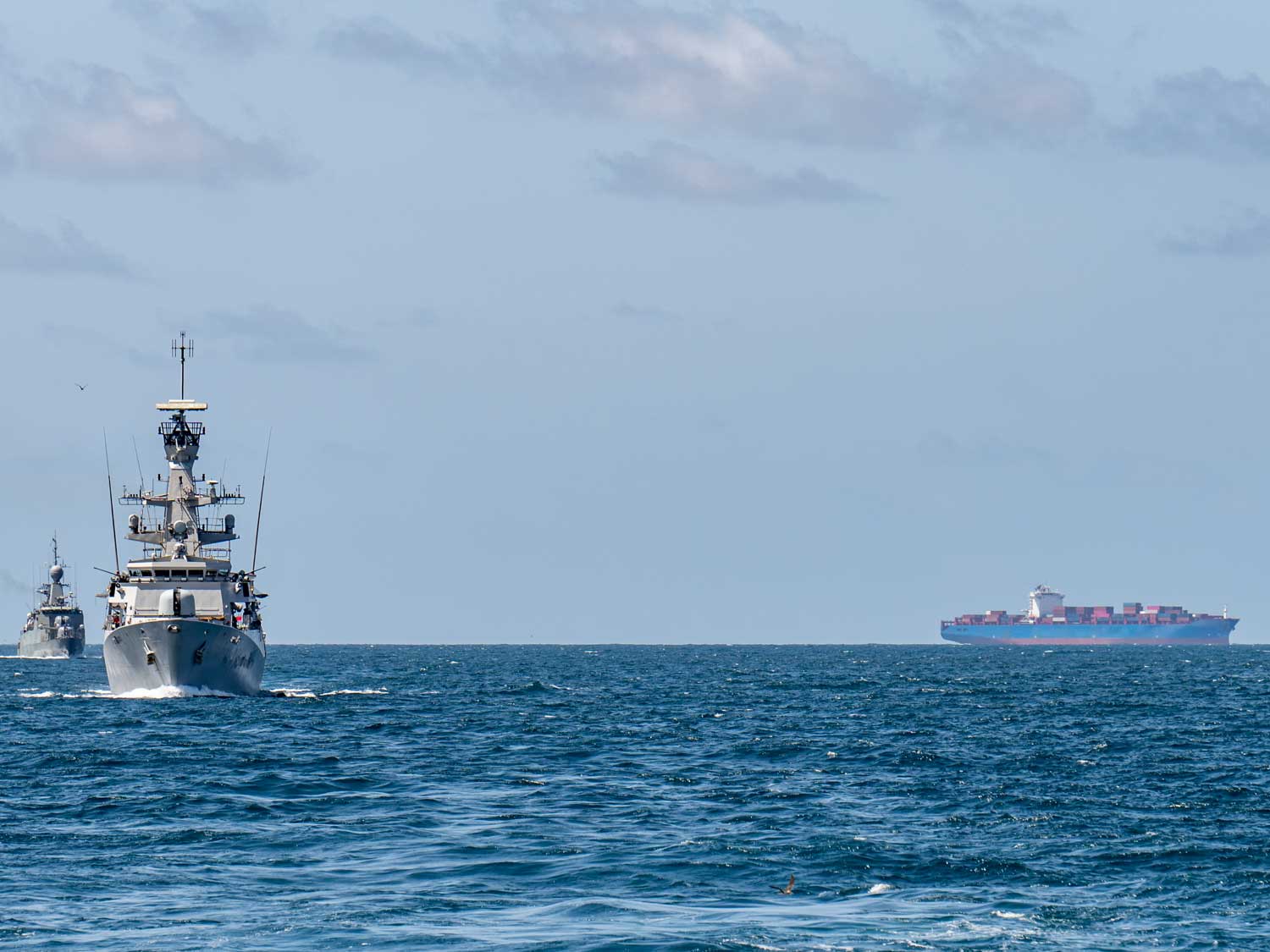
container ship and naval escort

Red Sea crisis; situation report

The UK Maritime Trade Operations (UKMTO) is already reporting multiple new Houthi attacks on vessels, following two missile strikes on the British registered general cargo vessel “Rubymar” on Sunday, which the crew had to abandon on Monday.

The Rubymar attack was followed by a merchant vessel being tracked by at least two drones and then a second attack in the Bab al-Mandeb strait, where a vessel was hit by a drone resulting in superficial damage to the superstructure.

The EU formally announced operation Aspides which will see at least four frigates being sent to the Red Sea to protect shipping in few weeks, but for now it is clear that despite the offensive posture of US and UK forces this has done nothing to reduce the frequency of Houthi attacks.

At the UN, China and Russia accused the US and UK of illegal military action against the Houthis, as such actions were not sanctioned by the UN Security Council. Interestingly it appears they are not complaining about Houthi and/or Iranian involvement, which is most certainly also not sanctioned by the UN Security Council.

It is quite clear that the Houthis have not been deterred by military action and maritime security is unlikely to improve anytime soon, with the ongoing war in Gaza and associated geopolitical tensions in the Middle East. The knock-on effects could take us well into 2024.

Rate movements 
With the pre-CNY surge now behind us, spot rate data shows Asia-Europe rates softening, but the pace of decline has slowed and while they might be 20% down on their peak in January, it is still 170% above the pre-Red Sea crisis level.

Similarly, Asia-Med rates, if they continue the present trajectory, have dropped over 20% on their peak, but are nearly 200% above pre-crisis levels.

On the Pacific both USEC and USWC spot rates have reached a plateau, but remain far above end 2023 levels and are not yet showing any material decline. 

Equipment
With the exception of a few isolated routes, the container shipping lines have largely been successful in managing the supply of equipment across their networks, but supply does remain tight in certain regions, including India.

The carriers are desperate to maximise revenue earning opportunities by avoiding any equipment availability problems, as the market settles into the new normal of transits around the Cape of Good Hope (COGH).

Vessel scheduling
After circumnavigating the African continent twice, the first of the containerships that diverted away from the Suez route have now begun to arrive back in Asia with substantial delays. 

These delays are challenging for carriers’ efforts to maintain weekly sailings from the Far East to Europe. At least two – and preferably three – extra vessels need to be added to each loop to guarantee all scheduled departures. 

For carriers, it is a ‘lucky’ coincidence that the return of the first batch of divert-ed ships falls in the traditionally ‘slow’ period after Chinese New Year, when shipping lines tend to blank a number of sailings. 

So far, only MSC and Maersk have announced a blank sailing program for the Chinese New Year period, with seven sailings voided to North Europe and four to the Med. 

Amidst the Red Sea crisis, global shipping schedule reliability decreased by 5% in December 2023, the largest monthly drop since February 2021 to 56.8%. It is inevitable that these figures will drop further as January’s COGH’s diversions are factored in, but they will then be expected to improve. At least until the Suez route reopens.

If you have any questions or concerns about the impact of the Suez situation on your Asia supply chain, or would like to discuss its wider implications, please EMAIL our Chief Commercial Officer, Andy Smith.

For questions about automotive supply chains, trade with the Middle East, Africa, Indian Sub and beyond, please EMAIL our Automotive team who are standing by to assist.

Questions or concerns relating to marine insurance and/or the Suez situation, or to discuss wider implications please EMAIL our Chief Finance Officer Laurence Burford.