FXT slave loading

Avoiding container demurrage and storage charges over the Platinum Jubilee

As the country prepares to celebrate the Queen’s record-breaking reign, with an extended bank holiday, we consider the potential penalty traps waiting to catch out the unwary shipper during the break and how you can avoid demurrage, detention and port charges.

Shipping lines and ports levy time-based charges, to encourage swift return of containers and to penalise for extended use, or port space used.

Avoiding demurrage, detention and port rent charges, are always a race against time, because the clock is ticking from the minute a ship docks, with inbound containers, or an exporter collects an empty container for loading.

And that clock keeps ticking through bank holidays, which could be critical over the 4 day, Platinum Jubilee. Freight movements and related costs do not stop for weekends, holidays or the arrival and departure of vessels or aircraft, regardless of the circumstances, unfortunately.

As always, we want you to avoid these unwelcome fees, which is why we recommend best use of any free period, by planning ahead, to ensure your documentation is complete and delivery bookings are confirmed and completed before the 2nd June.

The run-up to the extended bank holiday will be particularly challenging for hauliers and we would urge you to coordinate your warehouse slots and labour availability, with booked deliveries, to avoid mishaps and penalties.

For more information on how we can help you avoid demurrage and detention fees, please get in touch with our sea freight team. Led by Andy Smith, Metro's sea freight director, they can advise and recommend the best solutions to avoid unnecessary costs. Sharing your forecasts, will aid scoping and planning, to agree best progression.

Shanghai

Shanghai to return to normal in June? Let’s hope so…

Shanghai is aiming to reopen the city and business operations, with normal life resuming from the 1st June, as all 16 city districts report acceptably reduced ‘zero-COVID’ cases.

At a press briefing on Monday, Shanghai’s Vice Mayor announced that 15 of Shanghai’s 16 districts had recorded no new COVID-19 infections for two consecutive days, with all of the city’s 16 districts achieving zero-COVID the following day. 

The news comes as the city’s case count fell under 1,000 for the first time in over a month, with the vice mayor announcing a three-phase plan for reopening, which aims to return to normal business operations by mid to late June.

Supermarkets, convenience stores and pharmacies have opened, but movement curbs will largely remain in place until 21st May, to prevent a rebound in infections, with efforts to restore normal production and life in the city from the 1st June.

The number of trains serving Shanghai and domestic flights are increasing and from the 22nd May bus and rail services will gradually resume normal operations, but passengers will need to show a negative COVID test.

At the end of April reports suggested that 20% of the global containership fleet was caught in congestion outside ports, with more than a quarter waiting to get into Shanghai, leading to fears of a cargo ‘tsunami’ when the port reopens and pent-up container flows are finally released.

Increasing numbers of factories are operating under “closed loop production“ and most warehouses are open (though operating with reduced capacity) while - critically - more trucking is available, which means more cargo is able to be shipped from Shanghai.

While other cities implement varied COVID control policies, cargo collection and deliveries is still facing challenges and heavy cost, so please check with us on a case by case basis, for the best solutions.

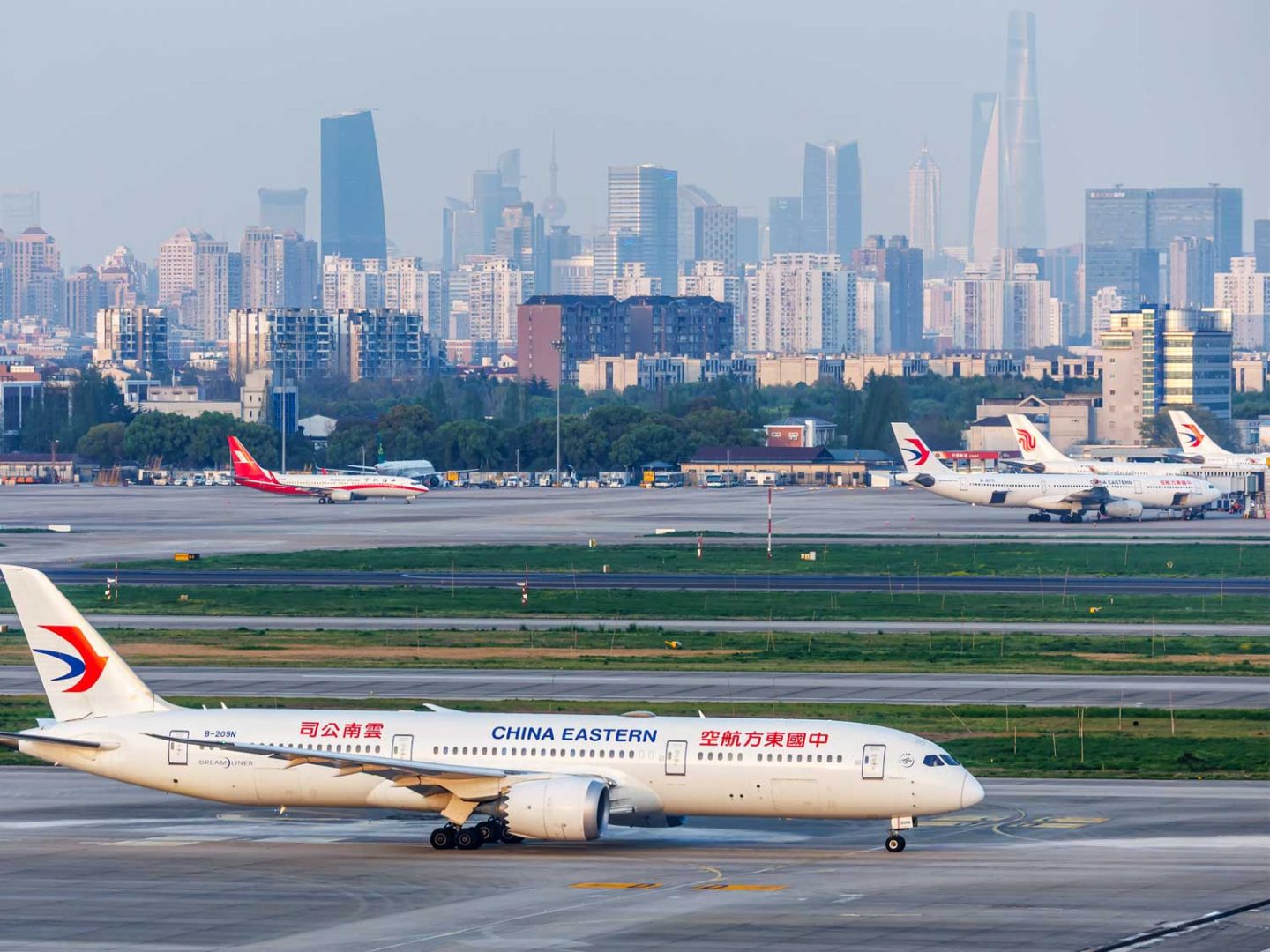
Flights serving Pudong (PVG) airport are resuming and are gradually increasing, but passenger flight policy has not changed, Chinese airlines are still re-routed to other airports, while foreign airlines are either ordered to suspend and cancel or reduce seating rate to 40%.  

China's severe zero-COVID restrictions are increasingly out of step with the rest of the world, which has been lifting restrictions even as infections spread, and are sending shockwaves through global supply chains.

China’s industrial output fell 2.9% in April from a year earlier, down sharply from a 5.0% increase in March and while economic activity has been improving in May, the strength of any rebound is uncertain due to China’s uncompromising “zero Covid” policy and the scale of future Covid outbreaks and lockdowns.

Beijing has been finding new cases almost every day, in an indication of how difficult it is to tackle the transmissible Omicron variant and while the capital has not enforced a city-wide lockdown it has extended guidance to work from home in four districts, banned dine-in service at restaurants and curtailed public transport.

We are working closely with our local partners to follow the evolving situation in Shanghai and Beijing and will continue to share any important developments.

With Shanghai’s lockdown lifting we anticipate the manufacturing bounce-back happening swiftly and we recommend checking the status of your orders with your vendors, to clarify when they will be manufactured and available for despatch.

We expect demand for space and spot/ FAK rates to increase very quickly and would suggest you start talking to us now about your potential requirements, so we can put appropriate plans in place.

With the long term fixed price and capacity agreements we have in place with our partner carriers we are well positioned to continue to deliver resilient, consistent and reliable supply chain movements as China recovers.

Our cloud-based supply chain management platform, MVT, simplifies the most demanding global trading regimes, by making every milestone and participant in the supply chain transparent and controllable, down to individual SKU level. 

To discuss how our technology could support your supply chain, please contact Simon George our Technical Solutions Director or Elliot Carlile.

Metro environmental focus not impacted by pandemic

Shipping lines act to support rates by cancelling sailings from Asia

Across the major shipping trade lanes a total of 56 sailings have been blanked over the next four weeks - so far - representing an 8% cancellation rate.

The halting of factory production, following the continuing lockdown in Shanghai, is resulting in a drop in export bookings from China, the ‘worlds factory’, of up to 40%, while numerous containerships are waiting at anchor off Shanghai port for berths and cargo to be loaded, many are waiting for orders from their head offices. 

Despite seemingly diverging in strategic direction, the carriers response to market conditions is to implement blank sailings, that will keep supply aligned with demand and therefore freight rates elevated.

Up to w/c 30th May The Alliance has announced 21 cancellations, followed by 2M and Ocean Alliance with 14 and 6 cancellations, respectively. That is a fair chunk of capacity to be withdrawn.

Drewry's Cancelled Sailings Tracker

Asia-North Europe freight indexes suggest that carriers efforts to increase bookings have had little effect and the impact on spot rate indices has been minimal and are in keeping with the usual situation in the period after the Chinese New Year and before the start of the peak season.

Industry consensus is that rates would stabilise, or soften slightly if demand keeps falling, before starting to pick up again towards peak season – and when China ‘opens up’ there could be a huge spike in demand – resulting in spot/ FAK rates rebounding back to 2021 levels very quickly.

The number of import containers arriving at the port of Los Angeles was down 20% this week, compared to last year, reflecting the fall in Chinese export bookings and reducing the waiting times for vessels to berth to 2.7 days.

Our sea freight experts have highlighted the threat of a surge of containers, that will follow Shanghai’s reopening. Their primary concerns is that any surge may arrive on the US west coast when the ILWU are still negotiating their new current labour contract, with the threat of industrial action leading to massive disruption.

Maersk, now the world’s 2nd largest container shipping line’s 1st quarter net profit was $6.8bn, with expectations for Q2 to be better still.

Maersk’s loaded volumes declined 6.7% over the quarter, compared to a global market volume decline of 1.2%, which points to a significant decline in market share.

MSC, the world’s biggest shipping line, remain in private hands and do not publish detailed financials, but their focus has been on massively growing the MSC fleet with acquisitions and new ship orders. 

How much this rush to become the biggest carriers has cost is impossible to know and we don’t know what capacity may be added to 2M services in 2023/2024, but there could be big implications for deployment, capacity and pricing. However it is reported widely in the trade press that this year is expected to be a huge year for the mainstream container shipping lines profits with $300 BILLION cited as the expected 2022 record return.

We are working closely with our network partners, carriers and own offices across China, to monitor the evolving blanking situation and find solutions for our customers, including time-sensitive shipments.

We maintain long-term contracts with a selection of shipping lines across all three alliances that secure space and rates, to provide the best alternatives and options, whatever the situation.

Metro aim to keep you advised daily of the latest developments in the industry, across all trade lanes, all modes and all methods of transport – always giving options and the best alternatives available. Please call Chris Carlile or Andy Smith for the latest advice and recommendations – bespoke and tailored services are what we deliver…

Shanghai port

China supply chain pressures relentless

Despite talk of restarting manufacturing and a tiered reopening of Shanghai and the surrounding province, the situation remains challenging and delays are increasing in Ningbo as the volume of cargo diverted from Shanghai continues to grow.

The Shanghai lockdown remains for a fifth week, with offices, workplaces, and public transport closed. Airport and container terminals remain operating, though restricted by the availability of transport to deliver and remove cargo, along with manpower and access issues caused by the current related restrictions.

Drivers are still subject to daily PCR testing (with additional ad-hoc testing imposed at short notice) and Shanghai and local road permits are required to enter cities in Jiangsu province and the local permit must be applied by the exporter, it can’t be the agent or haulier.

A number of major airlines continue to serve Shanghai, but restrictions limiting transport to and from the airport mean that cargo is diverting to other airports in the region and beyond.

The current issues look likely to remain until mid-May, at the earliest. In the meantime our team are re-routing cargo where it is possible and cost-effective, ensuring all available options are utilised.

Shanghai container terminals, in Waigaoqiao and Yangshan, operate as normal, but again they are affected by local transport availability and terminal handling capacity is limited due to availability of workers and COVID-safe working.

The situation is being further impacted by blanked sailings, delays, and longer waiting times, though the availability of ISO tank containers is improving and some carriers have lifted a stop on bookings for dangerous goods cargoes.

When transport can be allocated we continue to move FCL cargo through Shanghai ports, with the option of diversion, when appropriate. Though with increasing quantities of cargo diverting from Shanghai and Zhejiang province, Ningbo has become very congested and the announced blank sailings will very likely worsen the situation.

With Beijing expected to be the next major lockdown area, Shanghai is unlikely to see any relaxation of the rules and the "zero-virus’’ approach is likely to be pursued until the very end, which could be throughout the rest of 2022 in some form.

Guangzhou is on the COVID watch list, with the city’s airport, which has been handling large volumes of cargo diverted from Shanghai, cancelling all domestic flights due to suspected cases.

Local areas in Shenzhen are operating under different measures with factories and offices open or closed, based on the local conditions. Air and ocean facilities are operating, but the situation for local transport capacity and availability varies and drivers require a cleared 24 hours PCR test. The situation is very dynamic and changing daily with localised interpretations of regulations and requirements.

Cross-border trucking between China and Hong Kong is still struggling with capacity limitations due to long waiting times for control and restrictions. Large volumes of cross-border traffic continues to be transported by feeder services.

Reduced land-side trucking capacity continues to be a limiting factor, with significantly reduced capacity available for cargo collections and deliveries, which means factories may not meet planned delivery schedules.

We will continue to closely monitor the situation and update you as changes occur, but we do recommend checking with your vendors, to clarify the status of your orders, and whether they have actually been manufactured.

When China does begin to lift lockdowns it is not inconceivable that the manufacturing bounce-back could happen within weeks, as the government will be very focused on getting production up and running again. It is widely understood that this could have a serious impact, particularly if it coincides with the start of the traditional ‘peak season’. Spot/ FAK rates are expected to head north very quickly, as demand returns through product being made and logistics loosening up internally, within China’s transport systems.

We hope to see supply chains start to flow freely again quickly, as the pent-up demand for delayed goods could quickly create congestion, if operations are not running optimally. With the long term fixed price and capacity agreements we have in place with our partner carriers we are well positioned to continue to deliver resilient, consistent and reliable supply chain movements throughout the year. This has been our recommended model during the pandemic and continued challenges experienced over recent months.

Metro’s cloud-based supply chain management platform, MVT, simplifies the most demanding global trading regimes, by making every milestone and participant in the supply chain transparent and controllable, down to individual SKU level. 

To discuss how our technology could support your supply chain, please contact Simon George our Technical Solutions Director or Elliot Carlile.