Coronavirus update 24th March

Low speed containerships are propping up rates

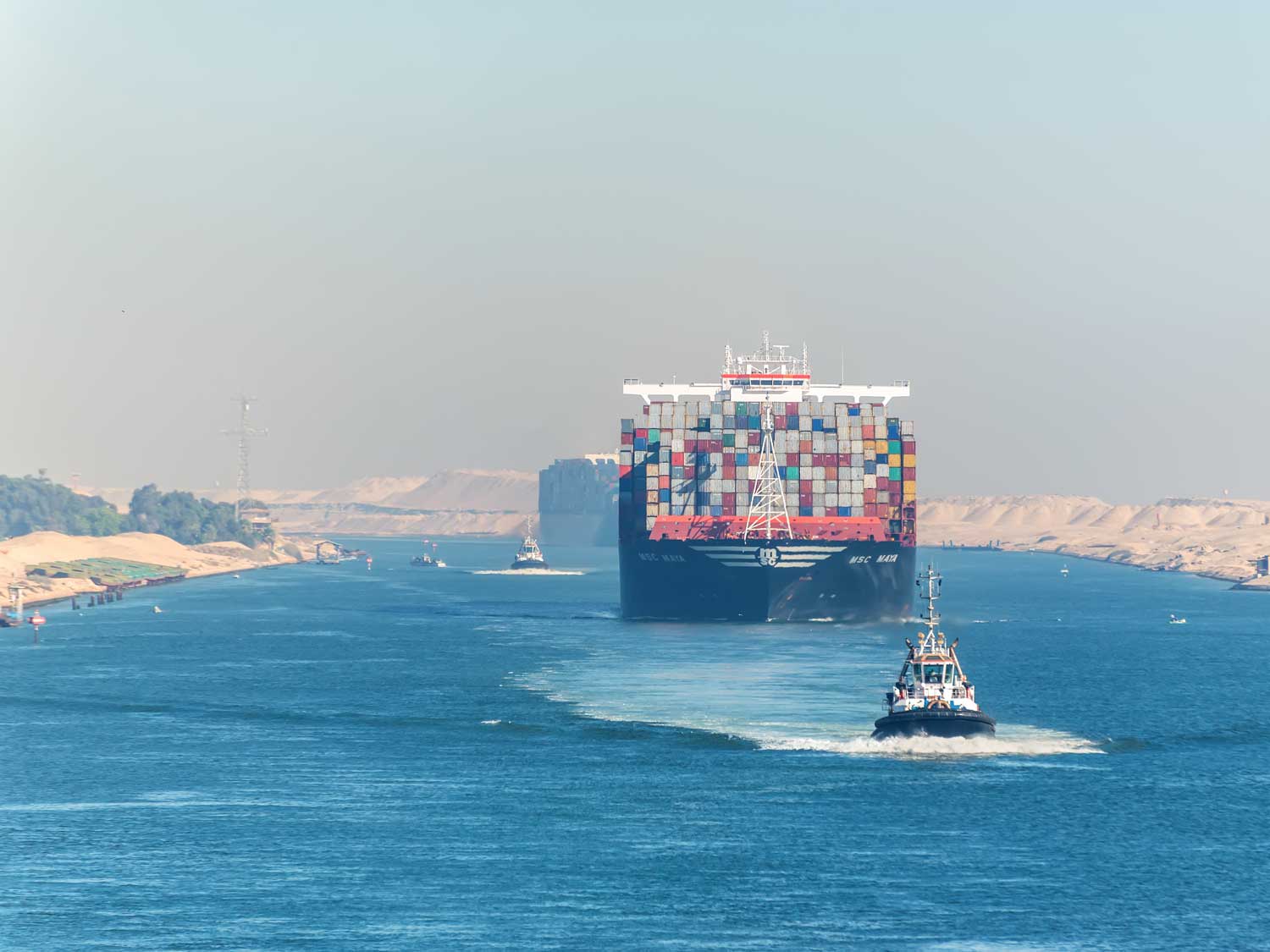
Last year the shipping analyst Drewry’s forecast that the container shipping lines earnings would be down 64% for 2023, but added that there were strategic choices available to the carriers, to protect their revenues, with slow steaming a proven method of removing capacity, to protect rates and comply with environmental regulations.

In the first quarter of 2023, the global container fleet accordingly moved at all-time slow speeds, with analysts suggesting that vessels could go slower still which, despite massive falls, will help carriers keep rates higher than pre-pandemic levels.

During the covid pandemic the container shipping lines increased average sailing speed by 4% to meet strong demand and create spare time, because of widespread port congestion. 

In the first quarter of 2023 the average sailing speed has come back down 4% year-on-year and could drop a further by 10% before 2025, to absorb capacity that would otherwise be surplus. 

Across the global container fleet average speeds went down by about one knot, in the last two years, which does not sound like much, but Alphaliner data shows that is about 6% slower overall, which means you need proportionately more tonnage to carry the same cargo volume. 

For the past couple of decades carriers have adopted slow-steaming whenever there is structural overcapacity or high fuel prices - or both - as is the current situation.

At the same time the shipping lines have ordered record amounts of new vessels and additional capacity is now being delivered into a market with minimal demand growth, new environmental regulations, carbon taxes and rising fuel prices.

Maersk and MSC announced last month they would be adding nine new vessels into the Asia-Europe trade, but that these services would be moving up to three days slower than before, thus absorbing all the new capacity. 

As part of plans to conduct field tests of an onboard carbon capture system (OCCS) for container ships in 2024, South Korea’s HMM will replace the propellers on six of its containerships with more efficient ones specially designed for slow steaming, with HMM also expecting to increase energy efficiency by 8-9%.

The transition to new fuels such as LNG, methanol and ammonia also favours slow speeds, since these fuels will be much more expensive than current ones, which makes sense to deploy extra ships and save fuel.  

Despite a 70-80% fall in freight rates over the last two years, and a worsening of the supply/demand balance, it is quite clear that the container shipping lines have been successful in matching capacity to cargo demand, in keeping rates higher than pre-pandemic levels.

Slow-steaming and evolutions in shipping alliances change competitive dynamics on all the major trade-lanes, which is why we stay close to our carrier partners and contacts, to keep track of changes and identify opportunities for our customers.

If you have any questions or concerns about the developments outlined in this eBulletin, please EMAIL our Chief Commercial Officer, Andy Smith, for the latest insights and intelligence.

coronavirus threat to car industry

Long-haul RoRo schedule disruption continues

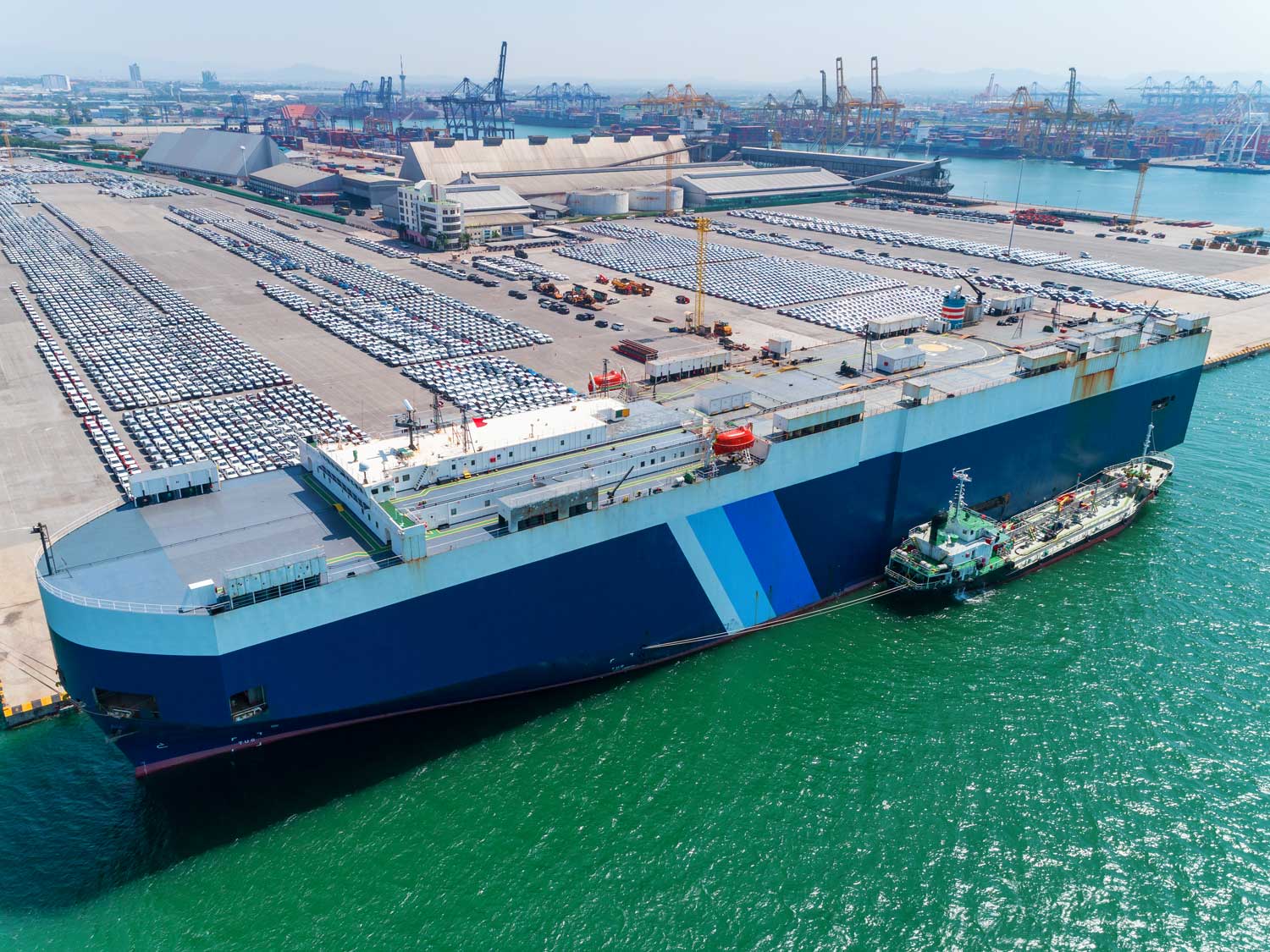
Specialised RoRo car and truck carriers are facing multiple challenges, which are causing congestion and delays at ports in Europe, China, South Africa, the US and Australia.

Driver shortages in the UK and Europe mean that some importers struggle to collect their cargoes from ports as quickly as usual, with terminals experiencing longer cargo dwell times, which may be due to a variety of underlying issues such as warehouse capacity, which create bottlenecks.

The movement of cars at ports around Europe, particularly Southampton, Koper and Zeebrugge (now called Antwerp-Bruges), are suffering with space issues, caused by these driver shortages and exports are delayed by a lack of ro-ro vessel space.

Antwerp-Bruges insists that car terminals in the whole of Europe are experiencing congestion, but it is not closed for new cars, with additional sites being made available to the automotive sector, and more sites added in accelerated development.

While the Port of Zeebrugge is still facing significant terminal congestion and delays, vessel operators continue to seek secure additional berth slots, labour to load and discharge cargo, and storage space.

One of the major contributing factors to the congestion has been what the port of Antwerp-Bruges called the “bullwhip effect”, where the pandemic delayed production due to a shortage of semiconductors, which increased substantially following the post-COVID recovery.

But the major cause of congestion has been the trucking sector, with a lack of drivers a major concern as well as the decline in the number of companies operating car-carrying vehicles.

Southampton in the UK and the Slovenian port of Koper, in the Adriatic, are also experiencing congestion, particularly with exports. Southampton’s vessel schedules were disrupted during the summer cruise season last year, partially due to labour shortages and operators are working closely with the port to try and avoid a repeat.

Koper exports cars, farm equipment and construction vehicles for Central and Eastern Europe, including Austria and Hungry.

At Southampton, delays of up to 18 weeks have been experienced for some export vehicles, while in Australia imports can be delayed by checks at ports for unwanted/invasive organisms, which can take up to three weeks.

Delays to schedules mean some long-haul carriers may skip ports to make up time, which further exacerbates delays.

Metro is increasingly shipping cars in containers to avoid the wait for delayed RoRo services, which have seen freight rates spiral due to congestion and shortage of space.

Standard 40’ containers can accommodate two large cars, properly secured and, with a rack, four small vehicles can be loaded which, with container rates comparatively low, offers massive efficiency gains and costs that are in line with historic RoRo levels.

Port to port freight costs are significantly lower, but inland rates are higher for container movements, which is what brings the costs up.

The increase in the export of cars from China (reported in this week’s eBulletin) has added to the congestion challenges, with increased demand for vessels to handle the increased volumes.

Metro has specialised in the automotive, construction and agricultural vehicle sectors for over four decades, working with many of the most respected and established global brands, to coordinate the end to end movement of vehicles and machinery around the world, by RoRo and container services.

Long-standing partnerships and volume agreements with the leading RoRo, PCTC and container shipping lines means we can offer the widest choice of services, routes and solutions for automotive, truck and knocked-down-vehicle movements.

To learn more, or to discuss our automotive capability, EMAIL Ian Tubbs.

empty container

Dealing with shipping container condensation

Over 200 million shipping containers are transported globally every year, with the vast majority moving through different climate zones, which can create condensation in the container and lead to many kinds of damage. 

Considerable temperature fluctuations can occur inside freight containers during transport and storage and since warm air can absorb more moisture than cold air, drops in temperature in closed freight containers may result in the formation of condensation, which can result in corrosion and rusting of steel cargo, mould on packaging and goods, damp packaging and detached labels. 

Condensation in containers manifests itself in three primary ways: 'container rain’; 'container sweat’; and 'cargo sweat’, with an estimated 10% of containerised traffic experiencing moisture-related issues.

Container rain is when water on the interior surfaces of the container, concentrates and falls directly onto the cargo, while container sweat usually occurs when container walls cool and cargo sweat usually occurs when air in the container heats up faster than the cargo, with condensation forming on the surface of the packaging.

The amount of condensation in a shipping container varies widely depending on many factors, including container usage, temperature, air space, ventilation, and the moisture content of the goods being shipped. 

While it’s impossible to prevent moisture buildup entirely, there are several ways to control condensation, with ventilation and load space critical, because when the difference between internal and external temperatures is small, condensation won’t form as readily and when a container is filled there is less air to hold moisture.

However, if the shipping container is transported in mostly wet and humid conditions, ventilation can pull moist air from the outside and encourage condensation. In these cases we would recommend improving the insulation of the cargo and using desiccants to absorb excess water from the air.

Desiccant bags can be hung from the ceiling and along the walls to help reduce the moisture in the air and make condensation less likely to form on the walls of the container. While desiccant blankets are hung over the goods to prevent condensation from forming and protect products from water droplets and desiccant pads lay below goods (typically liquids) to soak up leaks or extra moisture.

Countering the formation of condensation during container transport depends on a multitude of factors, including the nature of the goods, the climatic zones transited, the size of the container, the weight and moisture content of the goods, the packaging and transport duration.

To a certain extent, shipping container condensation is inevitable, but because we have years of experience keeping containerised goods safe and dry, that doesn’t mean it has to damage your cargo. 

Our sea freight team have direct experience in the management of container equipment and work closely with our shipping line partners to ensure that containers are ventilated adequately and that they are free from damage.

If you have questions or concerns on any of the issues raised here, or have specific supply chain challenges, EMAIL Andrew Smith who can advise on the effectiveness of desiccants, humidifiers, alternative packaging and insulation for different types of cargoes and geographies.

Shanghai port

Asia to Europe freight rates may mirror transpacific price increases

European importers from Asia are nervously watching developments in the US, as transpacific carriers succeed in implementing GRIs, increasing shipping rates to the West Coast, in a move that may be repeated on the Asia to Europe trade lane.

The Xeneta Asia-US West Coast index increased 39% last week, while the Baltic Index jumped 71%, and the container shipping lines are planning another wave of transpacific GRIs on the 1st May.

Hapag-Lloyd, CMA CGM, Evergreen, ONE, Zim and Cosco have announced GRI of $1,000/40’, while HMM plans to levy $2,000/40’.

JOC reported that there are indications that West Coast container volumes may be rising, while vessel wait times has increased at major US ports in recent weeks and with spot rates increasing for the fourth consecutive week, the market may have passed the bottom of the market.

The transpacific shipping lines regularly impose increases at this time of year, to increase base rate levels, ahead of annual contract negotiations with their biggest volume (BCO) shippers.

The lines are likely to roll out monthly increases ahead of the peak season and to help these GRIs stick, they will keep capacity tight by continuing to blank sailings.

On the Asia-Europe trade-lane, shippers should be bracing for GRIs for shipments from Asia from 1st May, with space already tight and carriers rolling cargo, particularly low-rated heavy containers.

Despite some blanking success from Asia to Europe, with rates stabilising over the past few weeks, getting GRI’s to stick against a backdrop of weak demand will be difficult and it only needs one of the smaller lines to start offering discounted rates for market share, for the GRI to collapse.

On the Asia to Mediterranean lane, rate indexes moved up 6% last week, while on the transatlantic rate erosion has continued, with Europe to US East Coast indexes down 5%.

We negotiate long-term and FAK contracts with shipping lines across all three alliances to secure space and rates that provide the best alternatives and options, whatever the situation.

To learn how we can support your East-West, transpacific or transatlantic trade EMAIL our Chief Commercial Officer, Andy Smith.