Long Beach 1

The transpacific container shipping outlook

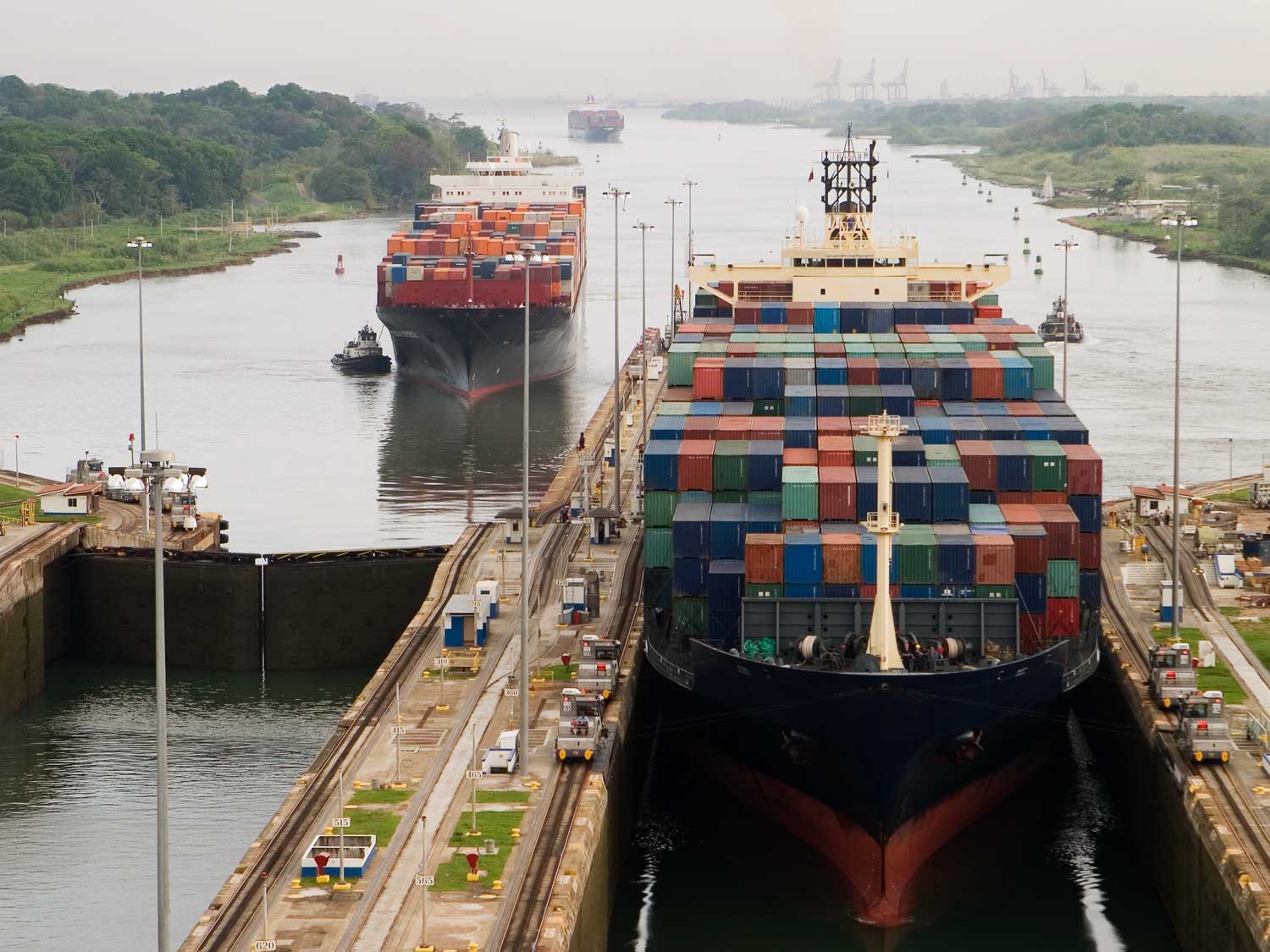
Transpacific container shipping lines are imposing surcharges and higher freight rates due to the ongoing Suez and Panama Canal disruptions, with the cost burden felt most by small volume shippers, but the biggest cargo owners are also feeling the heat. 

Since the major container shipping lines began diverting vessels around Africa’s Cape of Good Hope in mid-December, spot container rates have, on average, doubled globally.

Shipping lines have told the US government that the longer transit around southern Africa increases the distance a container ship travels from Asia by about 3,300 nautical miles. Resulting in an additional five to 16 days of transit time depending on the destination.

Along with the higher operating expenses of a 40% longer voyage, the lines argue that they need to rewire their entire global network. Which means making schedule changes, adding ships to maintain weekly port calls on a service loop and repositioning containers, all of which point to higher costs for carriers.

The sudden and sharp increase in ocean freight costs came as the market was expecting normalised demand and a surplus of new ships to keep freight rates suppressed during 2024.

Since the unfolding of the Red Sea crisis, and the drought impacting ship transits on the Panama Canal, carriers have levied an array of surcharges, but the surcharges are not being widely applied to BCOs, as they often have protections in their contracts, and mostly carriers are honouring those protections.

But ocean carriers are now looking for ways around those protections. In January, the FMC granted waivers to its 30-day notice period for adding new surcharges, allowing carriers to immediately add the charges due to the urgency of the Red Sea security situation.

A poll of the biggest shippers, beneficial cargo owners (BCOs) found that only 35% of them are having laden containers accepted under their original contract terms, with the vast majority being pushed to FAK [freight-all-kinds] spot market rates, which include added surcharges.

BCOs in the United States believe that ocean carriers have been targeting certain customers for higher rates and surcharges, pushing them towards FAK spot rates that are 400% higher to the US West Coast and 300% higher to the East Coast, for cargo loading in the second half of January.

Many major BCOs with volume commitments above 60,000 FEUs annually are still paying their contracted rates, which suggests an unwillingness by the transPacific shipping lines to upset their largest customers, particularly for gains that may be short-term.

Ocean carriers including Maersk, Hapag-Lloyd and CMA CGM are also using emergency clauses to say they cannot fulfil existing contracts under current terms, requiring shippers to pay surcharges to move their freight.

While ocean freight rates are nowhere near the highs experienced during the pandemic, increases are not just being applied to directly impacted cargo, but also to other routes, because of equipment availability, with shippers often subject to “emergency operational surcharges” on various trade lanes due to the Red Sea crisis.

The impact of Suez-related surcharges and rate hikes on shippers will be the focus of a Federal Maritime Commission hearing this week, to ensure the new fees and surcharges actually cover real costs and are not intended for profit.

We negotiate long-term and protected contracts with shipping lines across the alliances to secure space and rates, so that we can provide the best alternatives and options, whatever the situation.

To learn how we can support transpacific trade, or to learn more about our ocean and air solutions, please EMAILour Chief Commercial Officer, Andy Smith. 

marine insurance

Red Sea Crisis insurance withdrawals – fact or fiction?

In addition to fast-rising ocean freight rates and extended transit times, as the container shipping lines divert around Africa, shippers have been struggling to understand what (if any) insurance is in place, with insurance companies massively increasing war risk premiums and no longer willing to cover Red Sea voyages. 

In this constantly shifting situation it is critical that shippers understand what insurance covers are being referred to in current news report and what this means for their cargo.

As with all markets impacted by the Houthi rebel attacks the insurance market is changing almost daily with rumours and facts being thrown around in equal measure.

Insurance has been impacted like all areas of the supply chain, with costs increasing as the risk increases. This is true of hull insurances (to protect the vessel), as it is with the general war risk cover applied to marine cargo policies.

For those unfamiliar with insurance and when and how they apply, goods in transit insurance covers cargo against loss or damage whilst being transported from one place to another, or being stored during a journey.

If you are shipping goods by sea for example, you would take out marine cargo insurance which can be written on an annual basis, or purchased for individual shipments.

NOTE – Marine insurance is not included within the freight charges and agreements. 

For marine cargo insurance to be in place, with cover applicable to your goods, you need to specifically request insurance with a separate premium being payable.

Marine cargo insurance is different to marine hull insurance, with the latter covering the cost of repairs or replacement of the vessel, in the event of any loss and/or damage.

Hull insurance is typically purchased by ship owners, boat owners and charterers to protect against a range of risks associated with owning and operating vessels.

War risk cover, which provides insurance on losses resulting from events such as war, invasions, strikes and terrorism can be included within these policies or be purchased separately from specialist markets.

Insurers across the markets all take individual approaches to what cover they are applying, or withdrawing as the case may be.

Ships and vessel owners are being hit with high insurance premiums with reports that some insurers are refusing to cover vessels against war risk in the key commercial shipping corridor through the Red Sea.

For Lloyds insurers, their Joint War Committee has widened the areas in the Red Sea that are categorised as “high risk”, with war risk insurance premiums for vessels intending to sail through such areas rising from 0.07 to 0.7% – that’s a 900% increase in a month.

With the potential removal of some covers, including war risk cover, this can dictate the need for specific routes on the movement of goods. Whilst it may be reasonable for ship owners to request that routes through the Rea Sea be avoided, on a commercial basis, due to safety concerns. As a shipper you need to make sure that your insurers are comfortable with the changes and that the level of risk and cover you have is still sufficient to protect your cargoes.

Shipping around the coast of Africa also has its own complications, with the return of piracy off the coast of Somalia.

If you do find your insurer or insurance team changing or amending your policy and you need some advice in understanding what options are open to you, please do not hesitate to EMAIL our Chief Finance Officer Laurence Burford who will be happy to assist where possible.

There may be alternative insurance products that could protect your business more effectively in this ever changing world, but their merits need to be reviewed on a case by case basis with varying factors impacting cost and availability.

It is important to note that the surcharges that are raised by shipping lines during a time of war or crisis, despite how they may be worded, do not cover risks for the value of cargo moved on vessels.

These surcharges are designed solely to recoup additional costs incurred by the ship’s owner and/or operator, including higher insurance premiums for potential damage or destruction of a ship, and not for the container contents stowed on-board.

If you have any questions or concerns about the insurance related to the Suez situation, or would like to discuss its wider implications please EMAIL our Chief Finance Officer Laurence Burford.

Should you wish to obtain a quote on a particular insurance product please provide as much information as possible where known including but not limited to cargo type, cargo value, route, vessel details and such.

Maersk

The Gemini Cooperation

On the 17th January 2024, the 33rd day of the Red Sea crisis, Maersk and Hapag-Lloyd announced that they were forming a new shipping alliance – The Gemini Cooperation – in a major shake-up to the container shipping market on the East-West trade lanes.

Industry analysts have been predicting that with 2M’s demise already in the works for 2025, the remaining alliances would be breaking up over the coming year and we would see a new alignment of partnerships on the east-west trade.

Hapag-Lloyd will exit THE Alliance and link up with Maersk in February 2025 after the dissolution of the 2M Alliance, to form the Gemini Cooperation’

Operating a combined fleet of 290 vessels (equivalent to 3.4 million TEUs) Gemini will cover seven global trades, including coverage of the Europe – Middle East and Indian Subcontinent trades, besides the East-West trades.

Gemini’s network will be structured around 12 ‘hub-and-spoke’ terminals in Asia, EMEA, North and South America, from which Gemini will offer 26 mainline services, with schedule reliability in excess of 90%, a level that would differentiate Gemini from other alliances.

This leaves ONE, Yang Ming and HMM in a very vulnerable position, potentially unable to build a network matching those of the Ocean Alliance, MSC and Gemini.

The pressure is then on these three carriers to either lure a new partner out from Ocean Alliance, or re-invent a new service concept.

But, with the playing field having changed so radically the pressure is also on Ocean Alliance members CMA-CGM, COSCO and Evergreen, who will be asking themselves whether the current alliance setup is still fit for purpose or whether a new partnership might be better.

Additionally, the removal of the EU anti-trust exemption by the end of April 2024 could add to the pressure on Ocean Alliance as they will be significantly larger than the other groupings, and could well become the focus for competition authorities if they have a political need to show action following the exemption removal.

While Maersk and Hapag-Lloyd will be part of the Gemini partnership for three years, after which a 12-month notice period will be required, Alliances tend to have a lifespan of roughly 5-8 years, which means the re-calibration we see now is most likely be the shape of the market on the East-West services into the early 2030s.

If you have any questions or concerns about the Gemini Cooperation, or would like to discuss the wider implications of the shipping alliances, please EMAIL our Chief Commercial Officer, Andy Smith.

RoRo PCC

Car carrier and RoRo review

The large scale shift of finished cars to container shipping, due to roll-on/roll-off (Ro/Ro) capacity restraints may be faltering as the Red Sea diversions have sent Asia-Europe spot rates surging and increased transit times by 10-14 days.  

The disruption of the container shipping option that so many manufacturers have been relying on compounds the challenge for vehicle shippers as the global Ro/Ro fleet is also being diverted from the Red Sea to sail around southern Africa (with the transit and cost increases) to avoid Houthi militant attacks.

The Houthis seized the Japanese chartered Ro/Ro carrier Galaxy Leader in mid-November, and several other vehicle transporters have subsequently been threatened with hijack and missile strikes.

While some RoRo vessels had continued to transit the Suez Canal, under escort from their navies, they have all now made the decision to avoid the Red Sea entirely until maritime security has been restored.

Container spot prices may have risen for vehicle shipments from Asia, but the rate of increases have already slowed and are likely to become more attractive in the post-CNY lull.

Over the course of the year the size of the new container ship order delivery book is so significant that the massive increase in capacity could easily put downward pressure on rates, particularly as networks adjust to the Red Sea disruptions.

The share of container capacity on order versus capacity on the water was 26% as of December, which will be good news for those manufacturers that want to ship cars in containers cost-effectively.

Last year, the global car carrier fleet totalled 760 ships, with 77 vessels on order and roughly 70 due for delivery in 2024.

In total Ro/Ro carriers have new-build vessels on order equal to about 30% of the present fleet, with vessel deliveries scheduled to begin mainly after 2024, but they’ll primarily offset retired tonnage rather than expand fleet capacity.

If you would like any further information or have any questions or concerns about your Automotive supply chain, your export logistics platform into The Middle East, Africa, Indian Sub and beyond or any of the content and developments outlined here, please EMAIL our Automotive team who are standing by to assist.