KLM Boeing 787 10 Dreamliner

Government committed to SAF

As part of the UK’s net zero commitment the government is supporting a variety of technology, fuel and market-based measures to address aviation emissions, with particular commitment to sustainable aviation fuel (SAF).

The government recognise sustainable aviation fuel (SAF) as crucial to efforts to decarbonise, and they want the UK to be a global leader in its development, production and use. 

In 2023 the government launched their £165m Advanced Fuels Fund to support the development of commercial scale SAF plants within the UK.

In March, the UK Government announced a significant package of SAF developments:
- Publication of the second SAF mandate consultation
- Outlined the scheme that will seek to generate demand for SAF
- Provided an incentive to SAF producers
- Launched a further round of the Advanced Fuels Fund, with a further £55.8m to support UK SAF projects through to construction

£113m has been co-invested by government and industry to support hydrogen and battery electric flight zero emission technologies through the Aerospace Technology Institute (ATI) programme, in addition to £4.2m of funding for the Zero Emission Flight Infrastructure (ZEFI) Project.

Although hydrogen has the potential to accelerate the aviation sector’s journey to net zero, challenges remain regarding accessibility and costs and industry cannot wait for its implementation, which is why SAF remains key to reducing aircraft emissions.

In April, Sustainable Aviation’s road-map confirmed that UK aviation can continue to grow whilst meeting its commitment to net zero carbon emissions by 2050 and their modelling suggests around 40% of emissions could be removed using SAF.

By the end of 2023, the government will publish their response to the second SAF mandate consultation and support Virgin Atlantic to successfully operate the world’s first transatlantic flight on 100% SAF, from London to New York.

In 2025, they will bring the SAF mandate into force and complete the funding period for projects supported by the Advanced Fuels Fund.

Metro has been carbon-neutral for several years and is committed to extending this zero-emission strategy as far down customers’ supply chains as possible, which is why we became the first forwarder to join and invest in the Air France KLM Martinair Cargo SAF programme in January.

Metro believes that moving away from conventional fossil jet fuels to alternative fuels is the most achievable way to obtain sustainable net zero flights, but it is essential that these fuels are manufactured in the UK to keep fuel costs affordable for businesses and to ensure availability of product to meet demand.

We welcome the awards by the government’s Advanced Fuels Fund to five projects that are developing commercial scale plants that use a range of technologies to convert black bin bag waste, industrial gases and CO2 into SAF. 

Metro is achieving CO2 neutrality by measuring, reporting and offsetting our CO2 emissions and the same ECO technology we use is available ‘free of charge’ to our customers. EMAIL Ian Powell, to learn more.

plane climbing

Market upturn for air freight

Air freight spot rates have risen steadily since August on major Asia outbound lanes and while there is no significant peak season the market is definitely tighter, with global rates and tonnages stabilising after China’s Golden Week.

There is a perceptible uptick in air cargo rates, which is more pronounced than normal and while it may not suggest a major shift in the market, there is definite tightening from week-to-week and from lane-to-lane, particularly from Asia.

Market data for October shows a 2% increase in air cargo demand, which followed earlier increases that reversed the traditional drop triggered by China’s Golden Week holiday. The increase comes as cargo capacity growth slows, with global belly capacity returning to its pre-pandemic level.

Global air cargo spot market rates rose 2.9% in October and while rates were down 30%, on the year, they remain well above pre-Covid 2019 levels, supported by premium and special cargoes. 

China to Europe spot rates climbed 14% month-over-month in October, while Southeast Asia to Europe spot rates rose 9% and spot rates from Europe to the US were up 7%. The traditional decline in cargo capacity began last week, as seasonal passenger schedule adjustments remove belly-hold capacity from key trade-lanes.

Air cargo space from Asia to North America is under pressure as strong eCommerce demand outstrips the slow return of passenger flights and the essential belly cargo capacity they add. With spot rates from China to the US rising 10% in October and 15% from Southeast Asia.

Dynamic global load factors reached 59% in October, which is its second-highest level of the year, while Trans-Pacific load factors reached 89%. This is close to levels seen at the peak of the pandemic and means that any sudden increase in demand will see space squeezed very quickly. 

The major eCommerce companies in China are buying up space, with November online shopping promotions looming and much of any available air cargo space will go towards moving sales from Singles Day, Black Friday and Cyber Monday.

While there may be no clear sign of any significant fourth-quarter peak season, there is a definite tightening in the market, which means it is critical that pending air freight shipments are scheduled at the earliest opportunity, to secure space and the best available rate.

For valuable, special and time-sensitive cargoes there has never been a better time to use air freight, with extremely competitive rates and really interesting service and route combinations.

We have solutions for every critical shipment, please EMAIL Elliot Carlile for insights, prices and advice.

BHX

Positive developments at our Birmingham hub airport

Metro have worked in a strategic partnership with Birmingham Airport for almost 10 years and its importance as an air cargo hub and global gateway for the Midlands, has been further underlined by critical ground-handling investments and pending China freighter services.

Metro’s partnership with Birmingham International Airport reduces lead times and carbon emission’s, while increasing schedule reliability and enhanced air services and ground-handling capability further boosts this success. 

The scale and efficiency of the airport and cargo handling operations at Birmingham, together with our long-standing strategic partnerships with these operators, enables us to process and collect cargo very quickly after aircraft arrival, avoiding the delays and congestion experienced in peak periods at other UK hubs.

The scope of the airport’s handling capability has been further enhanced by a key ground-handling partner, Swissport, who have installed a main deck loader to accelerate the loading/offloading of freighter aircraft, which will be particularly valuable for the impending China services.

Enhanced relations with the ground-handling operations mean that additional value added services such as cargo packing, palletisation, SKU sortation can take place at the airport rather than transit through off airport.

Three major Middle-Eastern airlines are enhancing the airport’s connectivity to the region’s strategic air hubs, with Emirates’ iconic A380 ‘superjumbo’ serving Birmingham twice-daily from Dubai, while Saudia, the flag carrier of Saudi Arabia, operate thrice-weekly flights to and from Jeddah and Qatar Airways running daily services to Doha.

In in addition to the daily wide body flights from Qatar Airways, scheduled Saudi flights and enhanced Emirates service, Air India and Turkish Airways have also increased services.  

Metro are able to offer time critical ‘JIT’ services through the airport where freight can be transferred in minutes rather than hours from aircraft to the road. Additional customs formalities such as ATA carnets are handled swiftly and efficiently. 

Birmingham International is the UK’s fastest-growing airport and our central air freight hub, with proximity to major clients and manufacturing regions, for speed of first/final mile logistics and 90% of the UK population within a few hours drive.

For further information on our air freight and BHX gateway solutions please EMAIL Andrew Brooks.

Ben Gurion

Air cargo delays and ocean carriers announce Israel war risk surcharge

While sea freight traffic is largely operating without significant issues, the conflict in Israel is impacting airfreight to the country and the surrounding region, with many carriers’ services subject to cancellation and delay.

Many airlines have suspended direct flights to and from Israel, with many international aviation authorities avoiding the region’s airspace, and no bookings on the affected routes.

Israel represents a relatively small market for container shipping, and few vessels stop at its primary ports of Ashdod and Haifa, so the threat of disruption to container trade flow through the Mediterranean region remains limited.

Ashdod, one of the country’s largest ports, is continuing to operate normally 24/7, with employees working longer shifts, because the military has recruited 10% and the remaining staff must fill the gap.

While international airlines have temporarily suspended flights to and from Tel Aviv, the airport remains open, with domestic carriers still providing services and alternative cargo options, but these are very limited.

Etihad Airways is currently operating its daily flight schedule to and from Tel Aviv but they are monitoring the situation minute-by-minute. Turkish Airlines services from Istanbul to Tel Aviv appear to be operating normally and some integrators have resumed their flights.

No special measures or guidelines have been handed down to Israeli ports, which remain in contact with shipping companies and for now keep moving cargo and goods through the ports without any significant disruption.

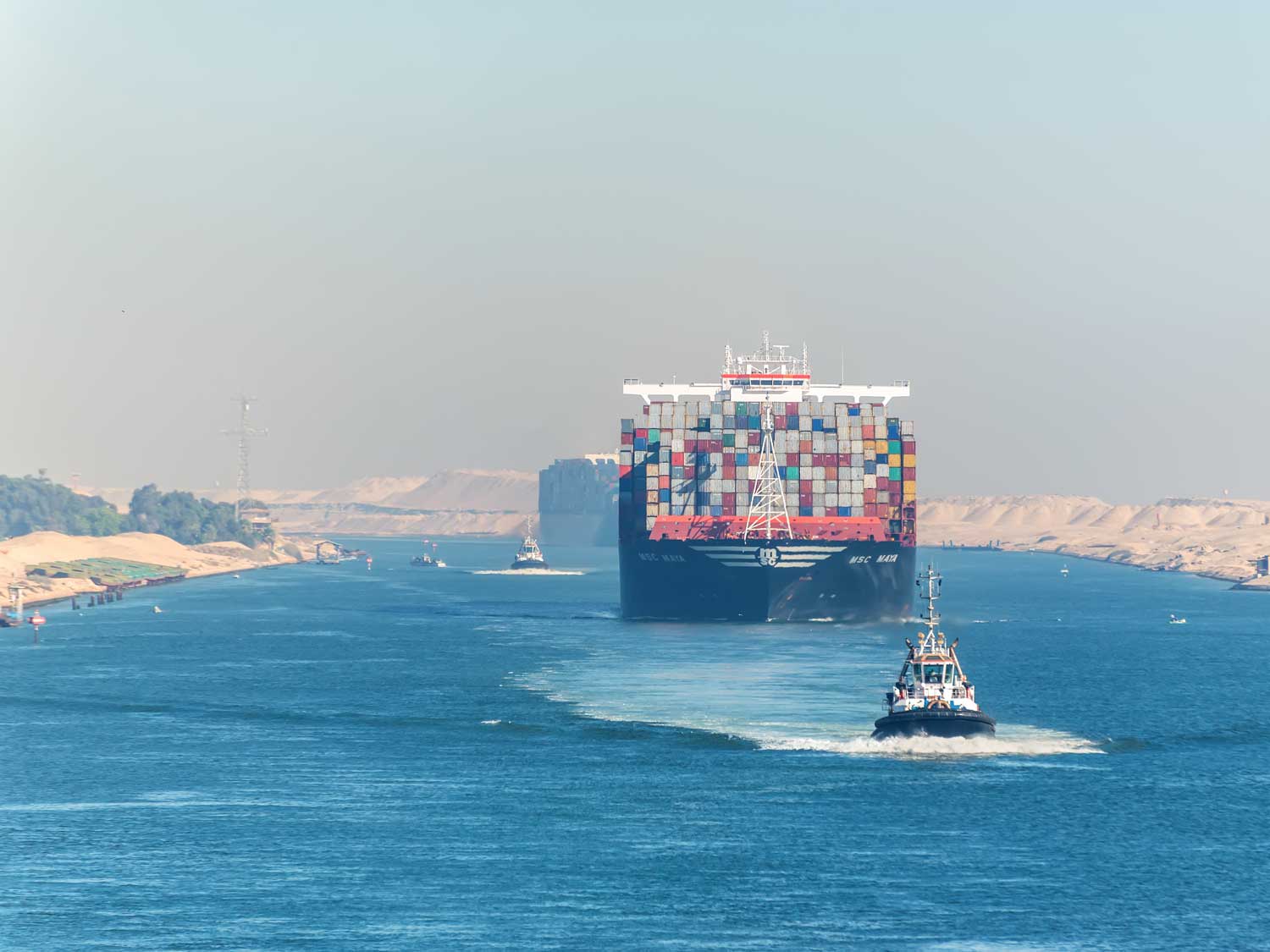
Any expansion of hostilities beyond Israel's borders could introduce risks to the Suez Canal, a critical waterway for container ships, however, the extent of these effects would depend on the conflict's expansion and duration.

We have not seen any rate increases, surcharges or additional fees so far, but there are concerns about possible increased insurance costs, with national Israeli carrier ZIM and other major carriers now announcing a war risk surcharge (WRS) on Israel cargo ranging from US$50-100/teu.

If you have any concerns about the issues raised in this article, we can review your situation and explain your options, including alternative carriers, ports and routes, where appropriate.

Our aim is to consistently provide the most efficient and cost-effective solutions, to ensure that your supply chain remains optimised. EMAIL Andrew Smith, Metro’s Chief Commercial Officer.