empty shelves

Supply chain weaknesses exposed by Covid

For decades, offshoring and global sourcing have offered lower labour and operating costs, wider product ranges and opportunities to reach new markets. The pandemic has exposed their supply chain vulnerabilities.

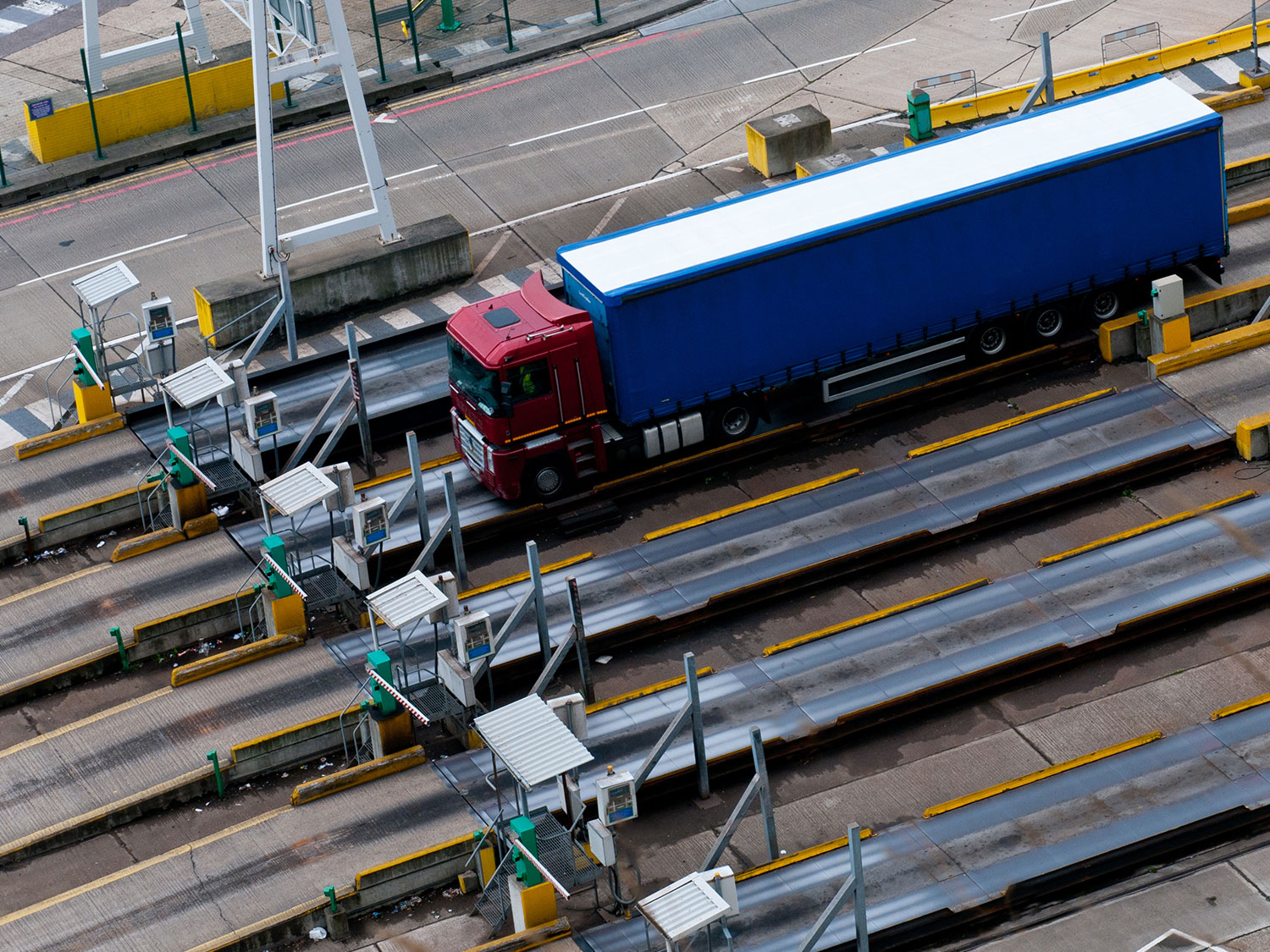
Customers are expecting faster and faster deliveries, but global supply chains take weeks and even months to land goods from overseas and lead times have been extended since the Coronavirus outbreak in early 2020. Owing to port congestion, raw material shortages, transportation bottlenecks/ delays and the HGV driver crisis.

The combination of national and local lockdowns and economic and political instability has highlighted three global supply chains weaknesses:

Lead times

The impact of the pandemic has profoundly challenged the effective management of extended supply chains, with average lead times from China increasing by 222% and from the US by 200%.

Raw material and component shortages are impacting verticals, with electronic components facing the biggest supply chain constraints, with lead times for the most important lines increasing from 16 weeks to over 52 weeks, with manufacturers increasingly running out of inventory.

Lower speed to market because of longer lead times, may also open doors for competitors, who can take market share by releasing products earlier.

Brexit poses even more challenges for unprepared UK manufacturers and exporters, with border delays and additional administrative burdens, extending lead times.

As a consequence, their end customers could potentially be liable to pay increased import tariffs, but also for extra costs throughout the supply chain, such as additional inventory holding and transportation costs.

Lack of diversification

Many businesses, keen to cut costs, have outsourced production, or sought oversea vendors, but Covid has highlighted the danger of excessive reliance on specific locations, regions or suppliers. And in the worst instances supplier, or supply chain collapse may put the businesses in significant danger.

Organisations faced significant challenges across the supply chain in the wake of the crisis and for the vast majority, over-reliance on vendors and manufacturers has led to shortages of critical parts, materials and orders. Exacerbated by difficulties in supply planning, due to a lack of information from the same suppliers.

In addition to the issues raised by the pandemic, if a single source or manufacturing base experiences any unpredictable or major event, or it is purchased by a competitor or runs into financial difficulties, customers that depend on it will be in jeopardy.

Lack of visibility

During the pandemic many companies have struggled to deal with an uptick in customer demand and overcome disruptions to their supply network with 72% (s. Capgemini) facing huge challenges in monitoring their end-to-end supply chain.

The main challenges reported by business owners, in a survey by Capgemini, was monitoring the location and status of their inventory and precisely tracking their transport capacity.

Without inventory visibility businesses struggle to scale up or down, to meet demand, or position products correctly, which all adds to difficulties in demand planning.

Difficulties with products being held up in ports or across borders has been common over the last 20 months and delayed shipments mean longer lead times, but without that visibility, executives cannot reconfigure the business’s expectations and control costs.

The lack of end-to-end visibility in global supply chains can expose companies to higher risk of disruption and those that don’t have transparent supply chains may suffer huge financial losses, because they don’t have enough information to identify disruptions and act accordingly.

Demand is driving change and supply chains need to be flexible, customer and solution driven, with end-to-end transparency and a single global inventory view, that supports efficient operations along the entire supply chain.

We work with our customers to improve their supply chain resilience in five key areas:

Understanding – We make it our key mission to recognise our customers requirements and expectations along with desired outcomes. With a thorough knowledge of what is needed we can contribute, create, design and provide all options available in the current market.

Visibility - Our cloud-based supply chain management platform, MVT, provides end-to-end visibility across their entire supply network, with global control down to item level.

Agility - Slower moving lines can be deferred, while priority orders can be highlighted and expedited, to increase speed to market and close the cash-to-cash cycle.

Diversification - With MVT, it is simple to monitor and add vendors. The system pro-actively manages and benchmarks vendors, product flows and outbound order data.

Contingency - MVT’s exception alerts and rules-based solutions, correct operational non-conformities, without human intervention, or alert users to issues outside set-parameters for corrective action.

For specific information, or to discuss how our technology could support your supply chain, please contact Simon George our Technical Solutions Director or Grant Liddell, for the latest innovation and initiatives that we have launched to underpin your own objectives.

Brexit red line

Brexit delay, dithering and duties: Metro has your back

To the consternation of many shippers, the Government is changing the start dates for new border checks and processes for imports and exports with the EU. The good news is that Metro’s experts can protect your supply chain from these changes and simplify customs compliance, with our intelligent, automated, digital solutions.

With three significant Brexit changes and developments already this month, it is clear why so many businesses trading with the EU are confused, uncertain and concerned about changing customs regimes, requirements and compliance.

Metro’s dedicated customs brokerage team, is one of the industry’s biggest, most experienced and best resourced. It is a unique repository for EU/UK Brexit expertise and a flagship for graduate professional development in a critical area.

Continuing investment in technology and the brokerage team has expanded the capacity of our groundbreaking Customs Document System - CuDoS - and the capability of the advisory, support and compliance resource we provide businesses that trade with the EU. 

The proprietary CuDoS embraces proven, new and emerging technologies including optical character recognition, to convert documents into digital data. With automation technology, machine learning and artificial intelligence, to simplify and automate declarations, CuDoS is constantly adapting to ensure compliance with change UK/EU customs regimes.

CuDoS: 2021 Brexit stats:

  • 74% of workflow automated
  • 15,000 export declarations
  • 6,000 Transit accompanying documents
  • 12,000 import declarations
  • 99% analog to digital accuracy
  • 8 minutes = record declaration turnaround
  • 85% of clearances turned around in under 2 hours

Importers pay more post-Brexit duties

UK importers have paid 42% more in customs duties since Brexit came into force on the 1st January, largely to the “rule of origin” tariff, which applies to goods imported from the EU which were originally made, or contain components made, outside of the EU.

UK importers are paying more duty and UK Customs is losing out on hundreds of millions of pounds, as importers fail to comply with the delayed declaration scheme set up to soften the impact of Brexit.

Delays cost business

Delayed customs declarations are not being converted into actual customs declarations and while some importers may be happy to import without declarations while they can avoid them, they do face the very real prospect of retrospective action and auditing by HMRC, to recover outstanding taxes and duties.

The decision by the UK government to further delay Brexit border controls has been criticised by trade associations who believe that if these controls were imposed on EU suppliers, it would cause friction that might encourage a negotiated relaxation in controls between the UK and the EU and is to the detriment of UK companies.

Under the revised timetable:

  • Pre-notification of Sanitary and Phytosanitary (SPS) goods, which were due to be introduced on 1st October 2021, will now be introduced on 1st January 2022.
  • Export Health Certificates, which were due to be introduced on 1st October 2021, will now be introduced on 1st July 2022.
  • Phytosanitary Certificates and physical checks on SPS goods at Border Control Posts, due to be introduced on 1st January 2022, will now be introduced on 1st July 2022.
  • Safety and Security declarations on imports will be required as of 1st July 2022 as opposed to 1st January 2022.
  • Exit safety and security declaration applies from the 1st October 2021. An EXS is required  for a range of situations including, empty pallets, containers or a vehicle being moved under a transport contract and goods moving under transit.

Available, for the first time, to new customers, our CuDoS customs brokerage platform is optimised continuously, in line with the regimes in force on both sides of the Channel. Automating and submitting customs declarations, CudDoS simplifies compliant border processing, in either direction. 

We simplify declaration submission and safeguard our customers EU supply chains from the potential fallout of easement and regime changes, which means that their EU/UK movements will not be interrupted when full UK/EU border controls are implemented on the 1st January 2022.

To discus your situation and to learn how we automate customs declarations for businesses of all sizes, please contact Elliot Carlile or Grant Liddell who can talk you through the options.

FIATA FBL

Metro successfully test new eBL with FIATA

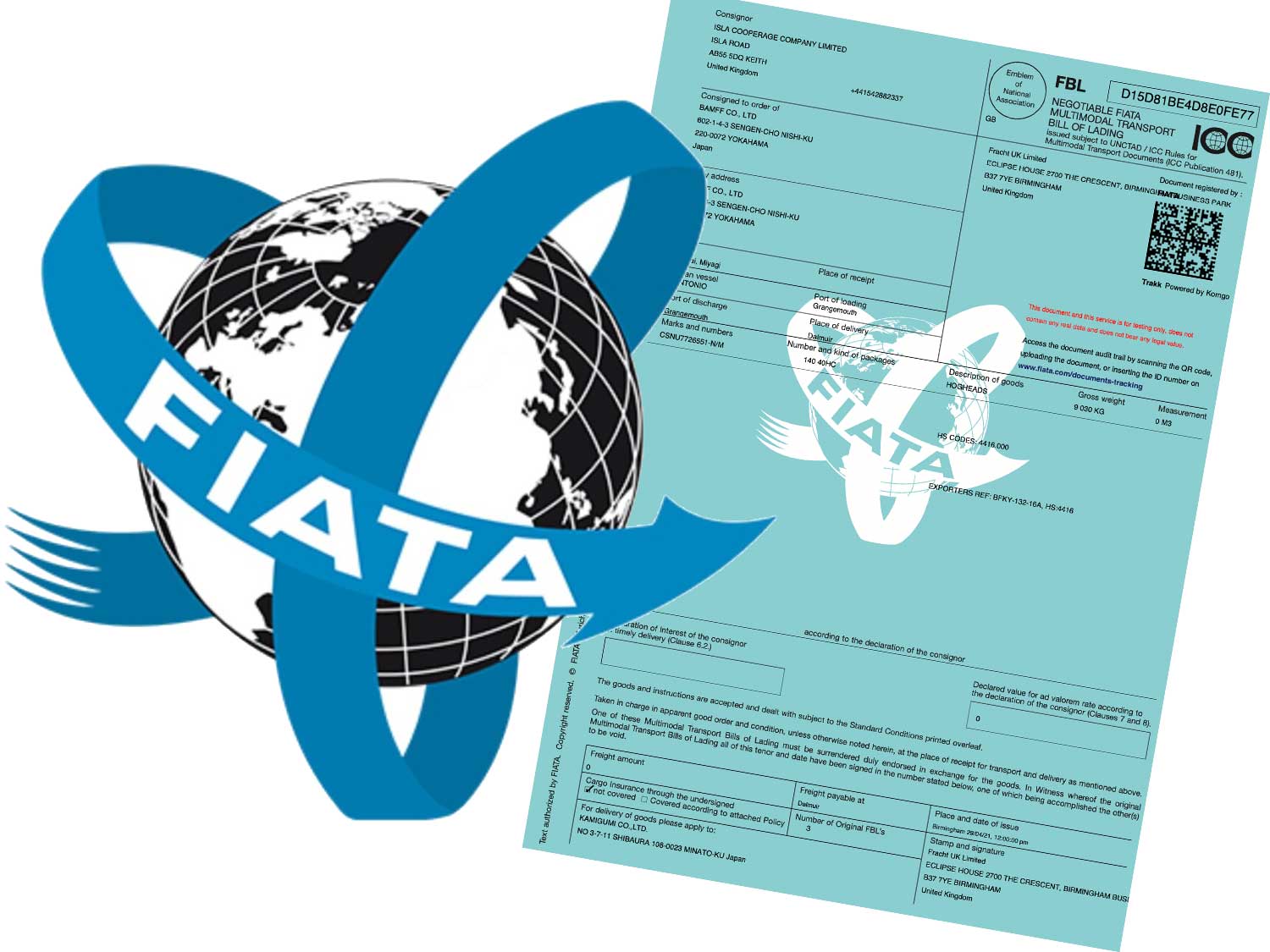
Metro continues to actively support the development and adoption of emerging technology, across the shipping industry, by participating in the successful testing of new e-FIATA Bill of Lading (eFBL) standard, with FIATA , the trade association for 40,000 freight forwarding and logistics firms in 150 countries.

The COVID19 pandemic has highlighted the urgent need for adoption of the digital version of one of the most important trade documents – the bill of lading. 

At ports and terminals around the world, goods cannot be released because the paper bill of lading is not there due to border restrictions, changes to the cargo’s routing, or people cannot physically stamp the document.

The ongoing disruption to trade, transport and the movement of documents, means that the digitisation of physical shipping documents is becoming much more significant

Several solution providers and carriers have offered proprietary versions of eBLs but the lack of standardisation has prevented large-scale adoption. 

Metro’s tech experts work with the United Nations Centre for Trade Facilitation and Electronic Business (UN/CEFACT), to harmonise trade documents and the exchange of information in the supply chain

In 2021, FIATA will release its eFBL standard, which is based on the UN / CEFACT Multimodal Transport Reference Data Model, to ensure interoperability with other standards and most systems. 

From a trust perspective we definitely see value in the document audit trail and the possibility for stakeholders to check the validity of documents.” 

Simon George, Technical Solutions Director, Metro Shipping

Earlier this month FIATA’s eFBL was tested by Metro, other freight-forwarding companies and software providers, as part of a proof of concept, aiming to make the open source standard available to all.

As part of the concept testing, Metro’s operations system generated a document that went electronically to FIATA’s servers, made an entry containing ‘issue date’ and ‘issued by’ as well as the document itself, which then sent back a FIATA bill of Lading  directly into our operations system.

FIATA really appreciate Metro’s assistance, in testing the electronic FIATA Bill of Lading issuance, sharing and verification processes. The detailed feedback will ensure our eFBL solution does answer to the needs of members around the world.

Lucelia Tinembart, Digital Projects Officer, FIATA

FIATA is going even further by testing a tracking solution for its documents, which will allow full traceability, through a unique QR code and number attached to each document. This will enable all parties interacting with an eFBL to verify the validity of the document, the integrity of its content, as well as the identity of its issuer, by scanning the QR code or uploading the PDF on FIATA’s website. 

Full implementation is planned to start in Q3 / 2021.

Metro believe that Blockchain, machine-learning and emerging technologies are the future of international trade. That’s why we work with UN/CEFACT and FIATA: to harmonise the exchange of information in the supply chain; and develop digital capability with critical documents like eBL’s.

For specific information, or to discuss how our technology could support your supply chain, please contact Simon George our Technical Solutions Director.

Brexit Selling customs services

Metro ready for UK’s new single customs platform – are you?

HM Revenue and Customs (HMRC) announced last week that the Customs Declaration Service (CDS), a system integrated with our market-leading technology, will serve as the UKs single customs platform from 31st March 2023.

Operating since 1994, HMRC is finally retiring its Customs Handling of Import and Export Freight (CHIEF) system on 31st March 2023, from when all customs declarations will be submitted through the Customs Declaration Service (CDS).

HMRC’s announcement that the Customs Declaration Service (CDS) will serve as the UK’s single customs platform from 2023 will end the current period of dual-running that has been operating with CHIEF.

CDS is currently used for Northern Ireland and Rest of World declarations and has already processed more than one million declarations since it went live in 2018.

Ahead of the complete CHIEF closure on the 31st March 2023, services on CHIEF will be withdrawn in two stages:

     
  • 30th September 2022: import declarations close on CHIEF
  • 31st March 2023: export declarations close on CHIEF / National Exports System (NES)

CDS is a key part of the government’s plans for a fully digitised border, in line with its 2025 UK border strategy.

Metro has been directly involved in the development of CDS, through the Joint Customs Consultative Committee (JCCC), as active members of The Association of Freight Software Suppliers and the British International Freight Association.

With the UKs exit from the EU, and the migration to the new Customs Declaration Service (CDS) the changes to Customs procedures and systems will have a huge impact on importers and exporters.

Our brokerage team, which is one of the UK’s largest dedicated team of customs experts, are available to review your situation and provide advice on CDS migration and compliance.

Metro automate and submit customs declarations via CHIEF and CDS platforms through our CuDoS system, which is optimised in line with HMRC and EU regimes.

Please contact Simon George, leading our customs and brokerage business unit, for further information and assistance on CDS and automating your customs declarations.