Crew

COVID disruptions continue to impact global supply chains

The delta variant has broken through virus defences across the Indian Subcontinent and the whole of Asia and reached nearly half of Chinas 32 provinces in just two weeks, threatening more supply chain disruption.

Developments are raising the threat of delays at ports and airports as authorities screen crews of incoming vessels and aircraft, with factory production potentially halted, or at least stymied, if widespread lockdowns are imposed. 

The situation is unfurling at a daily rate of knots…….

The strict lockdown in Bangladesh was lifted yesterday in a government announcement and factories can return to full operation, though we do not anticipate any significant improvement in ocean freight performance yet. Rates continue to increase, due to huge demand for containers and restrictions at Chittagong Port as a consequence of recent action.

Airport operations have resumed, though the market is relatively soft due to factory productivity being reduced and there are very few unloading bays for screening shipments, as construction continues inside the cargo village.

Cambodia, Myanmar, Indonesia, Vietnam and Sri Lanka continue to be affected by the spread of the delta variant and supply chain disruption, with many factories being forced to temporarily shutting production in the regions to stem the spread of the virus.

Port and airport facilities are still operating and there are no significant delays beyond those already being experienced, presently, although this is being monitored.

As we reported a fortnight ago, the lockdown in South Vietnam has many ships lying at anchor, which has now created a reported 100,000 TEU backlog at Ho Chi Minh City’s Cat Lai Port.

According to Saigon Newport (SNP), yard density at Cat Lai is currently around 85%, after it experienced a “rapid surge in the volume of over-dwelled import containers” - because many factories had closed or reduced production to 50%-70% during the lockdown - which had negatively impacted vessel handling.

Some factories are expected to reopen next week, but a resurgence in demand, caused by delayed production, may mean that empty container availability could worsen as manufacturing starts up and global demand continues to increase in the final half of the year.

The industry expectation is anticipating severe equipment shortages in the southern provinces of Vietnam for at least a few weeks, while equipment supply in the north is also extremely tight.

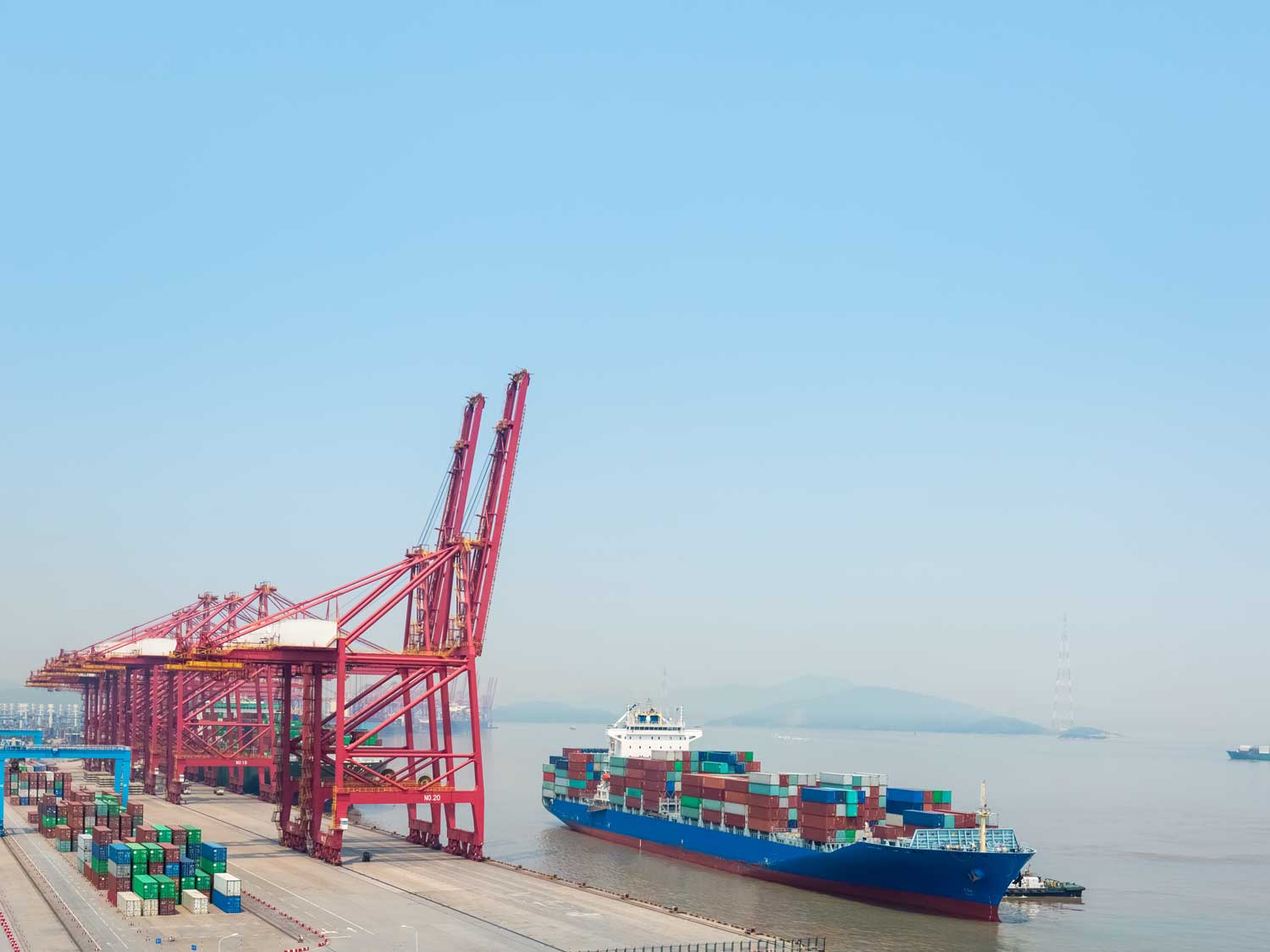
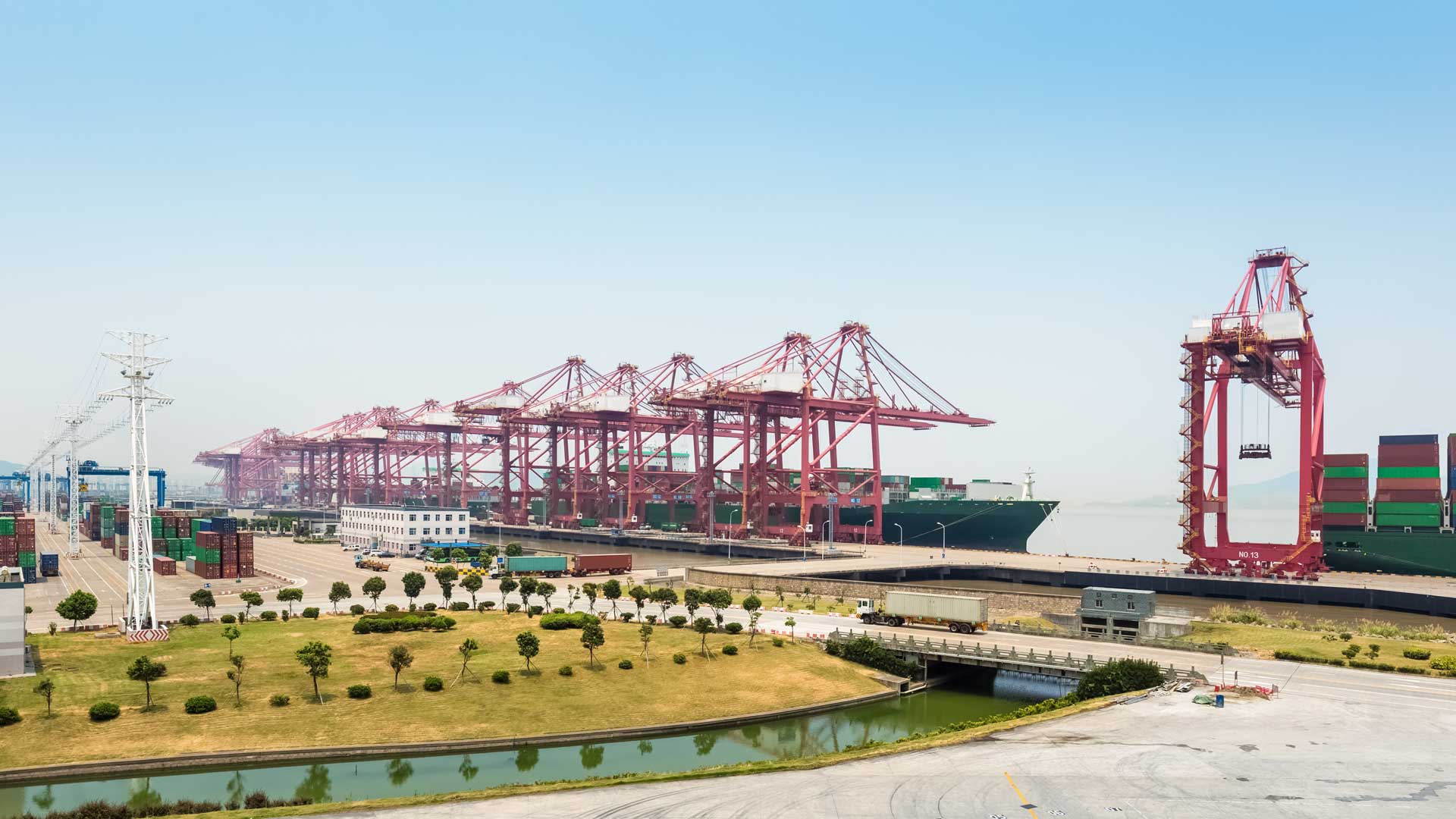
With congestion already increasing in Shanghai, following Typhoon In-fa, the world’s largest port, Ningbo, is now turning ships away, after a Meidong Container Terminal worker tested positive for COVID on Tuesday.

Operations were suspended yesterday following the 34-year-old worker testing positive, with the port authority initially claiming that its operating system was down before the Ningbo Municipal Health Commission confirmed an infected worker was part of the workforce at Meidong terminal.

Large vessel numbers are already backing up outside Ningbo-Zhoushanas. This map by maritime consultancy eeSea shows the huge volume of container ships at anchor waiting for berth space. This is not good news for the logistics sector and could potentially spread to other gateways if similar outbreaks occur in China further hampering the already disrupted supply chains.

Courtesy of eeSea

Ningbo-Zhoushan handled 1.17bn tons in 2020 making it the largest port in the world, with annual box throughput of 30million TEU. To put it into perspective.

When a COVID-19 outbreak was detected at Yantian Port in late May, operational capacity at the key southern port was cut by 70% for most of June.

Since last July COVID infections have been confirmed in roughly half of China’s provinces, sparking mass testing operations and localised lockdowns.

Newly reported cases have forced the country to re-introduce restrictions to curb the spread of the virus, with ports now requiring a nucleic acid test (NAT) for all crew, with vessels forced to remain at anchor until negative results are confirmed.

Many ports in the country are also requiring vessels to quarantine for 14 to 28 days if they previously berthed in India or performed a crew change within 14 days of arriving in China.

For urgent and must have shipments from Asia, we have access to freighter capacity from our Sea/Air hub in Singapore and can move consignments of up to 200cbm per flight to Europe.

Our commercial and operations teams work closely with our partners across Asia, monitoring air and sea freight operations and the port congestion that continues to impact most regions.

Please do continue to send us your forecast data and order information, at the earliest opportunity, so that we can manage cargo bookings and transit deadlines, to meet your expectations.

If you have any questions, concerns, or would like any further information regarding any of the issues raised here, please dont hesitate to contact Elliot Carlile or Grant Liddell.

Suez convoy

Carriers inject capacity, but rates stay high

Container carriers are injecting additional capacity into the critical Asia-North Europe trade as they prepare for a strong and prolonged peak season and elevated rates.

With the massive consumer and inventory demand continuing, carriers are transferring capacity from other trades and deploying additional vessels, which will increase market volume by 15.1% over the next 12 weeks, compared to the third quarter in pre-pandemic 2019. 

Driven by financial return and redeployment of the restricted supply of vessels, this continues to have a ‘knock on’ effect on other trade lanes, changing the dynamics inadvertently in markets that may not appear to be under ‘pressure’.

The capacity growth rate far exceeds historical trends, and although volume data on the trade lane lags by almost two months, the injection of additional vessels is a clear indication that carriers are preparing for an increase in import volumes to consumer markets and an increase in export demand in manufacturing regions amounting to the same result – demand exceeding supply = increased shipping costs.

Over the course of the last year, the share of the global container shipping fleet deployed in Asia to Europe and Asia to North America trades has increased from 34.6% to 41.4%. The fleet capacity percentage on all East-West mainline trade routes, which includes the Transatlantic on top of the two Asia trades, has risen from 38.5% in July 2020 to 45.9% in July 2021.

The Far East to Europe trade remains the biggest in terms of fleet deployment, with 21.5% of the global fleet (5.25 Million TEU), which represents a capacity increase of 19.7% compared to July 2020.

The main reason why carriers have shifted a larger proportion of their fleets to the East-West trades is of course the high revenue that can be earned there, with massive spot rates and the premiums that some shippers are willing to pay to secure a booking guarantee.

We are expecting the third quarter to be very strong and are already experiencing high numbers of booking requests, but carrier capacity will depend on operational constraints, which we detail rigorously in these bulletins.

Rising volumes will further challenge container ports that have been struggling with months of strong demand, disrupted services and the lowest ever carrier schedule reliability.

Asia-North Europe schedule reliability (vessel arriving within one day of the published arrival) for April, was just 24.4%, down from 72% in April 2020, with 461 vessels arriving more than seven days late from January through May.

In practice vessels on every significant trade are not calling at any North European terminal during agreed and reserved operation windows, which means terminal operations are running on a first-come, first-served basis.

Increasingly ‘industry experts’ (trade press, commentators and consultancies) are suggesting that widespread issues like port congestion and the lack of shipping containers should soon fade as the initial rebound from the pandemic passes.

Likewise, recent months have seen inventory replenishment and safety stock building, to protect against future supply chain disruptions and once sufficient stocks are built, the imbalance of demand and supply should also pass.

We would all welcome such an outcome, at the earliest opportunity, as the current situation traps us in a high rate and limited capacity environment. With demand outstripping available capacity, rates will continue to track steeply upwards.

Time will tell………..

We negotiate rate and volume agreements with carriers across all three alliances, which means we can react quickly to market changes and offer shippers alternative services, in line with their deadlines

Consider your requirements now for 2022 and beyond – many carriers are looking at longer validity periods for contracts exceeding 12 months and up to 3 years. Planning is essential to ensure that your logistics strategy is complete and predictable for the future. We can assist.

Our fixed validity contracts provide supply chain security and peace of mind, but with space and equipment in such short supply, we recommend a minimum of four weeks visibility and booking window, to secure space on the vessel and get the right equipment positioned.

We provide regular news, market intelligence announcements and updates on the developing ocean and air freight market situation, together with insights on alternative modes and the options available for critical cargo, with deadlines under threat.

Please contact Elliot Carlile or Grant Liddell to discuss your options in achieving your supply chain expectations and deadlines to ensure your business is ‘future proofed’ and all stakeholders within your organisation participate in the logistics cost strategy as an essential element to ensure successful growth throughout the 2020’s.

ships at anchor

Air cargo gains momentum from rising prices in ocean shipping

The record-breaking sea freight rates, driven by restricted volumes, equipment availability and service disruption is pushing increasing quantities of ‘distressed’ ocean cargo to air freight solutions.

Metro have advised and updated regularly on the dynamic air freight market, which has restricted lifting capacity through the grounding of passenger aircraft and increased costs as carriers rely on air cargo as the only revenue stream available. 

Coupled with manufacturing delays through lockdowns, component and raw material shortages and constant schedule malfunctions of ocean carriers, due to congestion and disruption and we are experiencing a very high air freight demand globally, on all routes, by desperate shippers, needing product to market or into manufacturing.

The International Air Transport Association (IATA), the trade association of the world's airlines and air freight agents, confirmed that that air cargo is benefitting from “exceptionally congested” container shipping supply chains and suggested that the cost-competitiveness of air, relative to that of container shipping has improved over recent months.

Prior to the pandemic air freight was typically 12 times more expensive than sea freight, but that differential has halved, with air cargo just six times as expensive in May. This is not a reduction in cost but a resetting of the standard price of ocean freight versus air freight pricing, which is at elevated levels, compared to the pre-pandemic situation.

Air cargo rates from the Asia to the US began to climb last week, driven in part by rising ocean rates. It is a peculiarly circular situation which sees ocean rates increase, driving an increase in ocean to air conversions, that are triggered by those same climbing rates and persistent delays in ocean freight.

It appears that some UK importers are deciding, or being forced, to move ocean imports to air, despite the expense and possible financial loss, as a way to guarantee their inventory availability and maintain and build customer loyalty, while their competitors continue to struggle with ocean freight delays.

Ocean rates from China to the US west coast last week were up over 150% on 2020, while prices to the east coast were up 209%.

Air freight, while volatile, is very stable in comparison to shipping, with global shipping schedule delays equivalent to an 8.6% loss of capacity. 

Airlines are much more reactive and agile, and can switch on flights quickly to meet demand, as long as there is a reasonable return on the investment. 

Similarly they can switch off supply if their aircraft cannot be filled with cargo – immediately - which ensures market rates remain elevated.

IATA believes that air cargo is likely to continue to benefit from disruption in ocean shipping. “Air cargo also tends to over perform other means of transport at the start of an economic upturn due to restocking cycles, when businesses turn to air to rapidly refill inventories as demand rises.”

“But with strong consumer demand and the lack of container capacity expected to continue until late 2021 at the earliest, air cargo is likely to remain a viable alternative to container shipping for some businesses. The upshot is that air cargo is likely to continue to perform well compared to other modes for most of 2021.”

We work closely with leading airlines and cargo carriers to offer the widest range of time-sensitive solutions, routes and transit times at the most competitive rates, from every origin.

If the right market conditions exist, we will be adding charter capacity during Q3 and Q4 to ensure that expectations from our customers are met and delivery deadlines achieved. We welcome enquiries and expressions of interest for specific origins, as we develop our plans to deal with the anticipated extended ‘peak season

We are driven by client needs and requirements – please engage and we will provide all options available in what is predicted to be a very active market in the latter months of the year and the lead up to an early Chinese New Year.

If you have urgent or time-sensitive consignments and would like to explore options, transits and costs, please contact Elliot Carlile or Grant Liddell, to ensure your deadlines are met.

Ningbo

Sea Freight market update and Q3 Rates

We are in a new world of shipping. There have been spikes in demand and freight rates before, but never for such a long time and never on such a continuously upward trajectory.

The challenges we face are unique. Even with demand levels increasing on the most popular trades, equipment availability continues to be an issue and the lines still void sailings. And the real effects of those blank sailings may take up to three months to work through, contributing to the ever declining schedule reliability.

The government has added freight workers to the essential workers allowed to use the daily workplace test scheme to avoid needing to self-isolate for 10 days if pinged by the NHS app.

Logistics and warehouse workers have yet to be included to the ‘exempt’ list and despite the inclusion of drivers on the list, massive disruption is being caused to supply chains due to self-isolating workers at ports, airports, haulage contractors, rail operators, in our offices and at customers premises.

Nearly a million people have already been pinged by the app in recent weeks, which is contributing to the delays being experienced outside of the usual day to day impact on movements, and in particular the desperate state of the first/ last mile haulage, especially with late bookings.

Situation summary

Capacity is expected to remain tight on most trades as we move further into the peak season and likely to remain so, for the rest of the year.

Vietnam’s Ho Chi Minh City has been in lockdown for over two weeks and most of its terminals are severely congested, with many ships lying at anchor off Vung Tau, an important feeder and transhipment hub, waiting for berth space to open up.

Schedule reliability on the Asia-North Europe trade was at 23.8% in May compared to 86.2% in 2019. The late arrival of deep-sea vessels, combined with more container exchanges per port call, is creating surges in volume and mounting congestion at European ports.

Rotterdam is operating with berthing delays of 2 – 10 days due to ongoing congestion and the Ever Given (the Suez Canal blocker) has returned to service on European destinations, but has been forced to drop the Hamburg port call because of concerns surrounding navigation safety.

Bangladesh is close to breaking point with severe national lockdowns, restrictions on container movements and enforced factory closures.

Asia to North Europe

The space and equipment crunch continues, with market demand exceeding supply and rates skyrocketing.

The overall situation is exacerbated by blank sailings and poor equipment availability at most significant origins throughout China and other manufacturing regions.

Carriers that are overcommitted are limiting booking acceptance or rolling shipments and schedule reliability remains at all time lows.

Rates increased on the 15th July and are expected to move up again with GRI’s on the 1st August across all major trade lanes, led by the transpacific trades.

This is without the consideration of weather influence and relentless hurricanes and typhoon disruption being caused at ports and airports throughout the continent.

Shippers need to be flexible on equipment and provide as much notice of requirements as possible and book no later than 5-6 weeks prior to order ready date.

North America to Europe

The reopening of the US and European economies after last year’s COVID-19 lockdowns spurred a resurgence in the trans-Atlantic container trade, with total containerised volume between the US and Europe rising 7.4% in the first five months of 2021 compared with the same period a year ago.

In the first five months of 2021, eastbound shipments picked up 2.6% to 732,618 TEU, compared to the same period in 2020.

Space is still very tight from the west coast and while the east coast is being managed tightly by a few ocean carriers, with sufficient lead time, securing capacity is more achievable.

Equipment at east coast ports are available and rates are generally steady.

Recommend 4+ weeks lead time on bookings from the east coast and 5 to 6 weeks for the west coast.

Europe to North America

US imports from Europe hit an all-time single-month record of 328,627 TEU in April, a 14.7% increase from a year earlier. May imports reached 316,687 TEU, a 26.4% gain from the same month last year

Capacity and equipment remains severely restricted and strong volume forecasts, together with the existing cargo backlog is going to keep pressure on rate levels.

Several vessels are omitting Rotterdam from their schedule, due to the ongoing port congestion and shipper flexibility on departures from different origin ports is pragmatic.

New blank sailings announced will reduce capacity further to the west coast in the first week of August.

Shippers need to be flexible on equipment and provide as much notice of requirements as possible and book no later than 5 weeks prior to order ready date.

Federal Maritime Commission to audit detention and demurrage

The US Federal Maritime Commission (FMC) has informed the top nine container lines operating on US trades that the agency will immediately begin auditing how they bill detention and demurrage charges amid increased pressure from the White House to crack down on unreasonable storage fees tied to ongoing port congestion.

Our commercial and operations teams work closely with our partners across Asia and North America, monitoring the sea freight market and the port congestion that continues to impact most regions globally.

As we enter the traditional peak season much uncertainty remains and we will continue to keep you updated as the situation evolves; day by day.

Please do continue to send us your forecast data and order information, at the earliest opportunity, so that we can manage cargo bookings and transit deadlines, to meet your expectations.

If you have any questions, concerns, or would like any further information regarding the situation in China, please dont hesitate to contact Elliot Carlile or Grant Liddell.