Ningbo 1

Ningbo container terminal to reopen

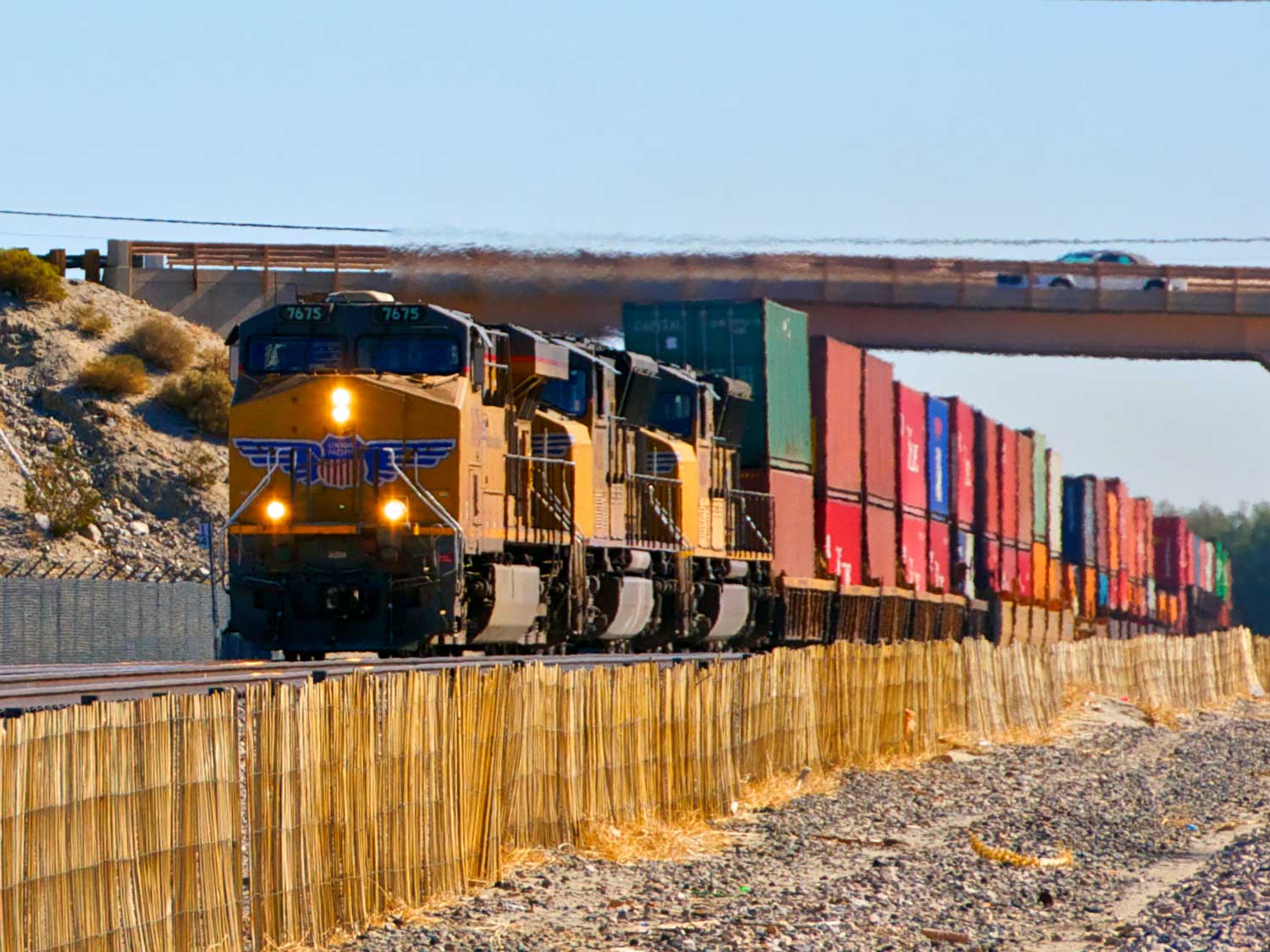
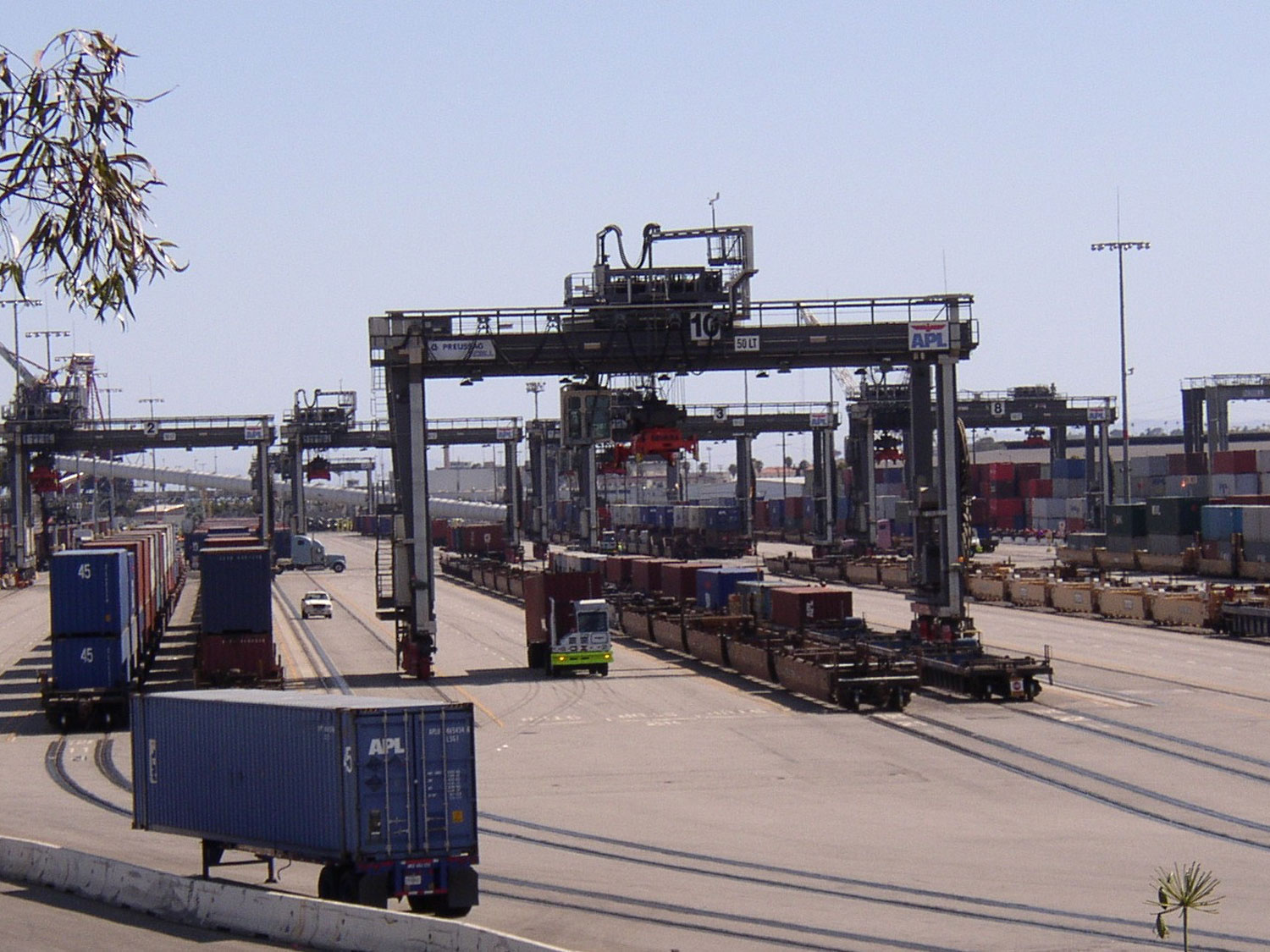
Ningbo Meidong Container Terminal will open tomorrow, having suspended all operations early last Wednesday morning after a port worker tested positive for COVID-19. Local sources now advise that the Meishan Island container terminal will restart operations from 18th August.

Despite the Ningbo port authority claiming that it had been able to work at 90% capacity in recent days, many ships are switching to different terminals and AIS data shows around 50 container vessels waiting at the outer Zhoushan anchorage.

Operations were suspended after a 34-year-old worker at the Ningbo Meidong Container Terminal (part of Ningbo’s Meishan bonded area) tested positive for COVID. More than 90,000 people have been tested over the past week with no further positive cases reported.

We are receiving (as yet unconfirmed) news that Ningbo’s shuttered Meidong container terminal will start a phased reopening tomorrow.

To clear the backlog of cargo, no new cargo will be accepted until the 25th August, with normal operations resuming from the 1st September.

The timeline is similar to the way Yantian reopened in June and will be in accordance with China’s COVID-19 policies.

Though significant, the disruption at Ningbo is significantly less than that which followed the Yantian closure, for around a month in May.

Port authorities claim that container volumes at Ningbo-Zhoushan port averaged 77,000 TEU a day between Wednesday and Friday last week, equivalent to 90% of the daily average in July.

The Meidong facility — also known as the Meishan Island International Container Terminal (MSICT) — handled around 22% of Ningbo-Zhoushan’s total throughput of 28.7 million TEU last year.

We are now on day seven of the closure and ships are being diverted to other terminals in Ningbo and other ports, including Shanghai, which are already running at full capacity, in the aftermath of Typhoon In-fa, with some imposing restrictions limiting the number of people and containers entering port areas.

Gate-in for export containers at other Ningbo terminals is limited to two days before a vessel’s estimated time of arrival, although entry to the container yard can be up to three or four days depending on the situation.

The closure of the Ningbo Meidong terminal is likely to lead to problems with trucking as well, as average wait times are currently 2-4 days and you can add another day onto dwell time for every day Ningbo Meishan terminal is closed.

Our commercial and operations teams work closely with our partners across Asia and while we expect the situation in Ningbo will improve swiftly, after Meidong reopens, we will continue to assess its impact on a shipment by shipment basis.

For urgent and must have shipments from Asia, we have access to freighter capacity from our Sea/Air hub in Singapore and can move consignments of up to 200cbm per flight to Europe.

If you have any questions, concerns, or would like any further information regarding any of the issues raised here, please don’t hesitate to contact Elliot Carlile or Grant Liddell.

WEF 2

The World Economic Forum’s resilient supply chain formula – how it can assist you to continue to succeed in a challenging environment

The World Economic Forum (WEF) has identified eight points of resilience to help manufacturers and trading companies prepare for supply chain disruptions.

The qualities of the most resilient supply chains are based on a survey of 400 senior supply chain executives and representatives from government and academia.

Of those surveyed, only 12% of businesses were identified as “resilience leaders”, with the “remaining 88% needing to take immediate action to build resilience”. 

This is all really quite interesting and worth a read and referencing from industry-leading ‘experts’ that sums up the current challenges faced across all sectors and industries, including the logistics field.

The report said the pandemic, cyber attacks, climate crisis and geopolitical tensions were leading to an increase in supply chain disruptions. Still, most companies were not prepared for such events, with 75% of respondents spending more than 75% of their time on resilience-related challenges. 

Initially, this may seem a pessimistic synopsis on global activity, but this can actually be interpreted as optimistic and deliver advantage if action and strategy are applied using the data and findings from the report provided. This is why we have included it in this weeks circulation.

1) Inventory

Ensuring product availability with simplified portfolios designed to allow interchangeable inputs and production arrangements when supply shortages or factory interruptions occur. 

Only 13% of companies displayed what the report called a “high degree of capability” in this regard. 

2) Customer orientation

Smart customer orientation ensures demand can be met while remaining agile and flexible. This may be more of a long-term investment due to the challenges of shared manufacturing space across business divisions, regions and even industries. 

3) Financial viability

Financial health across end-to-end value chains is vital so that companies can adjust their cost base to subsidise key suppliers, ensure input materials, and remain cash positive.

While larger companies are more likely to excel in this area, 86% of firms were either not prepared for major disruption or had to shed costs to cope with the financial implications of COVID-19.

4)  Go-to-market channels

The WEF said 39% of businesses needed to urgently modernise their go-to-market approach if they want to remain ahead of market disruptions. 

Diversified customer distribution networks incorporate multiple channels and automation to increase reliability. 

Smaller firms are more successful at this than larger ones, with 64% of smaller firms adapting to customers’ changing needs, such as new channel preferences, new geographies, or new customers. 

5) Logistics 

Strong logistics systems are “the holy grail” to many firms, yet only 14% of companies felt satisfied in their logistics setup.

A strong logistics system relies on close collaboration and focuses on building long-term relationships between firms and their logistics partner across the supply chain.

6) Manufacturing networks

Resilient and responsive manufacturing networks allow for production continuity by adapting production locations and products as necessary. The report found 40% of firms were still “highly dependent” on region-specific manufacturers, which may limit adaptability. 

7) Supplier landscapes

Companies that are reliant on particular suppliers, regions or commodity products are “vulnerable” to disruptions.

Striking a balance between diversifying the supplier base and creating strategic partnerships with key vendors is “crucial” to protecting the availability of essential materials.

As a result of COVID-19, 13% of firms have already begun to improve their balance in this area, and a further 47% said they were in the process of developing their supplier strategy. 

8) Advanced planning

With just 12.5% of companies - predominantly consumer and retail - incorporating new technologies and planning tools to quickly and effectively adapt to change, an overwhelming majority still need to transform their supply chain to sense shifts in demand.

We proactively invest in many ways (including intellectually and financially) to power the supply chains of both our British and international customers, with our freight management and outsourcing teams and our multi-award winning MVT supply chain platform.

The MVT platform harnesses every supply chain participant, process, and milestone from suppliers and manufacturers to carriers, distribution networks, and, of course, our customers to provide the real-time visibility, control and intelligence necessary to create resilient, flexible and fit supply chains.

For further information on our MVT tool and to discuss how we can enhance your supply chains, please get in touch with Grant Liddell or Simon George. 

We will deliver a bespoke, unique and tailored solution, ensuring that your products are in the right place, at the right time, with every available option available in the current global market. It is what we do and differentiates our culture.

Brexit Selling customs services

Metro ready for UK’s new single customs platform – are you?

HM Revenue and Customs (HMRC) announced last week that the Customs Declaration Service (CDS), a system integrated with our market-leading technology, will serve as the UKs single customs platform from 31st March 2023.

Operating since 1994, HMRC is finally retiring its Customs Handling of Import and Export Freight (CHIEF) system on 31st March 2023, from when all customs declarations will be submitted through the Customs Declaration Service (CDS).

HMRC’s announcement that the Customs Declaration Service (CDS) will serve as the UK’s single customs platform from 2023 will end the current period of dual-running that has been operating with CHIEF.

CDS is currently used for Northern Ireland and Rest of World declarations and has already processed more than one million declarations since it went live in 2018.

Ahead of the complete CHIEF closure on the 31st March 2023, services on CHIEF will be withdrawn in two stages:

     
  • 30th September 2022: import declarations close on CHIEF
  • 31st March 2023: export declarations close on CHIEF / National Exports System (NES)

CDS is a key part of the government’s plans for a fully digitised border, in line with its 2025 UK border strategy.

Metro has been directly involved in the development of CDS, through the Joint Customs Consultative Committee (JCCC), as active members of The Association of Freight Software Suppliers and the British International Freight Association.

With the UKs exit from the EU, and the migration to the new Customs Declaration Service (CDS) the changes to Customs procedures and systems will have a huge impact on importers and exporters.

Our brokerage team, which is one of the UK’s largest dedicated team of customs experts, are available to review your situation and provide advice on CDS migration and compliance.

Metro automate and submit customs declarations via CHIEF and CDS platforms through our CuDoS system, which is optimised in line with HMRC and EU regimes.

Please contact Simon George, leading our customs and brokerage business unit, for further information and assistance on CDS and automating your customs declarations.

ALL supply chain workers are essential

COVID-19: The critical worker crisis

In an effort to protect supply chains and essential services the government released a list of sectors where fully vaccinated workers may be exempt from isolation if they are told to quarantine after coming into close contact with a positive COVID-19 case. Many of these are within the supply chain and global logistics platforms that are essential to businesses functioning successfully.

Fully vaccinated adults will no longer have to self isolate if they are ‘pinged’ from 7th August in Wales; 9th August in Scotland; and 16th August in England.

Instead, they will be advised to take a PCR ( if you have ever wondered what it stands for - polymerase chain reaction) test and can stop self-isolating if the result is negative. If the result is positive, they will need to self-isolate just like anyone else.

Until the 16th of August in England employers providing the critical services listed below can request a self-isolating exemption for named employees who are fully vaccinated.

  • Energy
  • Civil nuclear
  • Digital infrastructure
  • Food production and supply
  • Waste
  • Water
  • Veterinary medicines
  • Essential chemicals
  • Essential transport
  • Medicines and medical devices
  • Clinical consumable supplies
  • Emergency services
  • Border control
  • Essential defence outputs
  • Local government

Supermarket depot workers and food manufacturers will be exempt whatever their vaccination status and this is being extended to transport and freight workers, plus those working in the selected critical sectors.

Despite the government’s moves supply chains are missing critical personnel at every point, including ports, freight terminals, railheads and shipper warehouses, not to mention the continuing HGV driver crisis.

So far the government has ignored pleas to relax Brexit immigration rules to allow foreign drivers to return on a temporary basis and calls for the MoD to provide drivers is unlikely to have any impact on the situation. The government’s moves to increase working hours and streamline driver testing systems, to aid recruitment, will only have a marginal impact.

With the shortfall of drivers already standing at 100,000, any personnel loss through illness, self-isolation or move to higher-paying retailers is having a profound impact on haulier operations across the country and particularly around key ports and airports.

After years of underpayment and poor working conditions, a job as an HGV driver has become more attractive in recent months as a growing number of firms offer up-front bonuses and wage uplifts in an effort to attract and retain staff, though shippers are increasingly picking up the tab, through driver surcharges.

All the signs are that we are heading for worsening disruption, as drivers taking holidays are added to COVID-19 shortfalls, without any drivers to cover.

Road transport cannot be avoided, as part of the movement of goods, with drivers critical for container movements, international and domestic haulage.

Metro work with a number of reliable, selected long-term haulage and rail partners across the UK, to give us access to the widest pool of equipment and driver resource. 

We frequently audit and manage our associated partners' standards and ensure the safety of all individuals within our platforms are always compliant with the current regulations and legislation.

To learn more, or to discuss your road transport requirements, please contact Elliot Carlile or Grant Liddell (or Simon Balfe who leads our UK multimodal transport operations) who can talk you through the options.