Freighter

The air cargo capacity challenge

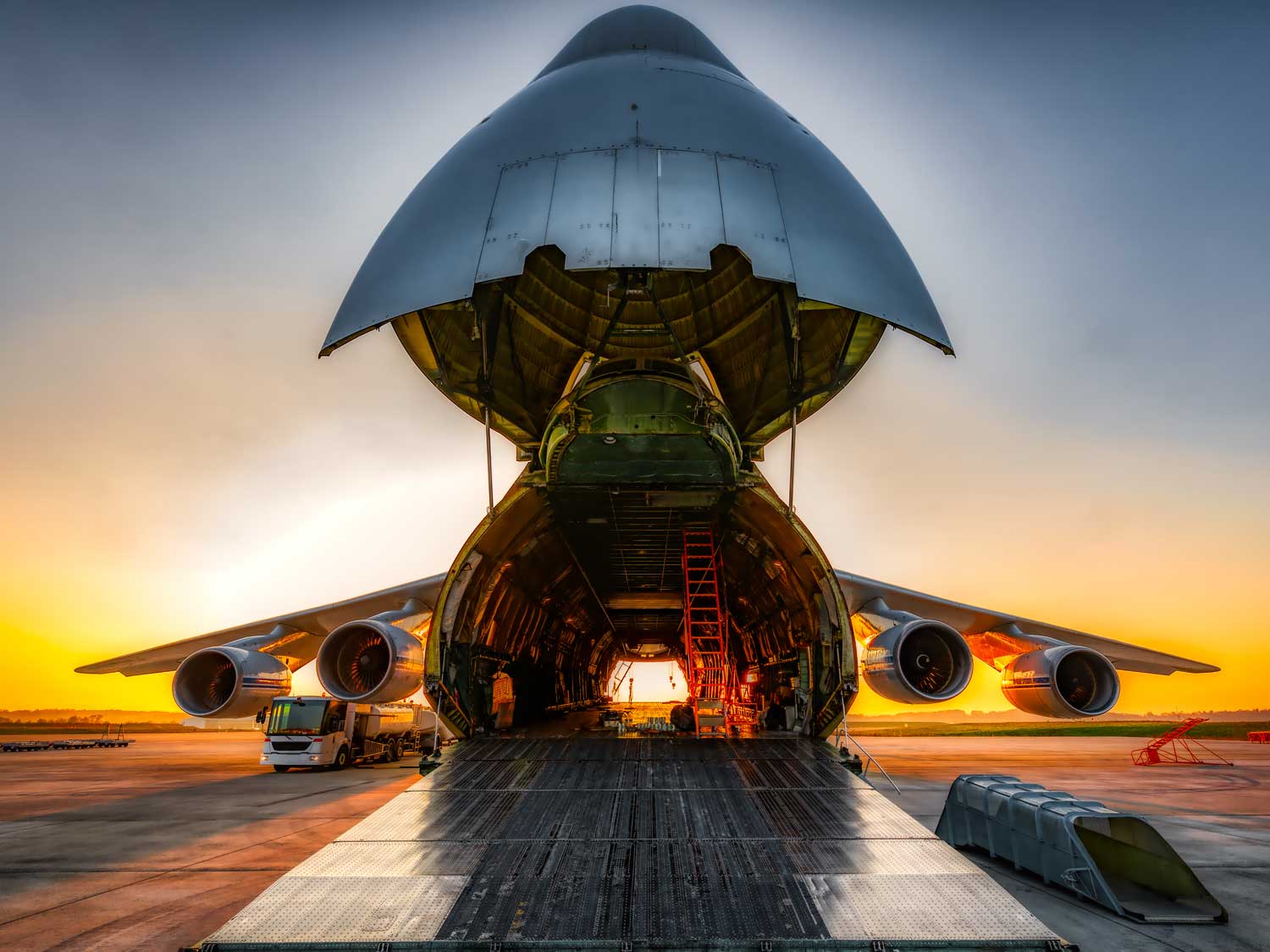
Air freight has been hit particularly hard by the spread of COVID and the more recent Omicron variant, with governments shutting down routes at short notice and schedules in disarray as flight crews and ground staff are unavailable because of infection, or quarantine.

The most significant and topical example of the impact of Omicron, is Cathay Pacific’s recent decision to suspend long-haul freighter flights altogether and while it has since resumed US cargo services it does not expect to be running freighters to Europe before March, this year.

It is developments like these, that make finding and booking air cargo space and getting time-critical consignments to their destination on schedule so very challenging.

Passenger aircraft grounded and country borders closed worldwide, was the initial reaction to Covid-19, halving global airfreight capacity as passenger belly-hold space disappeared in a few days.

Capacity went very rapidly in 2020 and our air freight team had to work quickly to try and find solutions for the desperately needed PPE (face-masks, virus test kits, gloves, goggles, and protective suits) that was sourced from China.

Demand was exploding, with converted ‘passenger freighters’ and charted freighters helping to meet demand from government, public-sector and industry customers.

The need to find flexible solutions over the last two years has widened our portfolio of airline partners and the use of multiple carriers across different routes and hubs, to give us many more options, which continues today.

By adding more airline partners, we can enhance our customer solutions by, for example extending cut-off times and adjusting transit times to meet specific requirements.

In the fourth quarter of 2021 we were heavily engaged in securing main deck freighter space for automotive clients, who’s stretched supply chains required premium solutions, even for larger shipments.

That search for main-deck, wide-body and effective charter options, continues, as all time-sensitive options are evaluated and recorded for future access.

SEE THIS BBC REPORT; The scramble for cargo aircraft as shipping costs soar

Even before the Omicron variant spread, some industry pundits were suggesting that it might be 2024 before passenger numbers, travel sentiment and long-haul belly-hold capacity returned to pre-pandemic levels.

Omicron has and will impact flight networks and therefore supply chains, and the passenger side is far from normal, which means tight capacity through 2022, with limited solutions for the cheaper end of air freight and while it is very challenging, we will find capacity for the most urgent shipments. This is without considering the Chinese market which is still very much ‘closed for travel’ on a global scale and looks unlikely to open up any time soon with the zero-COVID policy approach taken.

Looking at seasonal trends, it is likely that both the first quarter and second quarter of 2022 will remain challenging with rates elevated, though the third quarter may see an easing of the situation, before the peak season ramps up again mid-September.

Travel restrictions and uncertainty will continue to limit leisure travel in 2022 and business travellers will not be back to anywhere close to pre-Covid-times, which will limit the number of flights and served airport pairs.

Normalised intercontinental travel brings back the belly capacity that is not currently available in the market and, in the absence of another COVID variant, some expect belly capacity to begin increasing during the second half of 2022.

Despite the challenges, our air freight team continue to find solutions for urgent and time-sensitive shipments, to every destination and from every origin, using a blend of scheduled, dedicated and chartered air cargo services. 

We work closely with our global network, to continuously monitor market capacity and service opportunities that might benefit our customers.

Evaluating and blocking space on viable services early, including our sea/air platforms and hub services, is a critical factor in achieving the most demanding deadlines. 

Please call Elliot Carlie for insights and advice on how to move your express time sensitive products globally.

US winter storm

Winter storm disruption for US shippers

In yet another headache for shippers to and from the United States a widespread winter storm hit the central US and East Coast last week adding a new layer of disruption to supply chains beset by labour shortages, delays moving imports inland, and a general lack of warehousing and storage space.

The storm lashed states from New Mexico and Texas to Maine, hitting the Dallas-Fort Worth area and other midwestern cities along the Gulf Coast.

Many of the areas affected by the storm face freeze warnings, which are delaying recovery efforts and mean that many businesses are not able to receive freight, with some estimations that it will take two to three weeks for the freight market to recover.

The next two weeks will be critical, as the weather event will have passed, but networks will be out of sync, as shipments, drivers, and equipment recover from the dislocation caused by the storm.

Recovery will be made tougher by the existing hurdles posed by labour shortages and higher-than-usual freight volumes, while more freight will be pushed to the truckload spot market, where capacity constraints have been easing in recent weeks.

Freight delays in February will also put more pressure on US importers preparing for spring sales, because without capacity in the system, it is not possible to recover from incidents which interrupt the flow of that capacity.

Simply, the freight that isn’t moving in Chicago and elsewhere this week must eventually be moved, but how and when that will happen is up in the air for many shippers.

In an unfortunate, but predictable side-effect, US shippers can anticipate transport and related costs to soar in the next few weeks and possibly into the second quarter as they try to recover their supply chains.

Before the storm struck, many shippers sought safe havens at cargo terminals, but these are already overflowing with high volumes of containerised imports that arrived at US ports, but have still not made it to their distribution centres.

Separately, the strategically important Ambassador Bridge, that links Ontario with Detroit and carries 25% of US/Canada trade was blockaded by Canadian truck drivers in both directions late on Monday and remains at a standstill.

Truck drivers have caused havoc in Ottawa for almost two weeks protesting Canada’s new requirement that drivers entering the country, including Canadian truckers returning from the US, be vaccinated against COVID-19. The US has imposed a similar mandate.

The Ambassador bridge crossing is a crucial commercial link between the US and Canada and the impact on already strained supply chains is a problem that the Biden administration will be unable to ignore, because rerouting freight to the west in Washington state, or to the east will be expensive, adding hundreds of miles to routes and raising total per-mile costs.

The storm and Canadian disruptions is a further wakeup call to shippers that haven’t built visibility into their supply chains, that flexibility is necessary to overcome disruption, but improving their supply chain durability requires clarity.

We are working closely with our colleagues in Canada, the US and globally, to ease the impact of the weather and these protests on our transport operations and provide alternative solutions where necessary. 

We will continue to monitor and report on this developing situation, to keep you updated as conditions change. 

If you have any questions, concerns, or would like any further information regarding the situation in the United States, please dont hesitate to contact Kevin Lake, who leads our North American operations. 

Cut and run

The World’s biggest container line freezes out small shippers 

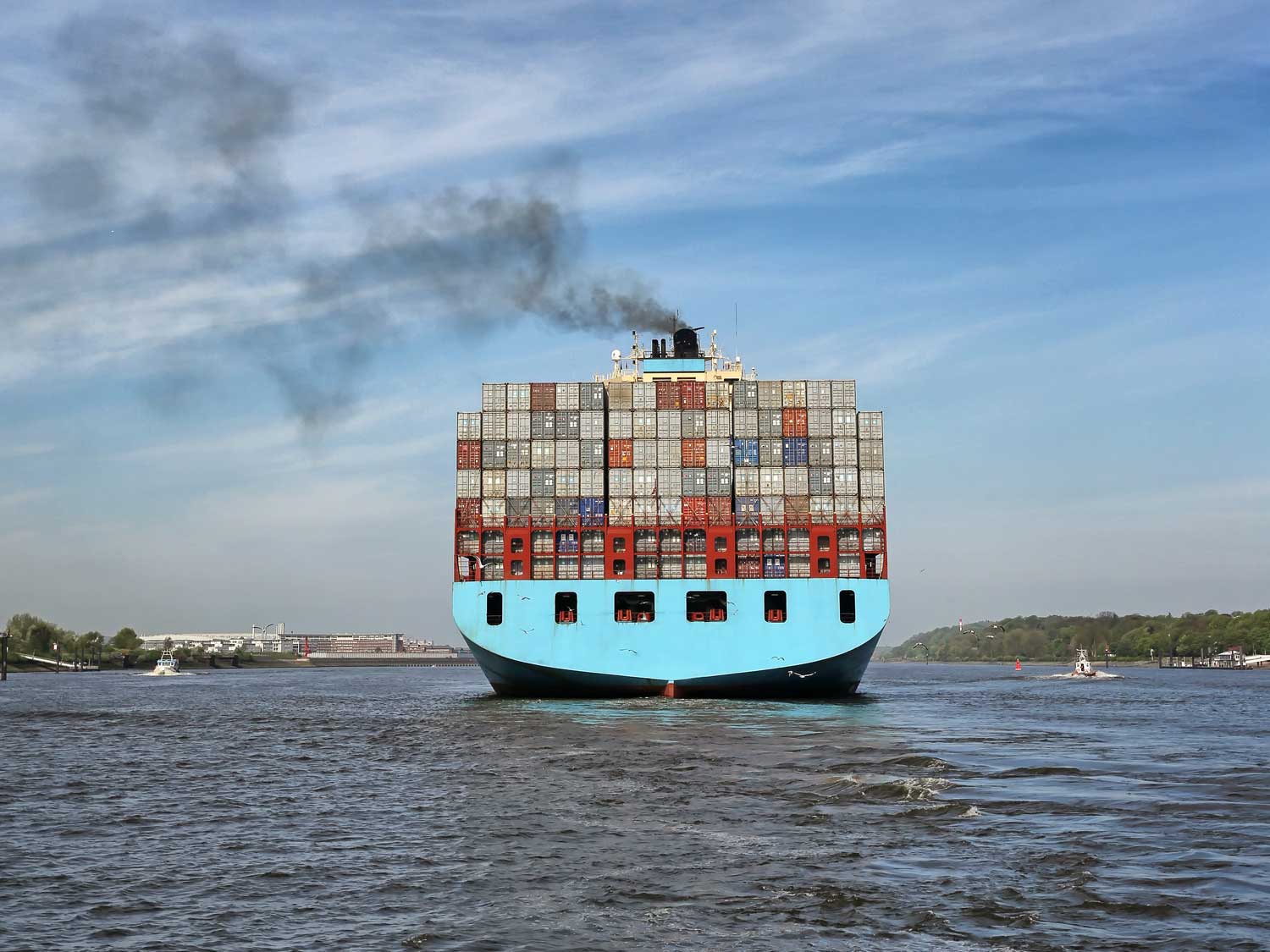
Leading shipping line, Maersk, has decided to focus on its largest volume customers, in a move that jeopardises the future of SME forwarders and leaves many shippers potentially exposed.

It is widely reported in the trade press, that small and medium-sized freight forwarders fear for their survival, following Maersk’s decision to offer them only its web-based spot market product, which is quite often unavailable on many trade lanes and routes.

Metro have secured long-term contracts with our partner carriers and shipping lines, across the three shipping alliances, but smaller forwarders, it would appear, are unable to follow suit and will face problems securing space and rates.

With Maersk, smaller forwarders can only get spot rates, which means they cannot plan a shipment in advance, because the spot quote has a very short validity. It can expire on the same day if the selected vessel runs out of space and it is not valid on the next vessel, which really restricts options for the forwarder.

While Maersk is the only carrier to focus on its biggest direct shippers (or BCO’s - beneficial cargo owners as they are termed), it is inevitable that other carriers may be considering a similar approach and the trade press is reporting feedback from sources that this is the case.

None of the shipping lines have yet made a clear statement that it planned to leave out forwarders in the future, but problems have been reported with making bookings. Smaller forwarders have been told late that there is no available space, or carriers are elevating pricing to a level that renders a shipment unviable, which raises suspicions of intention, according to trade articles.

For some medium sized forwarders, contracts have been renewed by the lines, but sometimes the rate is significantly higher, which is raising concerns that Maersk’s decision is the first step for other shipping lines to follow their strategy.

The problem for SME forwarders is that the carriers are offering bigger forwarders like Metro longer-term deals and that is immediately impacting smaller forwarders worldwide, because those kind of contracts are not now within their reach.

Without clear signals, and in a market where no shipper or forwarder can afford to shut the door on one possible carrier option, forwarders see little room to manoeuvre, but they are bracing themselves for the Maersk-type scenario they dread.

A trade source told the media this week that Maersk’s removal of contracted capacity had prompted other lines to do the same, claiming that one shipping line had “unofficially” told him that it was reducing capacity for smaller customers by 40%.

Another source concluded: “You can count main shipping lines on the fingers of your hands, but I think a few should not be able to kill thousands of freight forwarders. This is the risk.”

This is not the first time that container shipping lines have sought to cut-out freight forwarders and while previous efforts have quickly floundered, the digitalisation of the freight process, means that this time around they can offer short-term access to services via their spot rate platforms, without supporting SME forwarders.

In our view the freight forwarder is more essential than ever before, in supporting customers overcome the continuing minefield of logistical problems and in supporting carriers operate their capacity effectively.

Increasingly reliant on digital tools, carriers do not have the mindset or capability, to provide the support, feedback and service that shippers - of all sizes - need today.

We help our customers go global with ease, with advice, online services and real-time visibility of every shipment's journey. 

Shipping lines manage expensive assets and resources, that move between ports on fixed routes, but modern supply chains are fluid and need to react quickly to keep pace with demand, which is where a forwarder like Metro is invaluable in identifying requirements, finding solutions and allocating the right resource. Credibility and loyalty to our partners in the supply chain built up over decades really does make a difference.

And unlike the lines, who will favour their own services, we scan capacity opportunities globally, so that we can direct your cargo where your deadlines can be met in the most efficient and cost-effective way possible. 

Our goal is to help our customers improve productivity and profitability, to enhance their bottom-line and make them more successful.  Through unique initiatives and innovation.

Please contact Elliot Carlile or your usual Metro account manager, to discuss the best route to market and current fluid situation in the global logistics environment. We will have the answers that you need to plan your business continuity, in a challenging environment.

coronavirus4

China’s continued zero-Covid challenge for supply chains

The lockdowns and restrictions that China’s zero-Covid strategy risk, may create greater disruption than earlier waves of the pandemic, threatening already stretched global supply chains.

Beijing’s strict zero-Covid policy has curbed local outbreaks with mass testing, snap lockdowns, vigilant surveillance and extensive quarantines, but new variants such as Omicron have seen outbreaks intensify since the autumn.

China is determined to prevent any further Omicron outbreaks, especially as it prepares to host the Winter Olympics next month. It has recently imposed restrictions to maintain its zero-Covid target, with a lockdown in the central city of Xi’an, mandatory testing in Tianjin and parts of Zhongshan, Zhuhai and manufacturing hubs close to Hong Kong. And these are just the incidents that are known and get reported. There will undoubtedly be greater influence and impact, from the invisible actions taken.

Meanwhile restrictions have been eased in Ningbo, home to the world’s third largest container port, which has been in partial lockdown for most of the opening days of 2022, making entry and exit far easier for truck drivers heading to the port’s five container terminals.

Chinese ports are being impacted by regional lockdowns, with the situation varying widely from port to port and carriers changing vessel rotations at short notice, to avoid badly impacted gateways. This evolving situation raises the potential of even further disturbance, to already delayed shipping line schedules, from the main China base ports.

The situation may be exacerbated in the coming weeks, as China enters the build-up to many seasonal factory closures during Chinese New Year and Ningbo is still clearing backlogs, with many shipments having to be re-routed to Shanghai, to meet mother vessels.

Hapag-Lloyd is omitting Ningbo on two of its Asia-Mediterranean services and reinstating the Shanghai call, even though Shanghai is already severely congested, with most vessels already delayed by around one week. Very early, on their voyages into Europe.

Supply chains can usually cope with short-term lockdowns, but added shutdowns over a few weeks cause significant problems and with Covid, the lunar new year holiday and the Olympics all coming together, risks are multiplied and magnified.

After the initial virus outbreak spread from Wuhan over the lunar new year in 2020, the Chinese government blocked transport, preventing migrant workers who had travelled over the holiday period from returning to their jobs and factories shut for several weeks.

The latest restrictions have already impacted multinational organisations, with reports of Volkswagen and Toyota shutting their Tianjin plants last week and Xi’an chipmaker Samsung unable to get staff to work because of the lockdown.

And infections may spread further after Beijing reported its first locally transmitted case of Omicron, just weeks before the opening of the Winter Olympics in the capital.

Analysts fear that if infections spread, manufacturers would be as badly hit as they were two years ago, with few companies having their supply chains outside China, because these are strategic issues, which take a lot of time to stabilise.

Rather than moving production entirely out of China, some companies are trying to build second suppliers in China, while seeking alternative sources for components, but few of these initiatives will have progressed, as geographic diversification is often complex to get in place.

Supply chains have never faced so many challenges and with the situation in China being so fluid and changing rapidly, it is more critical than ever that you have the support of dependable partners. 

Metro share the latest supply chain news and most important global developments, so that you are always informed about the best alternatives and options, to keep your supply chain optimised. 

For further information and to discuss your ongoing requirements please contact Elliot Carlile,  or your usual Metro account manager to discuss alternative routes to market and manufacturing facilities.