Customs declaration

Importers from EU risking fines and worse

The EU introduced full import controls at the end of the Brexit transition period, while the UK government has now delayed full import control four times, with concerns rising that UK importers are not making appropriate declarations, risking fines and penalties.

The UK government’s own Public Accounts Committee officials warned months ago that much remains to be done to introduce import controls and the government’s aspiration to create the most effective border in the world by 2025 is a noteworthy ambition, but it is optimistic, given where things stand today.

Ambition is usually good – but it needs to be deliverable.

The decision to defer food checks and security declarations due to come into force in July is raising fears that more import shipments will not be properly declared by importers, or subject to HMRC scrutiny.

The Goods Vehicle Movement Service (GVMS) is HMRC’s IT platform for moving goods into or out of Northern Ireland and Great Britain, but its rollout, adoption and operation has been fraught with issues for UK border officials. Concerns are mounting that import shipments are simply bypassing the system’s oversight and weaknesses will continue to be exploited until import safety and security declarations are introduced, which will not be before the end of next year.

Without safety and security declarations being imposed on the 1st July, Border Force officials cannot see what needs to be stopped and which arrivals are without pre-lodged declarations, which means vehicles coming off the ferry could be carrying any number of undeclared shipments.

Reports in the trade press accuse some hauliers of taking opportunistic shortcuts without understanding the repercussions that may follow and until GVMS is operating effectively there may be little chance to restore order.

While deferred entries ended last June there are suggestions that some hauliers still use the entry in declarant’s record (EIDR) shortcut for GVMS entries, with others ticking the ’empty vehicle’ option for GB inbound.

Part of the problem is that a goods movement reference can be finalised via GVMS with the entry of just one ‘movement, or employer, reference number (MRN/ ERN), running the risk that hauliers could avoid declaring all shipments onboard a truck.

HMRC told the press: “HMRC has a strong track record in tackling all kinds of avoidance, evasion and non-compliance, and we will continue to employ an end-to-end approach to tackling customs risks.”

We always saw the EIDR delayed declaration scheme process as fundamentally risky, which is why none of our importers adopted it, opting instead for full clearance and consequently no liability to HMRC. 

It is now clear that there will be issues arising from HMRC’s border ‘easements’ and potential pitfalls, that we are pleased our customers have avoided.

Our CuDoS customs brokerage platform is optimised continuously, in line with the regimes in force on both sides of the Channel, automating and submitting customs declarations, for simple and compliant border processing in either direction.

To learn more and to discuss your trading objectives, please contact Elliot Carlile who can talk you through the options.

Shanghai port

China supply chain pressures relentless

Despite talk of restarting manufacturing and a tiered reopening of Shanghai and the surrounding province, the situation remains challenging and delays are increasing in Ningbo as the volume of cargo diverted from Shanghai continues to grow.

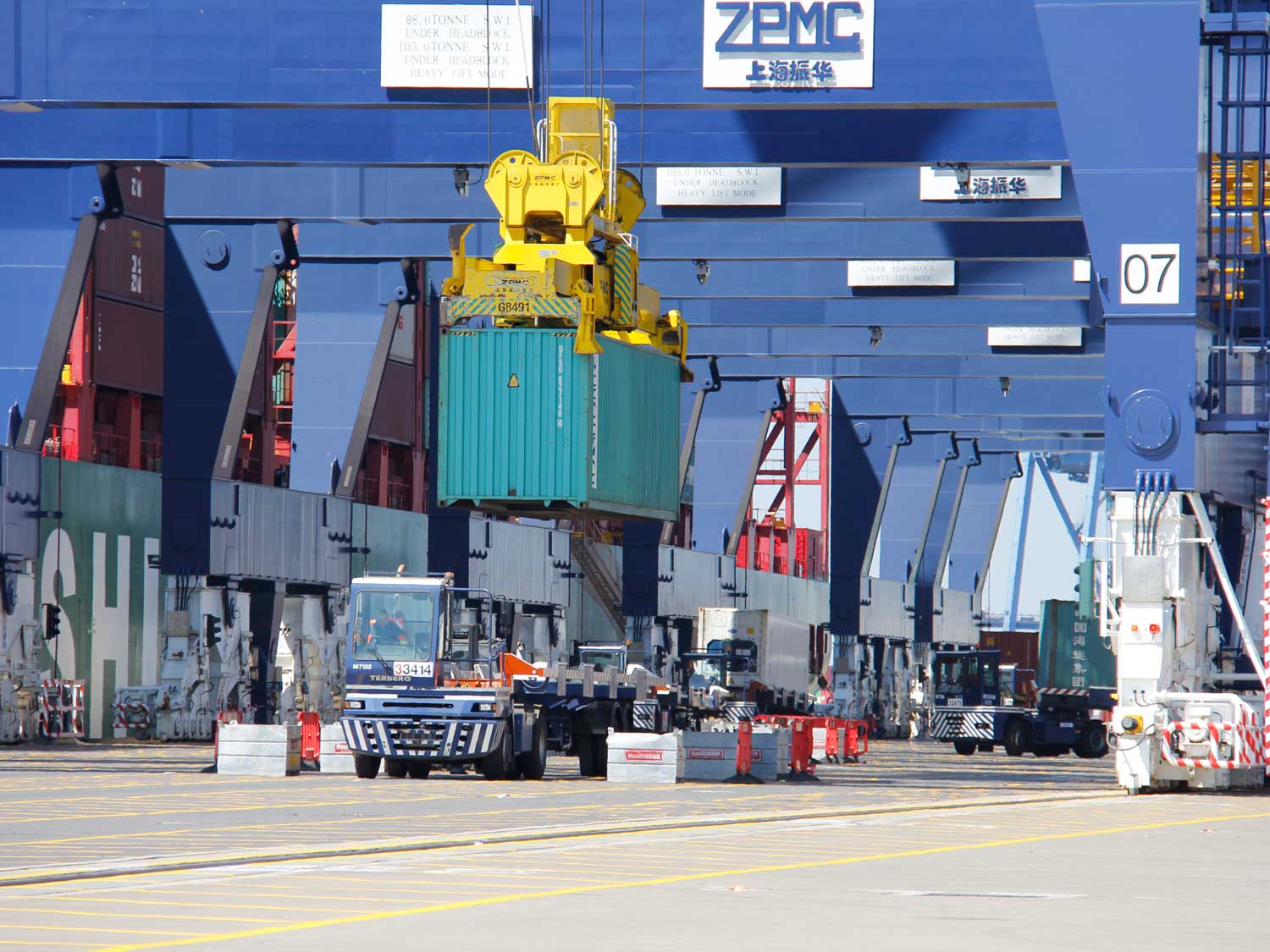
The Shanghai lockdown remains for a fifth week, with offices, workplaces, and public transport closed. Airport and container terminals remain operating, though restricted by the availability of transport to deliver and remove cargo, along with manpower and access issues caused by the current related restrictions.

Drivers are still subject to daily PCR testing (with additional ad-hoc testing imposed at short notice) and Shanghai and local road permits are required to enter cities in Jiangsu province and the local permit must be applied by the exporter, it can’t be the agent or haulier.

A number of major airlines continue to serve Shanghai, but restrictions limiting transport to and from the airport mean that cargo is diverting to other airports in the region and beyond.

The current issues look likely to remain until mid-May, at the earliest. In the meantime our team are re-routing cargo where it is possible and cost-effective, ensuring all available options are utilised.

Shanghai container terminals, in Waigaoqiao and Yangshan, operate as normal, but again they are affected by local transport availability and terminal handling capacity is limited due to availability of workers and COVID-safe working.

The situation is being further impacted by blanked sailings, delays, and longer waiting times, though the availability of ISO tank containers is improving and some carriers have lifted a stop on bookings for dangerous goods cargoes.

When transport can be allocated we continue to move FCL cargo through Shanghai ports, with the option of diversion, when appropriate. Though with increasing quantities of cargo diverting from Shanghai and Zhejiang province, Ningbo has become very congested and the announced blank sailings will very likely worsen the situation.

With Beijing expected to be the next major lockdown area, Shanghai is unlikely to see any relaxation of the rules and the "zero-virus’’ approach is likely to be pursued until the very end, which could be throughout the rest of 2022 in some form.

Guangzhou is on the COVID watch list, with the city’s airport, which has been handling large volumes of cargo diverted from Shanghai, cancelling all domestic flights due to suspected cases.

Local areas in Shenzhen are operating under different measures with factories and offices open or closed, based on the local conditions. Air and ocean facilities are operating, but the situation for local transport capacity and availability varies and drivers require a cleared 24 hours PCR test. The situation is very dynamic and changing daily with localised interpretations of regulations and requirements.

Cross-border trucking between China and Hong Kong is still struggling with capacity limitations due to long waiting times for control and restrictions. Large volumes of cross-border traffic continues to be transported by feeder services.

Reduced land-side trucking capacity continues to be a limiting factor, with significantly reduced capacity available for cargo collections and deliveries, which means factories may not meet planned delivery schedules.

We will continue to closely monitor the situation and update you as changes occur, but we do recommend checking with your vendors, to clarify the status of your orders, and whether they have actually been manufactured.

When China does begin to lift lockdowns it is not inconceivable that the manufacturing bounce-back could happen within weeks, as the government will be very focused on getting production up and running again. It is widely understood that this could have a serious impact, particularly if it coincides with the start of the traditional ‘peak season’. Spot/ FAK rates are expected to head north very quickly, as demand returns through product being made and logistics loosening up internally, within China’s transport systems.

We hope to see supply chains start to flow freely again quickly, as the pent-up demand for delayed goods could quickly create congestion, if operations are not running optimally. With the long term fixed price and capacity agreements we have in place with our partner carriers we are well positioned to continue to deliver resilient, consistent and reliable supply chain movements throughout the year. This has been our recommended model during the pandemic and continued challenges experienced over recent months.

Metro’s cloud-based supply chain management platform, MVT, simplifies the most demanding global trading regimes, by making every milestone and participant in the supply chain transparent and controllable, down to individual SKU level. 

To discuss how our technology could support your supply chain, please contact Simon George our Technical Solutions Director or Elliot Carlile.

Pallets

Ukraine invasion drives timber prices up and pallet supply down

The European Pallet Association (EPAL) and the European Federation of Wooden Pallet and Packaging Manufacturers (FEFPEB) have warned of a shortage of wooden pallets and packaging that is already being felt.

The war in Ukraine and the shutdown of production is having serious consequences for European pallet manufacturers, with packaging prices increasing, as evidenced by a French trade association who confirm that pallet prices have risen from €7 to €29, an increase of >400% increase.

The associations said that pallets are increasingly difficult to find and more expensive to produce in a context of soaring raw material costs and in particular the price of wood.

Pallets are critical components in the global transportation, because they are the common interface for every stage - handling, shipping, trucks, forklifts - and make the supply chain work. They have become a key component of transport and warehousing especially over the last few decades and are an essential tool to  industry. What you see in your local supermarket on a shelf has invariably been on at least one pallet in its movement, and usually several.

Without pallets, supply chains would revert to handling one box at a time, which is the way cargo moved, before the pallet was introduced over a hundred years ago.

Ukraine exported over 2.7 million m³ of lumber last year, a significant part of which was used for the production of wooden pallets and packaging in Europe, while Ukraine also independently produced and exported to European states about 15 million of its own locally manufactured pallets.

In addition to stopping deliveries from Ukraine, the wooden pallet and packaging market will also face difficulties with imports from the Russian Federation and Belarus, which annually supplied about 7.6 million m³ of lumber to the EU – that’s a huge amount of timber boards to be extracted from the supply chain.

Alternative suppliers from Scandinavia, Germany and the Baltic countries are currently not yet able to fully cover the possible shortage.

The result, for companies further down the line, is a sudden rise in pallet prices and the risk of running out of a product that’s often overlooked yet essential to supply chains, as it allows businesses to stack goods and transport them efficiently with reduced loading time. This affects all modes of transport, from high value electronic goods by air freight, through to foodstuffs by truck. Something to be aware of, that will add to the cost of goods.

To discuss your packaging and pallet requirements, please contact our export team, who can take you through your options and solutions. If you are seeing a shortfall in supply from current suppliers of pallets we have a network to recommend and assist with, what will hopefully be, a short term challenge that will often not be considered as a problem.

Dover queue 2

EU/UK border controls set for July put back again

The UK government has again delayed the introduction of further border controls on goods from the EU, due for implementation from July, pushing them back until the end of 2023, suggesting it did not want to add more costs at a time of fast-rising inflation.

New import controls, including on EU food products, due to begin in July of this year, have been put back for a fourth time, with the government saying "it would be wrong to impose new administrative burdens and risk disruption at ports" at a time of higher costs due to the war in Ukraine and rising energy prices.

The government said. “British businesses and people going about their daily lives are being hit by rising costs caused by Russia’s war in Ukraine and in energy prices. It would therefore be wrong to impose new administrative burdens and risk disruption at ports and to supply chains at this point. The remaining import controls on EU goods will no longer be introduced this year - saving British businesses up to £1 billion in annual costs.”

Port operators, many of whom have already built border control posts, have reacted angrily, saying the government’s announcement is a major policy change and that the facilities could become redundant, wasting millions of pounds of public and private funding.

Specifically, the following controls which were planned for introduction from July 2022 will now not be introduced:

•   Safety and security declarations on EU imports

•   Health certification and SPS checks for EU imports

•   Prohibitions and restrictions on the import of chilled meats from the EU

•   Sanitary and Phytosanitary (SPS) checks on EU imports currently at destination to be moved to Border Control Post (BCP)

Current import controls on EU goods will stay in place and traders will continue to move their goods from the EU to GB as they do now:

•   Import Customs Declaration

•   GVMS declaration

•   Pre-notification into IPAFFS for POAP, Live animals, Plant Products

The government’s statement confirmed that no further import controls on EU goods will be introduced this year and that businesses can stop their preparations for July now. In many ways this can be  considered a good thing that is positive for business; in other ways just further delays that will occur at some point that will need to be addressed.

They will now publish a Target Operating Model in the Autumn that will set out the new regime of border import controls and will target the end of 2023 as the revised introduction date for the control’s regime.

Metro are at the forefront of delivering EU customs brokerage solutions, with our automated CuDoS declaration platform and a dedicated team of over 40 customs experts.

Now available to new customers, our CuDoS customs brokerage platform is optimised continuously, in line with the regimes in force on both sides of the Channel.

Automating and submitting customs declarations and associated paperwork, CuDoS simplifies compliant border processing, in either direction. 

To discuss your situation and to learn how we automate customs declarations for businesses of all sizes, please contact Elliot Carlile to talk through the options.