Auto Advance

Metro witness the launch of environmental first – reducing vehicle carbon emissions before they have ever been driven

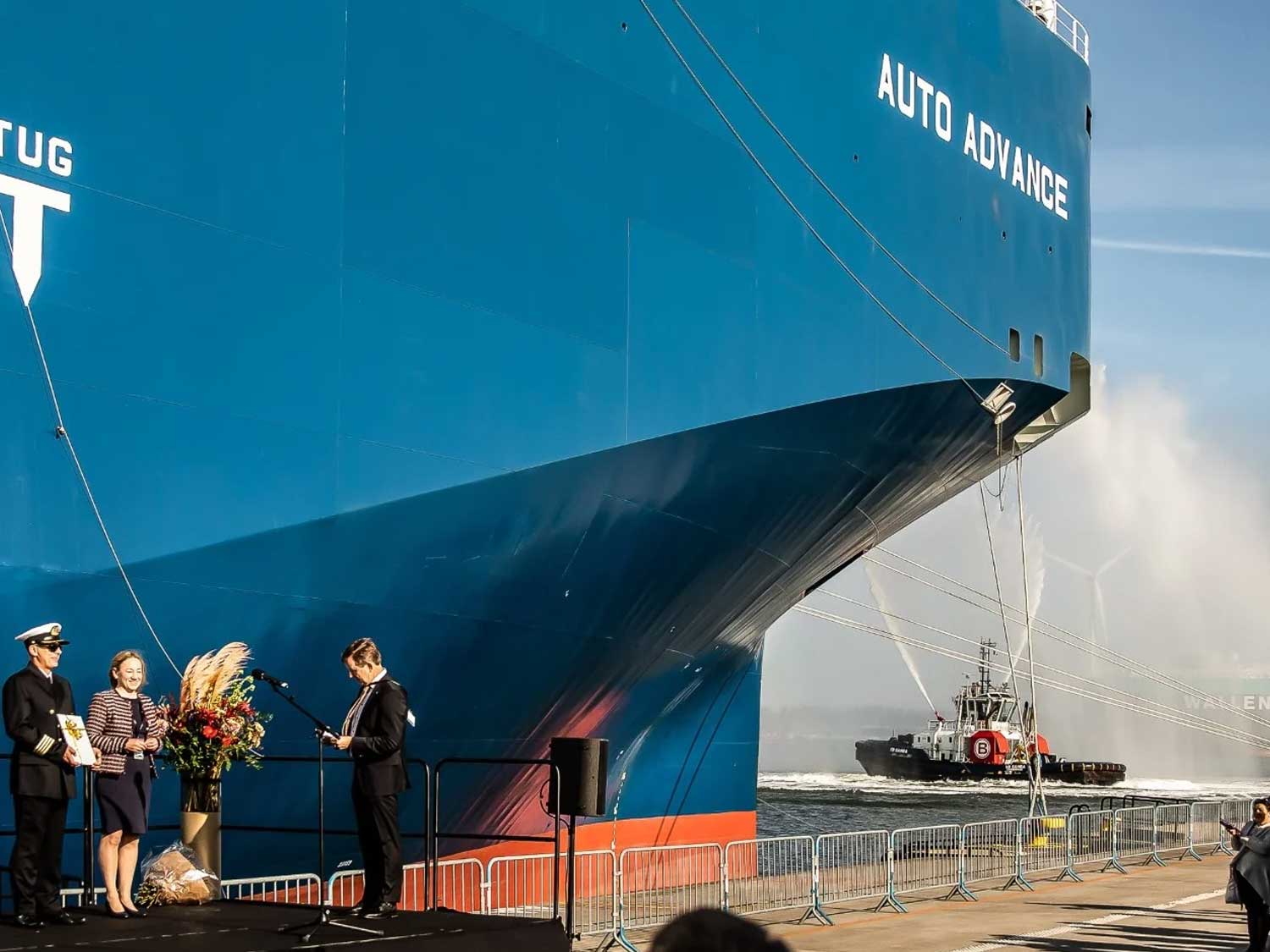
Operating a fleet of 17 pure car and truck carriers, United European Car Carriers (UECC) is the leading RoRo provider of short sea services for cars and other rolling cargo. Leading customer, Metro, was invited to Zeeburgge, to witness the naming of the world’s 1st hybrid pure car and truck carrier.

UECC, the Norwegian RoRo transporter of rolling cargo held a naming ceremony for its first dual-fuel LNG battery hybrid pure car and truck carrier (PCTC), the vessel Auto Advance, at the Port of Zeebrugge’s, ICO Bastenaken Terminal on the 26th October.

Present at the naming ceremony were Metro directors Tom Fernihough and Matt Weight, who are responsible for key automotive, construction and commercial/industrial vehicle accounts, and consequently big volume users of PCTC RoRo services.

The Auto Advance measures 28 by 169 meters in length (that’s big – think of two football fields), with capacity for 3600 vehicles, over 10 cargo decks and is said to be the world’s first vessel of its type. It will provide significant gains in energy efficiency and emissions reduction as it enters service this year to boost UECC’s efforts to decarbonise its fleet.

It is part of a new build trio of multi-fuel LNG battery hybrid PCTCs that UECC hope will make a real difference for the environment and for their business, as new green regulations are set to shift the RoRo market playing field.

LNG battery hybrid technology, together with an optimised hull design for better fuel efficiency, will enable these new builds to exceed the IMO requirement to cut carbon intensity by 40% from 2008 levels within 2030. Emissions of carbon dioxide will be reduced by around 25%, SOx and particulate matter by 90% and NOx by 85% from the use of LNG, while the new builds will also meet the IMO’s Tier 3 NOx emissions limitations for the North Sea and Baltic Sea.

Tom Fernihough. "Delighted to attend the naming ceremony of UECC's latest vessel the MV Auto Advance. A significant innovation in hybrid technology for a greener environment . Many thanks to UECC for their investment to a cleaner solution.”

Matt Weight. “Metro is committed to extending our zero-emission strategy as far down our customers’ supply chains as possible, which is why we welcome this positive move towards decarbonisation, by a key carrier partner.”

There is much more to come from Metro, on the environmental front, in the very near future which we will continue to announce as we roll out further initiatives with our partners and within the organisation. This is beyond a focus – it is our mission to ensure our customers have the slickest and most environmentally creative supply chains available at any time, regardless of the external influences.

To learn more about our commercial/industrial solutions contact Tom Fernihough, or Matt Weight for our automotive solutions and Simon George for our ECO/MVT, carbon measuring and offsetting solutions. We have the end to end movement of the most valuable cargo covered - with complete visibility and ability…

Suspension of Transit

<strong>Schedule reliability and port congestion in decline</strong>

The latest, market leading source, Sea-Intelligence schedule reliability figures show a slight decline of 0.7% in September to 45.5%, which is the first fall since reliability began to trend upwards in April and follows the year’s largest reliability increase of 5.8% in August.

The average delay for late vessel arrivals has been dropping consistently since the start of the year and In September improved once again, albeit slightly, dropping by -0.10 days, bringing the average delay to 5.81 days and is the second consecutive month that the delay has dropped below the 6-day mark since April 2021. Pre-Covid pandemic situation this would have been deemed completely unacceptable. But transits and measurements have changed over the last few years and many traders would like to slow down their products in transit in the current global environment so it is actually, by some businesses adjusting their supply chains in line with current consumer demand, considered a benefit we have observed.

With schedule reliability of 53.2%, 2M was the most reliable carrier in September 2022, followed by CMA CGM with 45.5%, with another four carriers recording schedule reliability of 40%-50% and the remainder at 30%-40%, or lower, it has been widely reported in the trade news.

Yang Ming recorded the lowest schedule reliability of 35.1%. In September 2022, once again, most of the carriers were very close to each other, with the difference between Yang Ming at the bottom and CMA CGM at second, a little over 10 percentage points.

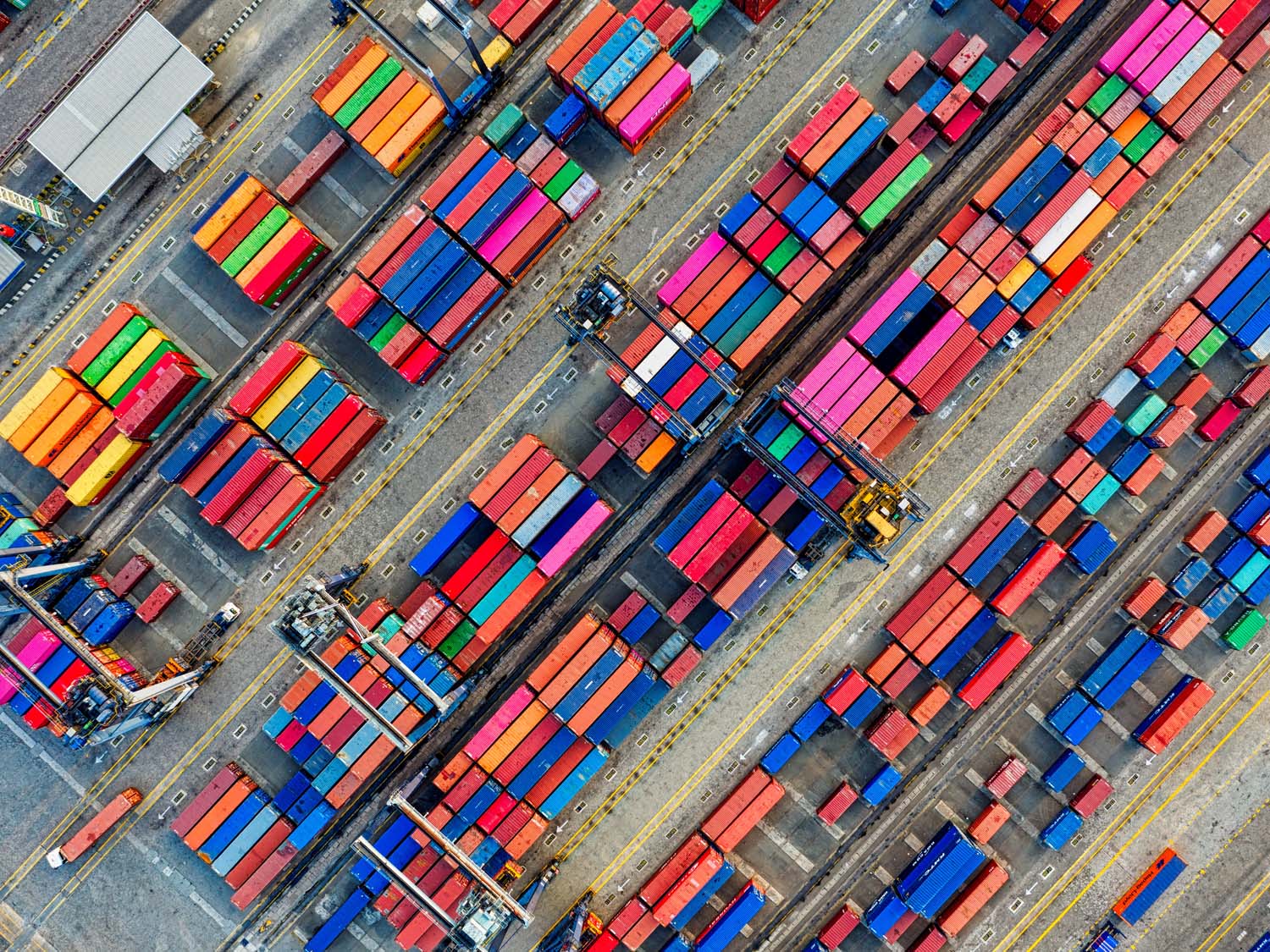
Despite schedule reliability improvements global port congestion remains an issue with ~11% / 2.8m TEU of capacity tied up due to bottlenecks, labour shortages, industrial disputes and other post-pandemic disruptions.

The overall trend is on a downward trajectory, as congestion is starting to ease across the main hotspots in the US and Europe, though there was a small increase in vessels waiting at Chinese ports, due to weather related issues and isolated COVID lockdowns.

US East Coast port congestion is improving, with Savannah remaining the most congested port with 33 vessels recently waiting at anchor. US West Coast congestion is now almost cleared with only a handful of vessels waiting in the San Pedro Bay area.

The situation at the main European ports remained largely unchanged, although dockworkers at the Port of Liverpool began their second strike last Monday and are set to continue through this week, and with no agreement reached with the Unite union at Felixstowe, there is a risk of further industrial action at either port before Christmas.

We are working closely with our offices and network partners to monitor the situation throughout US and European ports, with contingency plans to ensure product is delivered to market, without delay, until congestion finally subsides.

To learn how we can help you avoid disruption and port congestion, or to request our regular ocean market report, please EMAIL our sea freight director, Andy Smith, who can advise on the best solutions for your ocean supply chain. 

The freight market is changing every week, across all modes – we have the latest intel and will share our recommendations on the coming months and into the New Year of 2023 – a NEW challenge approaches. You are in safe hands to ensure you have the options available to achieve your future plans. Across the board we try to future proof all aspects of global trade to ensure that you achieve, as an agile leader and ambitious partner to your business.

Visibility

Delivering total supply chain control with 4PL transparency…. and much more

The COVID-19 pandemic raised public awareness of the critical importance of supply chains, with the industry being recognised as ‘key workers’ throughout the crisis. And the need for efficient logistics has increased reliance on fourth-party logistics (4PL) providers to manage complex global supply chains, which will see the global 4PL market, valued at £43 billion in 2021, reach £78 billion by 2030. Or we suspect probably much more.

The Metro MVT (My Visibility Tool) platform was conceived and launched over 15 years ago to provide real-time shipment status updates and end to end control and milestone management throughout the life of a movement of product and its transit on a neutral platform. It is a cloud-based, hyper secure, 4PL solution that connects shippers to their entire supply chain, harnessing all participant entities, process and inventory data to provide complete real-time visibility, control and intelligence.

Accenture defines Metro’s 4PL solution as, “a supply chain integrator that assembles and manages the resources, capabilities, and technology of its own organisation, with those of complementary service providers, to deliver a comprehensive supply chain solution.” 

“The 4PL client achieves improved service levels, reduced costs of up to 25%, minimised asset down time and reduced supply chain risks to the business. Performance visibility, better reporting and enhanced analytics assist faster and smarter decisions.”

Metro’s cloud-based 4PL platform is entirely modular and configured to each customer’s needs and situation. It consolidates multiple data sources to deliver 4PL insight and control, for strategic supply chain management and data-driven decision making.

Each 4PL platform embraces essential data sources from key supply chain participants, with advanced drill down features and a library of added value features that support participant management, financial oversight and performance benchmarking. 

The 4PL platform is a single source for managing end-to-end logistics, with multiple participants, carriers and service providers. Shippers, manufacturers and retailers find it easier, and more profitable, to focus on their core competencies and trust the control of their transportation and distribution to an expert like Metro, with a mature and proven 4PL solution.

The COVID pandemic and the Ukraine war have revealed the vulnerabilities of complex, geographically dispersed global supply chains. Metro’s 4PL platform creates visibility and stability, to make extended supply chains resilient, even in uncertain supply and demand conditions.

And because Metro do not own assets, there are no vested interests, just objectivity to optimise operations, detect and address issues, to deliver the most efficient supply chain, at the best cost and best performance metrics.

EXAMPLE 1

For automotive manufacturers and supercar marques, the Metro 4PL control towers manages the movement of finished vehicles globally. These singular assets are often time critical and very valuable, which means the 4PL needs to be constantly scanning the market to source the right mode of transport, for time sensitive freight moves, with the optimum balance of cost, service and on time delivery, while monitoring the vehicles progress throughout its journey. Scorecards rate vendors, validate invoices and provide a monthly KPI pack. 

EXAMPLE 2

For consumer product manufacturers Metro’s neutral 4PL solution manages multiple freight forwarders, consolidating data to provide a single view of the supply chain and giving the customer the ability to replace forwarders, without the hassle of integrating new systems.

Our commitment to innovation and developing bespoke digital solutions goes back decades, with the latest generation of 4PL tools incorporating robotics, predictive analytics and AI, to minimise risk along the supply chain. The latest modules monitor and measure CO2 emissions, at consignment level, for off-setting and ultimately carbon-neutral supply chains.

For more information on the 4PL platform, or to discuss how our technology could support your supply chain, please EMAIL Simon George our Technical Solutions Director or Matt Weight.

India factory

Sourcing insight; Buyers strategically moving production from China to India

Post-pandemic globalisation is not dead, but as China’s zero-COVID strategy continues it is evolving, as buyers reassess China sourcing risks and diversification and the alternative production capacity that India offers is badly needed, particularly given that Vietnam and much of Southeast Asia are hitting their limits.

As widely reported in the international media this week, new COVID outbreaks are creating further lockdowns in China and this quote from The Loadstar outlines the logistics impact, as of yesterday.

‘’Lockdowns in key Chinese port cities are again hampering supply chains, despite a “muted” peak season and President Xi gave no indication of a change to China’s zero-COVID policy at the Communist Party Congress this week, where he is expected to obtain a record third five-year term in office.

Indeed, in what has now become a regular occurrence, COVID restrictions are impacting supply chains in Ningbo, Shanghai, and Tianjin. Ningbo is the worst affected, with forwarders reporting disruption to the area around the port going into lockdown.’’

Apple has already moved 5% of its iPhone 14 production to India and US importers are increasing their sourcing from the country, with inbound shipments from India rising over 12% in 2022, though this growth is eclipsed by the UK’s goods imports from India, which grew by over 50%.

Apple has been manufacturing iPhones in the southern Indian state of Tamil Nadu since 2017 and by 2025, analysts expect a quarter of all iPhones to be produced in India, as trade tensions between Beijing and Washington show no signs of letting up.

Over 5% of the UK’s importers - >14,000 - are already importing from India and the number is likely to grow exponentially, as many companies looking to "de-risk" global supply chains are looking at alternative supply sources, because of political uncertainty and China's "zero-Covid" policy.

China’s zero-COVID strategy for eradicating the pandemic has already led to factory closures and large-scale supply chain disruption, with buyers  increasingly adopting a “China plus one" strategy, or avoiding the country entirely and re-engineering their supply chains.

The trend towards dual and omni-sourcing is clearly good news for emerging manufacturing power-houses like India, Vietnam, Turkey and Mexico.

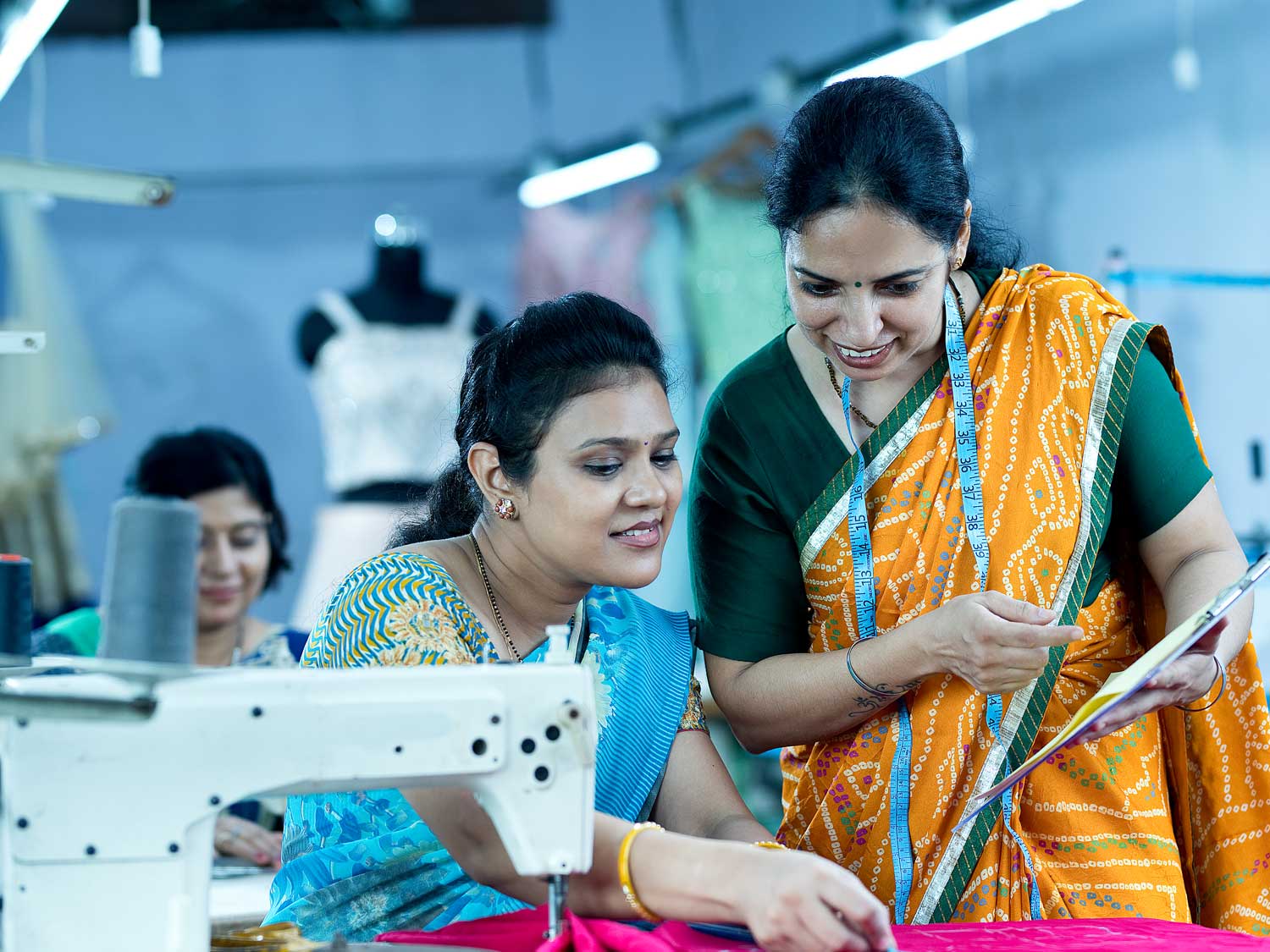
Metro’s footprint in India continues to grow, to meet our customers demand, with our expanding team of 50 relocating to a much larger, custom-built, facility in Chennai next year, driven in part by the government’s commitment to building manufacturing capability.

Prime Minister Modi's government is offering financial incentives to companies that are keen on making India their production hub, which is attracting foreign investment in sectors such as manufacturing and electronics, including semi-conductors, which are critical components for many of our customers.

Encouraged by these production-linked incentives a renowned mining conglomerate is investing £17bn to set up a semiconductor plant in India in collaboration with the Taiwanese electronics manufacturing giant Foxconn, taking India a step closer to its own 'Silicon Valley’.

The ascendancy of India as a sourcing region, mirrors near-shoring activity closer to home and in particular within the EU, sub-Saharan Africa and Turkey, where we have integrated transport networks, designed to support JIT manufacturing requirements.

These transport networks are ideally positioned to support new sourcing requirements, de-risking and simplifying a critical strategic decision.

If you would like to discuss our India capability, or learn how we can assist your ability and strategy to source from the EU and Turkey, or other evolving global manufacturing  regions, EMAIL Elliot Carlile to arrange a consultation and scoping discussion. We have it covered from a logistics perspective with immediate ability, agility and results to ensure you have a streamlined supply chain regardless of where you are sourcing your products. It’s what we do…...