Post-Brexit changes and demand driving up customs brokerage costs

Post-Brexit changes and demand driving up customs brokerage costs

New post-Brexit customs rules mean extra processes around declaring goods, which is increasing demand for scarce brokerage resources and pushing up the price of imports to the UK.

Despite the UK government investing over £700 million in border infrastructure and additional technology to monitor trade, importers are facing billions of pounds worth of additional costs after the Brexit transition period ended in January, with an additional 400 million annual import and export customs declarations, since leaving the customs union and single market.

The Public Accounts Committee says it is clear that EU exit and new border arrangements have increased costs, paperwork and border delays for UK importers.

In the run up to Brexit and the eventual ending of the transition period Metro invested significantly in system development, of our automated ‘CuDoS’ (Customs Documentation Services) customs solution and the building of a dedicated Brokerage team, that has supported our customers, in adjusting to the new European trading relationship.

In 2021 our brokerage team achieved significant milestones including:
  • 74% of workflow automated
  • 20,000 export declarations
  • 8,000 Transit accompanying documents
  • 26,000 import declarations
  • 99% analog to digital accuracy
  • 8 minutes = record declaration turnaround
  • 85% of clearances turned around in under 2 hours

Systems and CuDoS development continued through 2021, in readiness for the post-Brexit requirements that came into effect from 1st January 2022, with continuing research and development for the new HMRC operating system, CDS, which is now due to arrive in the 3rd quarter of this year for imports and March 2023 for exports.

Despite our groundwork and preparation for the significant changes on the 1st January, the demand for support from existing and new customers far exceeded all our expectations and workforce cost increases are outstripping inflation due to the salary increases that are necessary to retain skilled staff in a very competitive market. 

In addition to significant salary increases, we have also invested in our brokerage capability, by further increasing the size of our dedicated team, to meet current demand and support customers’ ongoing growth.

The launch of the GVMS service by HMRC has resulted in a significant surge in communication requests with the brokerage department, to support clients’ hauliers and has been a recognisable additional drain on the operational team.

While our team’s workload and process requirements have become increasingly more complex and time-consuming during 2021, we made every effort to maintain pricing stability for our customers, with any increases imposed at the end of the validity period,  reflective of the situation outlined above.

Metro continue to monitor and manage the post-Brexit situation as it develops and evolves, investing in our team and technology, to safeguard our customers and their European supply chains. We are cutting-edge with our solutions and reliability in the market.

Our tailored customs brokerage programmes are optimised and automated by our CuDoS platform, to offer productivity and scale economies.

We access the largest European haulage networks, including within our own group of companies, to provide agile and creative transport options into, out of and within Europe. 

For further information please contact Elliot Carlile to organise a full review and discussion relating to any issues that you may be facing.
Fears grow over new post-Brexit border checks

Fears grow over new post-Brexit border checks

Post-Brexit border checks have been introduced in stages since last January and the latest, which come into force in July, may cost UK companies millions of pounds, as widely reported in the national press.

Full checks and controls on imports of live animals and food at the GB border – which had originally been due to come into force on 1st January 2021 – had been postponed, to give UK importers more time to prepare, despite the EU having implemented checks on British exports immediately after ‘Brexit’ began on 1st January 2021.

The British Meat Processors Association (BMPA) said paperwork required for live animals or animal products – added to existing border red tape – would result in extra costs of £120m and “British consumers will be picking up the bill”.

In its latest report parliament’s spending watchdog, the Public Accounts Committee (PAC), said the only detectable impact of Brexit so far is increased costs, paperwork and border delays and that it was “clear that EU exit has had an impact” on UK trade volumes.

The report says there is potential for further disruption during the course of this year as more people start travelling again, and passenger volumes at key ports like Dover increase.

New border systems have yet to be tested with traffic back at what were normal levels, before the pandemic struck. This includes cargo and people travelling, which is a diversion from pure freight protocol and integrity.

Until now UK importers have been in an extended grace period, but in July, certification and physical checks will be introduced for all animal and meat by-products, and physical checks on live animals will take place at designated border control posts.

BMPA warned the additional paperwork caused may cause a permanent 20% loss of trade with the EU due to costs. “European exporters will become less inclined to keep supplying to the UK,” it said.

Allen explained: “After a year of dealing with the new post-Brexit customs and certification system, our members are reporting a huge rise in cost, which either has to be absorbed or passed on to their EU customers, rendering British exporters less competitive.”

This could have a significant impact on British consumers’ “cost of living woes,” as over a quarter of all food in Britain comes from the EU. This has been widely commented on recently, with food inflation starting to impact at every level.

The BPMA believe the government could solve the problem by entering into a veterinary agreement with the EU which would negate the need for most of the current bureaucracy and physical border checks and give British exporters a fighting chance to regain the trade they’ve lost, or may lose in the future, if action is not taken to avoid the fallout.

Figures from the Office for National Statistics show the cost of produce from retailers reached 4.5% year-on-year in December, which is the highest rise in nearly 10 years. And it is continuing to spike further in 2022.

We are seeing our own inflation, with additional administration and increased resource needed to complete brokerage processes – and further requirements – to ensure that our customers’ cargo continues to flow across UK/EU in both directions. 

Metro are continuously launching initiatives, digital and physical, to reduce costs and protect against negative market effects, whenever significant changes impact European supply chains.

Metro are at the forefront of delivering EU customs brokerage solutions, with our automated CuDoS declaration platform and a dedicated team of 40 customs experts.

Now available to new customers, our CuDoS customs brokerage platform is optimised continuously, in line with the regimes in force on both sides of the Channel.

Automating and submitting customs declarations and associated paperwork, CuDoS simplifies compliant border processing, in either direction. 

To discuss your situation and to learn how we automate customs declarations for businesses of all sizes, please contact Elliot Carlile to talk through the options. 

This is another area of expertise within the logistics environment that we have led from the front since the announcement of the UK leaving the EU and continue to pride ourselves in delivering real solutions to all customers every day.

Ports under post-Brexit pressure

Ports under post-Brexit pressure

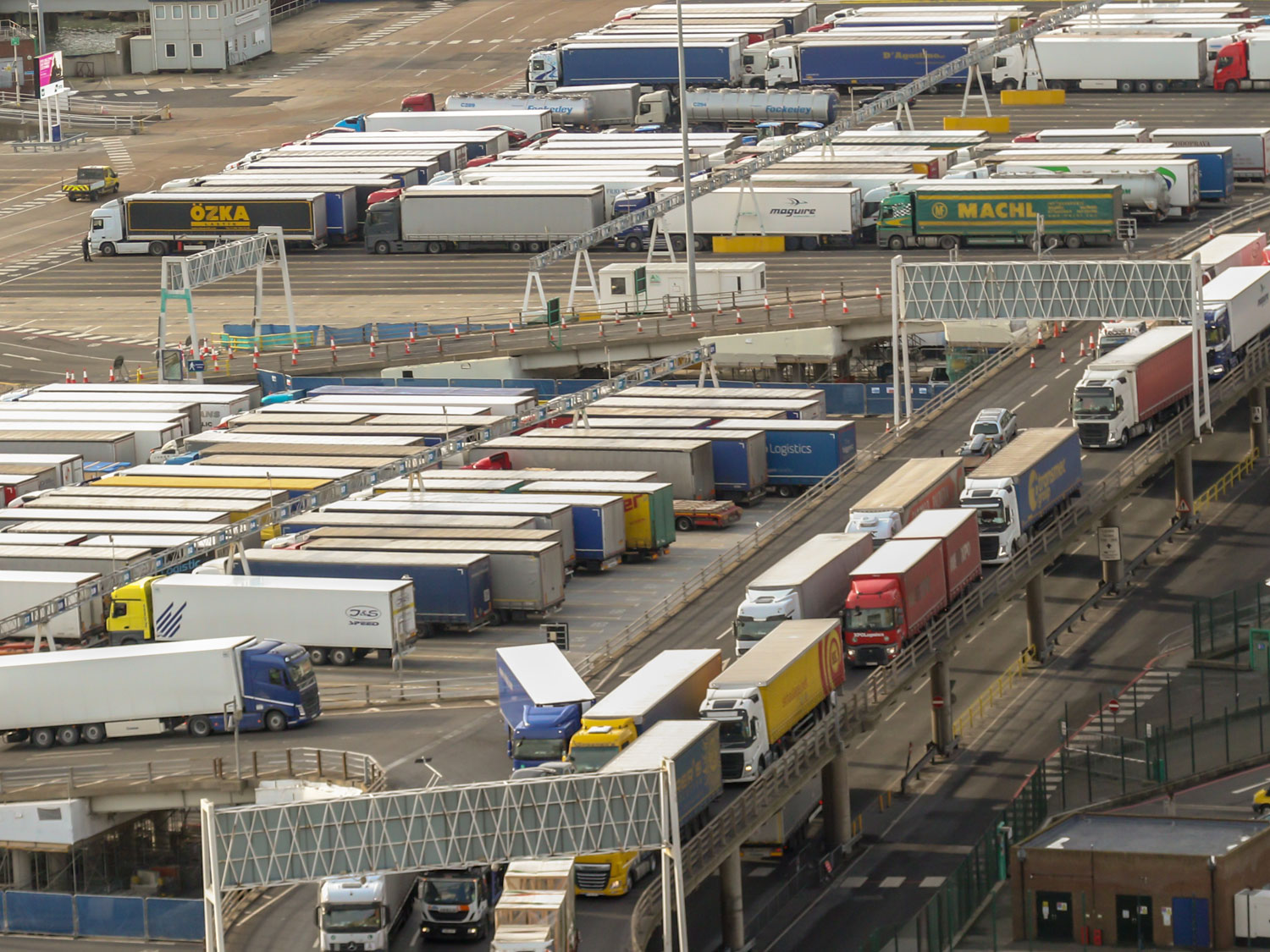
The 1st January 2022 changes to UK border policies, with the imposition of customs declaration for imports from the EU, got off to the rockiest of starts when the new supporting IT system, the Goods Vehicle Movement Service (GVMS), crashed on day one, with trucks stuck at Calais for four days.

While HMRC were quick to restore the crashed GVMS system, the pressure on EU/UK supply chains is likely to intensify as volumes rise after the Christmas lull, with additional delays tied to Goods Movement Reference (GMR) production, which is required before trucks can enter the loading port. Truck drivers have reported queues of up to eight hours trying to get through customs controls at the French port of Calais.

We are uncertain why other forwarders’ GMRs are not being produced in a timely manner and not always correct, as we do not see the new regulations as too arduous. The process is the same, it’s mainly just the time frame which has changed.

Make UK, the industry body representing 20,000 manufacturing firms, said that while optimism among its members had grown, it was being undermined by the after-effects of the UK’s departure from the EU.

One year on from the end of the transition period and the majority of firms in a Make UK/PwC senior executive survey said Brexit had moderately or significantly hampered their business, with over half warning they were likely to suffer further damage this year from customs delays, new red tape and changes to product labelling.

Brexit disruption remains among the biggest concerns facing industry bosses for the year ahead as Britain’s departure from the EU complicates the fallout from COVID-19 and the multitude of rising costs facing companies.

Delays at customs, the additional costs from meeting separate regulatory regimes in the UK and the EU, and reduced access to migrant workers were among top concerns raised in the survey, while on a more positive note three-quarters of companies expected conditions in manufacturing to improve over the coming year.

According to analysis by the Centre for Economics and Business Research, business optimism and output growth fell in December as firms grappled with the fallout from the latest wave of COVID infections.

However, most companies said they believed business conditions would improve, with about 73% believing that opportunities outweighed the risks, while in a separate survey of chief financial officers, a record 37% were planning on increasing capital investment in the next year, on new products, services, or markets.

Metro are at the forefront of delivering unique customs brokerage solutions, designed and developed in-house, with automation and a global team of more than 40 people dedicated to the platform. We can ensure that products move from A to B to Z seamlessly under the correct protocol and with complete visibility.

We believe that importers should have no fear of customs delays, or new red tape hampering their supply chain operations.

Our CuDoS customs brokerage platform automates and submits customs declarations, simplifying compliant UK/EU border processing and safeguarding our customersEuropean supply chains.

We have a dedicated team of customs experts who support our customers through easement and regime changes and ensure that their EU/UK movements flow smoothly across the border, in full compliance with all controls.

To discuss your situation and to learn how we automate customs declarations for businesses of all sizes, please contact Elliot Carlile or Andy Fitchett who can talk you through the options. 

We currently have capacity within our brokerage business unit due to further huge investment in 2021, in personnel and our CuDoS platform, which positions us at the forefront of the market. We can deal with any challenges and encourage all new enquiries relating to customs requirements during the current period.

2021; a year of supply chain challenges

2021; a year of supply chain challenges

All around the world, companies have been impacted by supply chain challenges in 2021. With the pandemic’s disruption exacerbated by ‘Black Swan events’, from Brexit, to the Suez Canal blockage, we have been working tirelessly to help our customers overcome these challenges and share critical information, so that they are always informed of what lies ahead.

Ensuring the right product is available for delivery, to the right customer, at the right time, in the right quantity and in the right condition becomes increasingly difficult when supply chains are pressured and unforeseen events impact operations.

To keep our customers and followers informed during 2021 we have been approached for our opinions regularly by the trade and national press, contributed to countless articles and shared breaking supply chain news, guides and insights, including:

  • 40 supply chain bulletins, to a combined audience of 32,000
  • 200 news updates on our web site attracting >100K page views
  • 1000+ social media posts, reaching over a quarter of a million users

Our first bulletin of 2021 highlighted early Brexit-related issues and outlined the rates, vessel space and equipment availability challenges that lay ahead.

A few bulletins in and we were considering the supply chain impact of the UK’s vaccine programme and, in preparation for the anticipated volume increases, were adding new personnel in key operational departments.

US port operations, particularly on the West Coast began to buckle under relentless volumes in early March, while European, North American and UK ports were anticipating a lull after the Evergreen EverGiven blocked the Suez Canal for six days, from the 23rd March. 

Lockdowns continued to ripple across Asia from April and container equipment shortages really began to bite, exacerbated by the ‘Suez Effect’, driving desperate shippers to move urgent cargo to air freight, with massive rate increases impacting many trade lanes and Metro’s Sea/Air services proving very popular with increasing numbers of smarter shippers.

May; and the same week we’re urging shippers to start planning their Christmas shipping schedules, the key Chinese port of Yantian stops accepting containers, after a coronavirus outbreak in the port area. Within weeks and the impact of the port’s closure has spread way beyond southern China, with carriers recording their worst ever transit times and rates at historic highs – 1,000% higher than 2020!

News of the heavy goods vehicle (HGV) driver shortage made mainstream news in June and Yantian finally opened, though Ningbo was to close just weeks later, after a single port worker tested positive for COVID-19, contributing to further sea freight rates increases, pushing increasing quantities of ‘distressed’ ocean cargo to air freight.

Throughout the year, while air freight has been uncertain, it has proven stable in comparison to shipping, with airlines being reactive and agile, switching on flights quickly to meet demand, where they have perceived a reasonable return on the investment and we have been ready to add charter capacity, to ensure that our customers’ expectations are met and delivery deadlines achieved.

Into the 3rd quarter and vessel space and the container equipment crunch continues, with market demand exceeding supply and rates skyrocketing. HGV drivers are considering strikes for better conditions, while demand for haulage is more than twice the 2019 level and 70% of hauliers are concerned about EU border checks due to come into force at the beginning of next year.

Metro’s technology team, meanwhile, have been integrating HMRC’s Customs Declaration Service (CDS), which will serve as the UK’s single customs platform, with our market-leading MVT supply chain platform and the CuDoS system, which automates and submits customs declarations in line with HMRC and EU regimes.

Our team also supported the development and adoption of emerging technology, across the shipping industry, by participating in the successful testing of new e-Bill of Lading (eFBL) standards, with FIATA , the trade association for 40,000 freight forwarding and logistics firms in 150 countries.

The final quarter of 2021 and the HGV driver shortage is intensified by further losses to the retail sector, factories in China are forced to close, due to power shortages, container carrier reliability drops to all-time lows, with ports subsequently omitted, to try and restore schedules.

Passenger airlines finally begin to convert and reduce the number of aircraft operated in ‘preighter’ configurations and return to flying scheduled passenger services on European, transatlantic and long-haul routes. 

As the year draws to a close, experts warn that the UK may run out of warehouse space, many shippers are still not ready for full UK border controls, manufacturing costs reach a three decade high, Omicron makes its debut and we share some Critical Christmas considerations.

This year we have also welcomed 60 new colleagues, to our Birmingham HQ and expanded our operations and platforms significantly, to ensure we deliver continued excellence, proactive communication and essential planning to customers. It’s what we do, to ensure we remain at the forefront of the industry, leading the evolution of freight and the dynamic solutions that benefit your supply chains.

However this year ends and whatever next year brings, you can rest assured that we will be available and ready to keep your supply chain running. Let’s keep talking and evolving as partners in an unpredictable environment and world. You are in safe hands!

Thank you for your support, Merry Christmas and Happy New Year.