Brexit red line

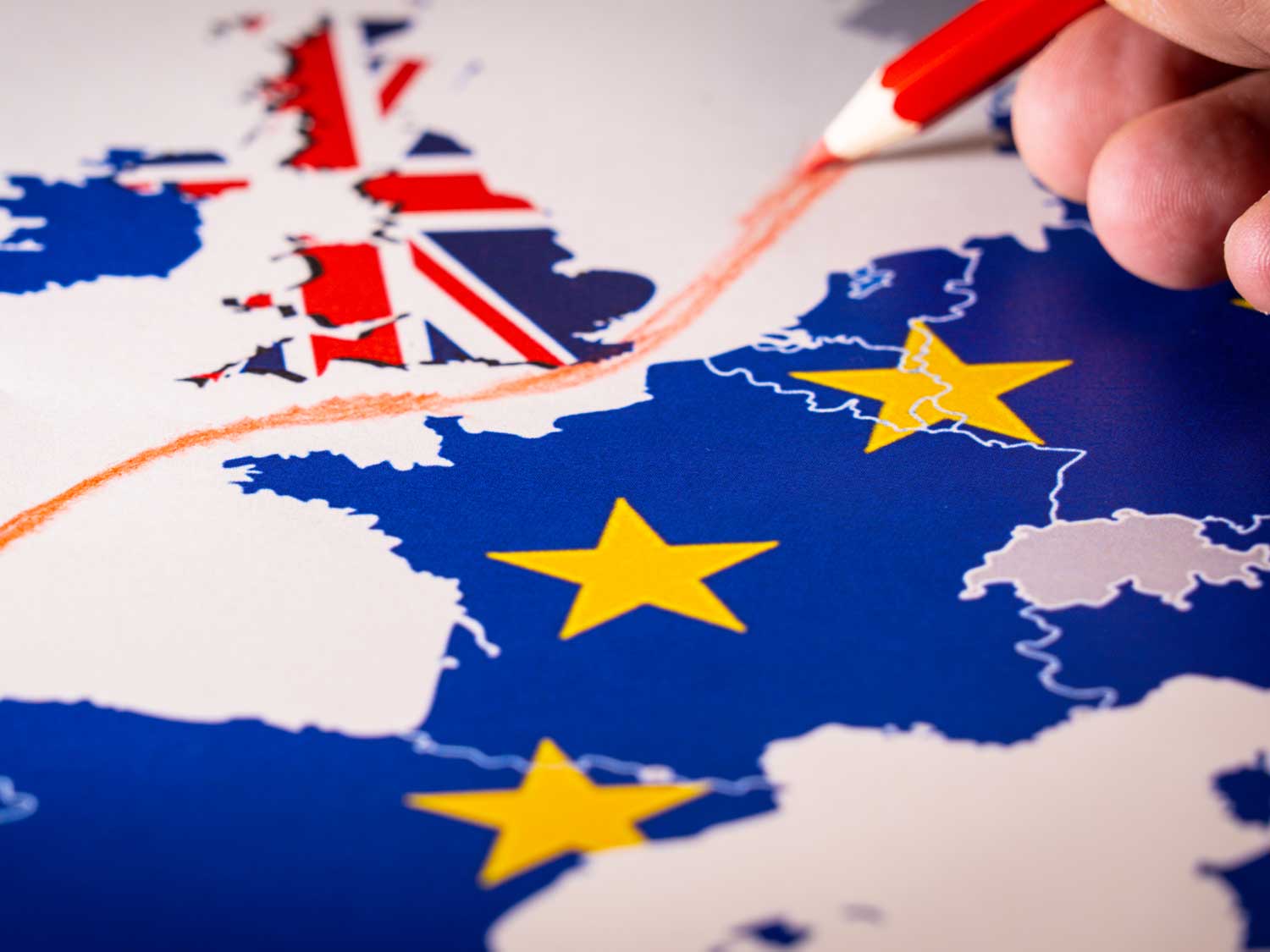
Shippers risk falling foul of post-Brexit origin rules

Many British companies trading with the EU are still failing to understand the extent of their legal obligations to comply with the origin rules of the EU-UK trade deal and could face disruptive enforcement action by customs authorities, when a ‘grace’ period for UK imports ends on the 1st January 2022.

Under the terms of the Trade and Cooperation Agreement that took effect at the start of the year, EU exporters can send goods to the UK tariff-free, but only if they can prove their products are sufficiently “made in the EU” to qualify for preferential access to the bloc’s single market.

These certification requirements on local content also apply to UK exporters wanting to send goods to the EU without incurring tariffs.

The “rules of origin certification process, was deemed so complex that EU and UK exporters were given a one-year grace period that reduced the required documentation, but this will expire on the 1st January 2022, with many companies facing a paperwork challenge.

UK importers found to have brought in goods tariff-free that are later found not to have complied with the rules of origin must pay full duties, and vice versa.

During the one-year grace period, British and EU companies have been allowed to certify their goods did qualify for zero-tariff access under the rules of origin, without supporting evidence from their suppliers.

Rules of origin and the way “originating content” is calculated vary from one product to another, but typically an item must be about 50% British or EU made in order to qualify for zero-tariff access under the terms of the trade deal.

To date, many British businesses have simply been attaching declarations stating they met the rules of origin to their invoices, even when they have no idea if the product is compliant or not.

Other companies have been working to better understand their origin situation, but with the potential for hundreds and thousands of components and complex and far-reaching tiers of supply, the situation is challenging.

The extent of any disruption from January will depend on how strictly EU and UK customs authorities carry out rules of origin checks. Inspections are expected to increase, particularly on the UK side, with more customs officers in place to ensure accuracy in terms of origin classification, as they will be collecting duty on behalf of the government rather than Brussels as was the case pre-Brexit.

If goods do not meet the rules of origin requirements or, more critically if origin cannot be proven, the importers will need to pay applicable Customs Duty.

The requirement to obtain preferential duty lies with the UK importer, who will need to provide either a statement of origin from the exporter or evidence they obtained about the originating status of the product.

Statement on origin that the product is originating made out by the exporter:

When exporting from the EU a statement of origin can be made out by any exporter where the value of the consignment is under €6,000 (£5,700). Above this, the EU exporter must have a Registered Exporter number (REX) and include it in the statement.

The statement on origin can be provided on any commercial document, describing the product in sufficient detail to enable its identification.

Importer’s knowledge that the product is originating:

‘Importers knowledge’ allows the importer to claim preferential tariff treatment based on evidence in their possession, that they obtained about the originating status of imported products. This evidence may be provided by the exporter or producer and provide evidence that the product qualifies as originating. As the importer is making a claim using their own knowledge, no statement on origin has to be provided by the exporter or producer.

If the UK exporter is subject to a request for verification and cannot provide evidence to show that the goods exported to the EU originate in the UK, the EU importer will be liable to pay the full rate of Customs Duty.

Now available to new customers, our CuDoS customs brokerage platform is optimised continuously, in line with the regimes in force on both sides of the Channel. Automating and submitting customs declarations, CuDoS simplifies compliant border processing, in either direction. 

We simplify declaration submission and safeguard our customers EU supply chains from the potential fallout of easement and regime changes, which means that their EU/UK movements will not be interrupted when full UK/EU border controls are implemented on the 1st January 2022.

To discuss your situation and to learn how we automate customs declarations for businesses of all sizes, please contact Elliot Carlile or Grant Liddell who can talk you through the options.

ECO globe 2021

Supporting environmental transparency

Environmental reporting standards for business have been high on the agenda at the UN’s Climate Change Conference – COP26 – currently underway in Glasgow and Metro support the drive for businesses to be open about their impact on the planet, as transparency is an essential precursor for reaching global solutions to a global problem.

Companies’ response to climate change is arguably the most pressing issue facing society, which is why the UK government has joined 38 international partners to welcome the establishment of new international sustainability reporting standards at COP26. 

As a disclosing company, Metro is among the 13,000 corporations that have committed to environmental transparency, by disclosing our environmental impact and working to reduce greenhouse gas emissions, safeguard water resources and protect forests.

While world leaders gathered to discuss the future of climate change and their negotiating teams are hard at work at #COP26, we hope that our customers, and the wider industry, will also take action on climate change, because it poses a present and future risk to supply chains. 

It is only by measuring our environmental impact, that companies can understand and mitigate now, to prepare for the future and ultimately remain competitive – especially as there is increasing demand for goods, services and suppliers with a reduced environmental impact. 

Metro’s MVT Eco module monitors the energy emissions, emission costs and CO2 equivalent emissions, of each consignment we move, by every mode, which means that Metro customers can monitor the environmental impact of their supply chains and participate in offset projects that will eradicate their CO2 footprint.

The MVT ECO module is a cloud-based solution, that is available, free-of-charge, to all our shippers on their MVT dashboard, where they can view key eco statistics related to their movements, to see which areas will benefit most from emissions offsetting and where efforts can have the most impact.

To request a demo or discuss your requirements, please contact Simon George, who leads our technical solution team, or Claus Rasmussen to discuss carbon reduction strategies and the availability of offset projects.

VIEW MVT ECO WEB PAGE

Coronavirus highlights need for visibility

Why some supply chains fail in the current environment

Brexit and the COVID pandemic has put global supply chains, and the people who work in them, into the public consciousness for probably the first time. As disruptions impact supplies of consumer goods, leaving empty shelves and fears grow for Christmas stock availability, people are asking ‘what’s gone wrong’.

Supply chains almost never operate perfectly. There’s too many processes, participants and ‘spinning plates’, to throw a spanner in the works. The reality is supply chains have  always had issues, but freight forwarders put them right and because the thing consumers wanted always turned up, no one was really paying attention. That is part of the value we have traditionally added to the global movement of your products – making issues logistics invisible so that you can get on with your own core business functions.

Weather, economics, capacity, pricing, labour disputes, strikes, regulatory changes and accidents are just some of the issues impacting trade and overcoming them is part of managing cargo flows for forwarder and supply chain executives. But the pandemic and its after-effects are much more profound. Why is that?

The simple answer is that the sudden, unexpected and massive surge of demand that followed the lifting of lockdowns, far exceeds the market’s capacity and ability to cope with the consequences. Supply versus demand dynamics were, and continue, to not be matched.

The existing global supply chain infrastructure simply can’t handle the volume of products flowing through the economy, as consumer demand shifted from purchasing services to purchasing physical products.

For another insight on this critical subject we recommend you view this excellent report on ‘Global supply disruption’ by the BBC journalist Ros Atkins - WATCH VIDEO – it gives a simple but comprehensive overview of what has and is happening in The UK and globally within the logistics arena.

With inventory limited, by domestic and global production shut downs, businesses pushed hard for more stock, as production came back online.

Suppliers across Asia, starting in China, ramped up manufacturing and products started to flow again and the volumes were much bigger than before. Many of them PPE related and totally unplanned as governments bought stock in the early phases of the Covid pandemic.

Before long, with all the passenger aircraft grounded, the shipping lines were employing all their fleets and every container ship that could be bought or hired was put to work moving cargo across the oceans.

However, ports were built to handle relatively consistent volumes and each port is constrained by the number of cranes that can service ships and the available space to store containers.

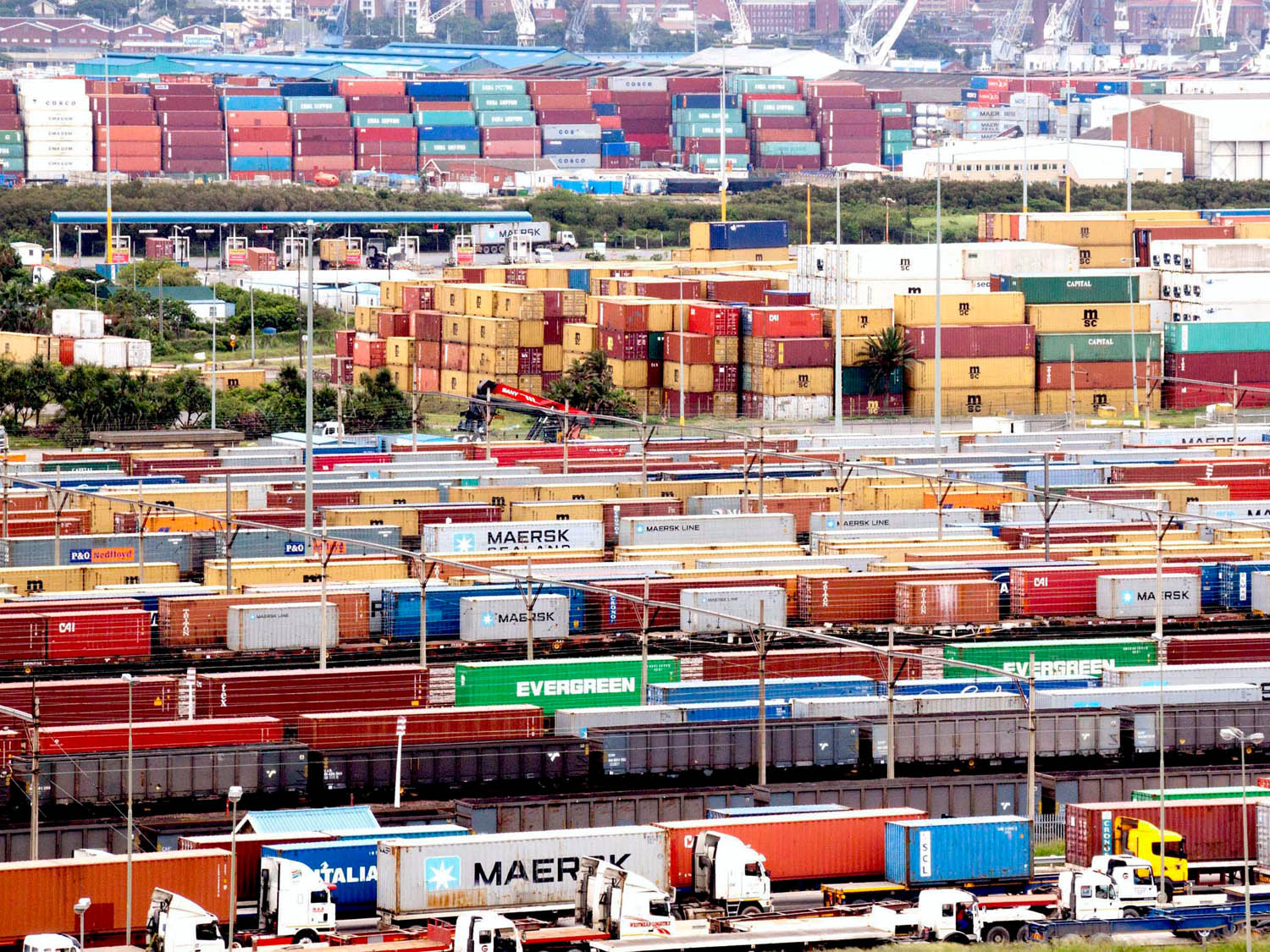
When the ports became flooded with cargo, they simply didn’t have the capacity to handle it and the lack of labour, trucks, storage capacity and rail infrastructure all started to create significant supply chain challenges as congestion worsened. 

Once a cargo shipment reaches the arrival port, it may go from truck to rail to warehouse to truck to distribution centre and any number of sorting facilities before it reaches a store or eCommerce customer. Many of the capacity constraints have been labour-related, i.e. COVID-safe working restricts port worker volumes, quarantine means under strength shifts at the distribution centres or simply not enough HGV drivers. Some of these issues are taking time to resolve, or may never be resolved.

Will the supply chain issues end soon? Very unlikely

Even if we can resolve bottlenecks, congestion and disruption to meet the current demand on the oceans, at the ports and in the trucks, any further significant increase in demand could undo any progress.

Businesses that don’t soon have enough inventory on hand are going to sell out prior to Christmas because lead times are so extended. We may see, after Lunar New Year, a very strong focus on inventory replenishment and with inventory-to-sales ratios so low, restocking may continue through the second quarter into the summertime and maybe all the way up to the peak season next year.

So, even if demand for services returns, we have a long way to go before the market catches up with anticipated demand. New vessel orders will not start to arrive until next year and will not add any significant volume before 2023-24 and, likewise, any infrastructure investments by ports or other participants, will take 12-36 months to plan and execute. 

It is anticipated and widely accepted that the issues we see currently within the logistics sector and the high freight rates across all modes will continue next year without much compromise until the second half - hopefully.

Managing supply chains can no longer be a back-office function, largely ignored and taken for granted. More than ever, business survival will require a highly functioning supply chain run by professionals with the experience and critical support of partners. 

Metro will always provide you with the alternatives and options available in the current market surrounded by proactive value added services, technology, communication and an overall solution throughout your own supply chains that is designed and created on a bespoke basis. 

We encourage engagement and a collaborative partnership approach with all of our customers, and suppliers for that matter. For further information and to discuss your ongoing requirements please contact Elliot Carlile or Grant Liddell and let us visit you and demonstrate what we do and how we do it…….

empty shelves

Supply chain weaknesses exposed by Covid

For decades, offshoring and global sourcing have offered lower labour and operating costs, wider product ranges and opportunities to reach new markets. The pandemic has exposed their supply chain vulnerabilities.

Customers are expecting faster and faster deliveries, but global supply chains take weeks and even months to land goods from overseas and lead times have been extended since the Coronavirus outbreak in early 2020. Owing to port congestion, raw material shortages, transportation bottlenecks/ delays and the HGV driver crisis.

The combination of national and local lockdowns and economic and political instability has highlighted three global supply chains weaknesses:

Lead times

The impact of the pandemic has profoundly challenged the effective management of extended supply chains, with average lead times from China increasing by 222% and from the US by 200%.

Raw material and component shortages are impacting verticals, with electronic components facing the biggest supply chain constraints, with lead times for the most important lines increasing from 16 weeks to over 52 weeks, with manufacturers increasingly running out of inventory.

Lower speed to market because of longer lead times, may also open doors for competitors, who can take market share by releasing products earlier.

Brexit poses even more challenges for unprepared UK manufacturers and exporters, with border delays and additional administrative burdens, extending lead times.

As a consequence, their end customers could potentially be liable to pay increased import tariffs, but also for extra costs throughout the supply chain, such as additional inventory holding and transportation costs.

Lack of diversification

Many businesses, keen to cut costs, have outsourced production, or sought oversea vendors, but Covid has highlighted the danger of excessive reliance on specific locations, regions or suppliers. And in the worst instances supplier, or supply chain collapse may put the businesses in significant danger.

Organisations faced significant challenges across the supply chain in the wake of the crisis and for the vast majority, over-reliance on vendors and manufacturers has led to shortages of critical parts, materials and orders. Exacerbated by difficulties in supply planning, due to a lack of information from the same suppliers.

In addition to the issues raised by the pandemic, if a single source or manufacturing base experiences any unpredictable or major event, or it is purchased by a competitor or runs into financial difficulties, customers that depend on it will be in jeopardy.

Lack of visibility

During the pandemic many companies have struggled to deal with an uptick in customer demand and overcome disruptions to their supply network with 72% (s. Capgemini) facing huge challenges in monitoring their end-to-end supply chain.

The main challenges reported by business owners, in a survey by Capgemini, was monitoring the location and status of their inventory and precisely tracking their transport capacity.

Without inventory visibility businesses struggle to scale up or down, to meet demand, or position products correctly, which all adds to difficulties in demand planning.

Difficulties with products being held up in ports or across borders has been common over the last 20 months and delayed shipments mean longer lead times, but without that visibility, executives cannot reconfigure the business’s expectations and control costs.

The lack of end-to-end visibility in global supply chains can expose companies to higher risk of disruption and those that don’t have transparent supply chains may suffer huge financial losses, because they don’t have enough information to identify disruptions and act accordingly.

Demand is driving change and supply chains need to be flexible, customer and solution driven, with end-to-end transparency and a single global inventory view, that supports efficient operations along the entire supply chain.

We work with our customers to improve their supply chain resilience in five key areas:

Understanding – We make it our key mission to recognise our customers requirements and expectations along with desired outcomes. With a thorough knowledge of what is needed we can contribute, create, design and provide all options available in the current market.

Visibility - Our cloud-based supply chain management platform, MVT, provides end-to-end visibility across their entire supply network, with global control down to item level.

Agility - Slower moving lines can be deferred, while priority orders can be highlighted and expedited, to increase speed to market and close the cash-to-cash cycle.

Diversification - With MVT, it is simple to monitor and add vendors. The system pro-actively manages and benchmarks vendors, product flows and outbound order data.

Contingency - MVT’s exception alerts and rules-based solutions, correct operational non-conformities, without human intervention, or alert users to issues outside set-parameters for corrective action.

For specific information, or to discuss how our technology could support your supply chain, please contact Simon George our Technical Solutions Director or Grant Liddell, for the latest innovation and initiatives that we have launched to underpin your own objectives.