The state of sea freight

Ocean freight carrier profits grow as global supply chain woes continue

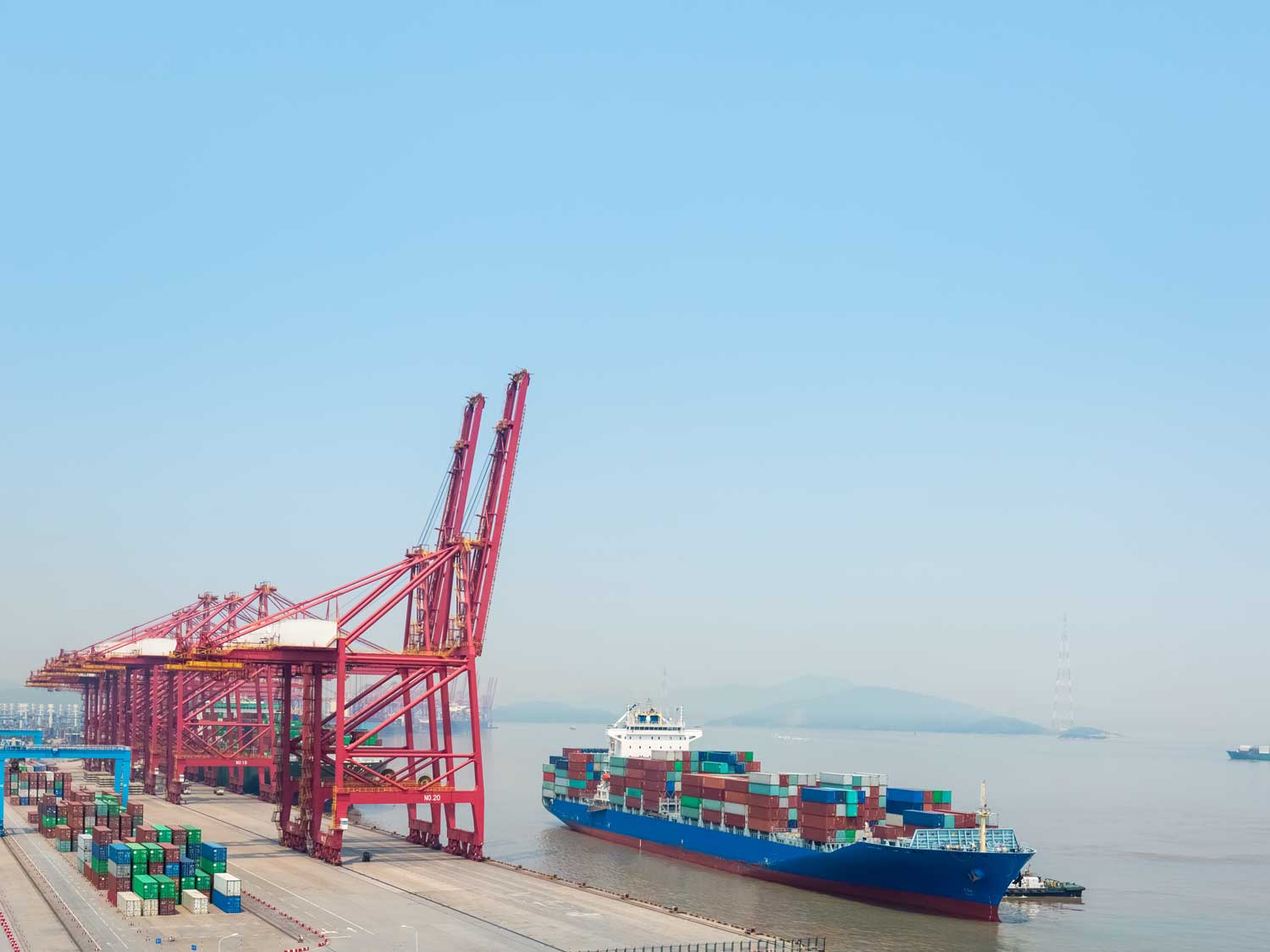
CMA CGM has published their Q3 results and in line with the other major Asia/Europe and trans-Atlantic carriers, they have made an extremely high degree of profit, due to the continued demand for space, exacerbated by global disruption diminishing the amount of vessel space available.

The CMA CGM group reported a net profit of USD 5.64bn for the third quarter, narrowly beating the Maersk group, currently the largest global container carrier.

Despite operating one million less teu than Maersk, the French line reported a greater increase in revenue versus the previous three months: group sales rose 23% quarter-on-quarter to USD 15.3bn; while Maersk reported a 17% revenue increase and a net profit of USD 5.46bn.

CMA CGM says it expects to achieve an even stronger financial performance in the fourth quarter.

Comparing performance between carriers based on Q3 2021 to Q3 2020: CMA CGM’s average revenue per TEU increased 107%; which is in line with Hapag-Lloyd which saw a 106% increase; and ahead of Maersk with a 90% increase; while ONE outperforms all with a 129% increase. Let’s conclude that asset owning shipping lines are reaping the benefits of their investments.

By contrast, the Global Freight Forwarding market contracted by -8.7% in 2020, recording its worst year since the 2009 financial crisis, as a direct result of the pandemic. The sea freight forwarding market contracted by -3.8% in 2020, but air freight forwarding suffered worse with a decline of -12.3%.

The freight forwarding market is expected to come back, with growth of 11.6% forecast for 2021, with an anticipated compound annual growth rate (CAGR) of 5% from 2020-2025, if and when volumes recover. This is without factoring in the impact of global macroeconomics and dynamics of consumer confidence, interest rate implications and available disposable income, in every country and territory.

The ocean carriers collectively are on a path for profits in excess of USD 150 billion this year, and higher from some sources, and the global container shipping market is anticipated to rise at a considerable rate between 2021 and 2025, progressing at a CAGR of 9% over the period, although this figure is likely to be exceeded by some margin.

Global supply chains are likely to be under intense and sustained pressure for some time yet, well into 2022 and beyond, and we will continue to share with you the most important developments so that you are informed and prepared to make critical decisions ahead of potential issues. 

We negotiate rate and volume agreements with carriers across all three alliances, which means we have the freedom to react to market conditions and changes. 

Please contact Elliot Carlile or Grant Liddell to discuss your supply chain expectations and deadlines to ensure your business is future proofed’ for the rest of 2021 and 2022.

Coronavirus update 27th March

Air freight airports and ground handling hubs grinding to a halt – and that’s everywhere

Sustained high demand, diminished capacity, COVID-safe work practices and apparent labour shortages, continue to place immense pressure on UK, European, US and global air freight hubs, creating congestion, from Heathrow to Azerbaijan.

While there are different situations at different airports, the demand for air cargo is exceptionally high and ground-handling operations are proving to be consistently ineffective at servicing the upturn in freighters, and passenger freighters, with particular problems at Heathrow, Amsterdam, Brussels, Frankfurt and Liege. And that’s just in Europe.

Despite the significant congestion that is impacting air cargo hubs globally, there is every likelihood that the already exceptionally high air freight prices will climb further as supply chain congestion drives further ocean-to-air conversion for essential peak inventory. ‘Distressed ocean freight’ has one repair option on the deep-sea destinations and origins and that is conversion to air freight which we are seeing daily driven by consumer and manufacturing demand chains needing stock, inventory and components to function.

The resumption of passenger operations in the critical trans-Atlantic market is very welcome, but trans-Atlantic supply has little impact on the China outbound routes that comprise the bulk of holiday peak volumes and it is not expected to result in a sudden easing of the essential air cargo market. Many aircraft were already flying routes that were profitable from cargo alone. It is just that they will now finally fill up the upper decks of the aircraft as traveller restrictions are withdrawn and they are allowed to resume global access and passenger sentiment in flying begins to resume.

London Heathrow is facing significant delays, as the cargo area is unable to cope and waiting times for vehicle collections and deliveries can be anything from five to ten hours, with the ever-present risk that the driver will ultimately be turned away. We are experiencing drivers running out of their legal hours of driving and having to replace with new shift drivers before they have even collected or delivered their air freight cargo whilst sitting statically outside the airline warehouses at the airports.

We are aware that some handling agents are moving airline pallets to London Gatwick to break down and return loose cargo to Heathrow. In theory, this practice should ease ground-handling pressure at Heathrow, but in practice, it actually adds further delays and increases the risk of cargo being misplaced.

It is beyond frustrating to locate and secure scarce air freight space, to get our customers’ consignments to destination on time, only for them to be delayed on arrival by 2, 3, 4 and even 5 days as we attempt the final mile of delivery. 

The situation can only be described as discombobulating and illogical. But unfortunately, this is the reality of the air freight supply chain presently, as widely reported in the trade press over recent days and weeks.

Whenever possible we are routing cargo via Birmingham International Airport, which continues optimum operations, to keep our customers’ goods moving, as well as clearing cargo and moving it to our general-purpose and various external temporary storage facilities (ETSF’s).

Overall the market is not as good as it should be, with issues all over the place at the major US, European and Asian hubs and the likelihood is it will get worse, particularly when the handlers are short-staffed in many facilities, due to COVID operating restrictions and the ability to ensure that resource can be deployed for the surge in demand.

In their defence, ground-handlers maintain that airline schedules and capacity are constantly shifting, which restricts their ability to forecast requirements and means that they cannot ensure there are sufficient numbers of handlers to meet the arriving and departing aircraft that they would expect with schedules during ‘normal times’. This actually reflects the ongoing situation in the ocean freight market with the circumstances that everyone will be experiencing in surface mode over the last year. However, during the current peak season, this is now filtering into the air freight environment.

They also suggest that they are unable to flex their prices like the airlines and while lots of money is being generated on air cargo, it’s not in handling, where the cost base has gone through the roof but pricing and revenue have remained relatively static.

Predictions are that the air cargo boom will continue well into next year, and possibly 2023, as it may take that amount of time for the passenger schedule to return to pre-COVID levels.

We know that cargo that ends up in limbo in on-airport warehouses exacerbates the congestion crisis, but quickly moving cargo off-airport depends on a ground-handling workforce that is of sufficient size to provide efficient operations to the cargo aircraft, preighters and PAX aircraft arriving at those major cargo hubs.

Despite the massive challenges, our air freight team continue to get time-sensitive shipments lifted at origin and work tirelessly to have it released asap after arrival. As soon as we identify an issue, regardless of the airport, we work around the problem to deliver the best solution and avoid obvious bottlenecks and turmoil.

We partner and engage closely with our global network to monitor market capacity and identify opportunities to use regional airports, that will benefit our customers ensuring that expectations and timelines are met – regardless of the challenges.

There are solutions for every critical shipment, please call Elliot Carlile or Grant Liddell to discuss your situation and for further insights and advice. We will have all options available and an intelligent and creative remedy!

HKG port

The impact of the COVID pandemic on global logistics

The pandemic has underlined the critical importance of the global supply chain, in meeting critical PPE and medical needs, as well as satisfying consumer demand and the challenges in keeping goods moving efficiently along it.

The pandemic is creating new challenges for supply chains, as it keeps them working under unrelenting pressure, bringing to light previously unseen and unacknowledged vulnerabilities. 

The ability of ports and supporting infrastructure to work at full capacity has been undermined by staff shortages due to quarantines and COVID-safe work practices. 

The pandemic has accelerated and magnified problems that already existed in the supply chain, such as the pay and working conditions of critical workers, like HGV drivers.

Demand for vessel space and sea freight costs soared on every trade route as the grounded passenger aircraft fleet removed over 50% of air freight capacity at a stroke and to make a bad situation worse the amount of sea freight capacity available, was cut further due to containers and the vessels that carry them, being out of position.

Hopes remain that cost pressures will lessen, as consumer spending shifts from products back to holidays, eating out and other services. And while freight rates are very likely to remain higher than before the crisis, they will not remain at the current levels.

2020 - The COVID outbreak’s supply chain impact

  • Brexit seen as a major trauma to European logistics platforms.
  • The first quarter lockdown in China, prompted carriers to swiftly withdraw vessels.
  • As global lockdowns followed the carriers made further massive cuts to sea freight capacity.
  • The global passenger aircraft fleet is grounded, removing over 50% of belly-hold capacity.
  • Massive and unexpected demand for freight space returns mid-year as consumers buy products, as they are denied access to services.
  • Shipping lines start to return vessels, but they are now vastly off schedule.
  • Reacting to critical global PPE demand, airlines convert aircraft (Preighters) to carry cargo.
  • Ocean capacity is massively constrained, leading some lines to cancel longer term contracts and push shippers and importers to the FAK (Freight All Kind) spot market.
  • Ocean and air freight rates continue escalating to first quarter levels up >1000%.
  • Vessel schedules are even less reliable, adding to congestion at ports and extending transit times, which means empty containers are not returned to the areas of manufacture creating further delays.

2021 - Where we are now

  • Freight rates have remained firm, despite some expectation of them softening post-Chinese New Year and into early Q4.
  • Airlines have remained busy, even without passenger support and air cargo rates have increased significantly as their sole source of income.
  • Lockdowns affect manufacturing and lead times, with infrastructure congested.
  • Extended ocean transits and shortage of equipment effectively cuts capacity by 25%.
  • Reliability of carriers is totally lost with just 30% vessels on schedule and transits massively extended.
  • Global port congestion disrupts vessel arrivals and departures and handicaps the return of empty containers.
  • Inland road haulage and port-linked rail services in the UK, Europe and North America become congested .
  • Shortages of HGV drivers creates additional issues at destination and adds to congestion resulting in storage, detention and demurrage costs.
  • Airlines still operating predominantly on cargo income and pricing at record levels entering peak season.
  • Freight rates on all modes remain historically high, creating a ‘pay to play’ environment, with carriers focusing on the most profitable lanes and markets.
  • Power shortages and periodic power cuts in China, adds pressure in key manufacturing regions.

2022 - Looking to the future

  • As passenger travel opens up globally expectations would be for pricing to soften, as passenger income returns and belly-hold space adds to freight market capacity.
  • Many carriers are very bullish about 2022 and will not currently offer any form of pricing for 2022 contracts which will unwind over the final quarter.
  • Limited numbers of new-build vessels are scheduled to enter service before the end of 2022, so capacity is likely to remain restricted.
  • Inflation may soften consumer demand, reducing pressure on global logistics, in all stages of the supply chain, including manufacturing.
  • Carriers will continue pushing for longer term two year contracts and either decline to offer 12 month contracts, or refer customers to the FAK/spot market.
  • Confident shipping lines, eager to continue growing the ‘bottom line’ and airlines keen to recoup losses will maximise revenues from cargo movements.

In summary...

The pandemic-linked supply chain challenges described above, that have driven up prices and slowed the global economic recovery, will lessen over time. But any recovery will be fragile and easily undone by unforeseen events, like the shortage of HGV drivers in the UK and China’s drive for zero COVID cases. 

By 2023 (possibly late 2022) the COVID-19 situation should be under control and consumer demand steady, providing stability in global shipping, operations and costing.

The capacity of the global container fleet could potentially grow by 20%, as new vessels are delivered and schedule reliability will have returned, but how much tonnage the the 9 major shipping lines decide to withdraw or retire from the market, will dictate what volume, if any, is actually added.

Political and global events, not yet apparent, may have a huge influence on global supply chains, on all modes and in all regions of the world. 

Local and global issues are intertwined, due to the fragile state of ocean and air freight markets, demonstrating just how unpredictable the movement of your goods has become.

The shipping lines are expected to declare in excess of $150 BILLION pre-tax profits in the current financial year and it is unlikely they will want to give that up, considering what they have experienced and learned over the last 18 months on market dynamics and influences. They are in control of events and consequently their own success. 

It is widely accepted that the current supply chain challenges and high freight rates, across all modes, will continue into next year without much compromise.

Managing supply chains is no longer a back-office function, largely ignored and taken for granted, because business survival depends on a a high-functioning supply chain run by professionals with the experience and critical support of dependable partners. 

Metro will always provide you with the best alternatives and options, supported by a proactive team, leading-edge technology and open communication. Supply chain solutions that are designed around you, your situation and needs. 

For further information and to discuss your ongoing requirements please contact Elliot Carlile or Grant Liddell.

ECO globe 2021

Supporting environmental transparency

Environmental reporting standards for business have been high on the agenda at the UN’s Climate Change Conference – COP26 – currently underway in Glasgow and Metro support the drive for businesses to be open about their impact on the planet, as transparency is an essential precursor for reaching global solutions to a global problem.

Companies’ response to climate change is arguably the most pressing issue facing society, which is why the UK government has joined 38 international partners to welcome the establishment of new international sustainability reporting standards at COP26. 

As a disclosing company, Metro is among the 13,000 corporations that have committed to environmental transparency, by disclosing our environmental impact and working to reduce greenhouse gas emissions, safeguard water resources and protect forests.

While world leaders gathered to discuss the future of climate change and their negotiating teams are hard at work at #COP26, we hope that our customers, and the wider industry, will also take action on climate change, because it poses a present and future risk to supply chains. 

It is only by measuring our environmental impact, that companies can understand and mitigate now, to prepare for the future and ultimately remain competitive – especially as there is increasing demand for goods, services and suppliers with a reduced environmental impact. 

Metro’s MVT Eco module monitors the energy emissions, emission costs and CO2 equivalent emissions, of each consignment we move, by every mode, which means that Metro customers can monitor the environmental impact of their supply chains and participate in offset projects that will eradicate their CO2 footprint.

The MVT ECO module is a cloud-based solution, that is available, free-of-charge, to all our shippers on their MVT dashboard, where they can view key eco statistics related to their movements, to see which areas will benefit most from emissions offsetting and where efforts can have the most impact.

To request a demo or discuss your requirements, please contact Simon George, who leads our technical solution team, or Claus Rasmussen to discuss carbon reduction strategies and the availability of offset projects.

VIEW MVT ECO WEB PAGE