
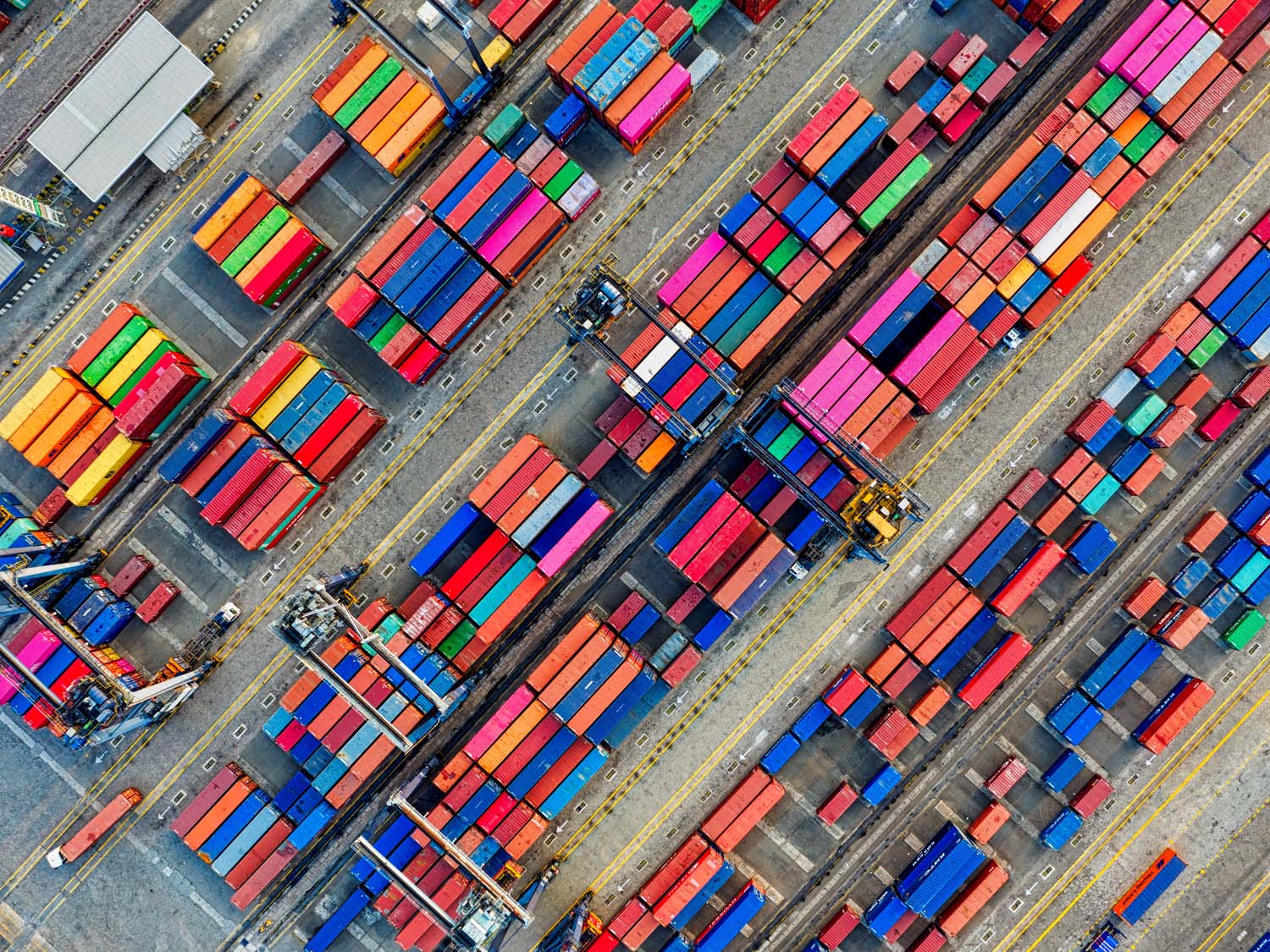
US ports to offer storage while others struggle

Out of position empty containers may cause further supply chain impact later this year

When global supply chains finally start to return to some form of normality, which many hope to see in the second half of the year, carriers face more headaches, with an avalanche of empty containers predicted to cause chaos. Who would have thought it?

Full year 2021 demand for sea freight growth was 6.5% compared to 2020 and up by 5.3% compared to 2019, meaning an average annual growth rate of 2.6% compared to pre-pandemic 2019.

The problem in the supply chain is therefore not that of global demand, but the highly skewed nature of the global shipping market where we have seen super strong growth of imports from Asia to North America and consistent increases to Europe, but either slow output or outright declines on other trade lanes.

In 2021, overall demand was equivalent to loading (and shipping) 6 TEU every second throughout the year, but disruptions and bottlenecks in the supply chain during the pandemic have led to vessels being delayed for extended periods, which effectively reduces the amount of capacity in the market and increased the need for additional container capacity to be introduced.

Despite the introduction of millions of new and diverted containers, the gap between effective demand and available supply has been over 15% in the past year, which highlights the continuing challenge we face in positioning equipment in many origins.

We see the shortage of containers driven by three elements: onward intermodal connections; port and terminals; and shipping schedule considerations.

It is the consistent resolution of these problems, that will ultimately dictate how quickly the supply chain crisis is resolved, and consequently how long it will take for equipment availability to normalise. In the right place at the right time.

In short, until land-side issues are resolved and shipping schedules restored, there will be no let up on equipment availability pressures. The variables in shipping are intrinsically interwoven with resulting consequences that cause unrelated but direct issues to container movements.

But, when supply chains do finally start to shorten, it will release a large amount of empty containers, 3.5m TEU from the transpacific alone, which will potentially create a new wave of congestion problems in the second half of 2022 and in 2023, in terminals as well as container depots.

Carriers and container leasing companies need to start planning for this development, or the resolution of operational bottleneck problems will create a ripple effect, with the potential of overwhelming container depots in the US, Europe and globally, where cargo imbalances are experienced.

Supply chains have never faced so many challenges and with local conditions changing rapidly it is critical that you have the ability to react quickly to new challenges - like a deluge of empty containers creating unexpected bottlenecks.

Our MVT supply chain platform gives you the power to improve your supply chain resilience across five key areas:

PERCEPTION – With a thorough understanding of our customers’ requirements and objectives we create supply chain solutions that draw on all options available in the current market.

VISIBILITY – Linking your supply chain participants and critical time-scaled events to provide end-to-end visibility across the extended supply network, with global control down to individual SKU level.

AGILITY – Proactively managing your supply chain flow means slower moving lines from any origin can be deferred, while priority orders can be highlighted and expedited, to increase speed to market and accelerate the cash-to-cash cycle.

FLEXIBILITY – It is simple to change supply lines, adding and monitoring new vendors, product flows and outbound order data, from any location.

CONTINGENCY – MVT’s exception alerts and rules-based solutions, correct operational non-conformities, without human intervention, or alert users to issues outside set-parameters for corrective action.

For specific information, or to discuss how our technology could support your supply chain, please contact Simon George our Technical Solutions Director or Elliot Carlile.
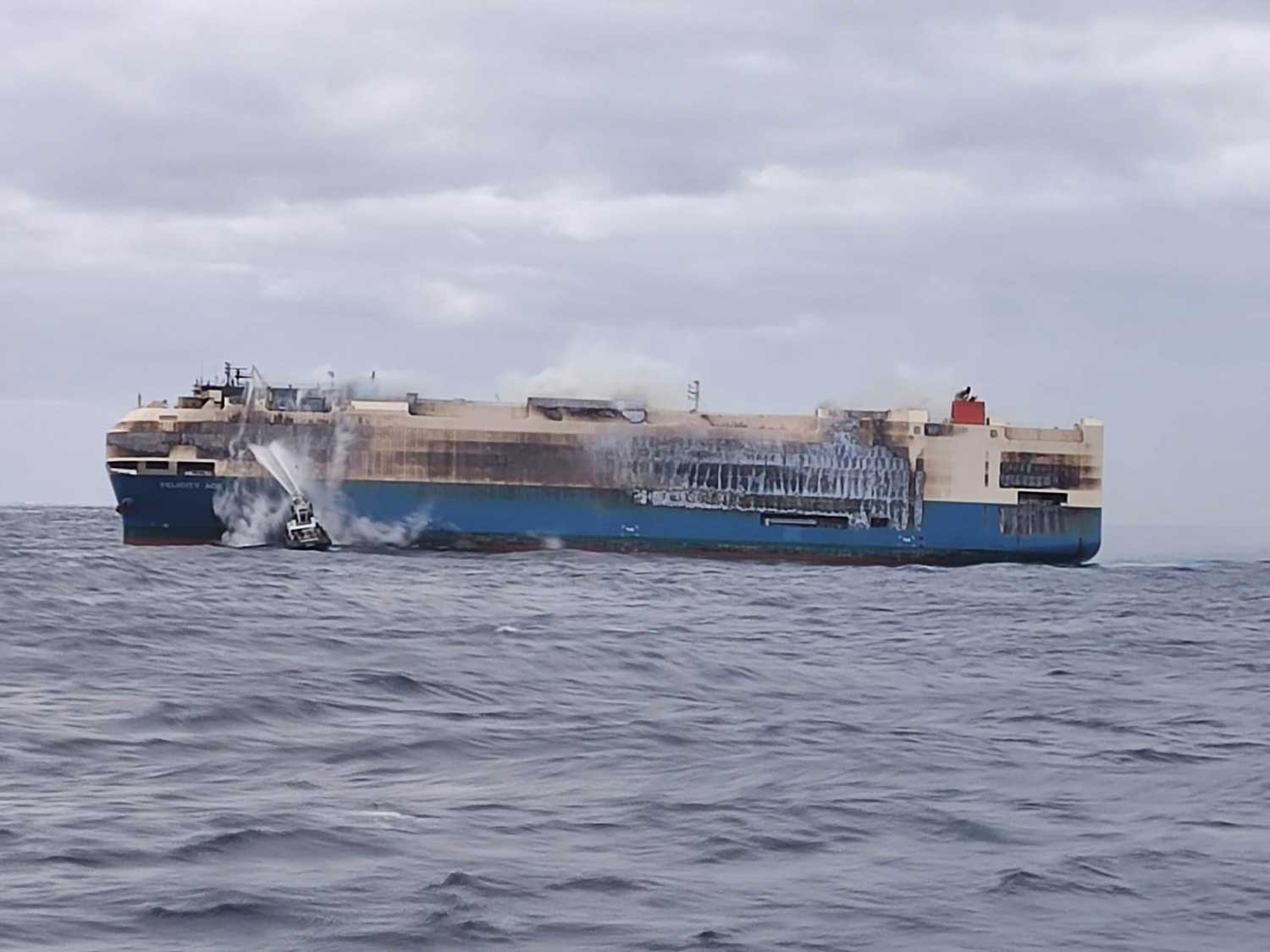

Felicity Ace

Valuable automotive RoRo vessel abandoned mid-Atlantic – and it is fully loaded

The Felicity Ace - which has not sadly sunk - was en-route from Germany to the USA, with 4,000 Volkswagen AG vehicles aboard, when it caught fire near the Azores islands in the Atlantic Ocean last week. The  Portuguese Air Force were the first to arrive at the stricken vessel, air-lifting off the crew and leaving the Felicity Ace to float mid-Atlantic, awaiting the arrival of fire-fighter tugs.

The RoRo ship was carrying about 4,000 Volkswagen AG vehicles, which could cost the brand at least $155 million, according to risk-modelling estimates, with Volkswagen, Porsche, Audi, Bentley and Lamborghini models on the vessel. Auto manufacturers other than VW may have lost about $246 million worth of vehicles.

Two large tugs with firefighting equipment rendezvoused with the Felicity Ace earlier this week to start spraying water and work with an initial salvage team that was already on board to cool down the ship.

No oil leakage has been detected, the vessel remains stable and MOL are expected to set up a website to provide updates on the incident.

This latest incident underlines once again the precariousness of global supply chains and the critical need for appropriate marine insurance cover.

The loss of so many vehicles and critical RoRo capacity - which could be the equivalent of 100k vehicles p.a. until the ship returns - comes at a bad time for global carmakers who are in the middle of a supply chain crisis sourcing semiconductors, resulting in extended delays for new cars and is likely to result in rate hikes, on a transport mode that was already massively over-subscribed.

The fire on the Felicity Ace could drive a marine re/insurance market loss of $500 million and while shipping losses have declined over the past 10 years, analysis shows that fires on board vessels remains one of the main safety concerns and have actually increased in recent years.

Metro did not have any of our customers products on this vessel but we are well prepared to provide assistance in air freighting replacement vehicles to their destinations to ensure demand is satisfied. We move huge numbers of vehicles every year globally by all modes and always consider and deliver available solutions in the current global market, within the automotive vertical, regardless of the challenges.

Carriers like MOL operate under conditions that limit their liability and may even require you to compensate them, in certain circumstances. Any compensation you may eventually receive is likely to be considerably lower than your actual loss.

Metro recommend and offer All Risk marine insurance cover that protects your cargo during every stage of transportation and storage, on a per shipment or annual cover basis, to the full value of the goods.

Metro has specialised in the automotive and construction vehicle sectors for over four decades. Working with many of the most respected and established brands, our specialist teams coordinate the end to end movement of vehicles and machinery around the world.

Long-standing partnerships and volume agreements with the leading RoRo carriers and container shipping lines means we can offer the widest choice of services, routes and solutions.

For further information please contact Tom Fernihough, our Automotive Director, for the latest advice and market news relating to the global supply chain of finished vehicles.

Image source: Portugese Navy

Moscow 1

New Russia sanctions threaten automotive supply chains

Tensions have soared in recent months in Eastern Europe as Russia massed soldiers and heavy weapons at its border with Ukraine, raising fears of an invasion and the potential to cause even more global supply chain disruption.

High-stake talks between Russia and the West have so far failed to de-escalate the tense standoff and there are fears that a conflict in the region could be particularly devastating for the automotive industry.

Political conflicts in the past decade have already taken a toll on the cost of automotive logistics in Eastern Europe. Historically, a substantial share of finished vehicles and automotive components were supplied to Russia from Europe via Ukraine. But since 2014, transit supplies through Ukrainian territory have been shut down, due to problems with migrants on the Belarus-Poland border.

Adjustments to the Russian automotive supply chain in the past few years have caused an increase in distance, delivery time and logistics costs and with the US authorities on the verge of approving further sanctions, which are expected to target US automotive components exports to Russia, carmakers are urgently looking into their list of suppliers, to analyse the possible risks.

Nissan is reviewing components obtained from the US and the possibility of replacing them with local components, but given that their models are deeply localised in Russia, they do not anticipate a significant impact on car production in Russia.

Automotive Russian imports from the US is primarily fuel tanks, exhaust pipes, steering wheels and similar products, many of which car-makers expect could be sourced elsewhere.

However, things are promised to get really ugly for the Russian automotive industry if the European Union joins the US sanctions, and even more so if the country gets disconnected from Swift, the global standard for payment and securities trade transactions.

Russian cutoff from Swift would terminate all international transactions, trigger currency volatility and cause massive capital outflows. Trade between Russian companies would continue, but paying foreign companies for automotive components and logistics services would become virtually impossible.

Despite a few optimists, most analysts believe that major international restrictions on automotive components imported to Russia would virtually put an end to finished vehicle production in the country. The Russian vehicle maker, Gaz Group, has remained under the threat of the US sanctions for several years and has indicated that it will cease production if the restrictions are actually introduced.

Russia’s Industry and Trade Minister estimated that the average localisation rate in the Russian automotive industry was 67%, reaching 75% on some particular models, but experts point out that it doesn’t matter whether you have 10%, 50% or 90% localisation, you cannot produce a finished vehicle using only 90% of components.

Problems withdrawing revenue from Russia would also push localised western companies to leave the country, which would be like a domino effect, ruining the Russian automotive industry from top to bottom.

Opponents of sanctions point out that finished vehicles assembled in Russia are successfully exported back to Europe, and with the current shortage of finished vehicles, no one will refuse them.

During the first nine months of 2021, the country exported 73,200 finished vehicles, 43% up compared to the same period the previous year. Most exported finished vehicles are assembled in the Russian north-west and exported to Europe through the St Petersburg’s sea ports.

The Russia-Ukraine conflict promises nothing good to Ukraine either. The tension currently lingering in the region was impacting business and investment flows into Ukraine, including its automotive industry.

During the past few years, several major global automotive components suppliers launched production facilities in Ukraine, including Fujikura, Kromberg & Schubert, and Leoni, to take advantage of the cheap but experienced labour force and a free trade zone agreement with the EU.

Hard-hitting sanctions could have unintended automotive side-effects, as Russia accounts for 45% of the world’s palladium production, a critical component in catalytic converters and restricting palladium imports from Russia could cause a global shock in the automotive industry.

Coupled with the recovery in global demand for vehicles, export restrictions on Russian palladium could cause an acute shortage of some crucial components and drive palladium price to an all-time high.

High pent-up demand for new vehicles has formed in the market over the past year and, with the normalisation of chip supplies, manufacturers are expecting record demand for vehicles in 2022, but the possible cessation of palladium supplies from Russia is a risk the market could do without.

Metro has been working with automotive manufacturers and their primary suppliers for decades, optimising complex inbound and outbound supply chain operations, on multiple continents, by all modes of transport.

For further information on our logistics, supply chain and freight management solutions in automotive and related sectors, please talk with Tom Fernihough, who will cover all current options available within our global network and platform.

Sea Air 1

Protecting our customers supply chains – future proofing during a tough time

We are taking all necessary steps to secure capacity, to protect our customers’ air and sea freight needs through expanded carrier relationships and selected charter deals.

Even against the background of low capacity and record-breaking spot rates, airlines and shipping lines, for a variety of reasons, have often failed to come through with the solutions we need and in continuing to meet our shippers’ needs, we need to be innovative.

While a few shipping lines are tinkering with developing their own airlines, in a bid to offer their biggest customers a single solution for their shipping needs, the reality is that the narrow airport-to-airport offer of most air carriers, is massively short of the integrated logistics solutions that we deliver and the biggest shippers will never put ‘all their eggs in one basket’. Agility between transport modes is now imperative to ensure product arrives in market or at the manufacturing facility on time.

Maersk has an estimated 70,000 shipper customers and while its airline subsidiary, Star Air, currently operates for UPS, it seems highly likely that, once it has the right infrastructure and equipment in place, Maersk will kick-out UPS and replace it with its own shippers, though this will represent a tiny percentage of the customer base.

Rather than looking for a one-stop shop, our experience of air freight customers, is a requirement for speed, transparency, quality and reliability, at market-competitive rates. This is what we do, day in and day out.

In many respects the flying part of an operation is the easy bit, it’s in the ground-handling and the logistics at either end, that makes air freight successful and can provide competitive advantage, if executed efficiently. Yet none of this is being integrated and offered by airlines and it is extremely unlikely that the shipping lines will be able to. Metro do this in a tailored way, down to consignment level, ensuring expectations are met and ideally exceeded.

The airlines have, in the past, allowed cargo to be no more than a contribution to the fixed costs of a passenger flight. They have shown little or no interest in the ultimate customers’ situation or needs, and appear to have learned little from the integrators, who took so much of their market share, through the end-to-end management of smaller cargo movements. This is where innovation and hard work have delivered results to our customers and will continue to in the future with a true door to door measurable service and deadline driven solution.

It would have been inconceivable before the pandemic that the cash haemorrhaging container shipping lines would logically consider moving into air freight, but with billions to spend, it seems anything is fair game. However, now when many of the delays are caused through the inefficiencies and dysfunctionality of ocean shipping schedules, it looks like an exceptional business model. Broken supply chains need repairing after all – and that’s where the time critical air freight product becomes essential delivered through experience, relationships and expertise.

Metro are constantly evolving and innovating, to add more value-added services, and customer-focused initiatives.

This total commitment to the customer, valuable technology and complete door-to-door solutions is a mind-set that air and sea carriers are simply incapable of providing. 

We are driven entirely by our customersneeds and expectations. For further information contact Elliot Carlile, who would be delighted to talk to you about your requirements.