container lorry queue

HGV crisis hidden for years

The HGV driver crisis, which has been gathering pace over the last two decades, has been largely hidden due, in no small part, to effective transport management by the freight forwarding community. But the situation has been exacerbated by Brexit and tax changes which encouraged 20 thousand European drivers to return to the continent and the loss of 30 thousand driving tests, during lockdowns, which has critically elevated the shortage of HGV drivers to 100 thousand.

The impact of the HGV driver shortage is being felt increasingly by the general public and in every business vertical and is particularly pronounced for the freight sector. 

With driver shortages hitting local collections and deliveries, it is impacting air freight and there are significant capacity issues for pan-European transport. But it is the sea freight sector and in particular the movement of containers that has been hardest hit.

Hauliers have been increasing driver pay rates, offering retention and loyalty bonuses and improving working conditions in a bid to halt the outflow of experienced personnel, which is being reflected in the costs incurred and may reflect a longer term trend to make the industry more attractive to a new generation of drivers.

Changes to the HGV driver testing process, recently announced by the government, will speed up the process and could mean an extra 1,600 drivers joining the industry every week. But there are lots of caveats attached to that figure and its benefits will only become evident over the long-term.

The challenge remains, too much demand and insufficient capacity, and managing the potential impact of this equation on supply chain operations. In the short-term the situation is very likely to worsen, before it gets better and, even if young people and women can be attracted to the profession, it may take up to two years to reach equilibrium.

With over three decades of shipping line and forwarding transport experience, Metro’s transport team is led by Simon Balfe, one of the most knowledgable volume movers in the UK.

Despite the breadth of experience, haulage contacts and relationships across the Metro team, they are increasingly challenged in locating sufficient haulage resource, with ‘merchant’ supply often going to the highest bidder and line haulage becoming increasingly unreliable.

Prior to the pandemic Metro’s on-time delivery KPI hovered around the 99% mark. Today, despite the best efforts of Simon’s team, it has slipped to 80%, which is still far higher than the industry average of 50%.

A significant factor in this fall, is the failure of line haulage reliability. Historically (right or wrong) shipping line controlled collections and deliveries (line haulage) has been perceived to be the ‘gold standard’ in container transport and costed accordingly.

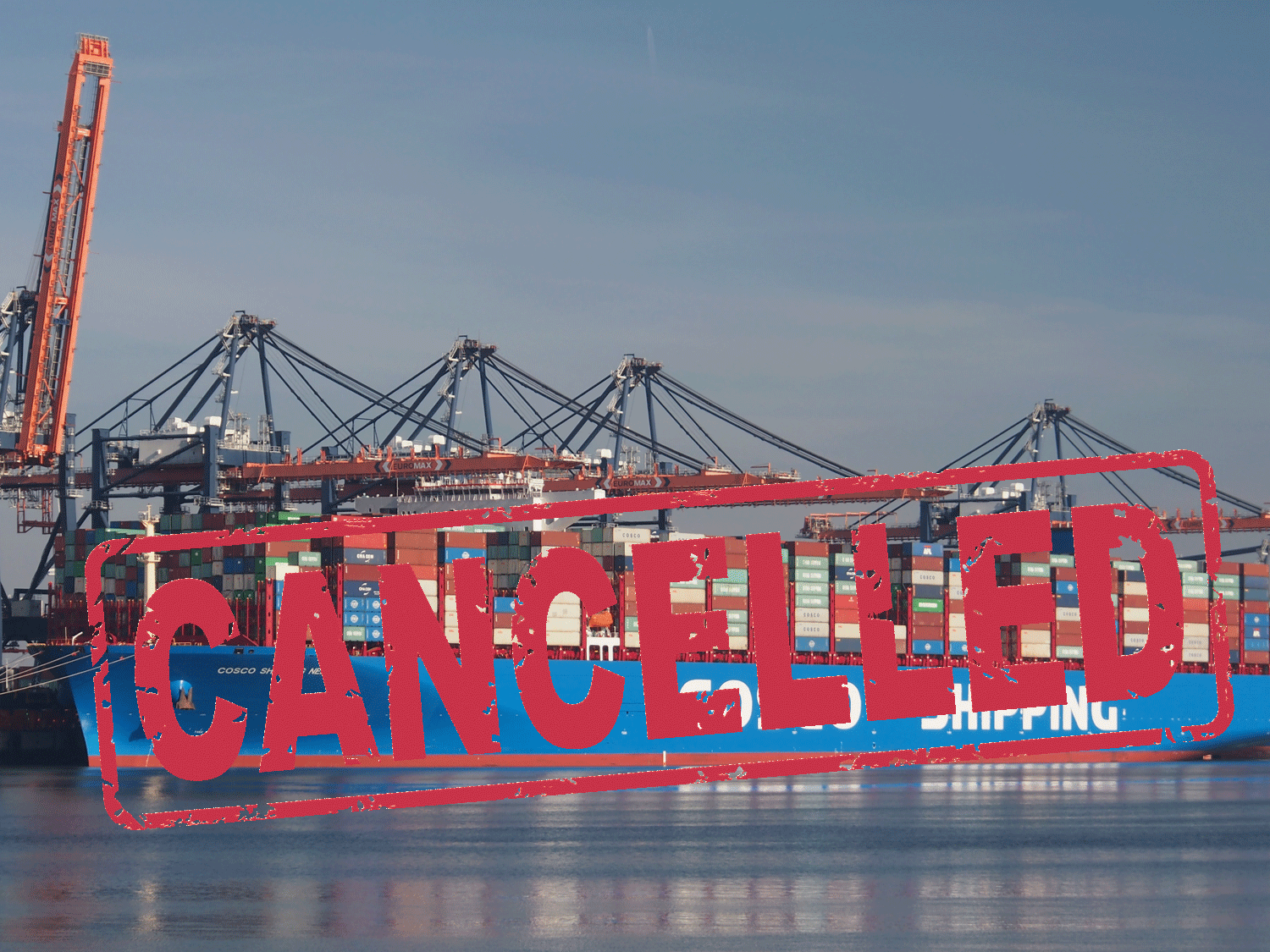
But the pandemic is tarnishing even this ‘gold standard’ as lines increasingly stop offering a ‘to-door’ service, or fail to honour confirmed bookings, which is having a profound impact on unlucky shippers, who are often left facing additional and unexpected charges.

We are increasingly called on to assist shippers who have had line haulage cancelled, or have received no prior notice of its withdrawal and have been offered new bookings, several weeks forward, leaving them to wait for their goods and the likelihood of rent and demurrage charges. 

Even though the extended time is a direct result of the line’s own actions, they are not sympathetic to writing off these charges, as the shipper always has the option to arrange their own transport.

Although this option does incur lo/lo charges and can be more expensive than line haulage, merchant haulage can potentially offset the rent and demurrage of an extended wait on the quay or terminal.

We work with a number of selected long-term haulage partners across the UK to give us access to the widest pool of equipment and driver resource at the UK’s primary container ports, to offer cost-effective and efficient merchant haulage services. 

To learn more or discuss your situation, please contact Elliot Carlile or Grant Liddell (or Simon Balfe, who leads our UK multimodal transport operations) to talk you through the options.

Antwerp

Unrelenting pressure on global sea freight supply chains

The core problems impacting containerised shipping - the slow circulation of ships and containers, port disruption and the HGV crisis - are clearly worsening, as they diminish available capacity supply and continue to drive spot rates to record levels on pretty much every lane and every combination of port pairings.

It is this loss of effective capacity when ships take longer to discharge and load at ports, and containers are not picked up or returned quick enough that contribute so much to the record spot rates we are experiencing, as well as high demurrage and detention costs, with ever-lengthening transit times.

When containers take longer to be repositioned back to origin ports, they are not available to pick up new loads, and when ships are anchored waiting for berths, they miss their scheduled departure dates, which leads to more cancelled sailings and the removal of much-needed capacity.

Vessel schedule reliability dropped 3.8% month on month to 35.6% in July, down a massive 39.7% from last year, as the average delay for late vessel arrivals continued to deteriorate.

If vessels and containers were circulating normally, many experts insist there would be no capacity problem, even with the high levels of demand we are experiencing.

As it is, many of those same experts believe we could be well into 2022 before we see the congestion begin to ease, simply because a complex system of millions of assets will take a considerable time to return to a normal circulatory flow.

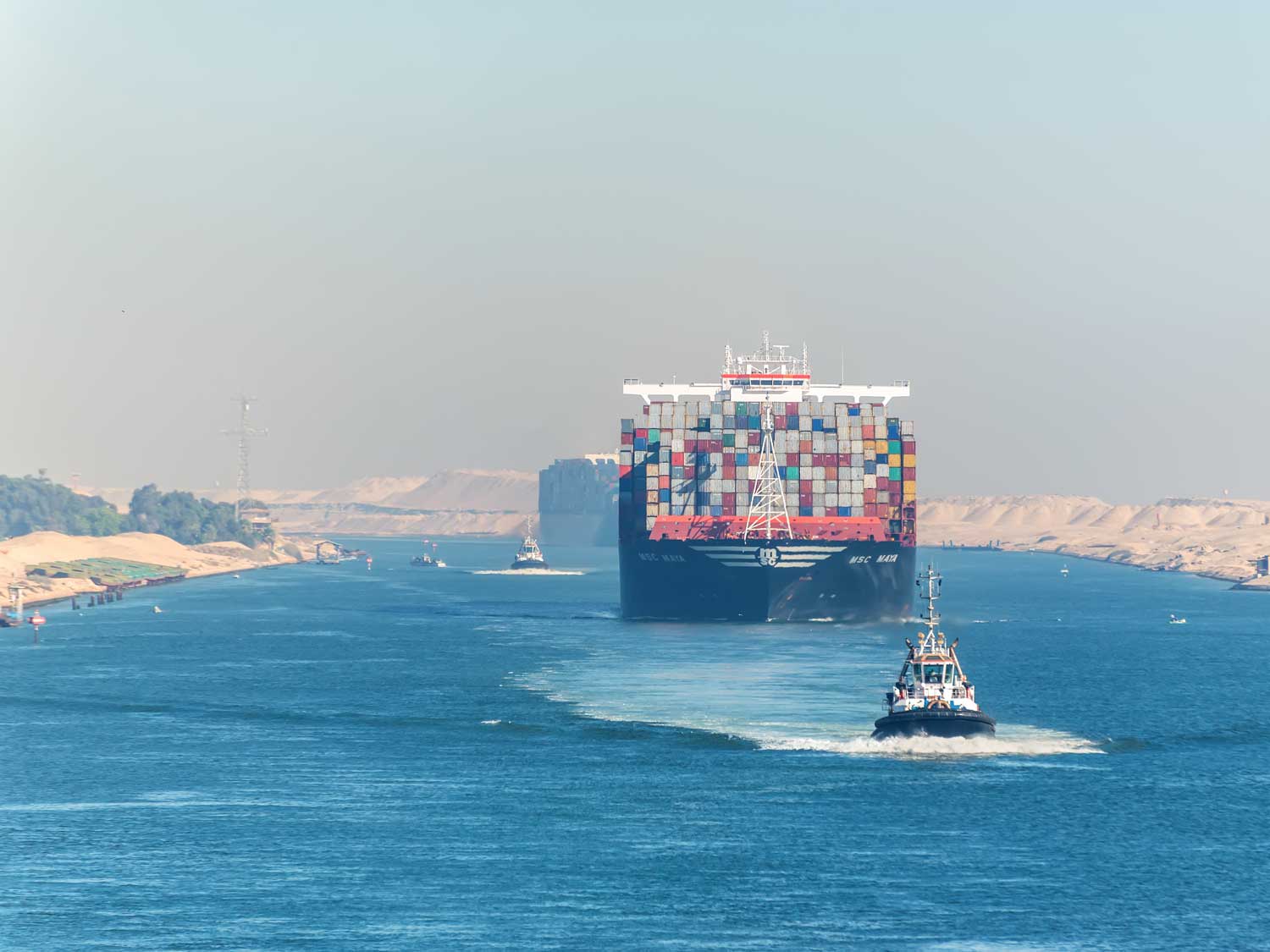
The series of supply chain shocks we have already seen this year - including the Suez, Yantian and Ningbo closures - combined to slow down the circulation of containers and the progress of container ships travelling from port to port, reducing the ability of shipping lines to satisfy the sustained strong levels of customer demand.

Illustrating this fact, Hapag-Lloyd has expanded its container fleet by 12% since the onset of the pandemic and has announced an order for an additional 75,000 containers, which will expand its fleet by a total of 15%, but because the average time it takes containers to return to origin has expanded from 50 to 60 days, the increase has not resulted in an increase in effective capacity.

This asset slowdown is a global phenomenon that will not ease until volumes do, and it is the peak-season volumes, stimulus spending, and restocking of depleted inventories that makes it likely that this may not happen until after the 2022 Lunar New Year.

Port dwell time has been increasing, often because of logjams at receiving warehouses, or increasingly longer to pick up from the terminal due to scarcity of haulage capability, and there are very real fears that shipping lines may cease carrier haulage services entirely, which would put an intolerable burden, on an already overstretched merchant haulage sector.

Slower asset circulation is also siphoning significant effective capacity from vessels, with 20–25% of transpacific container capacity and 12–13% of Asia–European capacity lost to congestion and delays, which means approximately 10% of the global fleet is absorbed by congestion/delays.

The reality is that carrier ordered new build vessels, and greater significant supply to the container industry is not due to deliver until 2023, with most of the alliances and major global container operators. So unless there is a fall in demand, then the current situation looks likely to continue for the foreseeable future, into 2022 and possibly beyond.

We negotiate rate and volume agreements with carriers across all three alliances, which means we can react quickly to market conditions and changes. 

For urgent and must have shipments from Asia, we have access to freighter capacity from our Sea/Air hub in Singapore and can move consignments of up to 200cbm per flight to Europe as an alternative to air freight from many origins.

Global supply chains are likely to be under intense and sustained pressure for some time yet, and we will continue to share with you the most important developments so that you are informed and prepared to make critical decisions ahead of potential issues. 

Please contact Elliot Carlile or Grant Liddell to discuss your supply chain expectations and deadlines to ensure your business is ‘future proofed’ for the rest of 2021 and 2022.

ship and graph

Global demand isn’t booming, but shipping rates are – and why is that?

Despite all the hype, Maersk has calculated that global container shipping demand is only up 2.7%, leading some analysts to assert that there is no COVID-era surge in global cargo demand, but there is a massive spike in supply chain disruption, which is the primary catalyst for driving rates up.

Maersk, who’s rates are up an average of 63% versus pre-COVID levels, estimates that global container shipping demand was up only 2.7% in the second quarter versus the same period two years ago in 2019, while the Drewry World Container Index of spot rates is 6.7 times what it was two years ago.

Global demand for the first part of the year is up a few percent on 2019, but data analysts point out that we did not have a capacity problem then and we should not have a problem now, because there is no reported huge global demand boom when you look at the facts.

The FT reported in July that that the Chinese economy seems to have already slowed and the words “Europe” and “boom” have not been connected for a long time, while the UK’s GDP grew 4.8% in the 2nd quarter.

But congestion curbs effective capacity and ocean freight capacity is being heavily curtailed by this phenomena, with equipment tied up on land and at sea and vessel schedules being disrupted resulting in the ‘conveyer belt’ being broken. Basically slower vessels in the wrong place ultimately means lower supply despite increasing new builds being introduced. Paradoxically.

In normal times a container would ship from the factory in Shanghai to Europe in 32 days, now it takes up to 70 days, and then the same container has to be returned (usually empty).

Not surprisingly, the spot rental for containers from China to Europe has risen from an already high base at the beginning of the year, by almost 150% in the past couple of weeks.

Container lessor Triton International controls about 40% of the container leasing market and has seen second-quarter income increase 148% from the same quarter last year, encouraging them to order more than 1.1m TEU of new boxes to add to the 7m they already hold.

Some of the decisions made by shipping lines over the last few years have definitely exacerbated the current situation. Carriers are now ordering new boxes to mitigate a decade-long tendency to reduce their equipment inventory. Carriers ordering a new vessel used to order three boxes for every unit of capacity on the ship, they then cut that down to two and we are suffering the effects of that now.

Just recently, Maersk sent out a customer advisory pleading with customers to return equipment more quickly, stating: “We do not anticipate the congestion decreasing any time soon. On the contrary, the industry overall is forecasting higher volumes into early 2022 and beyond.”

Carriers need more tonnage as ships get stuck in congested ports, particularly in the US and Asia, with some carriers reporting that they need 25% more fleet capacity to continue carrying the same amount of cargo.

Lars Jensen, the respected consultant, estimated last month that as much as 10% of the world’s liner shipping capacity has effectively been made redundant due to port congestion issues.

The limiting factors mean that while you can transfer vessels and containers from one trade to another, you cannot relocate ports from one trade to another and it doesn’t help if the supporting infrastructure and trucks are on a trade, if they are needed on another.

And the congestion drivers just keep coming: from the anchorage situation off California, to the Suez Canal blockage, to the closure of the port in Yantian; and now the Ningbo closure.

In the background minor, and often unseen, operational mishaps have a disproportionate impact on the global situation.

Vessels are always breaking down somewhere and normally the line would charter a replacement vessel or shift the cargo to another service, but now, there are no vessels left to charter and alternative services are all booked with every container slot utilised.

So these operational mishaps simply add more cargo to the pile of cargo that can’t move. Then the carriers try to ‘repair’ the damage and delays and that in itself has a knock on effect with the intended solution and remedy!

As bad as it may seem, everything we are currently experiencing is temporary, because when congestion does finally clear, spot rates willprobably fall and while the correction could be quite rapid. It’s unlikely that freight rates will go back to anywhere near where they were pre-pandemic. But they will settle and be consistent and predictable from a planning and budgetary perspective, which is necessary for any business to operate and cost their products and services in an annual period.

It is important to note that for the shipping lines, overall global demand and short-term consumer demand on individual trade lanes (transpacific and Asia-North Europe), are two entirely different issues. The first may guide strategic decision making on fleet size, while the second generates tactical moves, like transferring vessels to more lucrative routes, to meet short-term demand, creating shortages elsewhere.

The critical takeaway from this report, is that overall global volumes have not increased significantly, so when demand diminishes, equipment and vessel availability will naturally improve and rates will soften.

We negotiate rate and volume agreements with carriers across all three alliances, which means we can react quickly to market changes and offer shippers alternative services, in line with their deadlines. 

Our fixed validity contracts provide supply chain security and peace of mind, but with space and equipment in such short supply, we recommend a minimum of four weeks visibility and booking window, to secure space on the vessel and get the right equipment positioned.

Please contact Elliot Carlile or Grant Liddell to discuss your supply chain expectations and deadlines to ensure your business is‘future proofed’ for the rest of 2021 and 2022.

Union Pacific

US landslide problems continue to grow, as shipping lines announce they are not accepting bookings requiring inland delivery

Container imports at the US’ ten largest ports increased 14.3% year-over-year in July and ocean freight supply chains, now in their second year of extreme dislocation, are threatened by shipping lines suspension of merchant haulage.

The complete erosion of sailing schedule reliability, ships waiting longer to berth, sub-standard port operations and delays unloading containers are among the major issues facing US importers. In fact this is similar globally – but the impact in North America is much greater with the continent predominantly land locked.

Drivers who transport ocean containers in the Midwest and South Central US are quitting in alarming numbers this year because rail terminal congestion has lowered their daily productivity and pay.

Drayage operators at the Port of New York and New Jersey expect capacity to tighten even further in the coming months as cargo volumes show no signs of slowing and drivers exit the business because of the increasing hassles they face pulling containers. In addition there has been a huge surge in demand for domestic haulage, which is seen as a better long term and more rewarding career. Sound familiar?

Approximately 40% of all containerised freight flowing through the United States arrives or departs through Los Angeles and Long Beach ports. With 31 vessels at anchor recently awaiting berths at LA/LB terminals, up from 20 in mid-July and 10 in June, it is clear that the ports are still struggling to address the congestion that has plagued the west coast throughout 2021.

National and regional drayage providers in the Southeast are fully booked, with smaller truck carriers charging premiums to pull import containers from Charleston, Savannah, and Norfolk.

And now shipping lines, many of whom have already stopped supplying chassis over the last 5 years, will no longer accept bookings through to door and those that do still offer it are passing on costs if delivery cannot be arranged within free time. This is the case from both coastal ports and inland rail heads and depots. It’s a major issue.

This is a potentially devastating development, that could see some shippers face massive rent charges, as the typical free period of 5-7 days will be woefully inadequate in the face of a two to three week wait for haulage and dwell times at inland ports exceeding seven weeks.

There’s a shortage of chassis, to move containers, everywhere, reflecting a market that has been tight since at least November 2020.

Low inventories reflect the longer dwell time for a chassis on daily rental, averaging about five days more than it was last year. The longer dwell time stems from a mix of tight warehouse space leaving containers on chassis longer and truckers holding on to chassis for longer periods, with daily rentals kept for up to 20 days.

The biggest drag on haulage productivity is the increasing difficulty truckers have in returning an empty container to the same terminal where they are picking up an import load, with less than 40% of empties returning to the same location.

Once freight is routed inland, a causality dilemma (i.e. chicken-and-egg) follows with chassis scarcity and slow rail service, each causing further impairment to the other.

Add in labour ‘issues’ throughout all phases of the supply chain, most notably COVID-related absences and  difficulties finding truck drivers and warehouse workers, and the supply chain storm is near perfect.

The US has been grappling with a chronic lack of drivers for years, but the shortage reached crisis levels when the pandemic sent demand for shipped goods soaring, creating a surge in early retirements, with turnover rates over 90% for large long haul carriers.

August is the beginning of the US ‘peak season’ from Asia, with many retailers advancing their shipments this year to ensure that sufficient inventory will be available during the holidays.

The number of imported TEUs in August is expected to increase 12.6% year-over-year to 2.37 million, which would surpass the record just set in May and a full-year target of 25.9 million TEUs, 17.5% higher year-over-year and another record is anticipated.

On the inland transportation side, many of the supply chain’s problems have been placed on the railroads, but they maintain that a lack of capacity in the terminals is the reason for service issues.

Issues beyond the railroads’ control, like shortages of drivers and chassis are the reasons why trains are being delayed.

Dray capacity is a particular issue, with containers stuck in stacks because the chassis needed to put them into service are not available.

In July, the Union Pacific railroad suspended international container movements from West Coast ports to Chicago for one week to allow the network time to catch up. 

In short, it’s everybody’s fault, and nobody’s, because the volume surge has affected every part of the supply chain. There is no single participant – shipping line, railroads, truckers, marine terminals, or cargo owner warehouses and distribution centres – that can clear the bottlenecks and congestion singlehandedly. Every touch point of a container or kilo of cargo is effected with each impacting on the next in the supply chain.

And, along the way, as delays mount, prices rise along the supply chain. Terminal operators start charging for chassis and containers sitting too long in their facilities. Shipping lines keep raising rates and adding surcharges, like congestion fees, while transport operators start charging container storage in their yard, and add driver surcharges, to improve retention.

While congestion and/or disruption is unavoidable at many locations, we work closely with our colleagues in the US, to do everything we can to ease its impact and provide alternative solutions where necessary. 

We will continue to monitor and report on this developing situation, to keep you updated as conditions change. 

If you have any questions, concerns, or would like any further information regarding the situation in the United States, please dont hesitate to contact Kevin Lake, who leads our North American operations.