US ports to offer storage while others struggle

Out of position empty containers may cause further supply chain impact later this year

When global supply chains finally start to return to some form of normality, which many hope to see in the second half of the year, carriers face more headaches, with an avalanche of empty containers predicted to cause chaos. Who would have thought it?

Full year 2021 demand for sea freight growth was 6.5% compared to 2020 and up by 5.3% compared to 2019, meaning an average annual growth rate of 2.6% compared to pre-pandemic 2019.

The problem in the supply chain is therefore not that of global demand, but the highly skewed nature of the global shipping market where we have seen super strong growth of imports from Asia to North America and consistent increases to Europe, but either slow output or outright declines on other trade lanes.

In 2021, overall demand was equivalent to loading (and shipping) 6 TEU every second throughout the year, but disruptions and bottlenecks in the supply chain during the pandemic have led to vessels being delayed for extended periods, which effectively reduces the amount of capacity in the market and increased the need for additional container capacity to be introduced.

Despite the introduction of millions of new and diverted containers, the gap between effective demand and available supply has been over 15% in the past year, which highlights the continuing challenge we face in positioning equipment in many origins.

We see the shortage of containers driven by three elements: onward intermodal connections; port and terminals; and shipping schedule considerations.

It is the consistent resolution of these problems, that will ultimately dictate how quickly the supply chain crisis is resolved, and consequently how long it will take for equipment availability to normalise. In the right place at the right time.

In short, until land-side issues are resolved and shipping schedules restored, there will be no let up on equipment availability pressures. The variables in shipping are intrinsically interwoven with resulting consequences that cause unrelated but direct issues to container movements.

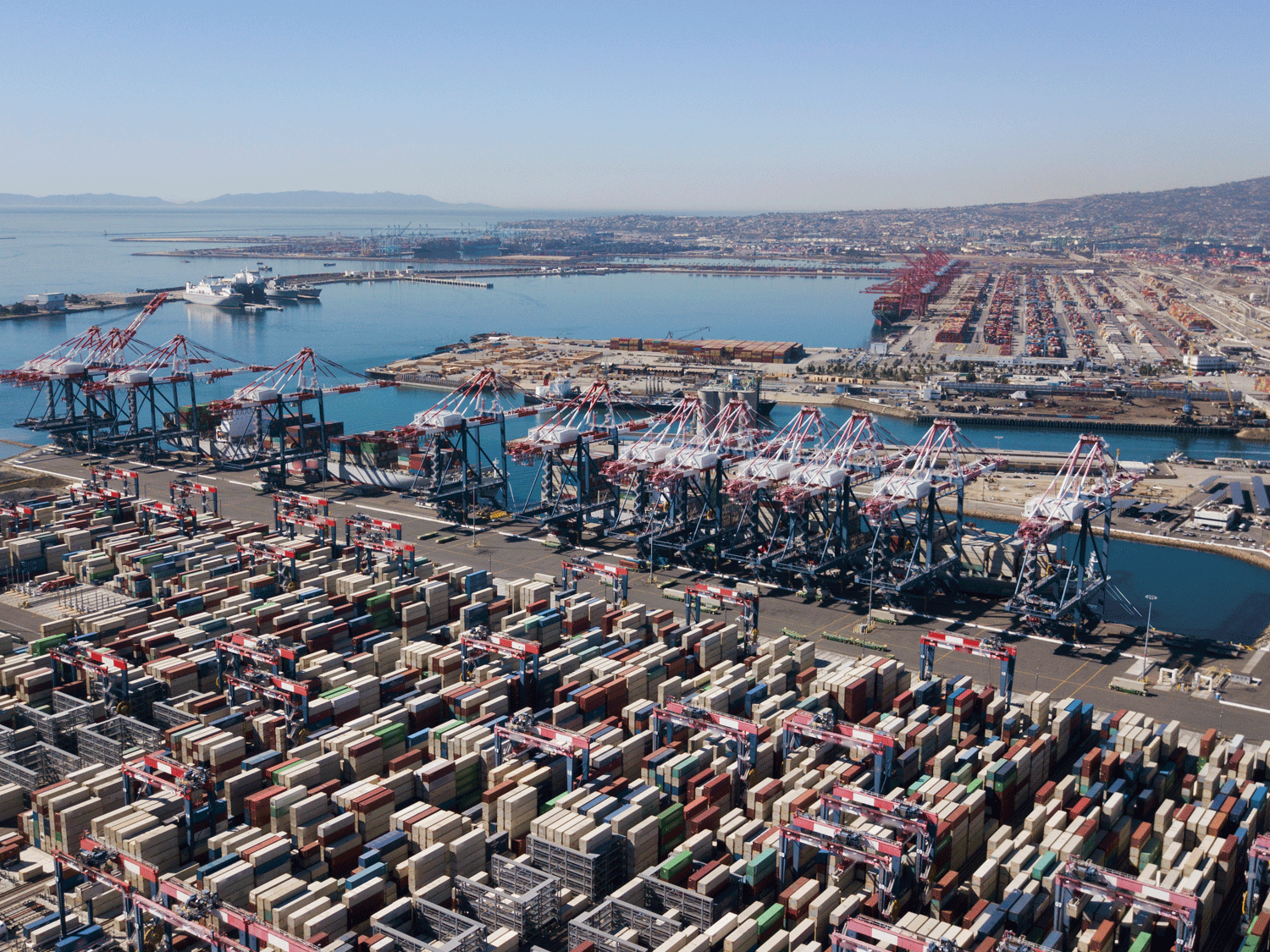
But, when supply chains do finally start to shorten, it will release a large amount of empty containers, 3.5m TEU from the transpacific alone, which will potentially create a new wave of congestion problems in the second half of 2022 and in 2023, in terminals as well as container depots.

Carriers and container leasing companies need to start planning for this development, or the resolution of operational bottleneck problems will create a ripple effect, with the potential of overwhelming container depots in the US, Europe and globally, where cargo imbalances are experienced.

Supply chains have never faced so many challenges and with local conditions changing rapidly it is critical that you have the ability to react quickly to new challenges - like a deluge of empty containers creating unexpected bottlenecks.

Our MVT supply chain platform gives you the power to improve your supply chain resilience across five key areas:

PERCEPTION – With a thorough understanding of our customers’ requirements and objectives we create supply chain solutions that draw on all options available in the current market.

VISIBILITY – Linking your supply chain participants and critical time-scaled events to provide end-to-end visibility across the extended supply network, with global control down to individual SKU level.

AGILITY – Proactively managing your supply chain flow means slower moving lines from any origin can be deferred, while priority orders can be highlighted and expedited, to increase speed to market and accelerate the cash-to-cash cycle.

FLEXIBILITY – It is simple to change supply lines, adding and monitoring new vendors, product flows and outbound order data, from any location.

CONTINGENCY – MVT’s exception alerts and rules-based solutions, correct operational non-conformities, without human intervention, or alert users to issues outside set-parameters for corrective action.

For specific information, or to discuss how our technology could support your supply chain, please contact Simon George our Technical Solutions Director or Elliot Carlile.

Felicity Ace

Valuable automotive RoRo vessel abandoned mid-Atlantic – and it is fully loaded

The Felicity Ace - which has not sadly sunk - was en-route from Germany to the USA, with 4,000 Volkswagen AG vehicles aboard, when it caught fire near the Azores islands in the Atlantic Ocean last week. The  Portuguese Air Force were the first to arrive at the stricken vessel, air-lifting off the crew and leaving the Felicity Ace to float mid-Atlantic, awaiting the arrival of fire-fighter tugs.

The RoRo ship was carrying about 4,000 Volkswagen AG vehicles, which could cost the brand at least $155 million, according to risk-modelling estimates, with Volkswagen, Porsche, Audi, Bentley and Lamborghini models on the vessel. Auto manufacturers other than VW may have lost about $246 million worth of vehicles.

Two large tugs with firefighting equipment rendezvoused with the Felicity Ace earlier this week to start spraying water and work with an initial salvage team that was already on board to cool down the ship.

No oil leakage has been detected, the vessel remains stable and MOL are expected to set up a website to provide updates on the incident.

This latest incident underlines once again the precariousness of global supply chains and the critical need for appropriate marine insurance cover.

The loss of so many vehicles and critical RoRo capacity - which could be the equivalent of 100k vehicles p.a. until the ship returns - comes at a bad time for global carmakers who are in the middle of a supply chain crisis sourcing semiconductors, resulting in extended delays for new cars and is likely to result in rate hikes, on a transport mode that was already massively over-subscribed.

The fire on the Felicity Ace could drive a marine re/insurance market loss of $500 million and while shipping losses have declined over the past 10 years, analysis shows that fires on board vessels remains one of the main safety concerns and have actually increased in recent years.

Metro did not have any of our customers products on this vessel but we are well prepared to provide assistance in air freighting replacement vehicles to their destinations to ensure demand is satisfied. We move huge numbers of vehicles every year globally by all modes and always consider and deliver available solutions in the current global market, within the automotive vertical, regardless of the challenges.

Carriers like MOL operate under conditions that limit their liability and may even require you to compensate them, in certain circumstances. Any compensation you may eventually receive is likely to be considerably lower than your actual loss.

Metro recommend and offer All Risk marine insurance cover that protects your cargo during every stage of transportation and storage, on a per shipment or annual cover basis, to the full value of the goods.

Metro has specialised in the automotive and construction vehicle sectors for over four decades. Working with many of the most respected and established brands, our specialist teams coordinate the end to end movement of vehicles and machinery around the world.

Long-standing partnerships and volume agreements with the leading RoRo carriers and container shipping lines means we can offer the widest choice of services, routes and solutions.

For further information please contact Tom Fernihough, our Automotive Director, for the latest advice and market news relating to the global supply chain of finished vehicles.

Image source: Portugese Navy

Sea Air 1

Protecting our customers supply chains – future proofing during a tough time

We are taking all necessary steps to secure capacity, to protect our customers’ air and sea freight needs through expanded carrier relationships and selected charter deals.

Even against the background of low capacity and record-breaking spot rates, airlines and shipping lines, for a variety of reasons, have often failed to come through with the solutions we need and in continuing to meet our shippers’ needs, we need to be innovative.

While a few shipping lines are tinkering with developing their own airlines, in a bid to offer their biggest customers a single solution for their shipping needs, the reality is that the narrow airport-to-airport offer of most air carriers, is massively short of the integrated logistics solutions that we deliver and the biggest shippers will never put ‘all their eggs in one basket’. Agility between transport modes is now imperative to ensure product arrives in market or at the manufacturing facility on time.

Maersk has an estimated 70,000 shipper customers and while its airline subsidiary, Star Air, currently operates for UPS, it seems highly likely that, once it has the right infrastructure and equipment in place, Maersk will kick-out UPS and replace it with its own shippers, though this will represent a tiny percentage of the customer base.

Rather than looking for a one-stop shop, our experience of air freight customers, is a requirement for speed, transparency, quality and reliability, at market-competitive rates. This is what we do, day in and day out.

In many respects the flying part of an operation is the easy bit, it’s in the ground-handling and the logistics at either end, that makes air freight successful and can provide competitive advantage, if executed efficiently. Yet none of this is being integrated and offered by airlines and it is extremely unlikely that the shipping lines will be able to. Metro do this in a tailored way, down to consignment level, ensuring expectations are met and ideally exceeded.

The airlines have, in the past, allowed cargo to be no more than a contribution to the fixed costs of a passenger flight. They have shown little or no interest in the ultimate customers’ situation or needs, and appear to have learned little from the integrators, who took so much of their market share, through the end-to-end management of smaller cargo movements. This is where innovation and hard work have delivered results to our customers and will continue to in the future with a true door to door measurable service and deadline driven solution.

It would have been inconceivable before the pandemic that the cash haemorrhaging container shipping lines would logically consider moving into air freight, but with billions to spend, it seems anything is fair game. However, now when many of the delays are caused through the inefficiencies and dysfunctionality of ocean shipping schedules, it looks like an exceptional business model. Broken supply chains need repairing after all – and that’s where the time critical air freight product becomes essential delivered through experience, relationships and expertise.

Metro are constantly evolving and innovating, to add more value-added services, and customer-focused initiatives.

This total commitment to the customer, valuable technology and complete door-to-door solutions is a mind-set that air and sea carriers are simply incapable of providing. 

We are driven entirely by our customersneeds and expectations. For further information contact Elliot Carlile, who would be delighted to talk to you about your requirements. 

Cut and run

The World’s biggest container line freezes out small shippers 

Leading shipping line, Maersk, has decided to focus on its largest volume customers, in a move that jeopardises the future of SME forwarders and leaves many shippers potentially exposed.

It is widely reported in the trade press, that small and medium-sized freight forwarders fear for their survival, following Maersk’s decision to offer them only its web-based spot market product, which is quite often unavailable on many trade lanes and routes.

Metro have secured long-term contracts with our partner carriers and shipping lines, across the three shipping alliances, but smaller forwarders, it would appear, are unable to follow suit and will face problems securing space and rates.

With Maersk, smaller forwarders can only get spot rates, which means they cannot plan a shipment in advance, because the spot quote has a very short validity. It can expire on the same day if the selected vessel runs out of space and it is not valid on the next vessel, which really restricts options for the forwarder.

While Maersk is the only carrier to focus on its biggest direct shippers (or BCO’s - beneficial cargo owners as they are termed), it is inevitable that other carriers may be considering a similar approach and the trade press is reporting feedback from sources that this is the case.

None of the shipping lines have yet made a clear statement that it planned to leave out forwarders in the future, but problems have been reported with making bookings. Smaller forwarders have been told late that there is no available space, or carriers are elevating pricing to a level that renders a shipment unviable, which raises suspicions of intention, according to trade articles.

For some medium sized forwarders, contracts have been renewed by the lines, but sometimes the rate is significantly higher, which is raising concerns that Maersk’s decision is the first step for other shipping lines to follow their strategy.

The problem for SME forwarders is that the carriers are offering bigger forwarders like Metro longer-term deals and that is immediately impacting smaller forwarders worldwide, because those kind of contracts are not now within their reach.

Without clear signals, and in a market where no shipper or forwarder can afford to shut the door on one possible carrier option, forwarders see little room to manoeuvre, but they are bracing themselves for the Maersk-type scenario they dread.

A trade source told the media this week that Maersk’s removal of contracted capacity had prompted other lines to do the same, claiming that one shipping line had “unofficially” told him that it was reducing capacity for smaller customers by 40%.

Another source concluded: “You can count main shipping lines on the fingers of your hands, but I think a few should not be able to kill thousands of freight forwarders. This is the risk.”

This is not the first time that container shipping lines have sought to cut-out freight forwarders and while previous efforts have quickly floundered, the digitalisation of the freight process, means that this time around they can offer short-term access to services via their spot rate platforms, without supporting SME forwarders.

In our view the freight forwarder is more essential than ever before, in supporting customers overcome the continuing minefield of logistical problems and in supporting carriers operate their capacity effectively.

Increasingly reliant on digital tools, carriers do not have the mindset or capability, to provide the support, feedback and service that shippers - of all sizes - need today.

We help our customers go global with ease, with advice, online services and real-time visibility of every shipment's journey. 

Shipping lines manage expensive assets and resources, that move between ports on fixed routes, but modern supply chains are fluid and need to react quickly to keep pace with demand, which is where a forwarder like Metro is invaluable in identifying requirements, finding solutions and allocating the right resource. Credibility and loyalty to our partners in the supply chain built up over decades really does make a difference.

And unlike the lines, who will favour their own services, we scan capacity opportunities globally, so that we can direct your cargo where your deadlines can be met in the most efficient and cost-effective way possible. 

Our goal is to help our customers improve productivity and profitability, to enhance their bottom-line and make them more successful.  Through unique initiatives and innovation.

Please contact Elliot Carlile or your usual Metro account manager, to discuss the best route to market and current fluid situation in the global logistics environment. We will have the answers that you need to plan your business continuity, in a challenging environment.