ships at anchor

China ship queues growing with further disruption to schedules

Despite key Chinese ports, including Shenzhen and Shanghai, operating normally, land-side logistics disruption, in the wake of the latest Covid-related lockdowns is inevitable and vessel queues are growing.

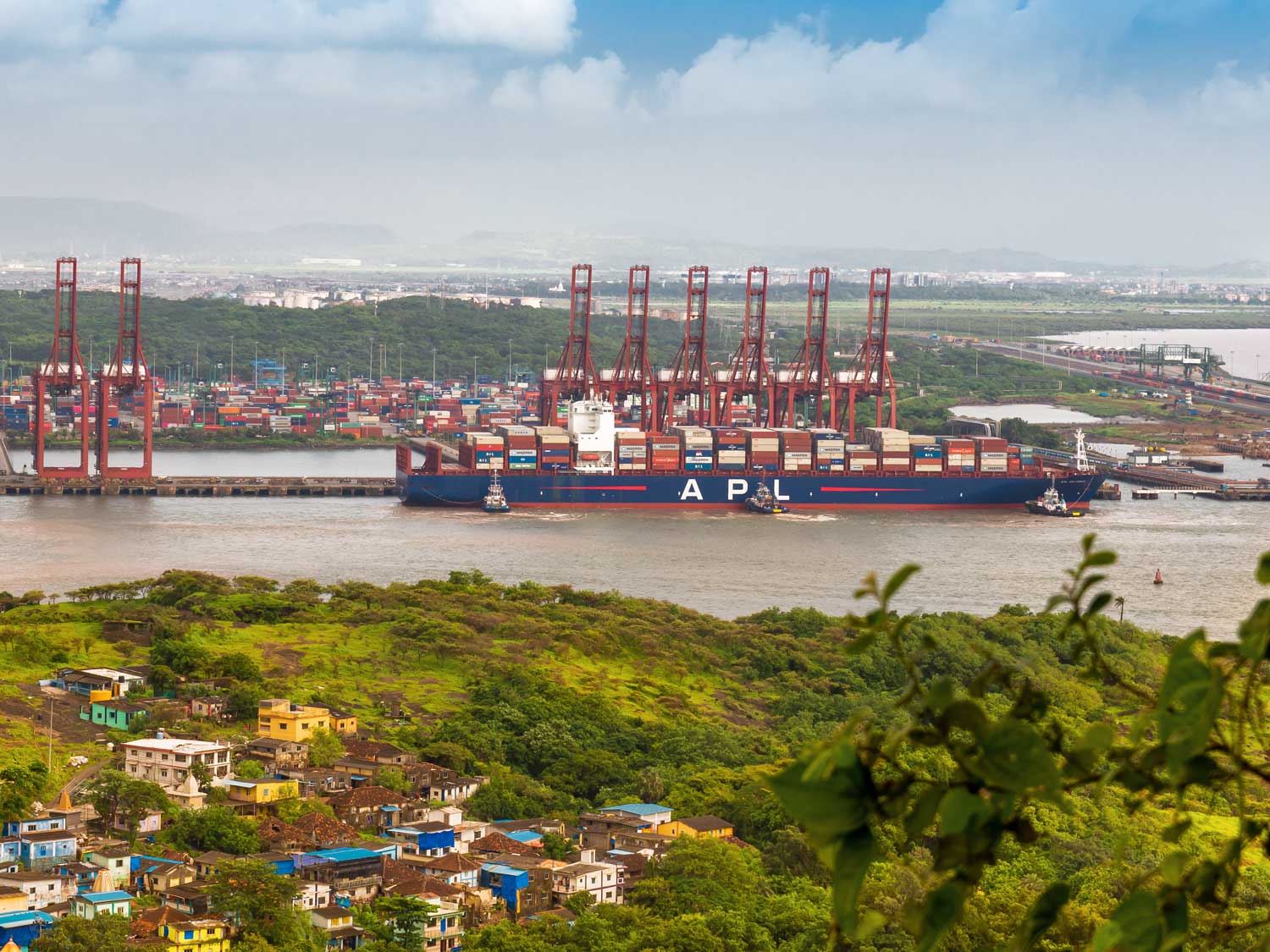
Queues of container ships outside major Chinese ports are lengthening, despite ports continuing to function normally - though with limited capacity - because many of the most profound problems lie on the landslide, with the strict Covid measures hampering trucking productivity, making it difficult to get cargo to and from the ports.

Vessel waiting times at Shenzhen terminals has grown longer, with an average wait of three to four days at Yantian International Container Terminal (YICT) and five to seven days at Shekou Container Terminal.

The spread of the highly-infectious Omicron variant this month has led to movement controls across China, which is debilitating transport operations and the ability of drivers to collect and deliver. So while ports remain open and vessels are continuing to dock, congestion is building up and some container ships are re-routing to avoid expected delays.

The current developments around Covid lockdowns in China and sanctions imposed on Russia is creating more supply chain uncertainty and congestion will go up as delays extend, which means we will work even harder to get our customers’ cargo moving around those obstacles.

Shenzhen city reopened on Sunday and while the Yantian container terminal continued operating throughout the lockdown, the impact on ocean freight is due to trucking restrictions when picking up from outside Shenzhen, or in a locked-down area.

Even with ports open, the lack of terminal handling staff and expected trucking delays are compelling some carriers to skip calls, or accept they will keep vessels waiting.

Maersk will skip calls at Shenzhen on three sailings later this week after the port imposed restrictions on cargo exports to limit congestion in the container yards at its western terminals.

Trucking capacity between Shenzhen and nearby cities is estimated to have dropped by 20%, or even more in some regions, due to the need for drivers to produce a negative test, which means longer delivery times and a possible rise in transport costs such as a detour fee or a highway fee.

Cross-border trucks between Shenzhen and Hong Kong are also affected, with capacity dropping by at least 70% as authorities impose tougher quarantine and testing requirements on drivers, with long waiting times, leading to transport by ocean to overcome the limited truck capacity. 

In Qingdao, terminals are still operating, but port productivity has dropped due to tightened coronavirus measures, with more than 70 vessels waiting to berth, double the number in February.

In Shanghai, which was said to be on the brink of lockdown and already imposed restrictions on passenger flights, warehouses and terminals operate as normal, but require the driver to be tested within 48 hours before delivery which is limiting trucking capacity and caused some shipments to be moved out of Ningbo.

Meanwhile, there have been reports of lengthening ship queues outside Chinese ports, with 262 vessels waiting outside Shanghai and Ningbo, up from 243 last week.

Supply chains have never faced so many challenges and with local conditions changing rapidly it is critical that you have the support of dependable partners. 

Metro will always share the latest news and most important developments, providing you with the best alternatives and options, to keep your supply chain optimised. 

For further information and to discuss your ongoing requirements please contact Elliot Carlile.

We continue to monitor the situation daily, which is very fluid, to update our advisory…….please look out for our announcements, or speak with your Metro account manager for the latest information.

Oil platform

Bracing for continued fuel surcharge increases – if it moves it needs an engine

Fuel prices were already on the way up before Russia decided to invade its neighbour and the additional volatility and uncertainty created by the conflict in Ukraine are significant enough to drive oil and fuel prices to levels not seen before. Or at least since the 1970’s relatively.

Average low-sulphur marine fuel prices had already risen to $726/mt prior to the Ukraine invasion, well above the 2021 high of $617/mt which has left us bracing for higher bunker/fuel surcharges, which will add to the already elevated rates for sea, road, and air freight movements.

Marine bunker prices and the price of diesel, which feeds directly into road and rail inland movements, has continued to climb, with jet fuel prices up double-digit percentages from mid-February.

The price of crude oil accounts for about half the price of diesel, but demand is a factor too and the intense freight demand and resulting supply chain disruption are likely to keep the price of diesel and petrol elevated even if they do moderate in the weeks ahead. This dynamic is also the case for aircraft and marine vessels.

The price of VLSFO, which powers approximately 70% of the global container ship fleet, reached close to $1,000/mt last week while high-sulphur fuel oil was trading at $623/mt.

Rising fuel prices, which have effectively doubled, represent a real worry for carriers and shippers are likely to feel the impact of these higher fuel costs via per kilo surcharges by airlines, Inland Energy Surcharges (for line haulage) as well as the traditional bunker adjustment factors (BAFs) that typically lag fuel price increases. Ultimately these are passed on to the consumer and that’s part of the explanation for global inflationary pressures currently.

Sea-Intelligence Maritime Analysis has estimated that if bunker fuel prices remain at their current level for the rest of the year, the container shipping industry will incur an additional annual cost of $7 billion, which would result in an average additional fuel cost of $39 per TEU.

As the global situation remains so uncertain, it is likely that we have not seen any peak yet, which could mean more bunker surcharges when lines issue their next rate adjustments on the 1st of April.

When freight costs are volatile, how often you ship and the way you ship becomes very important. Often speed is a determining factor, with many shippers choosing little and often, rather than consolidating bigger loads, that offer greater economies of scale.

Pragmatism now replaces expediency, as the sensible shipper will weigh the transit time benefits against the overall cost of the freight movement.

This affects all parts of the supply chain including first and final mile distribution. Many UK haulage firms are now reviewing their fuel surcharges on a weekly basis to ensure that they do not suffer losses through swings in the cost of daily changes in fuel procurement. We have distributed changes over recent weeks but the reality is that the cost to transport goods overland by any mode has increased sharply since February. We will continue to update and share the latest information and situation with you.

Despite the oil price spiking and increases anticipated, it is worth noting that nothing is certain in terms of fuel surcharge outcomes, which is why we share market intelligence and any changes that may occur, for transparency.

For the latest insights please contact Elliot Carlile or Simon Balfe, who will share market conditions and intelligence and explain how we are offering solutions that ensure that we stay ahead of the unravelling and volatile situation in global logistics. The reality is if fuel gets more expensive so will moving products – we will ensure that this is always shared, explained and passed through at cost – it is an unavoidable ingredient in transport.

ship launch

Record-breaking numbers of new ships may be placebo

Container shipping lines have used massive profits accrued since 2020, to refresh their fleets with modern, high-spec vessels, but their investment may only slightly alleviate port congestion and equipment shortages.

Soaring freight rates, post-Covid lockdown, have generated cash on an unprecedented scale for the global shipping lines, with Maersk expecting 2022 to be another bumper year, earning almost $50bn in profits over 24 months, while 3rd quarter profits at CMA CGM rose tenfold in 2021 and first-half profits Cosco were 21 times higher than before.

The major carriers are investing their windfall profits, to renew their fleets with modern, high-spec tonnage and, with plenty of money still to be made, everyone is rushing to get their ships into the water as soon as possible.

Early delivery rates are much sought after and many carriers have signed contracts for new container ships at yards, better known for building bulkers, tankers, or RoRo ferries. 

By February, the global orderbook-to-fleet ratio had crept up to 25%. This is a long way short of the 65% seen in 2008’s Bull market, when the lines were all chasing market share, but then again, @ 25 Mteu, the global fleet is twice the size now.

The uptick in orders commenced in mid-2020, when the order- book-to-fleet ratio was only 9%, with new build deliveries this year forecast at around 1.10 Mteu, which is roughly in line with the average delivered in 2016 - 2021. 

For a fleet size of 25 Mteu and assuming a realistic usable service life of 25 years for a container vessel, this year’s projection of an additional 1.10 Mteu, is essentially a zero-growth replenishment rate and will only slightly alleviate port congestion and equipment shortage. 

The new vessel deliveries will only slightly alleviate the pain caused by port congestion and equipment shortage because, there will not be enough new ships to replace the capacity shortfalls caused by system inefficiencies which are currently swallowing up about 10% of ’dynamic’ shipping capacity. 

The vast majority of container ships ordered in the recent boom will not join active service until 2023 and 2024, when we will see record deliveries of close to 2.40 Mteu 

Any slowdown in demand for space by shippers, could similarly push owners to defer some tonnage delivery until 2025. 

Over 50 of the very largest container ships, the so-called megamax, will join the global fleet by 2024, as Evergreen, MSC, ONE, Hapag-Lloyd, and OOCL pursue increasing economies of scale. 

Capable of carrying over 24,000 teu, these giants measure 400 meters long and 60 meters wide and their immense scale overwhelms many global ports, creating additional risks of supply chain disruptions and port congestion.

Port inefficiencies are magnified by megamax ships, because they strain every aspect of  operations. The megamax requires more of almost everything:

  • Access channel depth and width
  • Air draft
  • Depth alongside
  • Quay length
  • Ship to shore crane systems height, outreach and width
  • Landside storage capacity
  • Yard equipment and terminal operating systems
  • Road, rail and barge access
  • Capacity to expand

Global logistics, freight operations and infrastructure are transforming, as the intense and sustained pressure that supply chains have been subjected to, expose weaknesses and inefficiencies.

We will continue to use our market knowledge, extensive industry contacts and global network, to share the most important perceptions and developments, so that you have the insights required to make the most critical decisions. 

We negotiate rate and volume agreements with carriers across all three alliances, which means we have the freedom to react to market conditions and changes. 

Please contact Elliot Carlile to discuss your supply chain expectations and ensure your business is future proofed’.

ship and graph

Sea freight facing even more challenges

Low-sulphur fuel container ship bunker prices have increased by a third since Russia’s move on Ukraine, with bunker surcharges rising around 15% and expected to spike further with crude oil hitting new highs of more than double the price at the beginning of the year.

Expect the carriers to claw back as much cash as possible in the form of emergency bunker surcharges and increased use of slow-steaming to mitigate the financial impact.

We are seeing delays and detention of cargo by overseas customs authorities seeking Russian and prohibited cargo and French customs officers have already seized two vessels suspected of breaching sanctions.

<

Until trade lanes are free of Russian containers, disruption is to be expected, as customs intercede, cargo is identified, offloaded and (ideally, to free up much needed equipment) unloaded. 

Dwell time for containers and vessels is a key indicator of port efficiency. The longer cargo is stuck in port, the more it potentially costs shippers, in rent, inventory holding and tied up working capital and container ships operate to stringent schedules, which means any delay ripples across the entire service. 

During unexpected increases in dwell time, port operators increase stack heights and store containers on every available space in their yards, which significantly lowers productivity, potentially exacerbating dwell time.

Dwell times have increased 43% across Europe since Russia’s invasion of Ukraine, with consumer packaged goods, food and beverages, hit particularly hard, as dwell times increased by 55%.

Container ships are skipping ports to try and maintain their schedules or, at best, limit delays, which are averaging 17 days and unchanged since last November. 

Average round trip duration for all seven OCEAN Alliance Asia - North Europe loops however stood at 93 days, compared to an average round voyage time of 78 days.

China to Europe rail freight operations are apparently continuing, though major service providers have added Moscow ally Belarus to their booking suspensions, which effectively blocks rail shipments on much of the Asia-North Europe network, because containers must be transferred to different gauge trains on entering Europe, with the busiest crossing at the Małaszewicze-Brest reloading area on the Poland-Belarus border.

Increasing in popularity with shippers, particularly for high-value products that would benefit from a faster transit, rail freight from China has grown massively since the advent of the COVID pandemic, with volumes surging 29% last year, to 1.46m teu.

The displacement of such massive volumes will have a profound impact on other modes from Asia, taking much needed capacity and putting even more pressure on pricing.

Air cargo shippers on Asia to Europe lanes, that are already anticipating a hike in prices as a substantial amount of capacity has come out of the market, as a direct result of Russia’s move on Ukraine, could be hit particularly hard.

Supply chains are facing a new set of challenges and with conditions changing rapidly, upstream and downstream, we are working closely with our network partners, to proactively identify potential issues and take any action necessary to protect our customers.

We maintain long-term contracts and space agreements with leading airlines, carriers and shipping lines, which means we can provide the best alternatives and options, whatever the situation.

Our proactive team, leading-edge technology and open communication, provide our customers with the real-time visibility, control and intelligence they need, to maintain resilient, flexible and reliable supply chains.