US DoT

<strong>Complaints by shippers to FMC soar</strong>

The US Ocean Shipping Reform Act (OSRA), which was passed into law last June, gives the Federal Maritime Commission (FMC) more power to deal with shipping lines and mitigate supply chain disruption, leading to a slew of claims and jealous European shippers. 

In just six months the Federal Maritime Commission (FMC) has received more than 200 complaints since the Ocean Shipping Reform Act of 2022 (OSRA) was enacted, with over 30% of those complaints meeting threshold requirements to be referred to investigators.

Key points of the Reform Act:

- require ocean carriers to prove that detention and demurrage charges comply with federal regulations
- require ocean carriers to prove that detention and demurrage charges are reasonable (shifting burden of proof from the invoiced party to the carrier)
- prohibit ocean carriers to decline shipping opportunities without a good reason
- require ocean carriers to make quarterly reports to the Federal Maritime Commission

The FMC charge complaint process is promoting informal settlements and waivers of demurrage and detention billings, with more than $700,000 in charges refunded by carriers.

Hapag-Lloyd paid a $2 million civil penalty in June over detention fees it assessed to a drayage firm for containers the trucking company could not access. And now a Wisconsin-based non-vessel-operating common carrier (NVO) is accusing Hapag-Lloyd and its rail subcontractor CSX of improperly levying nearly $300,000 in fees against the NVO, after it exceeded container free time, attempting to retrieve containers, it says it could not access.  

Despite deciding that current conditions do not necessitate the issuance of an emergency order for shipping lines to share data, the FMC has announced that it intends to issue a supplemental notice of proposed rule-making (SNPRM) to address issues related to the ‘Unreasonable Refusal to Deal or Negotiate with Respect to Vessel Space Accommodations’ proposed rule issued last September.

The commission received almost 30 comments in response to its notice of proposed rule-making (NPRM) on Unreasonable Refusal to Deal or Negotiate, which the FMC believe demand thorough consideration. The SNPRM will address those matters and provide the commission the opportunity to receive additional public comments.

This initiative by the FMC is gathering pace and it is likely that there will be many more claims, and possibly even class action, against carriers  over coming months from disgruntled shippers and NVOCC organisations.

Any hope of the EU following the FMC’s lead has evaporated, as market supply and demand has moved in favour of the shippers, but the retained Container Shipping Consortia Block Exemption Regulation (CBER), expires on the 25th April 2024 and if the EU decide to revise or end the exemption regime, the UK may follow.

To learn how we can support your trade with the United States, or to learn more about our ocean solutions, please EMAIL our chief commercial officer, Andy Smith. 

We have avoided huge detention and demurrage costs over the last few years for our customers, through slick entry to and from the USA markets and utilising our own facilities, or partner container yards, to limit the impact.

coronavirus threat to car industry

<strong>Chinese carmakers look to container shipping for a reliable logistics solution</strong>

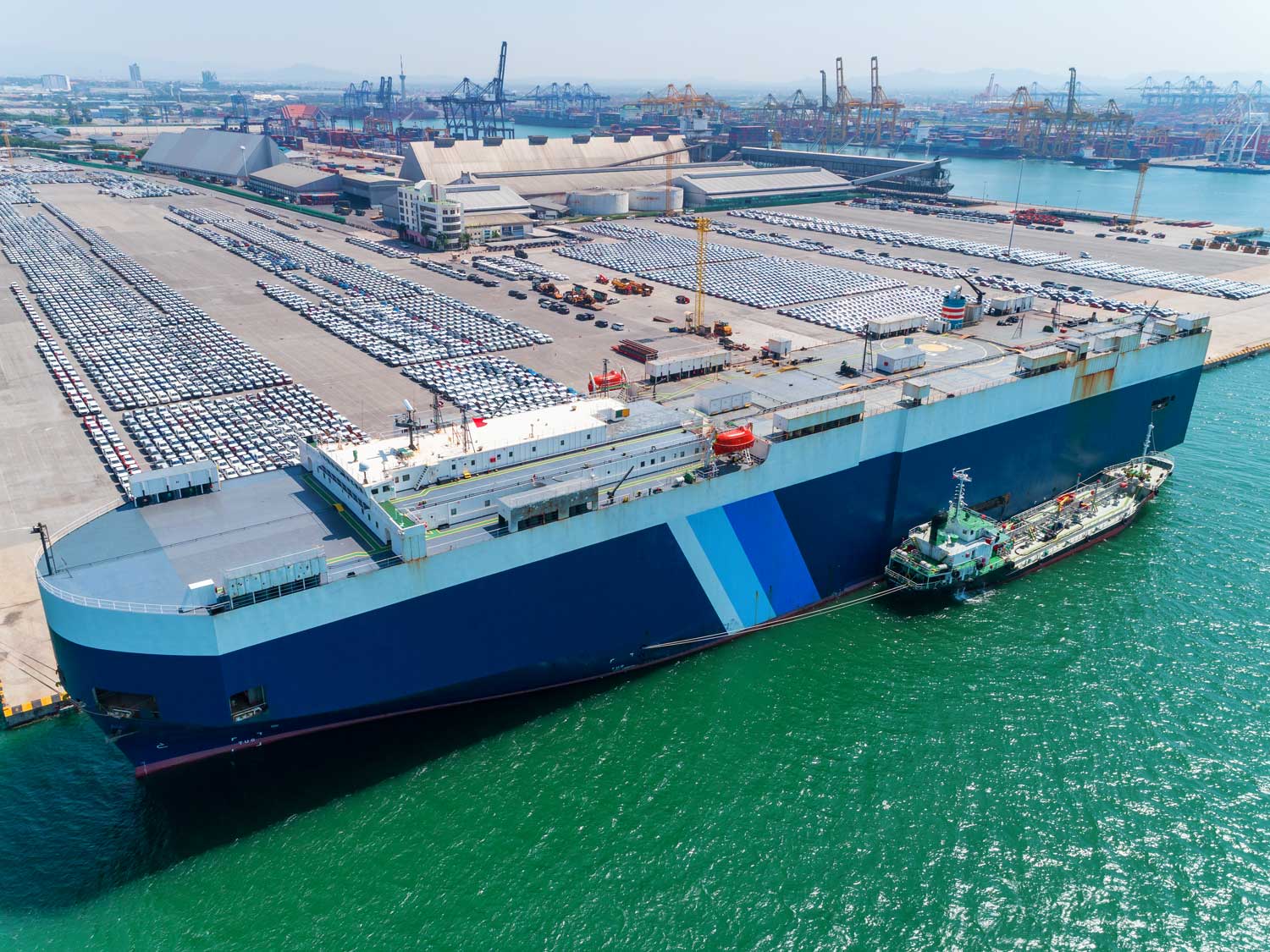
The global shortage of RoRo (roll on – roll off if you have ever wondered) capacity for finished vehicle shipments has intensified over the last two quarters, encouraging an increasing number of car manufacturers to look for control of vessel assets, while many others look to container shipping solutions.

Global automotive exports have surged over the last two years, yet the number of RoRo car vessels owned by the five main global carriers has not increased, with shipping costs skyrocketing and any available capacity taken by a limited number of big volume customers including FMC, Toyota, Stellantis, VAG etc.

The lack of RoRo vessels is stretching an auto supply chain already worn thin by a scarcity of semiconductors, pandemic-related labour shortages and months of port congestion intensified by China’s COVID-19 lockdowns. 

Daily charter rates for RoRo vessels that can carry up to 6,500 cars have risen to ten times the 2020 levels and are the highest on record since 2000, it has been reported in the global trade press.

Six months ago a flurry of RoRo vessel orders took the car carrier order book to 77 vessels (which equated to about 10% of the global car carrier fleet), but with these vessels due for delivery from 2024 onwards, they will do nothing to alleviate the current situation, which is fuelling a fresh round of RoRo construction orders, that are still unlikely to fill the vessel shortfall, which could be as much as 100 by 2024.  In short, demand is outstripping supply significantly in this sector.

Two of China’s biggest car manufacturers are so determined to ensure that their cars get to their customers that they have ordered their own ships.

BYD, which make electric and hybrid cars, is ordering at least six ships with the capacity to carry 7,700 cars, while state-owned SAIC Motor Corp is tendering for seven new carriers that can each hold 8,900 vehicles.

BYD and SAIC aren’t the first car brands to run their own shipping fleets. Toyota owns shipping company Toyofuji Shipping Co., while Hyundai has logistics group Hyundai Glovis Co., and Volkswagen charters its own vessels.

Rival Chinese carmakers Chery International and JAC hope to secure RoRo capacity in a joint venture with Anhui Provincial Port and Shipping Group, which will also be engaged in international container shipping.

China recently overtook Germany as the world’s second-largest auto exporter, sending almost 2.6 million vehicles abroad in the first 10 months of 2022, but the vessels ordered by BYD and SAIC will not be delivered for several years, so it’s a bold bet on lasting global consumer demand for Chinese cars.

Tesla CEO, Elon Musk, said. “Whether we like it or not, there just aren’t enough transportation objects to move cars around.”

Global RoRo vessel capacity was tight in 2022 and that tightness is expected to continue. 

With only 11 vessels expected for delivery in 2023 and China planning to export 2.3m units to Europe this year, the RoRo capacity currently expected will only serve half of that number.

But with container shipping rates slumping, there is a massive opportunity for shippers of finished vehicles to move units on dependable and regular services - without volume constraints - at relatively low cost.

There is a similar situation occurring with overland transportation around the world for vehicles. Car transporters and low-loaders are in heavy demand. With the electrification of vehicles and still a very bullish demand on new vehicles, whether with a combustion engine, EV propulsion or any other ‘new’ fuel there will continue to be pressure on supply chains for finished vehicles from cars to tractors to lorries over coming years. We continually are designing, creating and introducing new platforms to ensure that we can assist our customers in the traditional RoRo sector with alternatives that can deliver. Quite literally.

Metro has specialised in the automotive, construction and agricultural vehicle sectors for over five decades. Working with many of the most respected and established global brands, our specialist teams coordinate the end to end movement of vehicles and machinery around the world, regardless of origin or destination. With lots of added value through transparency and other imaginative solutions that fit their needs.

Long-standing partnerships and volume agreements with the leading container shipping lines means we can offer the widest choice of services, routes and solutions for finished car and KDV movements.

To learn more, or to discuss our automotive capability, EMAIL Matt Weight. He has most of the answers – and should he not, he will design a solution that works in the current environment with his team.

US flag and port

<strong>Beating the transatlantic logistics challenge</strong>

The ocean freight trade-lane between Europe and the United States is dominated by a handful of large carriers and while we have good relationships and work closely with those carriers, we also maintain a roster of smaller carriers, for tactical use, including one which has a particular pedigree.

For the first time in decades the U.S. has imported more goods from Europe than from China, with U.S/UK trade increasing 15% year on year in 2022, which has contributed to keeping European transatlantic demand healthy and attracting carriers from less profitable trade-lanes, as global trade adjusts to the changes that are continuing to occur.

The transatlantic market has been remarkably stable recently. It was not impacted by the supply/demand issues that spiked Asian export rates at the start of the pandemic, with carriers re-deploying transatlantic ships to more lucrative transpacific and Asia-Europe trades, as well as equipment being seconded to those routes, as lockdown consumer demand soared.

And, while rates have since softened, the transatlantic trade-lane has avoided the rate collapse affecting services from Asia, with major shipping lines recently joining its competitors by adding additional vessels to transatlantic schedules.

Despite long-term rate and volume agreements we have in place with transatlantic carriers, to guarantee the carriage of our customers’ cargo and the addition of more vessels on the trade-lane, the general service available - cost, ports and transit - remain largely similar. 

Which is why the service provided by our group carrier, Ellerman City Liners, is so welcome, with fast transits and alternative, quieter more efficient ports.

Five vessels are deployed on the US Express’ (‘USX’) service, with a weekly sailing frequency between North Europe and US East Coast, calling at Antwerp, Rotterdam, Hamburg, Tilbury, New York, Jacksonville and Wilmington (North Carolina), before returning to Antwerp.

The weekly USX sailings are the only direct service to and from Jacksonville, and with arrival into New York just nine days from Tilbury, USX offers one of the fastest and most reliable transit times available.

A major deliberation, and different approach Metro have taken over recent years, is in regard to the inland process within the USA which is still a challenge – but we have solutions that are bespoke and tailored to each of our clients requirements and expectations. The US is a big country after all, much of which is land-locked and needs a full end to end strategy and planning. Port to port is not necessarily the only transit defining  consideration to achieve the successful delivery of goods.

We really value the relationships we have built up with the primary shipping lines, over the last 40+ years and we welcome the opportunity to support them - as they often support us - because we take our contractual agreements very seriously.

But we value our customers too and our absolute focus is always to provide them with the most efficient and effective solutions. Optimisation of all the components necessary for consistent reliable services and when they need to avoid congested ports and terminals, require fast transit times, or want simple transhipment options to/from Spain, Portugal and Ireland, then the USX service is the option that ticks the boxes.

We negotiate long-term and FAK contracts with shipping lines across all three alliances to secure space and rates, so that we can provide the best alternatives and options, whatever the situation.

We leverage agreements across the alliances – and smaller niche shipping lines, when appropriate – to match port pairs and routings, or work around bottlenecks, to maintain resilient and reliable supply chains.

To learn how we can help support your trade with the United States, or to learn more about our USX service, please EMAIL our sea freight director, Andy Smith. He knows how to achieve results and ensure that your cargo arrives where it should and when it should, seamlessly.

FXT at dawn

<strong>December 2022; Freight market summary review</strong>

As freight prices on every mode return to relative stability and the worst effects of inflation work though, the market is expected to rebalance, achieve ‘correction’ and ultimately recover with slow growth in 2023.

The spiking freight rates on all modes are falling away and, taking inflation into account, the global freight market is expected to grow over 27% this year, though that figure falls to -2.4%, when inflation is removed, reflecting the falling volumes and demand slumps.

AIR

More shippers and particularly those that switched modes, when vessel operating performance fell to historic lows, are busily switching back to sea freight, as ocean congestion ends and container freight rates recede towards pre-pandemic levels.

The stabilisation of sea freight rates and improvements in vessel schedule reliability is encouraging some shippers to move cargo between airplanes and ocean containers, and especially users of our supply chain management MVT platform.

With MVT it is easy to amend purchase orders and be agile in switching complete or partial orders from ships to planes, or vice versa, if SKU sales velocity change.

Despite rates on many routes continuing to soften, shippers are unlikely to delay booking and securing airfreight capacity, to wait and see how the market fares, because from an operational point of view, this would mean an enormous risk, if any market changes restricted capacity. 

Time critical movements of cargo will always be necessary and unforeseen market dynamics will undoubtedly occur resulting in demand for air freight, whether through production delays or logistics interruption – history dictates that there will always be a necessity for airfreight, and usually at very short notice as world events continue to change, sometimes dramatically.

SEA

Freight rates have continued their decline with the market struggling to keep up and the carriers resorting to ever more drastic blanking programmes, to slow the price slide, or other tactics including cancellation of whole services or suspending vessel departures entirely – which is becoming more prevalent on many major routes.

The Asia-Europe trade remains under pressure with falling spot rates, a generally soft trading environment and no sign of the market bottoming out. Although contract rates for 2023 fixed validity and capacity assurance are hardening and increasing for the longer term situation in 2023 as carriers look to recover control of the current demand slump and balance supply to match.

Carriers are expected to announce more blank sailings/ cancellations as they seek to reduce the supply equation in their favour and while residual congestion is still impacting parts of Europe and the Americas, hopes are rising in China as the government finally begin to relax their absolute zero-COVID restrictions. Although they do still remain in a toned down form.

With transpacific volumes declining, rates have been falling, with west coast spot rates reaching something approaching pre-pandemic levels (it was only 12 months ago that rate levels on the spot market were at $20,000 per FFE) and while east coast rates have dropped, some capacity has been tied up in the continuing Savannah congestion and at other ports.

Transatlantic rates are starting to soften, particularly to Europe and while there is no change to capacity expected through the end of 2022, the expected fall in volumes is reducing port congestion and vessel waiting times on both coasts.

After what seems like an eternity most ports are finally turning vessels around on schedule, although times are still tight in Savannah, Houston, Oakland and Vancouver.

ROAD

European road freight rates hit an all-time high in 2022 as rising cost pressures, supply and capacity disruptions, regulatory change and the conflict in Ukraine created a potent mix of rate influenced drivers, but are beginning to reduce after Q3 peak.

Europe’s domestic road freight market is projected to grow by just 0.7% in real terms, while the European international road freight market is projected to grow by 2.1% in 2023.

A key driver behind the stronger performance of the international section might be retail and e-commerce sales which stimulate more cross-border flows of consumer goods.

Shortages of raw materials and intermediate products, together with weakening demand and energy shortages are clouding the outlook for the manufacturing sector in Europe,

Soaring diesel prices appear to have been subdued for now in the UK and the most recent EU data shows that the average weekly diesel prices in Q3 have fallen by 1.7% quarter-on-quarter. Although still incredibly high in reality and this could change very quickly from some of the consequences of global activity and the geopolitical landscape.

This represents at the very least a stabilisation of prices across the UK and Europe, with the momentum at the end of the last quarter appearing to be downward. However as widely reported in the trade, national and international press the UK, in particular, is still seeing issues with European trade levels and supply chain demand and supply availability.

Despite the ongoing challenges, we continue to find cost-effective international transport solutions, by every mode for every shipment, including urgent and time-sensitive cargo.

Please contact the below to learn more, or to discuss any of the issues covered in this market report.

SEA - Andrew.Smith@metroshipping.co.uk

AIR - Elliot.Carlile@metroshipping.co.uk

OVERLAND - Simon.Balfe@metroshipping.co.uk

Metro are here to assist with your decision making and planning for 2023 logistics strategy and options available. We are at the forefront of the market globally and will ensure you are best positioned to succeed in 2023. Please contact us – we encourage proactive knowledge based intelligence sharing and will always deliver on your expectations.