
Golden Week

Carriers blank Golden Week sailings

The cancellation of multiple October sailings from Asia to Europe is an attempt by the carriers to push capacity down and raise rates, but if they fail, they may not have another opportunity to significantly raise prices before Chinese New Year, next February. 

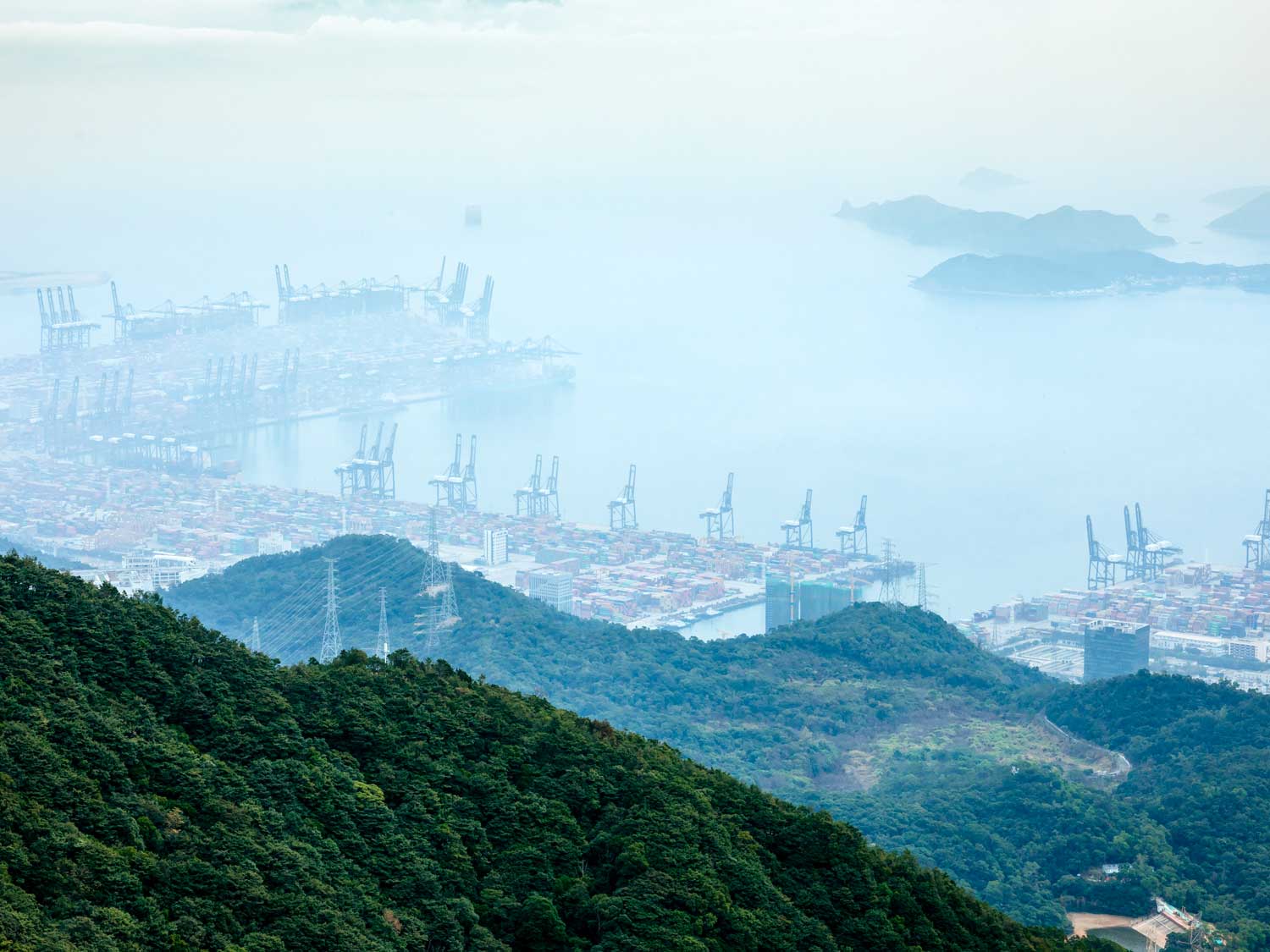
Container shipping lines across the three alliances have announced additional blank sailings ex Asia to North Europe and the Mediterranean, around the Chinese Golden Week holiday in the first week of October, and through to the end of the month.

According to data from Sea-Intelligence, the capacity operated on the Asia-Europe trade in September is 10% higher than last year and on the Asia-Med service it is 27% more and while the carriers are planning significant capacity cuts after Golden Week, we are wary of unannounced blank sailings in the coming weeks.

Overall 14% of scheduled sailings have been cancelled from mid-September to mid-October and this we expect are announcements to counter balance the lower demand during China’s Golden Week holiday.

The current blanking represents Ocean Alliance (5%) and THE Alliance (7%) with MSC blanking SWAN service weeks 38-43 removing 45k TEU of capacity.

MSC has radically cut capacity on the Mediterranean lane between weeks 40 and 43, but it is not clear whether HMM will blank any sailings of its Asia, India to Mediterranean standalone loop that launched in August.

The aggressive blanking announced by all three alliances means it may be challenging to find space for exports from China to Europe next month, which is why we recommend that you share shipping forecasts as early as possible, so we can reserve the space you need.

There will also be the knock-on effect of limited export sailings from North Europe during November and December, which underlines again the importance of shipping forecasts.

Carriers will, of course, be looking to raise rates on backhaul trades, as prices for oil have surged to $90 a barrel, with December Brent Crude now priced at around $95, driven by OPEC’s supply cuts, which have been extended to the end of the year.

The price of Rotterdam-sourced industry-standard low-sulphur fuel (VLSFO) jumped on Friday by another $8 per ton to $643 and has now increased by 22% since the end of June.

We are watching closely…

Whatever the market challenges are, our sea freight team keep our customers’ cargo moving, finding capacity and alternative services in the event of unforeseen blankings. 

Providing us with regular forecasting, helps us to understand critical dates and intended volumes, so that we can secure the right amount of capacity to keep your supply chains running. 

If you have any questions or concerns about your Asia supply chain or the developments outlined here, please EMAIL our Chief Commercial Officer, Andy Smith.
Panama Canal

Risk of Panama Canal disruption rising

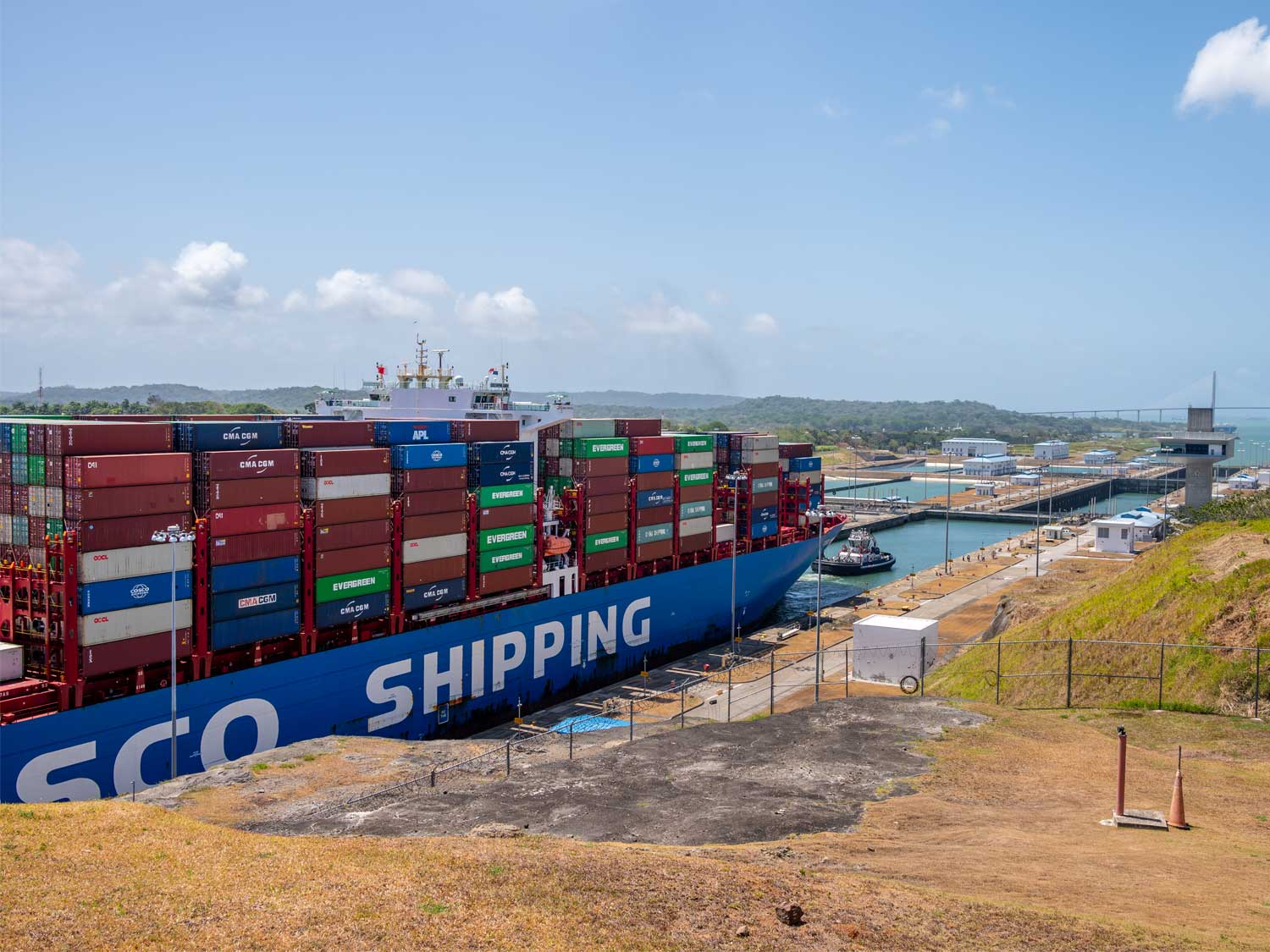
Unpredictable weather patterns and drought for most of 2023 have driven the Panama Canal Authority to impose numerous draft restrictions, reducing vessel transit numbers, and cutting vessel booking slots for lock usage, due to low water levels.

The Panama Canal consists of the man-made lakes of Miraflores and Gatun, with the panamax locks taking vessels with up to a 12.5 m draft and the neo-panamax locks for vessels up to a 15.2 m draft. 

The dual system is run on fresh water, with only the new system able to reuse some of the water used to transit the vessels, and with the lowest rainfall this century, the Panama Canal Authority’s limits on daily transit and vessel draft restrictions will stay in place for the rest of the year and throughout 2024.

While the ongoing restrictions have not impacted shippers yet, we are monitoring the canal situation closely, because extended delays for goods coming into the US for the coming autumn and winter seasons, could impact capacity, schedules and prices. 

The backlog of ships trying to enter the Panama Canal is growing, with current estimates putting the number at over 200 vessels. Containerships are the canal’s biggest users and are usually given preferential status, which means most have avoided the worst of the disruption, but neo-Panamax ships are waiting up to 18 days for northward transits, with similar delays for southbound transits.

Despite the wait, delays have not translated into noticeably late arrivals at US East and Gulf coast ports and with vessel capacity utilisation currently low, there has been capacity to absorb, and it will probably be a while yet before any delays are seen at the ports.

The number of daily transits through the canal has been capped at 32, compared with the 34 to 42 it can handle at peak capacity, in a bid to conserve water and some carriers are re-routing to avoid the backlog.

Ordinarily, neo-Panamax vessels move through the canal at an average 50 feet of draft but this has now been reduced to 44 feet to cope with the drought conditions, which means large container ships with good utilisation may have to offload containers, to make the vessel lighter and match the lower water draught.

In view of the draft restriction, some carriers have reduced maximum payloads, while others are still accepting heavyweight cargo and carriers have not yet been aggressive in imposing Panama Canal surcharges, though there is a suspicion that many have already rolled them into the ocean freight rate.

If you have any concerns about the issues raised in this article, we can review your situation and explain your options, including alternative carriers, ports and routes.

With a collaborative approach, we will provide the most efficient and cost-effective solutions, to ensure that your supply chain expectations are met.

ship and graph

Shipping line rate increases sticking

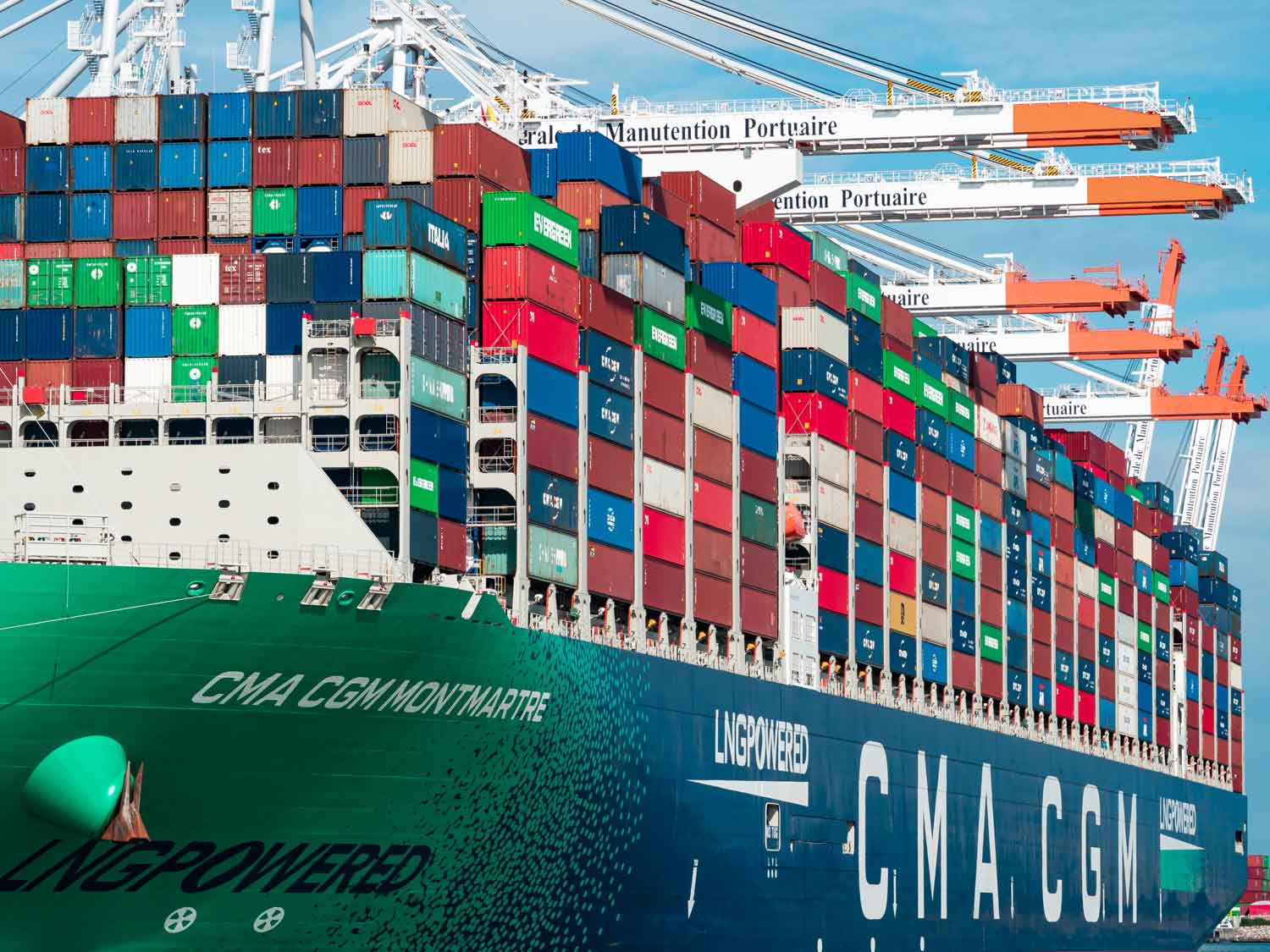
The container shipping lines’ GRIs seem to be sticking as spot rates climb above long-term prices on key routes from China.

General Rate Increases (GRIs) have been a persistent battleground since April this year, as carriers struggle to tackle the supply-demand dynamic and recover sea freight rates. 

However, until now, their efforts have largely been unsuccessful, but August’s GRIs appear to be encouraging for carriers…for now.

2023 has seen the container shipping industry striving to overcome the ‘double whammy’ of declining volumes and escalating overcapacity, leading to lower rates and lost revenues. 

The shipping lines have been implementing GRIs in an attempt to jumpstart rates growth, and recover their lost margins on the critical Asia and China trade-lanes, but have so far failed to make the desired impact.

Their biggest success has been on the Far East to US West Coast route where successive GRIs have been deployed May through to August, pushing spot rates up by 51.5%.

For the Far East to North Europe trade lane, spot rates bottomed out in early May, and from the end of July to the beginning of August, they have risen by nearly 40%.

This change has narrowed the spread between Far East to North Europe and Far East to the Mediterranean to the closest it’s been all year.

It is clear that new GRIs have clearly had an impact, pushing the short-term market above the long-term on all three leading corridors and while the GRIs have fallen short of the lines original ambition, given their lacklustre performance up until this point, the increase will be welcomed by the carriers.

With the traditional peak season for container shipping now looming large, carriers will have their fingers crossed for greater demand at the higher rates. 

However, given that the market has shown significant weakness upon implementation of GRIs earlier in the year, it is still too soon to know if the hikes are here to stay, and how the next round of GRIs (in September) will fare.

After a massive splurge in vessel ordering over the past two years, the new container ship order book is larger than at any other time and with record number of new ships joining the global fleet, the ocean carriers will be getting more aggressive in withdrawing capacity, to support their newly recovered rates. 

The sea freight market from China and Asia is extremely dynamic and actions by carriers often have a profound impact on individual trade-lanes, which is why we work closely with our carrier and network partners in China, to scan the market and identify opportunities for our customers.

If you have any questions or concerns about your Asia supply chain or the developments outlined here, please EMAIL our Chief Commercial Officer, Andy Smith.
Maersk

Shipping lines follow Maersk’s Asia-Europe rate increase

Maersk took a sea fright market struggling with excess capacity by surprise a fortnight ago, when it announced its intention to impose a 49% freight all kinds (FAK) general rate increase (GRI) on the 1st August 2023.

The carrier said that to continue offering a broad portfolio of high-quality services it was raising its FAK rate from Asia to the Northern European hubs of Rotterdam, Gdansk and Felixstowe, in a move that would add hundreds of dollars to a TEU.

Despite the lack of any apparent peak season, Maersk's GRI appears to be targeting peak season imports by European shippers. 

Other shipping lines haven’t waited to see if shippers will take Maersk’s bait, announcing their own GRIs, in the days since the original announcement.

The following lines (so far) have announced FAK rate increases in the range of $200-300 per TEU (double for FEU) effective on 1st August 2023:

Maersk | CMA | MSC | HMM | Evergreen | OOCL

Rate erosion on the Asia to Europe trade has been accelerating, virtually halving since the beginning of the year, but it does feel like we’re back in a pre-pandemic market where a carrier announces a key-trade GRI, with the rest tagging along, using the GRI as a starting point for negotiations.

In the past, GRIs which run counter to supply and demand fundamentals have typically struggled to succeed, as demonstrated by trans-Pacific GRIs through the first two quarters, that did little to lift spot rates. 

At this point in the year, rising peak season demand should be exerting upward pressure on rates, but sustained weak demand and huge amounts of available capacity have been suppressing the market. 

The financial impact of a damaging second quarter for carriers is encouraging carriers to follow Maersk’s lead, with their own increases and the desire to bring an end to sub-economic trading may see the lines return to more disciplined volume control, particularly as the new container ship order book currently sits at 7.3 million TEUs.

The equivalent of a third of the current global fleet is due for delivery by the end of next year, with 2.5 million TEUs due in 2023 and the remainder by end of 2024, with the biggest share to be deployed on the Asia-Europe trade. 

Without significant cuts in capacity through an increase in blank sailings and/or idling vessels, many carriers could be in loss-making territory. 

The sea freight market from China and Asia is extremely dynamic and actions by any carrier or alliance can have a profound impact on the competitive behaviour of major trade-lanes, which is why we work closely with our carrier partners, to stay abreast of developments, so that we can protect and identify opportunities for our customers.

If you have any questions or concerns about your Asia supply chain or the developments outlined here, please EMAIL our Chief Commercial Officer, Andy Smith.