Trailer

European division continues expansion

Five months ago European Director, Richard Gibbs, outlined his vision for Metro’s road freight and short sea services, in developing the business’ capability across the EU. Today, he updates us on his progress and next priorities.

“Since the start of the year we have been working very closely with our continental partners and carriers to add new ‘lanes’ to our transport network, extending the scope of our regular services, alongside our daily EU-wide FTL and LTL services.”

“At the same time we’ve been increasing our operational capacity, by growing the European team and adding new freight centres and groupage hubs in Leicester (Desford) and Manchester.”

“Service design has a been a primary point of focus, but so too has customs compliance solutions and advanced technology, to deliver visibility, control and supporting services.”

“The development of the CuDoS customs platform by our technical services team and the digitising of customs compliance has been a ‘game-changer’ for our customers and particularly those trading with Europe.”

“Using Artificial Intelligence and Machine Learning CuDos optimises data capture and customs declaration processes, with an SLA of 98% on turnaround times of under two hours and record turnaround speeds under 8 mins.”

“Since Brexit, the UK is considered as a third country and transactions with the EU are no longer intra-community, but considered as imports and exports, which means that VAT and duties need to be paid in the country of import, creating a trade barrier for many exporters.”

“Some EU importers are comfortable arranging import clearances and our standard T form services accommodate these movements, across single and multiple borders. However, some EU importers do not want to arrange import clearances, which is why we have created a range of options that allow UK exporters to complete transactions with their EU customers simply and seamlessly and even as if it were a domestic transaction.”

“The options are varied and can be adapted to suit specific transactions and customer relationships. They are listed below, but really require further explanation, which we will provide in a future post - or you can EMAIL me now.”

The Delivered Duty Paid or ‘DDP’ Incoterm means the exporter takes responsibility for the transport of the goods and customs formalities in the UK and EU, by becoming the ‘Importer of record” in France (or another member state) taking the burden away from your customer.

 - Regime 42 is for DDP transiting France for another EU destination. 

 - Regime 40 is for DDP shipments where the exporter has a French VAT number enabling clearance in France for free circulation in the EU.

 - DDP Light is where the consignee authorises their VAT number to be used as the importer of record but any duty is paid by the exporter. 

To learn more about our expanded European capability, including our CuDoS and EU/DDP solutions EMAIL Richard Gibbs. 

EV charging

Automotive trends – We are in lockstep 

In a sign of the growing strategic significance of supply chain management for carmakers, two major manufacturers have appointed chief supply chain officers (CSCO) this month. Their appointments come after the industry has battled disruption to production and supply chains, shortages in semiconductors, and supply and logistics cost and capacity challenges.

The Ford and Renault appointments come as automotive manufacturers increasingly put top priority on efficiency, capacity, quality and digitalisation across their supply chains, with UK car sales recovering from their slump in the pandemic and Ford reclaiming the best-seller title.

Keeping up with demand
New car registrations rose by 16.7% in May, the 10th consecutive month of growth as supply continues to improve. Large fleet registrations continued to drive the growth, up by 36.9%, which has been attributed to greater availability following challenging supply issues in 2022.

British car manufacturing continues its resurgence, with output growing 9.9% in the latest monthly figures and exports up 14.7%, with 80% of UK-made cars being exported

UK car production is up 13.1%, driven by uplift in exports, with the EU the largest market, followed by the US, China and Australia.

The global volume challenges of RoRo PCC and  PTCT services are well-document in the trade press and are likely to remain a serious challenge for several years.

Metro is supporting exports by shipping cars in containers, with significantly lower port to port freight costs, to avoid the long wait for delayed RoRo services, which have seen freight rates spiral due to congestion and shortage of space.

Standard 40’ containers can accommodate two large cars, properly secured and, with a rack, four small vehicles can be loaded which, with container rates falling to new lows, offers massive efficiency gains and costs that are in line with historic RoRo levels.

Digitalisation
David Leich, executive director of global supply chain at General Motors said last year that those working in supply chain faced up to 200 unique global supply chain disruptions a week impacting the delivery of inbound parts and the delivery of finished vehicles, while only 6% of them have full visibility of those supply chains.

To monitor its supply chain for potential risks that could delay or halt shipments JLR is planning to use a combination of Artificial Intelligence, predictive analytics and machine learning in combination with “human intuition”, to help avoid industrial disruption that could affect production and increase costs.

The introduction of the technology, by JLR and other manufacturers, is part of a wider move to digitally enable supply chains, with end-to-end visibility and security.

Metro is increasing use of predictive and AI technology, to collate real-time carrier updates, to maintain accurate vessel ETA’s, data for purchase order management, route optimisation and supply chain visibility. 

We are developing our telematics capability, to offer shippers a much more effective alternative to the data aggregators, who are quite simply compiling data from open APIs and screen scraping historic data. We favour the ‘smart container’ technology that a number of carriers are developing, and are actively involved with UN CEFACT in creating industry standards for sharing this data.

In addition to creating visibility along the supply chain, Metro’s technical solutions team have worked hard to ensure the quality of data and provide a suite of reporting tools that make it easier to interpret and implement actions in a meaningful way.  

Lithium Batteries
Growing demand from consumers and government incentives are driving demand for EVs globally and with more EV models coming out from more brands over the next two or three years, the added growth in battery demand means that manufacturers and supply chain infrastructure will struggle to satisfy demand. 

Bloomberg Intelligence, told Automotive Logistics that while the semiconductor supply constraints are now beginning to ease, battery supply to meet demand will be the next problem, with potential bottlenecks from 2025 for the supply of lithium batteries into electric vehicle (EV) production.

Metro’s automotive teams handle the movement of thousands of EV’s and battery components every month, by all modes of transport including - when appropriate - the use of refrigerated equipment, to maintain ambient temperature levels, for additional safety precautions.

We started developing our Lithium battery logistics platform over six years ago and since then we have invested in the resource to serve this vertical, including training to cover all modes. 

Our Li-ion transportation expertise is increasingly recognised as market-leading, with our automotive team’s manager invited to address the International EV battery conference.

If you would like to learn more about our automotive logistics capability, or to discuss any of the issues raised here handling, please EMAIL Ian Tubbs, Automotive Manager at our Birmingham HQ.

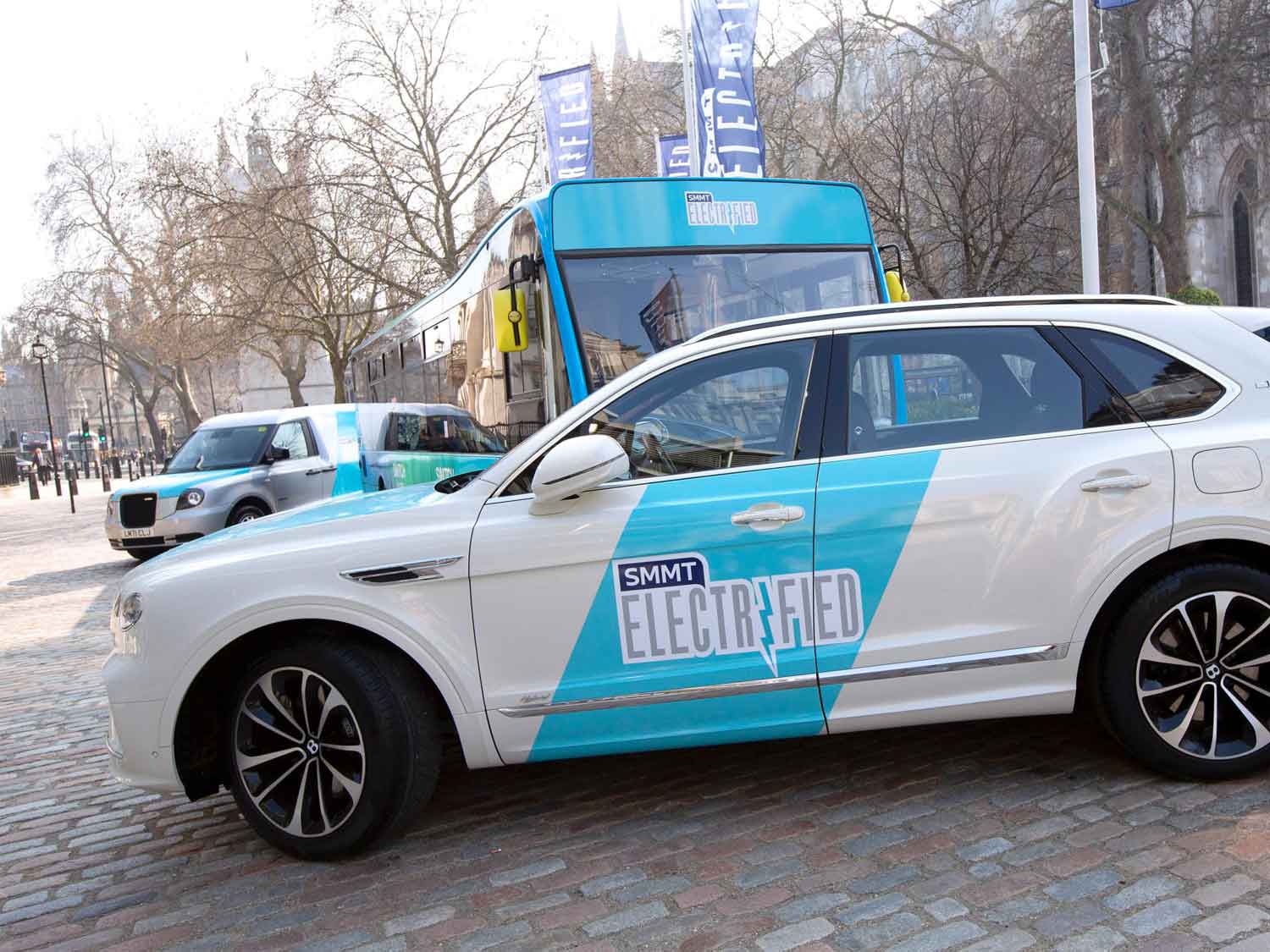
SMMT electric

Setting the environmental auto supply chain benchmark

The Society of Motor Manufacturers and Traders (SMMT) represents more than 800 automotive companies, manufacturers and brands, and is one of the most influential trade associations in the UK, shaping policy and legislation across the UK and Europe.

Metro is a member of key vertical trade associations, like the SMMT to be an active industry participant and to share best supply chain practice, to optimise manufacturing, assembly and despatch – to accelerate global success.

SMMT provides members with a forum to share insights on issues affecting the sector, helping them to develop strategies and build positive relationships with key suppliers and partners.

Senior Key Account Manager, Ian Tubbs, recently delivered a supply chain sustainability presentation to SMMT members and outlined the emissions monitoring, reporting and offsetting solutions developed by Metro, with reporting protocols that are in use with leading car manufacturers. 

Ian set the scene by highlighting the scale of emissions generated by sea and air freight carriage and the manufacturing of cars, and the cost of decarbonising vehicles.

He also highlighted specific actions and developments, which Metro undertake, that are making a positive environmental contribution today, including container load optimising, use of rail freight and LPG, Electric and Hydrogen fuels for commercial vehicles, and Sustainable Aviation Fuel for aircraft.

Metro was the first freight forwarder to join Air France KLM Martinair’s SAF programme, investing in the sustainable alternative fuel.

Ian demonstrated the MVT ECO module, which Metro customers can use to view live energy consumption, carbon emission and offset cost data for all their shipments, across all transport modes and trade-lanes, with easy export of data for further internal analysis.

The CO2 output in MVT ECO is calculated using the GLEC Framework, a standard already employed by Jaguar Land Rover, which was developed by the Global Logistics Emissions Council and is the only globally recognised methodology for harmonised calculation and reporting of logistics green house gasses.

MVT ECO enables monitoring and reporting of any mode of transport and goes a step further by providing offsetting and avoidance costs, with the opportunity to invest in sustainability projects, which have already attracted leading manufacturers including Ford, JCB and Toyota.

The screen-grabs below show carbon footprint reporting by month, which can be viewed by mode and trade-lane. Energy emissions can be viewed in joules, CO2 equivalent emissions in tonnes, and avoidance costs to offset emissions.

The ECO statement reports at consignment level and is fully downloadable into an easily digestible excel format to analyse offline, with multiple data points like, references, shipment dates, location or port pairings, weight, distance travelled and the emissions calculations.

It can also provide you with a partial offsetting cost in line with sustainability projects you’re looking to invest in, with a slider at the top of the page to choose how many Pounds per carbon tonne you wish to calculate.

The emissions calculator compares carbon output by mode, by inputting consignment details such as number of containers, weight in kg or tonnes, or pallets quantity and then specifying origin and destination.

The MVT ECO module is available free-of-charge to customers on their MVT dashboard, where they can view key eco statistics related to their movements, to see which areas will benefit most from emissions offsetting and where efforts can have the most impact.

To request a demo or discuss your requirements, please EMAIL Ian Tubbs.

Banner image courtesy of SMMT

CMA CGM air cargo 2

CMA CGM join Metro’s drive for sustainable aviation fuel

Metro was the first Air France/KLM customer to invest in their Sustainable Aviation Fuel (SAF) programme and we are delighted to see that CMA CGM Air Cargo, though their capacity partnership announced last year, have also committed to reducing their emissions through the use of sustainable aviation fuel.

The capacity partnership announced last year between Air France KLM Martinair Cargo (AFKLMP) and CMA CGM Air Cargo will see the carriers jointly operate their full-freighter aircraft capacity, including CMA CGM’s six freighter aircraft and AFKLMP’s six freighters.

The commercial partnership also covers Air France-KLM’s belly aircraft capacity, including more than 160 long-haul aircraft and will run for an initial duration of 10 years.

Metro has already made its operations carbon-neutral and is committed to extending this zero-emission strategy as far down customers’ supply chains as possible, while the aviation industry has committed to decarbonising by 2050.

Alternative energies, such as electric and hydrogen, will not solve the challenge for the aviation industry, which is why Metro has joined industry innovators, AFKLMP, to support and invest in sustainable aviation fuel.

CMA CGM and Air France-KLM share an ambition to increase air cargo sustainability and have both committed to Net Zero Carbon by 2050.

With unaddressed air carriage CO2 emissions forecast to reach 22% of global emissions by 2050, we believe that SAF is the best opportunity to reduce the industry’s emissions by almost 50%. That is why we welcome CMA CGM to the initiative and hope that other carriers will follow their lead in joining the most effective solution to reduce the aviation industry’s carbon footprint. 

Metro is achieving CO2 neutrality by measuring, reporting and offsetting our CO2 emissions and the same ECO technology we use is available ‘free of charge’ to our customers.

The ‘free of charge’ ECO module, that sits in our MVT supply chain platform, monitors the energy emissions, emission costs and CO2 equivalent emissions, of every Metro consignment, by every mode, globally.

To request a demo or discuss your requirements, please EMAIL Simon George, who can outline our proven carbon reduction strategies and the availability of offset projects.