Matthew Weight automotive

Industry heavyweight to spearhead new Automotive division

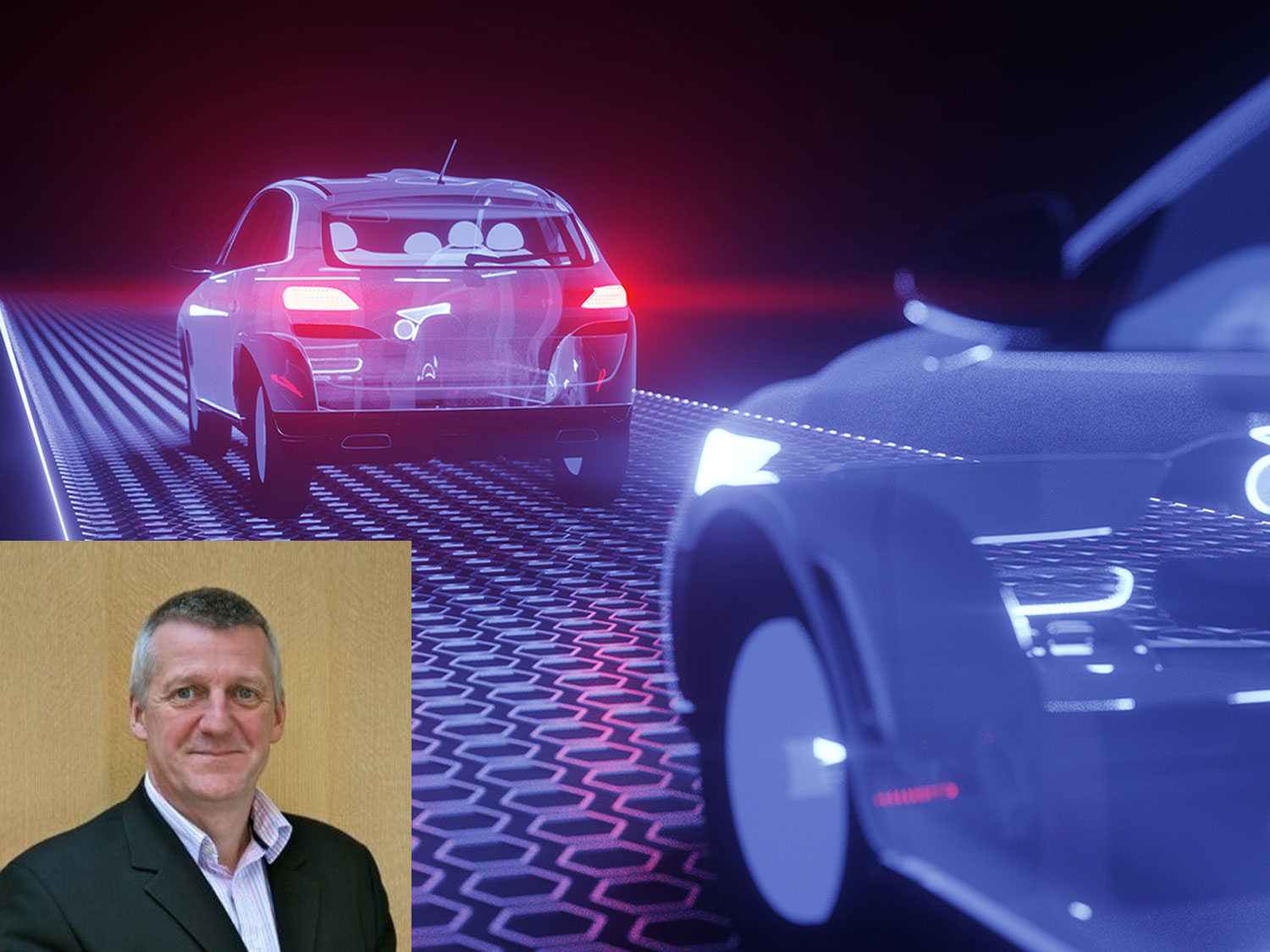
Matthew Weight with 30 years’ experience and a specialist background in automotive logistics has joined Metro as Automotive Director. With responsibility for automotive services, Matthew will establish Metro as the first choice global logistics partner for finished vehicle, automotive components and aftermarket parts.

An ardent and experienced logistician, with a passion for coaching football, Matthew began his career working in fleet management with Vauxhall, before moving into the logistics side of the industry. 

Working with a further three manufacturing marques, Matthew made his move to work with Jaguar Land Rover in 2012, leading the Global Special vehicle distribution and European plant evacuation teams. 

As Automotive Director, Matthew will pull together all automotive experience in Metro, to create a new division that will deliver full spectrum logistics, freight and supply chain solutions for finished vehicles, automotive components and aftermarket parts.

The formation of a new automotive division will integrate existing automotive capability into a distinct entity and will allow the business to refocus on this important vertical, with development of people, processes and systems at its core, together with the engagement of existing and new customers and suppliers.

Grant Liddell, Managing Director, Metro commented: “As our business has evolved, we have developed complex operational and technical supply chain capability that are fully integrated within our business and deliver to customers the culture, service quality and logistical expertise that Metro is renowned for. The renewed focus and expansion of our automotive capabilities is a natural development designed to enhance our automotive proposition to existing and prospective clients in this important market. I am thrilled that Matthew joins us to lead the new division and I look forward to working with him and our clients in this important space.”

Simon George Technical Solutions Director, Metro added: “In recent years our supply chain management solutions, visibility tools and control tower platforms have successfully penetrated a number of key industrial, manufacturing and retail verticals. Matthew has a great reputation in the market and brings a high level of expertise across the automotive sector and we’re very excited to see what technical innovations will follow with Matthew at the helm.”

Matthew Weight, Automotive Director, “Having been a customer of Metro and my previous auto-events experience means that I ‘get’ the unique logistics challenge that goes with each activity, and the need to be agile and deliver on time, in full every time.”

“Designing the right logistics and technology solution for each individual challenge is critical, because ‘one-size’ rarely fits all in the world of Auto logistics and knowing and understanding the customer perspective means that solutions always have the customer in mind at all points.”

Metro has specialised in the automotive and construction vehicle sectors for over four decades. Working with the leading brands, OEM’s and suppliers our specialist teams coordinate the end to end movement of vehicles and machinery, optimising complex inbound and outbound supply chain operations, on all modes of transport.

We maintain long-standing partnerships and volume agreements with the leading vehicle RoRo carriers and container shipping lines, which means we can offer the widest choice of services, routes and solutions.

Please contact Matthew Weight, our new Automotive Director, to discuss any aspect of the market or learn how we could transform your global supply chain.

QEII

70 years of the Queen and global logistics evolution

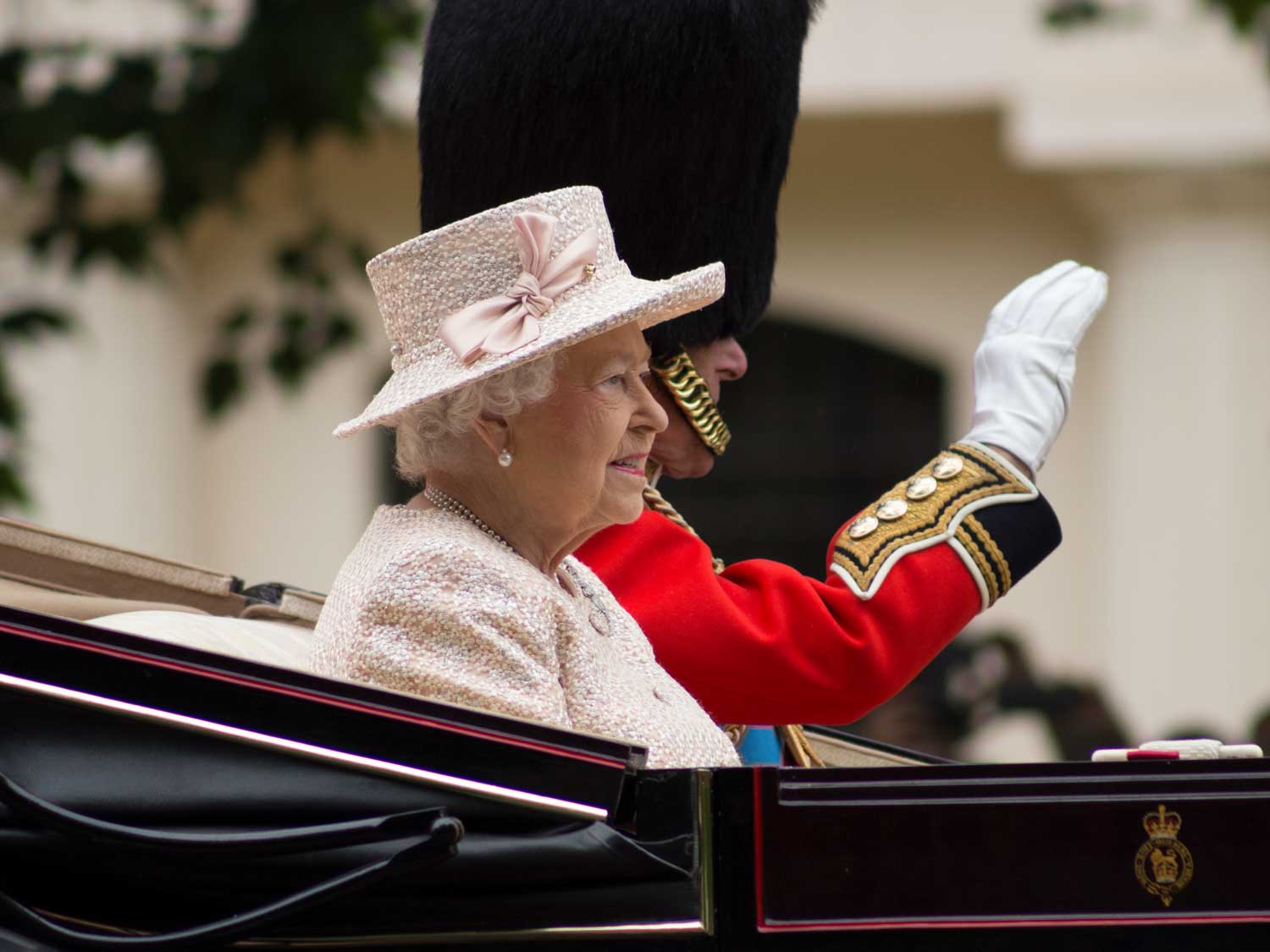
In the 70 years that Queen Elizabeth II has been our monarch, her reign has heralded the transformation of international trade and the beginning and spread of a new global economy.

When Elizabeth II acceded to the throne in 1952, at the age of 25, Britain had lost two-thirds of her pre-war export trade and the post-war beginning of the reconstruction of a new global economy had just begun.

Three months after her accession BOAC began the world's first commercial jet service with the 44-seat Comet 1A, flying paying passengers from London to Johannesburg. Within a few years a variation was flying transatlantic, with 1 ton payload at a cruising speed of 400 mph.

And just three years after Elizabeth’s coronation saw the beginning of containerisation, with the inaugural voyage of the first container ship, the Sea Land Ideal X on the 26th April 1956.

By the early 1960’s container ships had replaced traditional breakbulk liner services on the major east-west trade routes and the impact of these changes greatly reduced the cost of international trade, while increasing its speed and effectiveness and was a major element in rapid globalisation.

Globalisation has been facilitated by advances in technology which have reduced the costs of trade, and trade negotiation rounds, originally under the auspices of the General Agreement on Tariffs and Trade (GATT), which led to a series of agreements to remove restrictions on free trade and the formation of the World Trade Organization.

After the Berlin wall fell in 1989, and the Soviet Union eventually collapsed, the WTO was created in 1995 and encouraged nations all over the world to enter into free-trade agreements, and most of them did, including China.

The U.S. and China re-established diplomatic relations in 1979, with China contracting to GATT in 1986, acceding to the WTO in 1995 and becoming WTO’s 143rd member in 2001.

With China becoming a member of the WTO, it started to manufacture for the world, which opened the door to off-shoring production and access to cheap consumer goods.

In 1983 a new technology from the Third Industrial Revolution, the internet, connected people all over the world in an even more direct way, with orders now placed electronically instantly. Instead of having them delivered in a few weeks, orders could now arrive within days.

The World Wide Web followed in 1989, supporting further global integration of value chains. You could do R&D in one country, sourcing in others, production in yet another, and distribution all over the world.

The result has been a globalisation on steroids. In the 2000s, the sum of imports and exports has consequentially grown to represent half of world GDP.

The pandemic has placed an unprecedented burden on the world economy, healthcare, and globalisation, but reports of the demise of consumerism due to COVID have proved premature, with the trade of goods surging to pre-pandemic levels despite well publicised supply chain problems.

Some experts predicted the pandemic would lead companies to source from within their local region rather than around the world, but the international flow of goods is growing faster than local sourcing and near-shoring within regions.

Global supply chains are under the most intense and sustained pressure of recent times, which is why we monitor and report on the most important developments, so that you can take effective action and make informed decisions, that avoid possible issues, before they become problems. 

Container shipping and air freight continue to face challenges globally, but with notice we continue to secure space and get the right equipment positioned. The world of global logistics and supply chain is a rapidly moving environment and Metro ensure that we are at the forefront of developments to deliver the most appropriate service and solution, as we have been for over half of the Queens reign.

Please contact Elliot Carlile to learn how we can support your supply chains, even in the most challenging market conditions.

The Metro team talk Simon George

Leading by example

Effective planning for the receipt of inbound ocean cargo, requires accurate arrival dates, but with schedule reliability at all time lows, the effective management of imports has never been more challenging. Metro’s new ‘Vessel Tracking’ tool links directly with transceivers on board, to follow real-time progress and uses AI to detect changes and automatically correct expected arrival dates, so that plans can be updated. 

At Metro shipping, we move over 100,000 containers every year and it's becoming increasingly difficult to solely rely on the arrival data the carriers are providing, we require additional levels of visibility that go way beyond the standard.
According to our systems, less than 20% of container vessels are arriving on time and some trade lanes have reliability of less than 2% on-time schedule reliability. 

The ability of vessels to hit their port berthing window impacts shippers that have goods or equipment tied up on the ocean voyage, with ripple impacts from delays all along the extended supply chain.

The Metro Technical Solutions team have been working closely with Windward, the Predictive Intelligence company, that apply AI to global maritime trade, to integrate their Ocean Freight Visibility solution with the Metro supply chain platform, MVT.

Utilising AI to get predictive ETA data is an important development. To see the impact of vessel behaviour, weather, port congestion all being evaluated is quite exciting for us and Windward's data stacked up incredibly well, in terms of what we found in the predictive data.

The resulting MVT ‘Track Your Vessel’ module improves inbound planning efficiency, with automated data collection and analysis to provide real-time accurate ETA predictions, disruption risk predictions, reasons for delay, and location-based insights for inbound cargo. 

Effective planning for the receipt of inbound ocean cargo, is dependent on knowledge of the vessel’s actual arrival date and even with schedule reliability at all time lows, the automated updating of accurate vessel ETAs by the MVT ‘Track Your Vessel’ module supports the effective management of imports, customs processes and swift delivery to the importer.

In a forthcoming webinar, Metro’s technical solutions director, Simon George, will show how technology can turn transform import challenges into effective operations, that exceed customer expectations.

"We need to provide first-class digital solutions. This last year has been one of the worst in terms of predicting how your supply chain is going to perform. Anything that could’ve gone wrong, has gone wrong. As an example, not only is it costing up to 10x more to move freight, instead of 35 days shipments are taking 45 or 50 days. Technology can’t fix that. But it can help you make decisions within those constraints. You can make data-driven decisions."

Simon, together with former Maersk executive, Lars Jensen and members of the Windward team will discuss how to turn formidable challenges, including supply chain disruption, into promising opportunities. 

The Windward webinar takes place on Thursday 17th March @ 11am. Click HERE to register for this event.

The MVT ‘Track Your Vessel’ module automatically follows all ships carrying containers with our cargo on the water. The module instantly detects an ETA change or an arrival at POD and automatically updates the MVT platform.

Our technical solutions team are constantly innovating and evolving the MVT platforms to ensure that, whatever the challenge, our customers’ products are in the right place, at the right time. 

For further information on our MVT platform and to discuss how we can enhance your supply chains, please get in touch with Eilliot Carlile or Simon George.

training 2

Making the new normal better

As we move into the post-coronavirus workplace, we are striking a balance between what worked before and what will succeed in the new future.

From thinking about the next normal to making it work: we considered what to stop, start, and accelerate, because the old ways of working are defunct in the new environment.

We are rethinking the knowledge, abilities, and experiences that our colleagues have, to encourage and implement skills-based development, that will support the expansion and diversification of our talent pool, without compromising on personal development and customer service.

By making the workplace a vehicle for our people and our values and reimagining the work to be done, we are supporting our employees’ needs and career development. 

The new workplace, needs to bring out the best in our team, by providing them with what is best for them. Because better employee experience, increases loyalty, creates larger talent pools, while increasing productivity and boosting customer satisfaction.

All our colleagues have returned to their offices, reuniting with their teams, in a safe and engaging environment, which supports collaboration, in serving our customers better.

Their old technology and thin-client network links are being replaced by leading-edge operating systems, laptop and mobile equipment, that offers more mobility and simplifies business continuity, with remote working a simple extension of the office.

Remote and induction training has continued throughout the pandemic, but nothing beats personal mentoring and the buzz of the classroom environment.

Our internal training team is working flat-out, through a backlog of operational and skills courses, while implementing new personal development plans, so that every colleague is allocated dedicated career coaching, to define their pathway, to realise their career and professional potential.

In a clear sign of our growth through the pandemic, over a dozen team-members - in our head office alone - have been promoted to supervisory, team leader and managerial positions, while long-standing financial controller, Laurence Burford, joins the board as finance director.

Bespoke management and graduate development programmes have been designed by our trainers, to introduce graduates to the variety of roles, skills and capabilities across the Metro group, while the leadership programme covers the essential skills that will enable manager and supervisors to be more effective in their role and support their team, while increasing their personal knowledge, confidence and capability.

Eight management development cohorts are working through the six modules, that will support them in their new roles and help prepare for the next step on their career ladder.

Metro strive for excellence, unparalleled career paths and a working environment that stimulates success, for the individual and for the business. This is inextricably linked in our philosophy. We are constantly recruiting new members to the team and welcome any interest from like-minded people, who would like a future with Metro and our associated business.

If you or someone you know would like to discuss a career at Metro please send details to Paul Moss, our Head of HR for engagement.