THE industry trade show returns – Multimodal 2021

THE industry trade show returns – Multimodal 2021

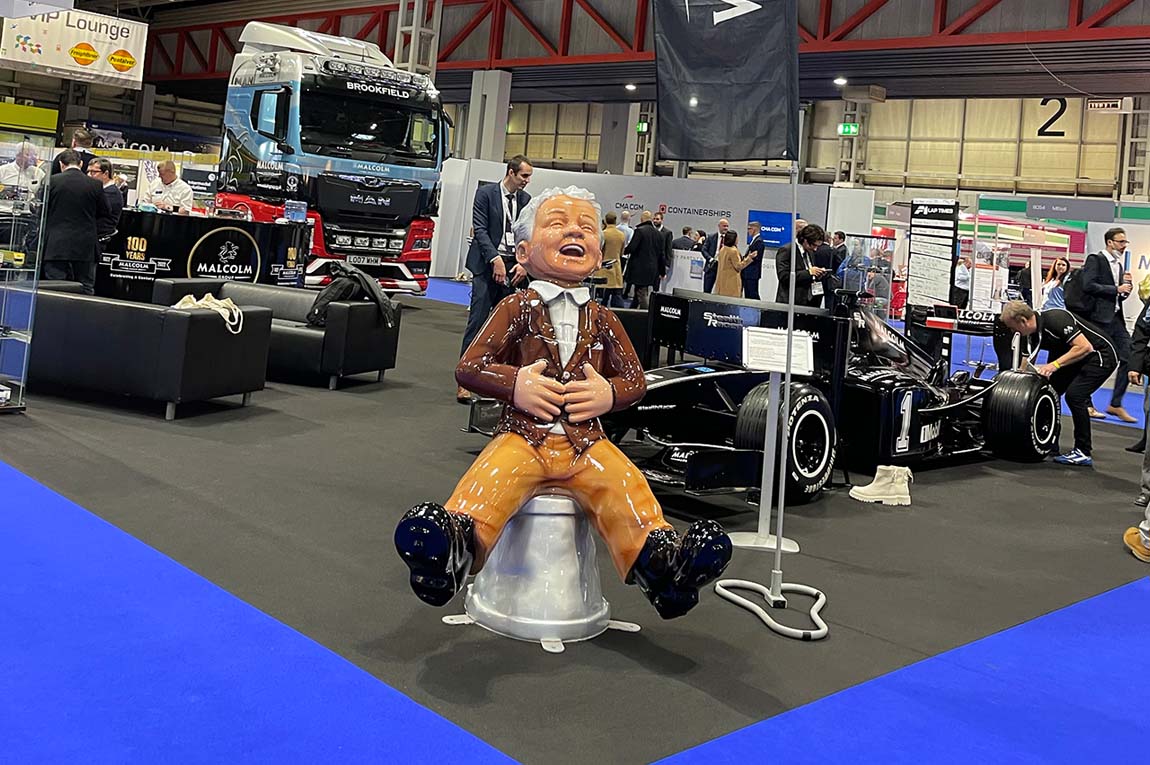
After a break of more than two years the UK freight industry’s only dedicated conference and exhibition – Multimodal – has returned to Birmingham’s NEC centre and, as it is just down the road, we’ve popped in for a look around.

While the various COVID lockdowns and restrictions played out, Mutimodal suffered repeated postponements, denying the industry its annual opportunity to meet and greet.

Exhibitors are a mix of carriers, hauliers, ports, 3PL’s, trade associations and suppliers into the sector.

New for 2021 is the British International Freight Association’s (BIFA) village, designed to provide a marketplace for BIFA members to showcase the products and services they offer.

As a BIFA freight service award winner Metro were entitled to a free stand within the village but, due to the exceptional supply chain challenges we are currently facing, our priority is supporting our customers. Which meant we could not release senior team members for the three days that Multimodal runs, and have had to forego the opportunity to exhibit.

While we couldn’t spare colleagues for three full days, we have taken the opportunity to pop in for a quick look around, take these pics and see one of our team participating in one of the popular seminars.

This year’s seminar programme has been developed by Logistics UK, to share insight and best practice and “explore how technology, innovation and people power are driving a new business landscape.”

Day 3 of Multimodal  will see BIFA take the lead role in a seminar programme, supported by Metro’s Colin Smith (Training & Career Development Manager) that focuses on attracting young talent to the sector; with an examination of apprenticeships that are available; the trade association’s recently launched schools engagement programme, as well as the work being done by BIFA’s Young Forwarder Network.

Feedback on the seminar sessions is interesting, particularly the most popular ones, as they explore the way forward for businesses in the supply chain. 

The most consistent theme is that supply chain has never been in the public eye, like now and it is critical that we raise the profile of the sector and it’s role within the wider economy and in particular to use this opportunity, as Colin highlights, to attract the next generation into the industry.

The HGV crisis came up consistently, but so too did sustainability and the need to look at every supply chain element, because we need to protect the future.

And in protecting the future, there were calls to ensure that EU suppliers and operators are fully prepared and ready for the 1st January 2022, as businesses will not be able to delay making import declarations and if you use ports that operate the pre-lodgement model or the Goods Vehicle Movement System (GVMS), full import declarations will be required before the UK Border.

Containerisation turns 65 in its most challenging year

Containerisation turns 65 in its most challenging year

Sixty five years ago saw the beginning of containerisation, with the inaugural voyage of the first container ship, the Sea Land Ideal X on the 26th April 1956. Today, despite its best efforts, the container shipping industry is swamped by the continuing deluge of pandemic and lockdown related trade, with resulting delays, rising costs, ongoing disruption and challenges to supply chains.

The modern shipping container owes its origins to an American truck driver called Malcolm McLean who, in the years before the Second World War, wasted many hours waiting for his truck to be unloaded and the goods loaded on to ships. 

In the 1950’s, he worked with engineer Keith Tantlinger to develop a shipping container,  that could be carried by trucks and trains and be loaded onto ships, as well as being secured for long sea voyages, with a locking mechanism on each of the four corners, allowing containers to be stacked on vessels, increasing the ability to load more goods on vessels.

Malcolm McLean introduced the first container vessel into service in 1956, when he used a converted oil tanker, the Ideal X, to ship 58 containers from Newark, New Jersey to Houston, Texas. 

It took nearly a decade from the sailing of Ideal X, for containerised ships to replace traditional breakbulk liner services on the major east-west trade routes and the impact of these changes greatly reduced the cost of international trade, while increasing its speed and effectiveness. 

Over time the use of containers has reshaped global trade, with ports becoming bigger, while their overall number have reduced. As more types of goods can be traded and shipped, speed and reliability of shipping has enabled ‘just-in-time’ production, which in turn allowed manufacturing firms to grow leaner and more responsive to markets as even distant suppliers could now provide components quickly and on schedule.

Today, container ships operate in all of the world’s shipping trade lanes, responsible for moving an estimated 45% of total global trade and with half of international air freight capacity removed due to the shutdown of passenger service due to the COVID-19 pandemic, container ships have become even more critical, as the workhorses of international trade.

Handling the surge in volumes, driven by the lockdown shift in spending by homebound consumers has brought unprecedented challenges and the most overwhelming impact is that containers aren’t being unloaded, reloaded, and returned to origin points fast enough, meaning that fewer (if any) containers are available, with chronic delays predicted to persist throughout 2021. 

As the shipping container celebrates its 65th birthday, the container shipping lines are in the strongest financial position for many years, with the three main alliances overcoming the chronic overcapacity that has constrained revenues for decades. 

The current new vessel order book of three million TEU capacity is equal to 12.8% of the world’s current fleet, but if the carriers’ capacity control discipline is permanent, an increased order book is not necessarily a sign that a new period of overcapacity is approaching. 

Global supply chains are under the most intense and sustained pressure of recent times, which is why we monitor and report on the most important developments, so that you can take effective action and make informed decisions, that avoid possible issues, before they become problems. 

Container shipping is facing pressure and equipment availability challenges globally, on all trades, which makes booking equipment particularly challenging and is why we request four weeks visibility and booking windows, to secure space on the vessel and get the right equipment positioned.

Please contact Elliot Carlile or Grant Liddell to learn how we can support your supply chains, even in the most challenging market conditions.

Header image: The Ideal X was originally constructed as a T2 tanker, similar to the Hat Creek shown here (August 1943) with Plan of the SS Ideal X under. SeaLand logo and McLean at railing, Port Newark, 1957. Content is available under CC-BY-SA | CC BY-SA 2.0 | CC BY-SA 4.0

40% of firms find better post-COVID suppliers

40% of firms find better post-COVID suppliers

In a recent survey, reported by the Chartered Institute of Procurement & Supply (CIPS), 41% of firms said that they have found “new and better” suppliers to work with as a direct result of coronavirus.

The survey also found that 57% found the outbreak an “incentive” to make positive changes to their business model, with 35% are now using cheaper suppliers than those they had worked with previously

The survey of 502 senior decision-makers confirmed that the pandemic has been damaging and challenging for the UK’s private sector, but it has also presented opportunities.

The report highlights how Covid-19 has forced businesses to re-evaluate their business models and supply chains, enabling them to make improvements to the way they operate.

The worst impacts of the economic costs of the pandemic are confirmed, with 36% of respondents stating that businesses in their supply chain had closed down since March and over half (56%) had had to change how they delivered their product or service.

And while there is a sense of optimism from the business leaders, with a positive second half of the year anticipated, only 52% expect their turnover to grow in 2020.

The reports findings are in stark contrast to the doom and gloom of three months ago and suggest that businesses are not becoming complacent, but are actively seeking new opportunities while overcoming the challenges of the pandemic.

Although much of the foregoing detail and survey responses relate to the supply of products, the drive for continual improvement, even in the midst of a onadmeic, apply equally to logistics and freight. 

Metro have continued to enhance our platforms over the pandemic period, launching initiatives and driving innovation to deliver cost effective and reliable solutions, during a turbulent and unpredictable market. 

We also strive to look into the future, by anticipating further changes with Brexit and further supply chain impacts from Covid19. 

Metro have continued to attract new business from clients over the last 6 months, many of whom are reassured by our consistent long term approach to our business continuity and strategic planning. 

For further information on our solutions please contact Grant Liddell, Business Development Director (grant.liddell@metroshipping.co.uk/ 07817 477926) who will be delighted to assist you and present all options available based on requirements and expectations.

Metro’s 2020 undergraduate cohort are truly unique

Metro’s 2020 undergraduate cohort are truly unique

Attracting talented young people to start a career in logistics is an industry wide issue, which Metro has addressed by engaging directly with regional universities and introducing the logistics and supply chain sector to annual cohorts of undergraduates. With the opportunity to experience a wide range of tasks and responsibilities, during a placement year.

The one year, fully-paid, Metro placement is designed to give undergraduates the opportunity to learn more about the practicalities of working at Metro in customer-facing teams and to develop their people skills, as well as helping them build practical knowledge of the supply chain and global logistics.

In learning the challenges our customers face and seeing how we develop the solutions and processes they need, we give undergraduates an engaging workplace experience and hopefully, inspire and nurture the next generation of talent for our client-facing teams.

Having experienced some unique times, Kiran-Sophie Ladva, an English Literature and Politics Student at Aston University, talks about her Metro experience.

As I have come to the end of a 13-month placement at Metro I thought it would be a great opportunity to write about my experience. With this job being notably opposite to my degree in English Literature and Politics, I began my placement journey feeling anxious, due to the minimal knowledge I had of the industry. 

By working and liaising with plenty of clients, carriers and hauliers, my confidence and knowledge in the industry excelled and flourished, strengthening communication, leadership and organisational skills. Also, this exposure to a diverse range of people allowed me to build strong relationships and friendships, in both work and general life. 

During my placement, global circumstances (i.e. Covid-19 and Brexit) impacted our industry tremendously, meaning I was apart of some of the most stressful situations our industry has faced. Being forced to adapt to new rules and regulations, this pressure has equipped me with vital skills to utilise in my future endeavours. 

Having achieved a 1st-class grade in my placement year, I am truly grateful for everything Metro has provided me with. The training, the variety of skills, the laughter, the stress, the friendships and the heightening in my confidence will impact my future positively. 

Thank you so much, Metro” #placement

Kiran-Sophie Ladva

English Literature and Politics Final Year Student