COVID 19 business continuity planning

Preparing for the vaccine effect

The UK's rapid Covid-19 vaccination roll-out will undoubtedly help the economy bounce back and we are anticipating an upsurge in demand for air, sea and overland transport as confidence returns from the second quarter as lockdowns loosen and consumers are able to consume in the old fashioned way !

The economy is expected to shrink 4.2% in the first three months of 2021, amid government enforced restrictions to slow the spread of the virus, but the Bank of England is expecting a rebound this spring as consumer confidence returns.

While the jobless rate is projected to rise later this year as the furlough scheme winds down, the UK economy is expected to recover, as a successful vaccination programme supports a "material recovery in household spending".

With UK savings hitting an additional annual rate of £125bn in 2020 and more to be added in 2021, the potential spike for the economy is considerable, as soon as lockdown is lifted and with low interest rates already encouraging spending, the Bank have not ruled out lowering them further, potentially into a negative situation, if further stimulus is necessary.

On the industrial front, the government has indicated that a new Treasury-led growth programme will be announced by chancellor Rishi Sunak in the coming weeks.

The new “plan for growth” strategy will take in work by officials at the business department, who have been rewriting the 2017 industrial strategy since last autumn.

Putting technology and innovation at the heart of the UK’s economic future, £45bn of financing has been assigned to a number of industrial strategy initiatives, including freeports throughout the UK.

We are anticipating supply chain demand increasing in three key areas:

- Priority movement of locked down orders and delayed shipments further accentuated by high consumer demand

- Restocking demand (80% inbound) primarily on the major Asian trade lanes

- Supply chain restoration by manufacturers and OEM

To prepare for these demand upswings we are:

- Adding personnel to key accounts in our operational departments

- Reviewing historic data to forecast volumes

- Working directly with customers to coordinate preparation activity

- Modelling supply chain scenarios, so we’re ready for any eventuality

- Further resourcing our overseas business units/ BPO operations to deal with administration and data integrity management.

For now, our number one priority is keeping our team healthy and productive by maintaining a safe office environment, for critical workers and supporting alternative ways of working.

Metro recommend that you fully review the potential impact on your supply chain of a sharp recovery, to ensure your own demand requirements are met. We are here to support and provide solutions, with a tailored platform that will ensure you benefit fully, from hopefully a more positive environment, in which we function in all aspects of our daily lives !

containers e1594971328170

Container equipment shortages may be lessening in Asia

Even if ‘one swallow does not a summer make’ we fervently hope that one container index’s ‘positive trend’ really does signify a turning point in container shortages.

The container selling and leasing platform Container xChange, track and compare the global availability of containers on their Container Availability Index (CAx), with score above 0.5 indicating a surplus and below 0.5 indicating a deficit of containers.

The CAx has highlighted a “positive trend” that could make Chinese New Year the turning point, with values for 20-foot dry cargo containers and 40-foot dry cargo containers  improving to 0.34 and 0.37, respectively, indicating much higher availability of empty containers than last month.

Although the latest figures for January are still well below 0.5 and represent a shortage of available containers, those figures for 20DCs and 40DCs are beginning to resemble the ‘normal’ level of container shortfalls experienced for major Chinese export markets. 

Index levels for 40-foot high-cube containers (40HCs) are also significantly higher this month, although at below 0.2 their availability remains low.

For Shanghai, a city traditionally known for a deficit of containers, the index reached record lows in December 2020 of 0.13 for 40DCs and to an even lower 0.08 for 40HCs. A minus of 75% and 83% compared to equipment levels in the first quarter of 2020.

With Chinese container factories now working at full production, and the aggressive repositioning of empties back to China by the shipping lines, optimism remains that Chinese New Year could become the turning point for equipment shortage. 

According to CAx Qingdao is reaching index values of 0.5 for standard equipment – which should represent a balanced equipment situation. Though our experience is that shortages still remain a significant issue.

And for some of the other major hubs across Asia like Singapore, Nhava Sheva and Port Klang, the Container Availability Index shows the same trend. Compared to December 2020, container availability is up 58% in Singapore, 35% in Nhava Sheva and 54% in Port Klang across standard container types in January 2021.

Looking at the CAx forecasts, the indications are that the equipment situation will remain stable in the coming weeks until mid-February, when the Container Availability Index will settle at around 0.35 for 20DCs and even 0.38 for 40DCs.

Although this is not the end of the container supply crisis in Asia and availability to load boxes with products, it is a positive piece of news for a situation that has worsened over the last few months and had a huge impact to supply chains. There are many other dynamics and variables to consider and Metro will continue to update you every week on changes in the global logistics markets that may impact your own business.

Over 40 years we have built a global network of strategic partners and investments to protect our customers and keep their supply chains moving, whatever challenges may arise in 2021.

Our team’s knowledge and experience, together with our award winning MVT digital platform, add value, visibility and flexibility to our customers’ supply chains. 

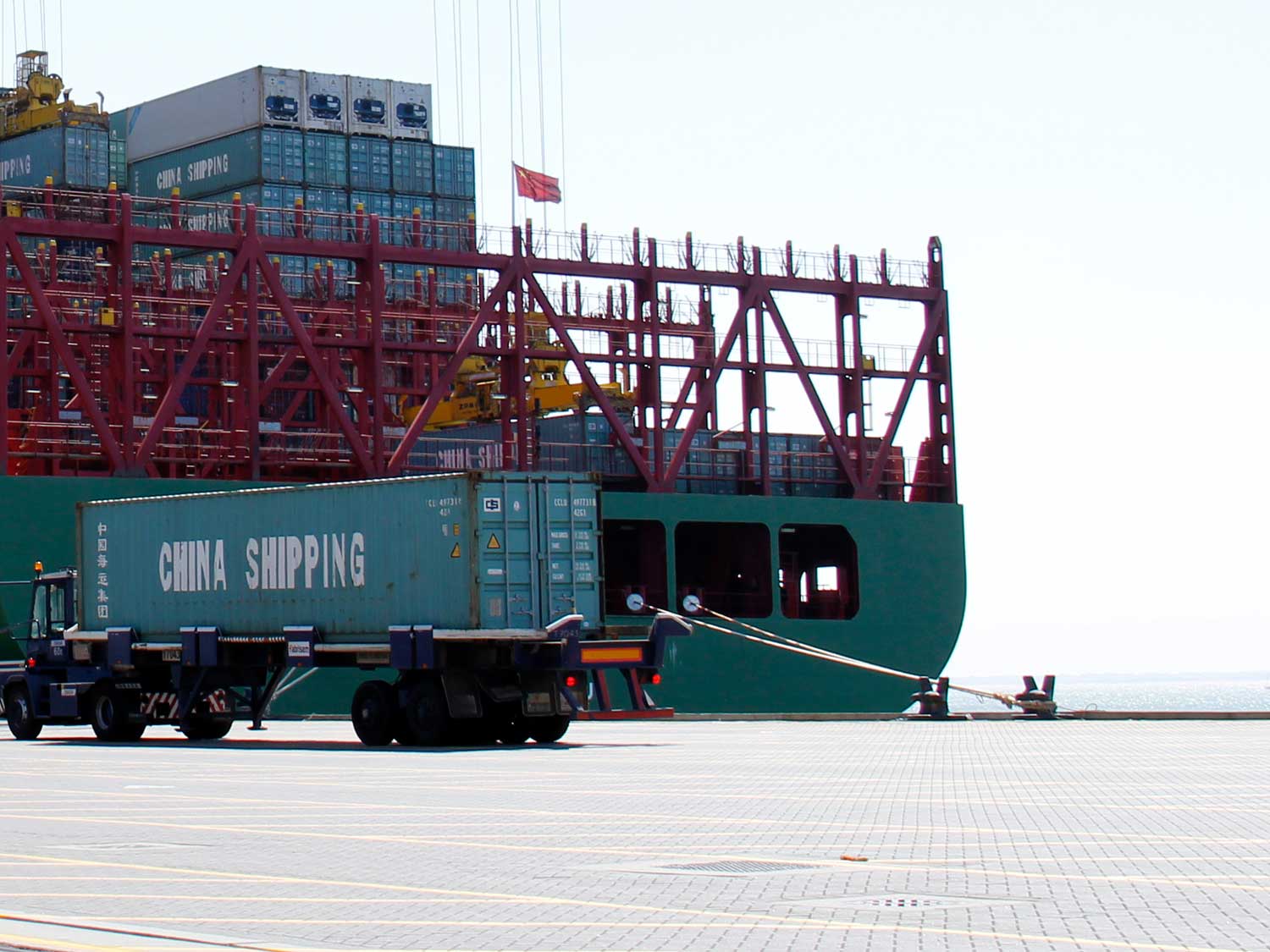
China shipping container

BBC report £10k freight costs to ship a container from China

Massive and continuing post-lockdown consumer demand has resulted in a lack of available space on vessels, shortage of empty shipping containers in Asia and congestion at destination ports, driving freight rates to levels never before experienced.

Taking issues that have perplexed shippers since last Summer to a wider audience, the BBC’s business reporter Vivienne Nunis, posted an article entitled: Shipping crisis: "I'm being quoted £10,000 for a £1,600 container."

Metro has been reporting market intel throughout 2020/1 and the steady increase in shipping costs from across Asia, that shipping lines have implemented on the spot/ freight all kinds (FAK) markets, ending the year 10 times higher than the start.

This topic has now hit the national news headlining delays on products arriving into The UK causing a shortfall in availability and the impact on the future cost of the sales price of goods as freight costs filter through to the consumer.

The article highlighted the travails of an online retailer struggling to absorb a six-fold increase in freight costs.

Helen White, the founder of start-up Houseof.com, which imports lighting from China, says the rise in shipping costs means she's making a loss on what she sells. "We were paying £1,600 per container in November, this month we've been quoted over £10,000,"

She's one of many UK importers facing soaring freight costs amid a global shipping crisis that may last months.

It was hoped the backlogs could be cleared during the Chinese New Year holiday in February, but instead a coronavirus outbreak in China, and the action being taken by the Chinese government and authorities as a result, is adding to the uncertainty facing firms in relation to the cost and reliability of their supply chains.

In the UK the difficulties in international shipping have coincided with problems faced by businesses trading with the EU after Brexit and during the transition period since the start of the year to new processes and trading rules.

But some companies can't absorb the skyrocketing freight costs that shipping lines are charging, which could lead to higher prices for consumers, particularly as it can be really hard for a small business to absorb these, without making a loss on the goods they're selling.

Usually during the Chinese New Year holiday, factories in China shut down for two weeks and there were hopes the pause in production would give UK ports a chance to clear the backlog of ships waiting to dock, and encourage shipping lines to move more empty containers back to Asia.

But rising numbers of coronavirus cases have prompted the Chinese authorities to stagger factory closing dates so that not all workers are travelling to their home regions at the same time, which means some factories may not stop production at all. Incentives are being given for workers to remain in their region of employment and it is expected that hundreds of millions of journeys will not be made over the Spring festival period as the Chinese government looks to restrict movement of the population. This will have an impact on the production at factories.

And while there have been calls for the shipping lines to add more ships to help ease the backlog of stock orders building up at warehouses across China, more blacked sailings have been announced for the CNY period.

The BBC report suggests that shipping lines have been trying to drive down demand from British importers by charging a premium for deliveries to the UK, or bypassing the country's ports altogether.

One shipping line recently offered freight rates of $12,050 for a 40ft container from China to Southampton, but charged just $8,450 for the same container to travel from China to Rotterdam, Hamburg, or Antwerp.

A glimmer of hope that does add a positive spin to the situation is that shipping lines are now starting to have their vessels arrive from North America and Europe with empty containers to replenish the diminished or non-existent stocks in China which will hopefully result in increased supply which should result in a softening of freight rates as demand for boxes becomes more balanced against supply.

For business-owners like Helen White, the difficulties affecting the shipping industry can't be solved quickly enough.

In what looks likely to be another tumultuous sea freight year, Metro is well placed to deliver reliability and cost effective solutions based on a fixed validity pricing structure.

Protect your supply chain and budgets for 2021, by providing us with your forecasts and we will secure you a deal for the year ahead, that has fixed validity and consistency in pricing.

Call Ian Barnes and/ or Grant Liddell to discuss the latest market situation and your plans for the year.

Carriers balancing act continues into 3rd quarter

Carriers CNY blanked sailing surprise

Optimism in signs that the equipment shortage crisis might improve after Chinese New Year, have been dealt a blow with the surprise announcement of blanked Asia to UK sailings, despite it being widely reported that carriers would not be using this tactic this year.

2M alliance members Maersk and MSC will blank three sailings from Asia to North Europe in weeks 5-7, including one vessel that will be allowed to ‘slide’ into the following week, while maintaining existing bookings.

MSC said the blanking's were necessary “due to the slowdown in demand during CNY” as well as the “challenging congestion across the supply chain”.

Maersk advised its customers that the blanking's were needed to “improve schedule reliability”, to “free up these services for schedule recovery measures” in response to “severe port congestion and equipment limitations”.

The Loadstar quoted a carrier source, who confirmed that “they are fully booked right the way through CNY, plus there has been so much cargo rolled over recently that it can’t be a question of reduced demand, so my guess is that they want to get some sort of schedule back by cutting out the sailings.”

Industry experts confirm that schedule reliability on the route was “worse than we’ve seen in a long time” and that “these blanks are necessary and required scheduling recovery measures, they’re not meant to take out capacity.”

Ocean Alliance member CMA CGM will skip three loops during the same period, while HMM is reported to have deployed an extra loader at the end of the month from Busan to Hamburg to cater for the cargo overflows of South Korean shippers after pressure from their government.

According to The Loadstar, Chinese regional carrier China United Lines is in advanced planning stages to launch a standalone service to North Europe, deploying a string of small feeder vessels.

While we have, like the rest of the market, seen significant prices and volume pressures on all major sea freight markets, our carrier partners have honoured agreements and have been, as far as they can be, proactive in their support. 

Metro are working around blanked vessels and will always provide all realistic options available in a chaotic container market and we hope to experience negligible impact through our planning and early decisive actions on allocating containers over the period.

Metro negotiate rates and volume agreements with a broad portfolio of carriers, across the three alliances, to offer our shippers the widest range of service offerings, port-pairings and rates.

For further information contact Ian Barnes, who would be delighted to talk to you about your situation.