budget

The current lockdown, yesterday’s budget and future ‘revenge spending’ will impact your supply chain and logistics strategy

Boris Johnson has set the country on a “cautious” road-map for restoring normal life and economic activity by June 21st, with government support for the economy for months to come.

There are four main stages (see below) in the road-map for the lifting of coronavirus restrictions, running from the 8th March, through the 12th April (when shops and other venues can begin to open), 17th May (when pubs reopen indoors) to the 21st June when remaining parts of the economy open.

With parts of the economy facing weeks or months of further restrictions, the Chancellor’s budget, announced yesterday contains more measures to help individuals and companies through the final phase of the Covid-19 pandemic and post-lockdown.

On balance the budget contains no nasty surprises and plenty of positive actions, which means that we are likely to see import levels continuing to increase as firms begin to restock ahead of the economy reopening, with the very real prospect of a massive spike, that may persist for some time, as consumers unleash their ‘revenge spending’.

Having endured months with no opportunities to spend money on holidays, drinks out, restaurants or the arts, ’Revenge spending’ follows, when a cooped up populace is finally freed from lockdown. This is reflected in the reported healthy economic predictions on the growth and economic recovery announced for 2021 and 2022 in yesterday’s UK Budget.

We consider the highlights………

Rishi Sunak’s second Budget was aimed at restarting the UK’s economy after lockdown, with measures to boost the housing market and extend furlough support to September.

We welcome the decision to freeze fuel duties, which is a direct cost to businesses that need to transport cargo.

It is anticipated by HMG that the UK economy will grow by 4% in 2021 and over 7% in 2022 which will, if this is the case, restore the UK economy to pre-pandemic levels in 2020, and in fact beyond. If this is the case there will be potentially huge demand for global shipping and continued pressures on the logistics and supply chain infrastructure within The UK. Metro will be adapting our approach accordingly and adopting new processes and innovation to ensure customers are receiving the best fit solutions in what would be the biggest growth period seen since official records began in 1949.

Metro continue to be committed and active at the leading edge of the logistics sector in the developments of the next generation of professional forwarders, with our apprenticeship and undergraduate placement programmes. We are pleased to see additional investment in apprentices, placements and training, which will be embraced within our organisation and promoted nationally.

England Freeport’s

The first eight freeport locations have been revealed. Described as “special economic zones’’ they are intended to make it easier and cheaper to do business with a variety of tax cuts and simpler planning rules. In summary they are located at the following locations with a further two to be announced in The UK under the current proposal :-


  • East Midlands Airport
  • Felixstowe and Harwich
  • Humber
  • Liverpool City Region
  • Plymouth
  • Solent
  • Thames
  • Teesside

Attracting investment

Dubbing it the biggest tax cut in modern history, the government has increased tax relief, to spur business investment and drive productivity.

For the next two years when companies invest they will be able to reduce their tax bill by 130% of the cost.

Metro will continue to invest in colleagues (established and new to the business), resources and relationships/ partnerships taking further advantage of the HMG announced stimulus packages and assistance in developing our solutions to customers.

Building confidence

The chancellor announced a number of measures which will support businesses and give consumers confidence to act positively, as lockdown is lifted and the economy begins its recovery.

There are no income, NI or VAT tax increases, in a major boost for workers and available consumer spending ability.

Alcohol and fuel duties are frozen, while stamp duty is extended for a further three months

The lockdown recovery road map

Stage 1 - from March 8th and March 29th

  • Pupils return to schools
  • Two people from different households can meet outdoors for recreation
  • Care home residents can receive one visitor

Stage 1 - from March 29th

  • Two households will be able to meet in private gardens
  • Households can gather outdoors under “rule of six” restriction
  • Encouragement for people to stay local and work from home where possible
  • Most international travel will still be banned

Stage 2 from April 12th

  • Non-essential retail reopens
  • Self-catering holidays in England can resume
  • Indoor leisure facilities reopen
  • Pubs and restaurants can serve customers outdoors

Stage 3 - from May 17th

  • Most outdoor social contact restrictions lifted
  • Indoor mixing allowed between two households
  • Pubs and restaurants will be able to reopen indoor
  • Museums will also reopen
  • Sports arenas will start to admit people within new limits

Stage 4 - from June 21st

  • Lift all legal limits on social contact
  • Reopen all remaining parts of the economy

In summary, a positive injection has been proposed, that will add to the growth of the UK economy and your trading activity with Britain in the global arena, during unprecedented times, as we exit, hopefully, the pandemic environment, and the relationship with EU continues to devolve and evolve over coming months and years boosting industry and the trading position with the rest of the world’s economies.

Metro are at the forefront of assisting our customers success and develop the ability to trade and grow internationally, with innovation and market leading supply chain methods and strategies.

For further information on the latest logistics platforms and market intelligence please contact Ian Barnes or Grant Liddell for detail and recommendations, on how we can drive your business forward into the new era of recovery and expansion!
EU China containers

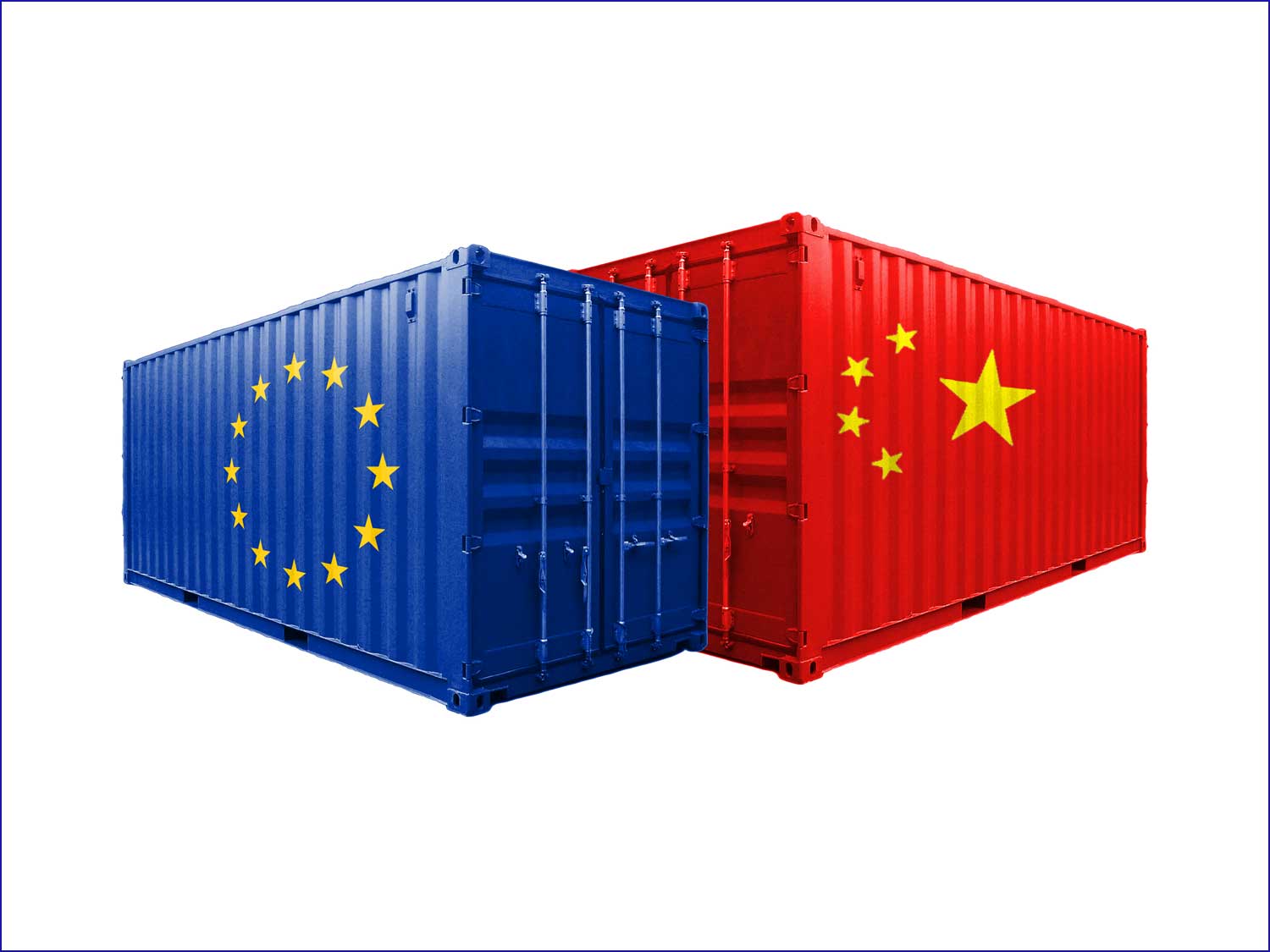
China overtakes US as EU’s biggest goods trading partner – but for how long ?

China is now the EU's biggest trading partner, overtaking the US, as volumes of goods grew in both directions, propelled by sustained pandemic demand.

As business with Europe's major partners fell due to the COVID-19 pandemic, trade with China (import and export) was worth €586bn last year, rising €25bn in 2020, compared with €555bn worth of imports and exports from the US, signifying a fall of €62bn on 2019.

Although China's economy crashed in the first quarter due to the domestic impact of the Coronavirus, its economic recovery fuelled increased demand for EU goods, while strong and sustained demand for medical equipment and electronics drove Chinese exports to the EU.

This may assist to explain the unprecedented levels of demand on container shipping over the last few quarters and the resulting disruption and challenges that have occurred within the industry, as we have updated consistently on during 2020 and now in the first few months of 2021. 

Coupled with latent infrastructure issues within the industry the sustained demand levels have further accentuated the problems that have occurred and the sharp rise in container shipping costs that have been experienced on all major trade lanes globally.

Eurostat, the EU's statistical office confirmed that China was the main partner for the EU in 2020, with an increase in imports of (+5.6%) and exports (+2.2%). The EU's trade deficit with China grew over the same period from $199bn to $219bn in 2020.

Conversely trade with the UK and the United States (the EU's largest export markets) dropped significantly with a reported decline in both EU imports from the US of -13.2% and exports to the US of -8.2%.

It should be noted that the Eurostat report did not include trade in services, which have been growing faster than goods, and the US remains the EU’s top services trade partner.    

While final numbers for trade in services are not yet available for the full year of 2020, over the first three quarters trade in services between the EU and the US during that period was €296.3 billion, which is five times more than the trade in services with China.

The estimated value of the EU’s total trade in goods and services for 2020 with China will be in the region of €657 billion in 2020, while the equivalent US trade will be around €950 billion.  

The EU and China, meanwhile, have agreed a new investment treaty, which brings seven years of negotiations to a successful close, but risks tensions with the US.

The deal will remove some barriers to EU companies’ hopes of investing in China, and improves access to markets including private healthcare, cloud computing, air transport and car manufacturing, including electric vehicles and hybrids.

For Beijing, the deal will lock in existing market access rights while securing some openings in the areas of manufacturing and renewable energy. 

For the US, the investment treaty may create tension with the Biden administration, which has been calling for transatlantic co-operation, to put pressure on China’s perceived unfair economic practices and other important challenges.

Metros network extends across Asia and the United States, with many customers – including leading brands and manufacturers – sourcing and having established, and expanding, export markets.

As the fallout of the pandemic on global economies continues to unravel, and will for some time, it is clear that traditional trade lanes and markets will adapt, as has Metro’s strategy and planning, to ensure that we are well positioned to deliver consistent and innovative solutions to our clients. 

This includes the European markets, which have seen a huge impact post-Brexit, with the implementation of border controls and new processes. The UK is Europe’s third largest trading partner after China and the USA and a significant contributor to the economy and wealth of The Continent.

Carriers continue to adjust services and schedules, withdrawing and introducing new ones, to accommodate the new world landscape. And we are at the forefront of the industry, in influencing and maintaining the best service offering in the dynamic logistics market, to ensure our customers are best positioned to take advantage of the anticipated post-Covid rebound and new trading relationship with many of the world’s leading economies. 

We are here to support our customers supply chains.

To discuss current market developments and intelligence relating to any of these markets please contact Grant Liddell or Ian Barnes.

barge in Vietnam

Pandemic impacting Asia’s growth

The sustained threat of US tariffs through 2019 meant that supply chains were diverted away from China to factories in other regional economies. As the Covid-19 pandemic took hold in January 2020, factories closed, inventories fell and supply chains around the world began to stall.

With manufacturing reduced in all but essential areas, because of lockdowns, inventory stock-outs followed and the aggressive replenishment drives which ensued have created excessive demand and supply chain bottlenecks that are likely to continue for some time yet.

For the first time, many factories across Asia have not closed for the lunar New Year holidays or have opened early to catch up with production backlogs. But getting goods to market is a challenge, thanks to the bottlenecks that continue to constrain shipping capacity.

For many Asian countries the problem is particularly pronounced, as it is also impacting the flow of raw materials required for manufacturing, which could slow economic growth and potentially see some production return to China, under a more benign US leadership. This has been demonstrated  recently with the global shortage of computer chips which is having an impact on many industries including the automotive, technology and, for that matter, any sector reliant on these small, but essential, components as part of the manufacturing process. At times factories are grinding to a halt causing chaos.

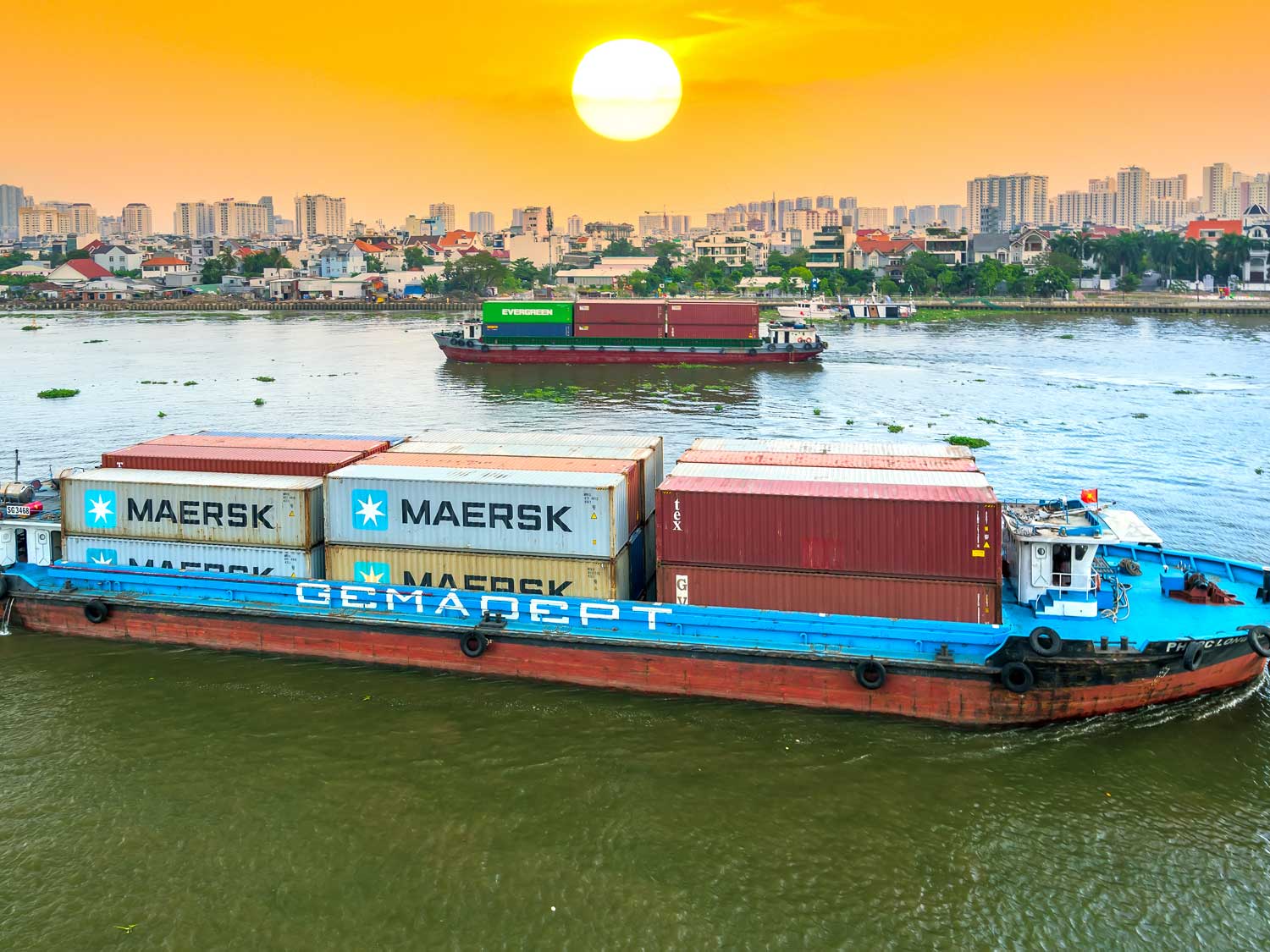
Intra-Asia supply chains have been undermined by the continuing impact of COVID and skyrocketing demand on the westbound and trans-pacific trades.

Covid quarantine rules, affecting ship crews, led Pearl River Delta, feeder operators to stop accepting bookings in early January until the end of February, which means that cargo that would normally move by feeder to the export/import ports has to move overland.

Direct services to key Asia ports have not been cut, but they are insufficient to meet current demand and the resulting shortage of empty containers has been particularly pronounced because, rather than allow trade to naturally position containers, the shipping lines would rather repatriate empty boxes to China, to benefit from the higher yields offered on the westbound and trans-pacific trades.

Surface transport cannot make up for the lack of intra-regional capacity, because there are not enough drivers or rail capacity to handle the volumes to avoid intra-Asia economic impact.

As the UK’s largest trading region, especially for imported manufactured products and consumer merchandise, the regional effects within Asia have a significant impact on supply chains. We continually update clients on the reality of the market and anticipate issues and try to avoid them, offering the best current solution available and options on mode of transport to ensure deadlines are met.

For further information and the latest situation within Asia please contact Grant Liddell who will share our local office and partner updates with you, to assist in your forecasting and planning throughout 2021, which is proving to be another supply chain challenge – but one that we always rise to, to ensure supply chains continue flowing!

Freighter

Air cargo capacity to remain constrained until 2023

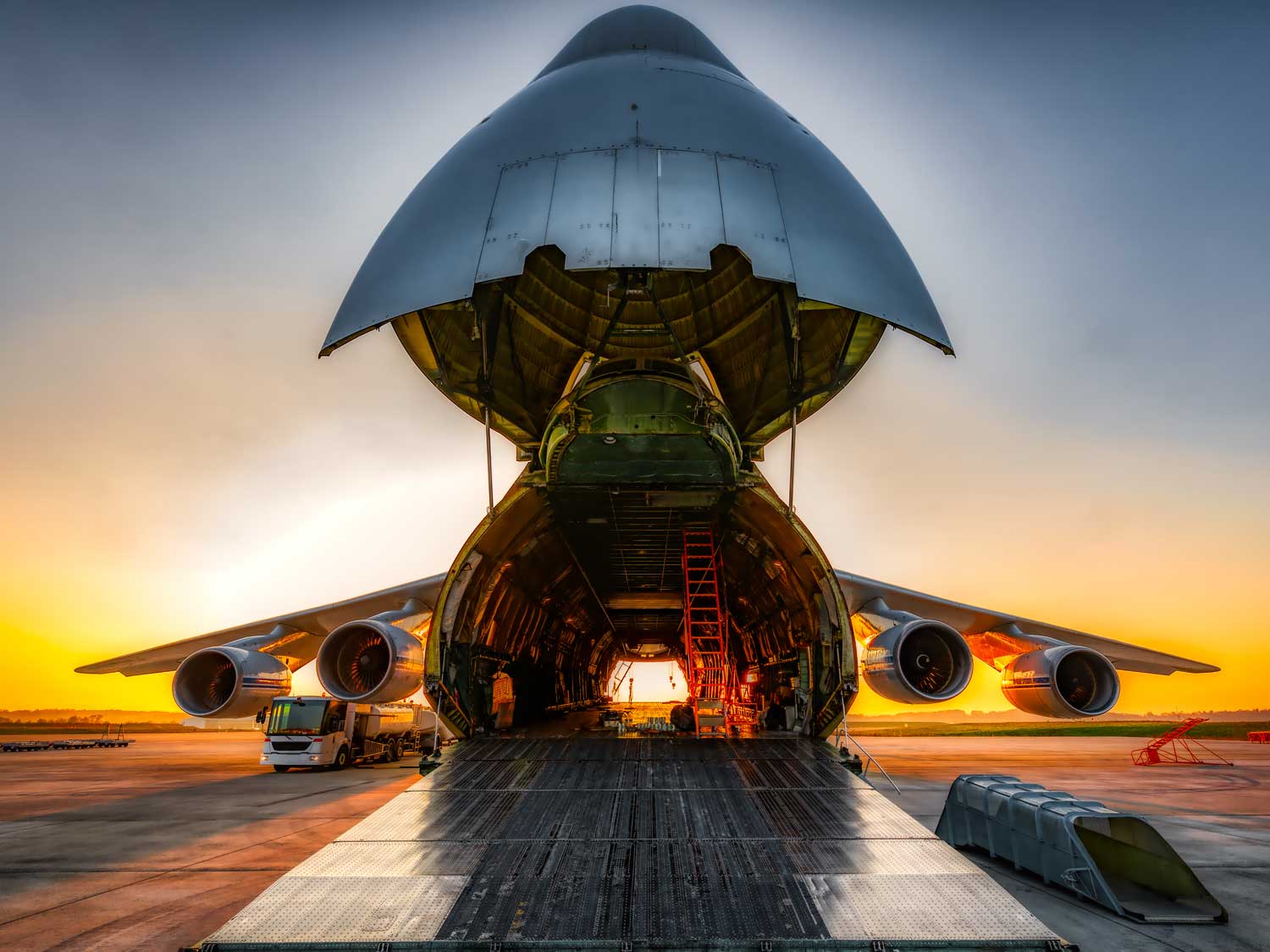
In the absence of belly-hold capacity (passenger aircraft), big volume shippers are taking freighter and charter options, potentially affecting air cargo capacity available to some shippers and underlining the importance of the strength of partner carrier partnerships and of our time-sensitive sea/air solutions.

Air cargo capacity is expected to remain constrained for some time, resulting in the biggest volume shippers increasingly relying on charter operations, as scheduled carriers are forced to further reduce passenger flights (PAX) due to increased travel restrictions globally, with a large amount of the world’s airlines fleet parked up and not operating.

In addition, continued high demand for air freight on some lanes prevails, with PPE/ COVID testing kits, vaccines and component/raw material shortages forcing the need for the faster transit to market.

The market has also been impacted by severe ocean freight delays, as we have publicised over recent months, resulting in ‘distressed ocean freight’ transferring to quicker transits by air freight, taking much needed capacity.

Global vaccination programmes are likely to lead to a pick-up in passenger travel in the second half of the year, but this capacity will mainly be short-haul and domestic flights, which won’t add any capacity for long-haul cargo operations.

Long-haul travel, which is a much bigger part of global air cargo capacity, has been grounded since the first quarter of 2020 and will be slower to resume, with the market unlikely to be back to normal until 2023, it is widely reported in the aviation industry. 

Many of the world’s larger airlines have converted some of their PAX aircraft to cargo-only flights, to ensure air freight continues to move - commonly referred to as Preighters.

In the absence of passenger ticket income, operating costs are far above their normal levels and rates have escalated to a new 'normal' level, which is significantly higher than the pre-pandemic level. 

Unless a satisfactory return is achieved on these flights, with a revenue stream that covers costs, aircraft are withdrawn, reducing capacity further and through market dynamics, costs rise further, to make it attractive and viable carriers to continue operating PAX freighters.

In terms of additional dedicated freighter aircraft coming into the market to alleviate any capacity shortfall, the lead times for production and converting freighter aircraft are long and the uncertain economic outlook may deter companies from investing in all-cargo aircraft.

With the air freight belly-hold capacity constriction likely to last, chartering may have to become a more permanent part of large shippers supply chains.

Where strategic capacity is available, spot rates are moving in one direction, with Shanghai to North Europe up significantly year over year and reflecting further volatility on a continual basis.

Chinese New Year has seen no softening in demand, with rate negotiations weekly or even per shipment and the number of spot rates increasing drastically compared to previous years.

Alexandre de Juniac, IATA director general, said that meeting demand without belly capacity continues to be an enormous challenge. “As countries strengthen travel restrictions in the face of new coronavirus variants, it is difficult to see improvements in passenger demand or the capacity crunch. 2021 will be another tough year.”

The COVID-19 pandemic continues to disrupt air cargo logistics chains, with measures to curb the infection rates affecting the availability of airline crew and ground staff. 

New 14-day quarantine measures for pilots and crew in Hong Kong is having a significant knock-on effect by limiting crew availability, with Cathay Pacific calculating that the new quarantine rules may result in a reduction of current passenger capacity of around 60% and a reduction of current cargo capacity of around 25%.

The whole of the global aviation industry has been impacted and there are few routes, if any, where costs have stabilised and we continue to manage and monitor our partner airline relationships, to ensure that we are in the prime position to deliver express cargo and our commitments.

Metro continue to monitor turbulent air capacity issues, to identify potential volume opportunities, as well as developing and offering alternative services and multimodal services to ensure that the best options are made available to meet deadlines and expectations. 

We work closely with the world’s largest scheduled and charter cargo airlines to offer consistent and reliable transits at market competitive rates. 

If you have any questions regarding these developments or would like further information, updates, or the latest market pricing please contact Elliot Carlile or Grant Liddell.