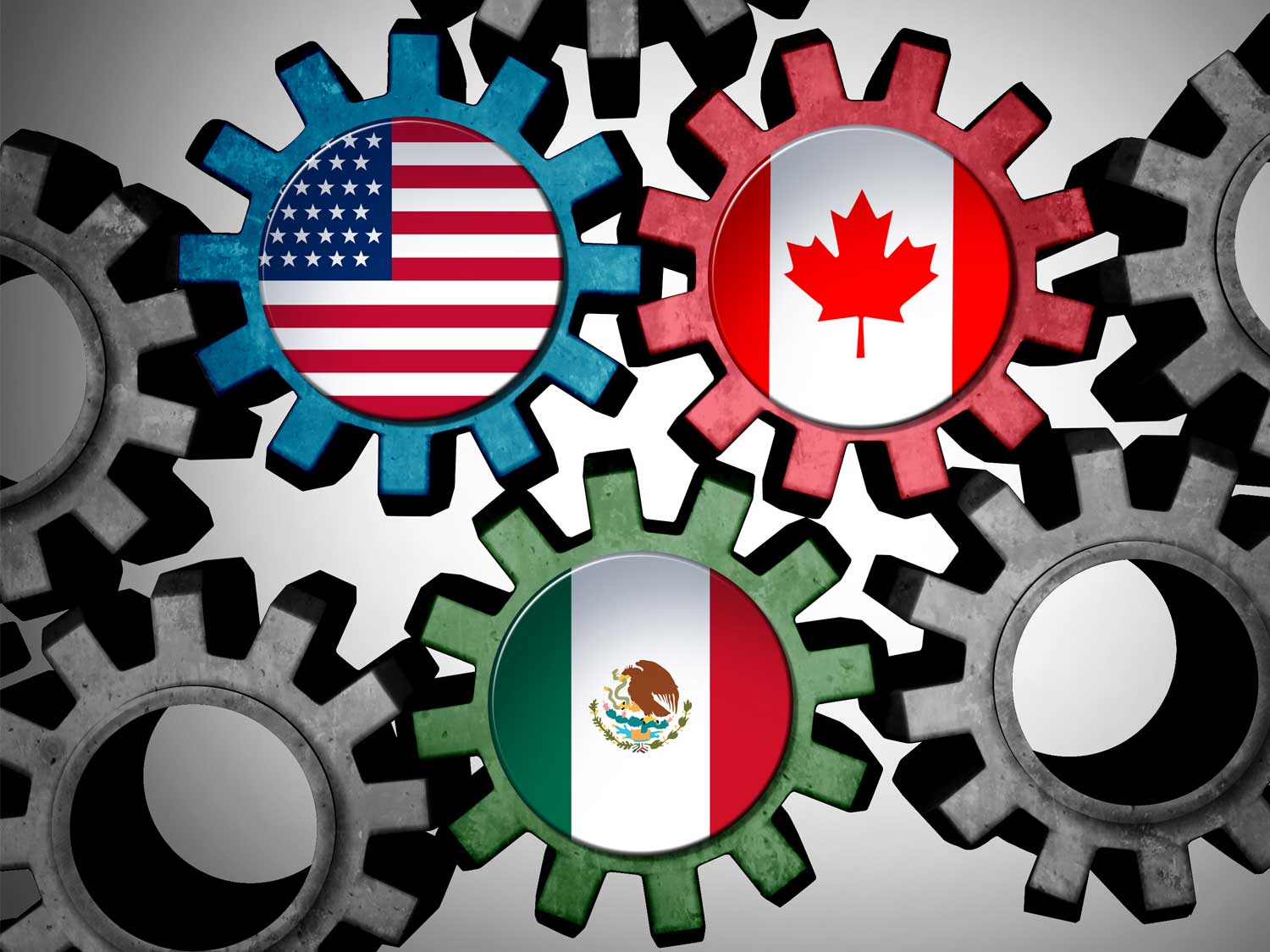
The United States-Mexico-Canada Agreement (USMCA) is the legal and operational backbone of a $31 trillion North American trading bloc, and its renewal process is a live strategic risk factor for manufacturers and automotive brands active in the region.
Renewal negotiations are one of the most strategically important issues facing North American manufacturers, automotive brands and industrial supply chains.
While the agreement itself is not due to expire immediately, the failure to secure a straightforward 16-year renewal by the July 2026 review milestone is creating growing uncertainty across sectors heavily reliant on integrated US, Mexican and Canadian manufacturing operations.
The negotiations are particularly important for automotive, machinery, steel, aluminium and advanced manufacturing supply chains that have spent years restructuring production around the USMCA framework.
Why USMCA matters
The USMCA effectively underpins North America’s position as a highly integrated manufacturing bloc, supporting nearly $2 trillion in annual trade and deeply interconnected cross-border production networks.
The agreement provides the legal and operational framework that allows manufacturers to build complex regional supply chains with long-term investment certainty, streamlined customs processes and unified rules governing trade across all three countries.
That stability has become increasingly valuable as global manufacturers continue reducing dependence on long-distance Asian supply chains and accelerating near-shoring strategies closer to North American demand centres.
Mexico, in particular, has become a major beneficiary of this shift, offering shorter transit times, lower logistics risk and strong manufacturing integration with US production.
Automotive supply chains remain at the centre of negotiations
USMCA rules already require 75% of vehicle content to originate within North America for tariff-free treatment, helping drive major investment into regional automotive manufacturing and supplier networks.
Modern automotive production across North America is now deeply interconnected, with components often crossing borders multiple times before final vehicle assembly.
A single component may be stamped in Mexico, machined in the US and assembled into a finished vehicle in Canada or back in Mexico. That level of integration means even relatively small tariff or rules-of-origin changes can have significant operational and commercial consequences.
The Trump administration is now reportedly pushing for even higher US content requirements within vehicles as part of the renewal process, alongside broader efforts to bring more manufacturing activity back into the United States.
At the same time, steel, aluminium and automotive tariffs remain major areas of disagreement between the three countries.
Negotiations becoming more complex and politically sensitive
Formal negotiations between the US and Mexico are now under way, while Canada is still waiting to enter full trilateral discussions with Washington.
Current expectations are that the July review deadline will pass without a full agreement, triggering an extended review and negotiation period rather than an immediate collapse of the agreement itself.
In practical terms, USMCA would remain operational, but uncertainty around future rules, tariffs and investment conditions could persist for months or even years.
That uncertainty matters.
Manufacturers making long-term investment decisions around factories, tooling, supplier sourcing and critical minerals need confidence that North American trade rules will remain stable over the life of those investments.
The White House is also increasingly using separate bilateral negotiations alongside the formal USMCA review process, creating additional complexity around tariffs, automotive rules, steel, aluminium, labour standards and critical minerals.
For many manufacturers, the agreement is now viewed not simply as a trade deal, but as a strategic foundation for North American industrial resilience.
What this means for manufacturers and importers
For businesses operating across North America, the current environment reinforces the importance of supply chain flexibility, customs planning and close monitoring of trade policy developments.
Automotive, industrial and manufacturing sectors remain particularly exposed to any changes involving rules of origin, tariffs, customs procedures or regional content requirements.
While the direction of negotiations remains uncertain, all three governments continue publicly supporting the importance of maintaining a trilateral North American trade structure.
The challenge now is whether that shared strategic interest can overcome increasingly difficult political and economic negotiations.
Metro helps customers manage complex cross-border logistics, customs compliance and North American supply chain strategies across the US, Mexico and Canada.
To discuss your North American logistics requirements or USMCA-related supply chain planning, EMAIL Managing Director Andrew Smith.