Coronavirus update 27th March

Air freight market more than challenging

Despite the massive challenges, our air freight team continue to find solutions for critical cargo and our Sea/Air services are invaluable for time-sensitive shipments. With options from across Asia, via a choice of hubs including Singapore, Colombo and Dubai, we offer the widest choice of service, transit and rates.

There is a massive surge in demand for air freight globally, but particularly across Asia, due to continued shipping disruption. Vessel and loading delays at loading ports are negatively impacting transport from origins, that are further compounded throughout transit to arrival port, with haulage issues added to the mix, when they do eventually get released to destination. 

The same scenario is being experienced to some extent globally and particularly across the USA, which has endured more turbulence than the UK.

Despite this massive and sustained demand, air capacity from China and Hong Kong continues to suffer due to COVID restrictions, as Cathay’s August volumes confirmed, at just 66% of the same period in 2019. 

Enhanced Covid rules at Chinese airports are impacting ground handlers and air crew, which drives down capacity and as a result rates are climbing daily on all routes driven by supply versus demand dynamics, with China-US air cargo rates reaching new highs, even beyond those experienced in 2020 during the PPE supply crisis.

The absence of passengers - and scheduled flights - is creating challenges in capacity, as shippers gear up for peak season. Goods continue to fill fewer planes, but worsening long haul passenger demand hinders freight growth, in particular between Asia and Europe and the Americas.

Converted ‘Preighters’ are unlikely to offset rising air cargo demand and there is a finite number of pure freighters available in the market which will add delays as peak season continues to build.

Retailers, as widely publicised in the national and international press, are desperate to ensure that shelves are stocked for the Christmas period, but reliance on time critical air freight increases pressure on global air cargo supply chains. 

And this pressure will increase even further when the traditional air freight peak season picks up pace, with tech product launches and manufacturers trying to restore reduced stock and inventory levels.

Shippers are increasingly turning to our Sea/Air services, with demand up 25% over the last week, and climbing at all major hubs including Singapore, Colombo and Dubai, as shippers move urgent consignments to gateway airports where they can be transferred to air freight.

The traditional ‘go to’ charter option is increasingly difficult to obtain, with three to four week lead time weeks and the North American market draining capacity, by paying much higher rates and making transpacific routes more lucrative.

Scheduled flights are still very limited and even though freight rates are high airlines are still losing money, without revenue from passengers, which means that cargo is the prime income for many, as it has been for the last 18 months, which is keeping pricing high and forcing it higher.

Airlines are not negotiating like shipping lines, by seeking longer term contracts, but are leveraging the supply chain versus demand imbalance to create a ‘pay to play’ environment, that maximises revenue potential.

Despite the massive challenges, our air freight team continue to find solutions for time-sensitive shipments, but it can take up to three weeks to get lifted from some origins. 

We work closely with our global network to monitor market capacity and identify service opportunities that might benefit our customers.

Evaluating and blocking space on viable services early, is a critical factor in achieving deadlines based on customers’ requirements and expectations, including the constant recalibration of our hybrid sea/air platforms and hub services. 

Please call Elliot Carlie or Grant Liddell for further insights and advice. 

As much visibility and planning into the final quarter that you can provide will ensure that we can create a tailored and bespoke solution, to deliver your product to market – at the right time. 

container lorry queue

HGV crisis hidden for years

The HGV driver crisis, which has been gathering pace over the last two decades, has been largely hidden due, in no small part, to effective transport management by the freight forwarding community. But the situation has been exacerbated by Brexit and tax changes which encouraged 20 thousand European drivers to return to the continent and the loss of 30 thousand driving tests, during lockdowns, which has critically elevated the shortage of HGV drivers to 100 thousand.

The impact of the HGV driver shortage is being felt increasingly by the general public and in every business vertical and is particularly pronounced for the freight sector. 

With driver shortages hitting local collections and deliveries, it is impacting air freight and there are significant capacity issues for pan-European transport. But it is the sea freight sector and in particular the movement of containers that has been hardest hit.

Hauliers have been increasing driver pay rates, offering retention and loyalty bonuses and improving working conditions in a bid to halt the outflow of experienced personnel, which is being reflected in the costs incurred and may reflect a longer term trend to make the industry more attractive to a new generation of drivers.

Changes to the HGV driver testing process, recently announced by the government, will speed up the process and could mean an extra 1,600 drivers joining the industry every week. But there are lots of caveats attached to that figure and its benefits will only become evident over the long-term.

The challenge remains, too much demand and insufficient capacity, and managing the potential impact of this equation on supply chain operations. In the short-term the situation is very likely to worsen, before it gets better and, even if young people and women can be attracted to the profession, it may take up to two years to reach equilibrium.

With over three decades of shipping line and forwarding transport experience, Metro’s transport team is led by Simon Balfe, one of the most knowledgable volume movers in the UK.

Despite the breadth of experience, haulage contacts and relationships across the Metro team, they are increasingly challenged in locating sufficient haulage resource, with ‘merchant’ supply often going to the highest bidder and line haulage becoming increasingly unreliable.

Prior to the pandemic Metro’s on-time delivery KPI hovered around the 99% mark. Today, despite the best efforts of Simon’s team, it has slipped to 80%, which is still far higher than the industry average of 50%.

A significant factor in this fall, is the failure of line haulage reliability. Historically (right or wrong) shipping line controlled collections and deliveries (line haulage) has been perceived to be the ‘gold standard’ in container transport and costed accordingly.

But the pandemic is tarnishing even this ‘gold standard’ as lines increasingly stop offering a ‘to-door’ service, or fail to honour confirmed bookings, which is having a profound impact on unlucky shippers, who are often left facing additional and unexpected charges.

We are increasingly called on to assist shippers who have had line haulage cancelled, or have received no prior notice of its withdrawal and have been offered new bookings, several weeks forward, leaving them to wait for their goods and the likelihood of rent and demurrage charges. 

Even though the extended time is a direct result of the line’s own actions, they are not sympathetic to writing off these charges, as the shipper always has the option to arrange their own transport.

Although this option does incur lo/lo charges and can be more expensive than line haulage, merchant haulage can potentially offset the rent and demurrage of an extended wait on the quay or terminal.

We work with a number of selected long-term haulage partners across the UK to give us access to the widest pool of equipment and driver resource at the UK’s primary container ports, to offer cost-effective and efficient merchant haulage services. 

To learn more or discuss your situation, please contact Elliot Carlile or Grant Liddell (or Simon Balfe, who leads our UK multimodal transport operations) to talk you through the options.

container haulage

UK Road freight turbulence to continue impacting global trade and freight movements

The HGV driver shortage is hitting crisis level in the UK (and around the world) as demand for haulage services continues to increase and, while a potential strike within the industry has been averted, the threat of driver strike action continues at Tesco and Hanson, raising the possibility of further disruption this autumn and running up to the traditional Christmas and festive ‘rush’.

The prospect of strike action comes as severe shortages of workers and raw materials trigger widespread disruption across the British economy, in a crisis caused by the fallout from Covid, Brexit and years of underinvestment in HGV drivers. As well as European drivers returning to their home countries and not returning after lockdowns and Brexit earlier this year, removing an estimated 20,000 HGV1 operatives.

This effect is being felt in all areas of logistics, but in particular within the container transport sector, which can often be seen as ‘hard work that is underpaid’.

The growing global crisis

Fast-food giant McDonald’s has joined the growing list of companies forced to cut parts of their services due to shortages of stock caused by the lorry driver crisis, which adds to stock problems caused by a disruption in international supply chains.

Analysts say a global shortage of truck drivers has persisted since the middle of the 2000s. Still, the deteriorating global driver shortage, which has now tipped into a domestic crisis, has only become visible to the general public this year. It has been around for much longer and has been delicately managed within the supply chain industry.

The transport sector’s labour issues have developed over time as multinationals have driven down supply chain costs, and the global driving workforce has aged. The average truck driver in the UK is 55 years of age. It has not been a popular career path to follow.

The number of drivers in general freight in the US has dropped to 430,000, down from 465,000 at the start of 2020, and the situation is getting worse. This situation is not unique to the UK, and globally there is an issue with the first mile and final mile aspect of freight movements.

Chartered Institute of Logistics and Transport members in Australia and central Asia have reported heavy goods vehicle driver shortages of 20%.

Increasingly, global trade is becoming more complex, consumers want quicker deliveries, and simply there are not enough skilled HGV drivers to handle this demand around the world. In the UK, to become an HGV1 driver qualified for the operation of an articulated 40’ lorry is a lengthy process that has also been impacted by lockdowns and reduced testing for aspiring drivers. Different vehicles require different accreditations, with many tests unable to be completed during the situation over the last 18 months resulting in fewer new people entering the industry.

According to the Road Haulage Association (RHA), there is a shortage of more than 100,000 drivers in the UK, out of a pre-pandemic total of about 600,000, exacerbated by changes to rules following Brexit and 30,000 HGV driving tests being missed because of COVID.

Freight's own challenge

The impact of this shortage is being felt in every business vertical and is particularly pronounced across the freight sector. Touching domestic delivery and collections, as well as international transport, and particularly the merchant haulage of empty and laden sea containers. The air freight sector is also experiencing issues with collections and deliveries and being impacted as drivers move to less hectic roles within the domestic sector.

In addition, and not widely reported, the purchase of new vehicles and trailers are impacted with manufacturers taking at least 6 months to deliver equipment due to component shortages, other manufacturing issues and demand for new lorries, despite the increasing cost of the assets – simply put they cannot be manufactured quickly enough to meet their order books.

Metro’s transport team is among the most experienced and biggest volume movers in the UK. They are increasingly challenged in locating sufficient haulage resource, particularly for movements within a 72-hour window. Hauliers and carriers, along with market conditions, are dictating a ‘pay to play’ scenario, where the highest bidder benefits. And this is across all modes and sectors of the industry.

Even the payment of a booking premium of >£300 on a container is no guarantee that the contractor will not cancel the booking without notice. This often means the shipper’s container will exceed its free period of rent and detention on imports or fail to materialise on export collections. 

We manage these situations with agility every minute of the day. There are no statistics published that we can advise or refer to, to demonstrate the scale of the issues. But it is frequent and demanding. 

We have and continue to increase our transport teams across all modes, dedicated to ensuring that we overcome all the industry challenges, now and in the future, with innovation, creative and imaginative solutions and hard work. 

No silver bullet

The average haulage movement now takes 3.7 times as long to administer, communicate, and organise, with the impact of all the component events this year, as it did pre-pandemic and in 2020.

The RHA, freight transport association Logistics UK and the British Retail Consortium (BRC) are among the trade associations that have - without success - urged the government to take measures, including relaxing visa regulations, to alleviate the road haulage problem. 

So far, government proposals have been limited to plans to streamline the process for new drivers to gain their HGV license and increase the number of driving tests conducted. In fact, today, BBC News has run an article on how the government is looking to fast track new driver tests – Government to shorten HGV driver testing process. The situation is changing daily……..

The crisis is anticipated to worsen in the coming months as demand for goods increases with the new school year starting, businesses returning to their workplaces and the build-up to Christmas, traditionally the peak time for logistics movements. This, in particular, is due to be felt in the container haulage industry as detailed – an essential ingredient to global freight movements.

Freight sector hauliers have been increasing driver pay rates, offering retention and loyalty bonuses and improving working conditions in a bid to halt the outflow of experienced personnel to retailers. This all reflects in the costs incurred and the reliability to ensure we continue to deliver consistent services to our customers and ultimately to their customers.

Road transport cannot be avoided, as part of the international movement of goods, with drivers critical for container movements, international and domestic haulage.

We work with a number of selected long-term haulage partners across the UK to give us access to the widest pool of equipment and driver resource. 

To learn more or discuss your situation, please contact Elliot Carlile or Grant Liddell (or Simon Balfe, who leads our UK multimodal transport operations) to talk you through the options.

Antwerp

Unrelenting pressure on global sea freight supply chains

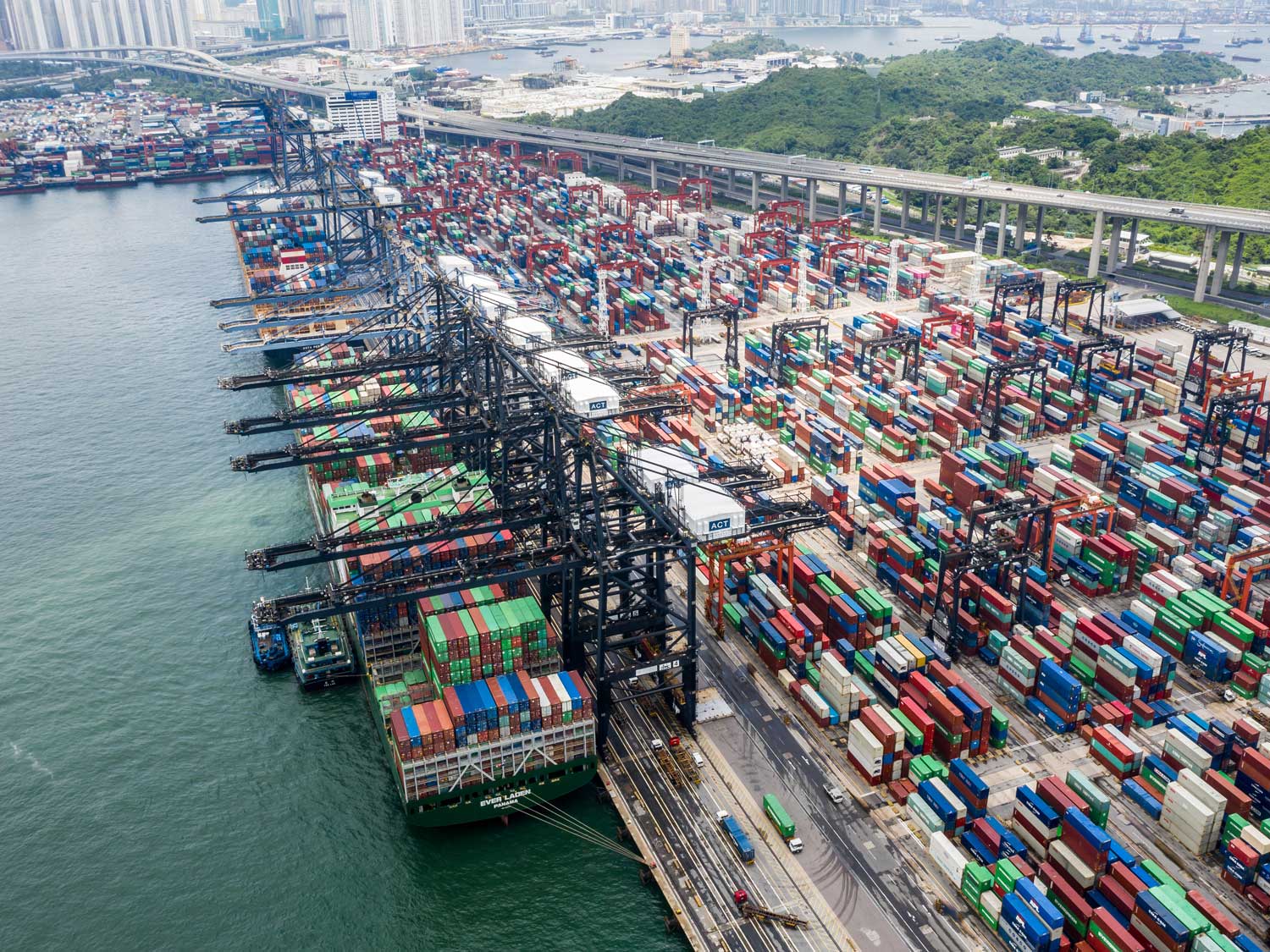
The core problems impacting containerised shipping - the slow circulation of ships and containers, port disruption and the HGV crisis - are clearly worsening, as they diminish available capacity supply and continue to drive spot rates to record levels on pretty much every lane and every combination of port pairings.

It is this loss of effective capacity when ships take longer to discharge and load at ports, and containers are not picked up or returned quick enough that contribute so much to the record spot rates we are experiencing, as well as high demurrage and detention costs, with ever-lengthening transit times.

When containers take longer to be repositioned back to origin ports, they are not available to pick up new loads, and when ships are anchored waiting for berths, they miss their scheduled departure dates, which leads to more cancelled sailings and the removal of much-needed capacity.

Vessel schedule reliability dropped 3.8% month on month to 35.6% in July, down a massive 39.7% from last year, as the average delay for late vessel arrivals continued to deteriorate.

If vessels and containers were circulating normally, many experts insist there would be no capacity problem, even with the high levels of demand we are experiencing.

As it is, many of those same experts believe we could be well into 2022 before we see the congestion begin to ease, simply because a complex system of millions of assets will take a considerable time to return to a normal circulatory flow.

The series of supply chain shocks we have already seen this year - including the Suez, Yantian and Ningbo closures - combined to slow down the circulation of containers and the progress of container ships travelling from port to port, reducing the ability of shipping lines to satisfy the sustained strong levels of customer demand.

Illustrating this fact, Hapag-Lloyd has expanded its container fleet by 12% since the onset of the pandemic and has announced an order for an additional 75,000 containers, which will expand its fleet by a total of 15%, but because the average time it takes containers to return to origin has expanded from 50 to 60 days, the increase has not resulted in an increase in effective capacity.

This asset slowdown is a global phenomenon that will not ease until volumes do, and it is the peak-season volumes, stimulus spending, and restocking of depleted inventories that makes it likely that this may not happen until after the 2022 Lunar New Year.

Port dwell time has been increasing, often because of logjams at receiving warehouses, or increasingly longer to pick up from the terminal due to scarcity of haulage capability, and there are very real fears that shipping lines may cease carrier haulage services entirely, which would put an intolerable burden, on an already overstretched merchant haulage sector.

Slower asset circulation is also siphoning significant effective capacity from vessels, with 20–25% of transpacific container capacity and 12–13% of Asia–European capacity lost to congestion and delays, which means approximately 10% of the global fleet is absorbed by congestion/delays.

The reality is that carrier ordered new build vessels, and greater significant supply to the container industry is not due to deliver until 2023, with most of the alliances and major global container operators. So unless there is a fall in demand, then the current situation looks likely to continue for the foreseeable future, into 2022 and possibly beyond.

We negotiate rate and volume agreements with carriers across all three alliances, which means we can react quickly to market conditions and changes. 

For urgent and must have shipments from Asia, we have access to freighter capacity from our Sea/Air hub in Singapore and can move consignments of up to 200cbm per flight to Europe as an alternative to air freight from many origins.

Global supply chains are likely to be under intense and sustained pressure for some time yet, and we will continue to share with you the most important developments so that you are informed and prepared to make critical decisions ahead of potential issues. 

Please contact Elliot Carlile or Grant Liddell to discuss your supply chain expectations and deadlines to ensure your business is ‘future proofed’ for the rest of 2021 and 2022.