Antonov AN 225

Air freight impact of Ukraine crisis

Capacity from Asia has shrunk by 22% in a week, as cargo planes that provided much needed capacity and capable of transporting heavy goods, are either sanctioned, grounded or destroyed, while airlines consider longer and more expensive cargo flights from Asia.

The European Union joined the United States and Canada in closing its airspace to aircraft from Russia last Wednesday, suspending air carriers based in Russia from operating cargo air services, including Aeroflot and all-cargo carrier Air Bridge Cargo Airlines, adding further pressure to an already tight air freight market.

Air Bridge Cargo parent company Volga-Dnepr Group has capability few other carriers can match, with its fleet of twelve AN-124s and five IL-76s, both of which have heavy transport capabilities, for the largest and bulkiest freight.

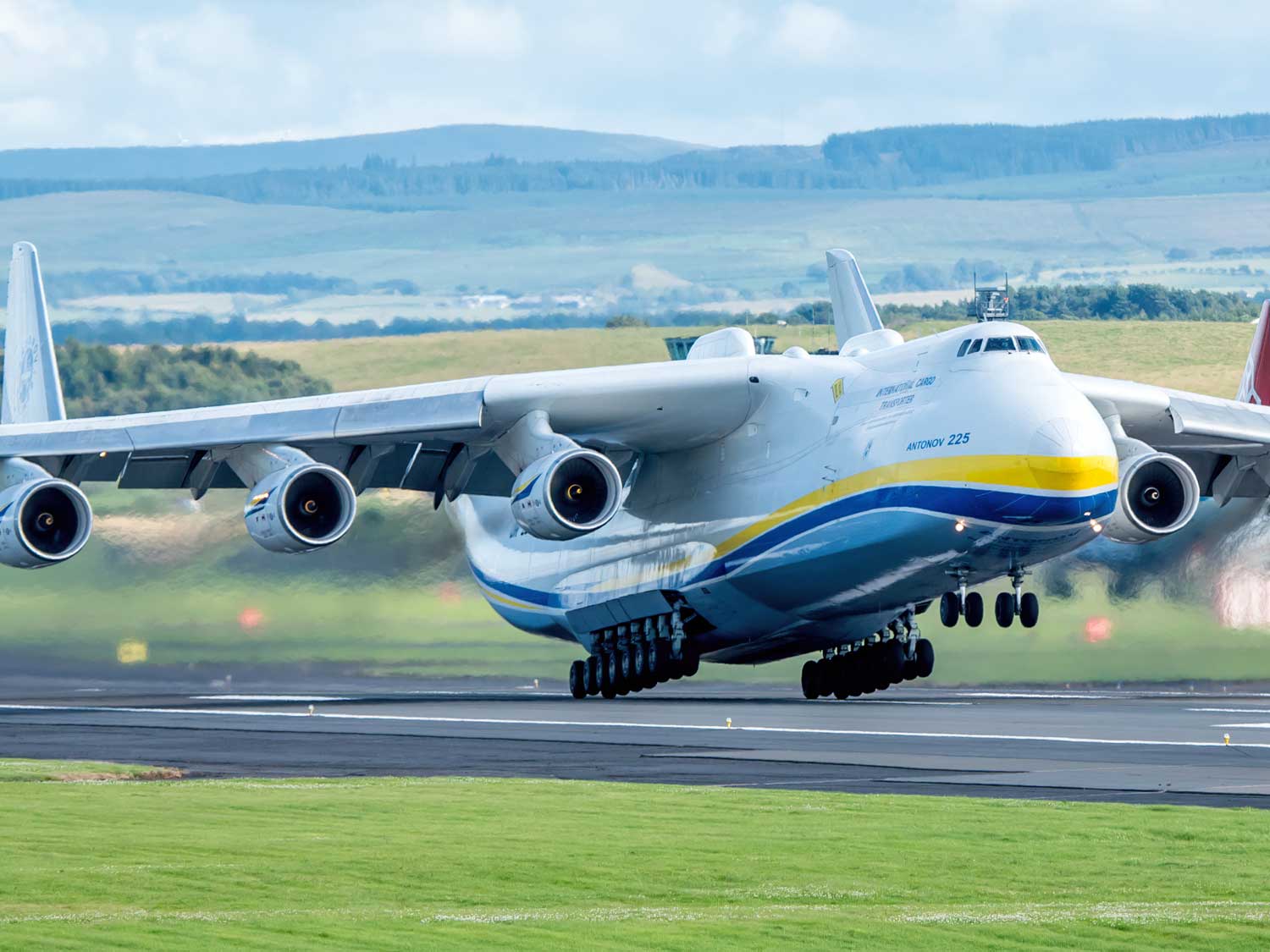
Heavy-lift aircraft capability was further strained shortly after the outbreak of the conflict, when forces from Russia reportedly destroyed Antonov Airline's AN-225 during an airfield invasion.

Originally designed to airlift rocket boosters and orbiters for the Soviet space program, the Antonov AN-225 Mriya, was the only aircraft of its class ever completed. It is the largest aircraft in the world and the only aircraft that features six turbofan engines. Able to transport up to 250 tonnes of cargo, including single pieces weighing up to 200 tonnes, it carries twice the payload of a Boeing 747 freighter.

The destruction and grounding of much of the Antonov fleet will make oversized project cargo shipping much more challenging and in the short-term may add costs and delays for many industries, most notably the energy sector.

Flight distance, times, fuel burnt and cost will rise as airlines reroute flights between Asia and Europe to avoid Russian air space. Average flight times on six key trade routes from Asia to Northern Europe increased by 3.4% within days of Russia’s invasion.

Freight costs are likely to increase further, as are fuel costs and many carriers are introducing War Risk Surcharges to compensate for the costs of adjusting operations. 

Some carriers may cancel their Asia-Europe services as they face longer and costlier routes and those carriers that do continue to fly, will pass on higher fuel costs, while the weight of the additional fuel could limit the amount of cargo carried.

Japan’s two largest airlines, JAL and ANA, cancelled flights to Europe last week, pending government guidance, because of worries about flying over Russia. Avoiding Russian airspace adds more than 1,000 nautical miles and 150 minutes to a flight between Europe and Tokyo.

Air freight has been struggling with climbing rates ever since the COVID-19 pandemic sparked a drop in air cargo capacity in 2020 but the brief window of recovery post-CNY, was slammed shut as the war in Ukraine presents a new layer of uncertainty.

With air freight capacity under severe pressure and prices rising again, driven by the Ukraine crisis and soaring fuel prices, our reliable sea-air solutions provide the cost-effective and dependable alternative.

Sea/air offers significant cost savings on air freight, with accelerated transit from Asia, of just 12 days via Singapore from initial vessel departure, and 20 days through our Dubai hub, with typical savings of 70%.

To explore our time-sensitive solutions and the viability of sea/air for your supply chain, please contact Elliot Carlile.

The Metro team talk Simon George

Leading by example

Effective planning for the receipt of inbound ocean cargo, requires accurate arrival dates, but with schedule reliability at all time lows, the effective management of imports has never been more challenging. Metro’s new ‘Vessel Tracking’ tool links directly with transceivers on board, to follow real-time progress and uses AI to detect changes and automatically correct expected arrival dates, so that plans can be updated. 

At Metro shipping, we move over 100,000 containers every year and it's becoming increasingly difficult to solely rely on the arrival data the carriers are providing, we require additional levels of visibility that go way beyond the standard.
According to our systems, less than 20% of container vessels are arriving on time and some trade lanes have reliability of less than 2% on-time schedule reliability. 

The ability of vessels to hit their port berthing window impacts shippers that have goods or equipment tied up on the ocean voyage, with ripple impacts from delays all along the extended supply chain.

The Metro Technical Solutions team have been working closely with Windward, the Predictive Intelligence company, that apply AI to global maritime trade, to integrate their Ocean Freight Visibility solution with the Metro supply chain platform, MVT.

Utilising AI to get predictive ETA data is an important development. To see the impact of vessel behaviour, weather, port congestion all being evaluated is quite exciting for us and Windward's data stacked up incredibly well, in terms of what we found in the predictive data.

The resulting MVT ‘Track Your Vessel’ module improves inbound planning efficiency, with automated data collection and analysis to provide real-time accurate ETA predictions, disruption risk predictions, reasons for delay, and location-based insights for inbound cargo. 

Effective planning for the receipt of inbound ocean cargo, is dependent on knowledge of the vessel’s actual arrival date and even with schedule reliability at all time lows, the automated updating of accurate vessel ETAs by the MVT ‘Track Your Vessel’ module supports the effective management of imports, customs processes and swift delivery to the importer.

In a forthcoming webinar, Metro’s technical solutions director, Simon George, will show how technology can turn transform import challenges into effective operations, that exceed customer expectations.

"We need to provide first-class digital solutions. This last year has been one of the worst in terms of predicting how your supply chain is going to perform. Anything that could’ve gone wrong, has gone wrong. As an example, not only is it costing up to 10x more to move freight, instead of 35 days shipments are taking 45 or 50 days. Technology can’t fix that. But it can help you make decisions within those constraints. You can make data-driven decisions."

Simon, together with former Maersk executive, Lars Jensen and members of the Windward team will discuss how to turn formidable challenges, including supply chain disruption, into promising opportunities. 

The Windward webinar takes place on Thursday 17th March @ 11am. Click HERE to register for this event.

The MVT ‘Track Your Vessel’ module automatically follows all ships carrying containers with our cargo on the water. The module instantly detects an ETA change or an arrival at POD and automatically updates the MVT platform.

Our technical solutions team are constantly innovating and evolving the MVT platforms to ensure that, whatever the challenge, our customers’ products are in the right place, at the right time. 

For further information on our MVT platform and to discuss how we can enhance your supply chains, please get in touch with Eilliot Carlile or Simon George.

ship and graph

Sea freight facing even more challenges

Low-sulphur fuel container ship bunker prices have increased by a third since Russia’s move on Ukraine, with bunker surcharges rising around 15% and expected to spike further with crude oil hitting new highs of more than double the price at the beginning of the year.

Expect the carriers to claw back as much cash as possible in the form of emergency bunker surcharges and increased use of slow-steaming to mitigate the financial impact.

We are seeing delays and detention of cargo by overseas customs authorities seeking Russian and prohibited cargo and French customs officers have already seized two vessels suspected of breaching sanctions.

<

Until trade lanes are free of Russian containers, disruption is to be expected, as customs intercede, cargo is identified, offloaded and (ideally, to free up much needed equipment) unloaded. 

Dwell time for containers and vessels is a key indicator of port efficiency. The longer cargo is stuck in port, the more it potentially costs shippers, in rent, inventory holding and tied up working capital and container ships operate to stringent schedules, which means any delay ripples across the entire service. 

During unexpected increases in dwell time, port operators increase stack heights and store containers on every available space in their yards, which significantly lowers productivity, potentially exacerbating dwell time.

Dwell times have increased 43% across Europe since Russia’s invasion of Ukraine, with consumer packaged goods, food and beverages, hit particularly hard, as dwell times increased by 55%.

Container ships are skipping ports to try and maintain their schedules or, at best, limit delays, which are averaging 17 days and unchanged since last November. 

Average round trip duration for all seven OCEAN Alliance Asia - North Europe loops however stood at 93 days, compared to an average round voyage time of 78 days.

China to Europe rail freight operations are apparently continuing, though major service providers have added Moscow ally Belarus to their booking suspensions, which effectively blocks rail shipments on much of the Asia-North Europe network, because containers must be transferred to different gauge trains on entering Europe, with the busiest crossing at the Małaszewicze-Brest reloading area on the Poland-Belarus border.

Increasing in popularity with shippers, particularly for high-value products that would benefit from a faster transit, rail freight from China has grown massively since the advent of the COVID pandemic, with volumes surging 29% last year, to 1.46m teu.

The displacement of such massive volumes will have a profound impact on other modes from Asia, taking much needed capacity and putting even more pressure on pricing.

Air cargo shippers on Asia to Europe lanes, that are already anticipating a hike in prices as a substantial amount of capacity has come out of the market, as a direct result of Russia’s move on Ukraine, could be hit particularly hard.

Supply chains are facing a new set of challenges and with conditions changing rapidly, upstream and downstream, we are working closely with our network partners, to proactively identify potential issues and take any action necessary to protect our customers.

We maintain long-term contracts and space agreements with leading airlines, carriers and shipping lines, which means we can provide the best alternatives and options, whatever the situation.

Our proactive team, leading-edge technology and open communication, provide our customers with the real-time visibility, control and intelligence they need, to maintain resilient, flexible and reliable supply chains.

plastic packaging

Unwrapping the Plastic Packaging Tax

From the 1st April 2022, importers, will be expected to pay tax on any plastic packaging over 10 tonnes, that does not contain at least 30% recycled plastic, with penalties for those that fail to pay, declare, or register for the tax.

Not a lot of people know that. But there is a potentially huge exposure and liability for all commercial businesses that do not comply.

Announced in the 2020 Budget, the Plastic Packaging Tax (PPT), will encourage the use of recycled plastic, by providing an economic incentive to use recycled material when producing plastic packaging. It is estimated that the tax could lead to an increase in the use of recycled plastic in packaging by approximately 40%.

Companies that produce or import more than 10 tonnes of plastic packaging over a 12 month period, will be liable for the tax of £200 for every tonne of packaging made from less than 30% recycled plastic, unless they can claim a credit or relief.

The tax will be administered by HMRC, who will establish and maintain a register for the purposes of collecting and managing PPT. Manufacturers and importers of plastic packaging components will be liable to be registered for PPT if there are reasonable grounds to believe that they will manufacture and/or import at least 10 tonnes of finished plastic packaging components in the past 12 months.

Because the tax will be calculated per component of plastic packaging, in the case of a glass jar with a plastic lid, the lid is treated as a separate component and in a bottle of moisturiser, the bottle and dispenser are classed as separate components that would need to be recorded separately.

Packaging that contains multiple materials, but contains more plastic by weight than any other single substance, will be a plastic packaging component for the purposes of the tax. For example, if a 10-gram item of packaging is made up of four grams of plastic, three grams of aluminium and three grams of cardboard, all 10 grams will be considered plastic packaging for the purposes of the tax.

In the UK supply chain, PPT is applied in the first instance to the packaging manufacturer. There is a secondary liability clause, meaning that if the tax has not been paid by the manufacturer, the liability can be passed down to other stakeholders in the supply chain, such as the brand owner or final product manufacturer.

Due diligence may be particularly difficult in relation to imported packaging and businesses will need to keep records of the due diligence checks they have made, which are in addition to the records required for PPT.

Producers and importers of less than 10 tonne of plastic packaging in a 12-month period, or where plastic packaging contains 30% or more recycled plastic content, will be exempt.

Medicine packaging, transit packaging like pallet wrap, packaging for goods in transit, or export within a year and durable components like DVD cases are also exempt.

Any business above the 10 ton threshold will need to keep records for their annual tax return of the packaging they manufacture or import, as plastic packaging is assumed to not meet the recycled content test unless it can be proven otherwise.

Accounting records (kept for six years) should show:

  • Total amount in weight and a breakdown by weight of the materials used to manufacture plastic packaging, excluding packaging which is used to transport imported goods.
  • Data and calculations used to determine if a packaging component is, for the most part plastic, and how much recycled plastic it contains
  • Weight of exempted plastic packaging and the reason for the exemption

OFFICIAL GUIDANCE CAN BE FOUND HERE

To discuss your PPT situation, exemptions and compliance, please contact our customs brokerage team, who can take you through the implications.  We have, within our extended group, expertise and specialist business analysts that can help and advise you on this evolving situation and we can introduce you directly to the best solution for your business needs.