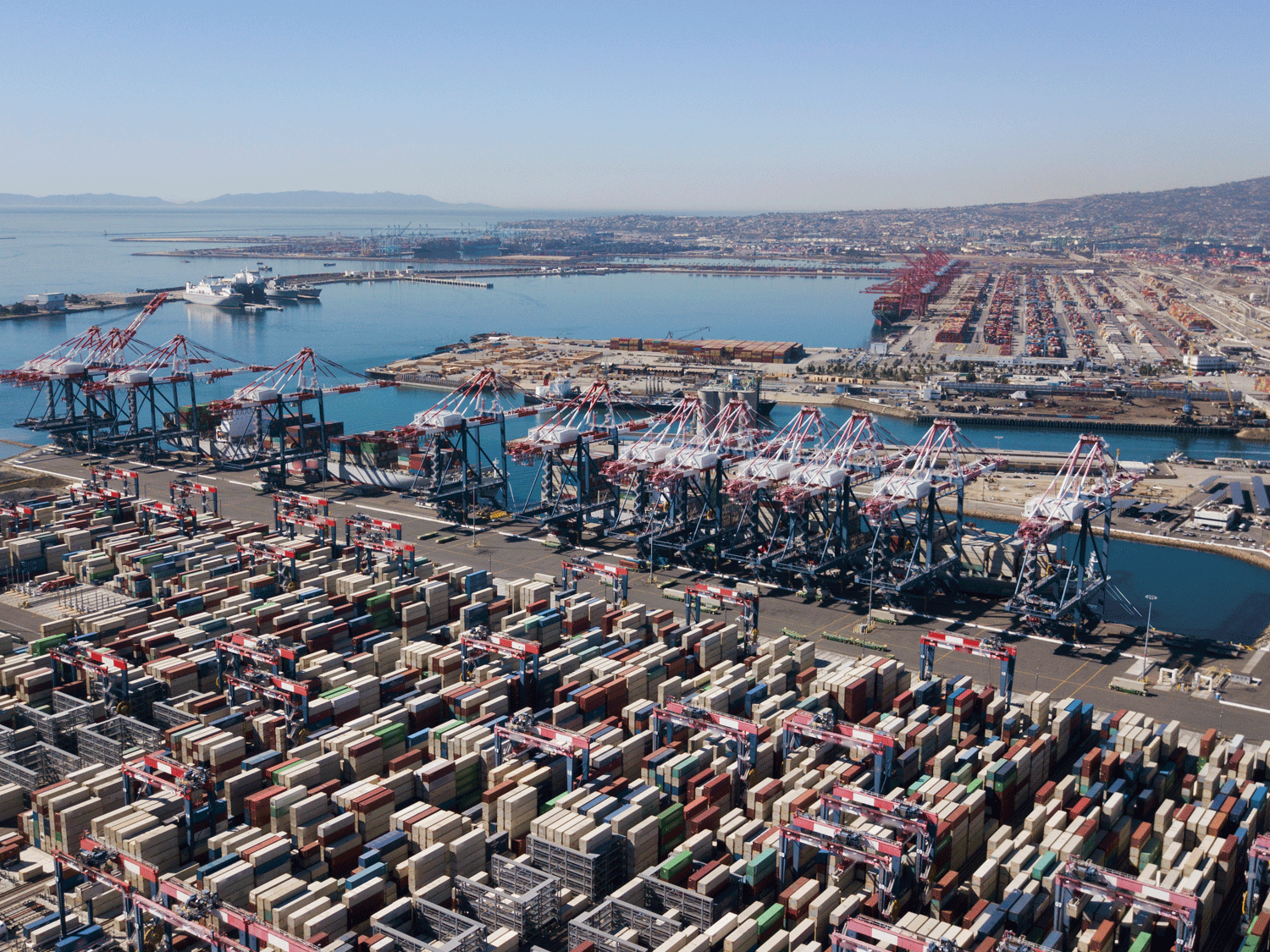
LA an d Long Beach

US ocean supply chains face multiple challenges

While The House of Representatives passed the Ocean Shipping Reform Act this week, to overhaul regulation of the container shipping industry, its focus on detention and demurrage billing and the container lines’ responsibility to load exports, will have little impact on import congestion, or record sea freight rates.

Carriers may leave India even as GRI’s bite

Freight rates from India to the U.S, which are already at their highest level, are increasing further as shipping lines prepare a round of big general rate increases (GRI) as peak shipping season approaches. But even with further elevated rates and the Indian peak season approaching, with a spike in demand from China growing, capacity may fall, as lines move vessels between trade lanes to carry higher-revenue cargo.

The China conundrum

Despite evidence of consumer demand slipping, there is no sign of imports from China slowing and, with Shanghai reopening, an early start to the peak shipping season is more likely, possibly as early as late June.

An early peak season is almost certain to increase spot rates, but the scale of rate increases and length of the peak season are uncertain, as some shippers are delaying or canceling orders and others will have forward-booked cargo.

US imports from Asia increased 2.7% in January through to April compared to 2020, despite the lull typically experienced over the Lunar New Year holidays and the disruption following Shanghai’s lockdown.

Port congestion

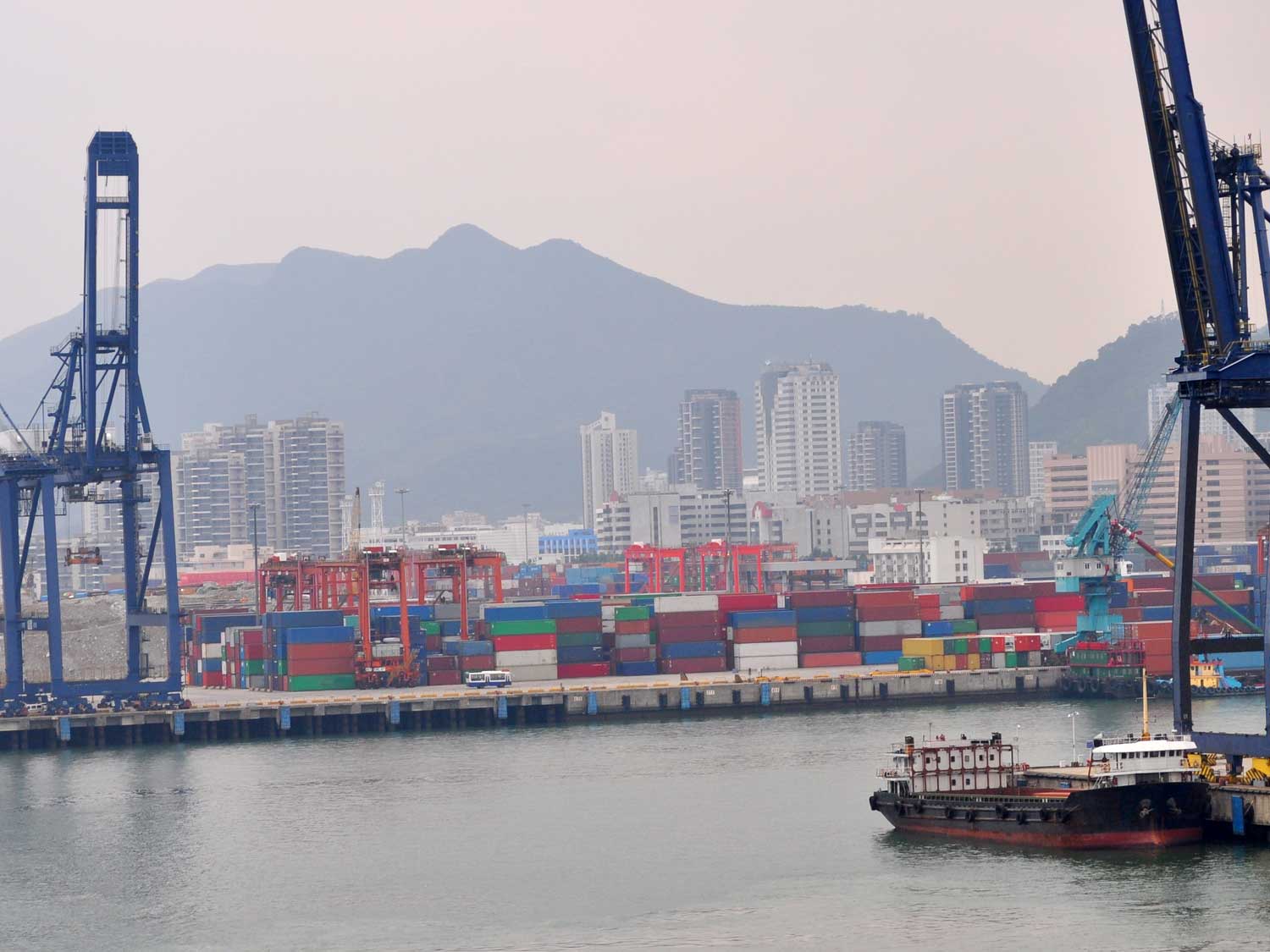
All ports within the United States have seen continued congestion for the last two years and has been a leading cause of product shortages during the pandemic, contributing to higher freight rates and supply-chain costs, which have pushed inflation in the U.S. to a 40-year high. 

NY, NJ, and Savannah are the latest to be hit with added congestion and while the east coast ports managed import increases last year, early 2022 has brought further volumes, as shipments reduced to the west coast with shippers avoiding the congestion and wanting to remove further risks of delays associated with ILWU contract negotiations uncertainty. 

Canada’s west ports are struggling with Asian imports and are announcing that all terminals are completely full. Which means that are not able to handle diversions because of ILWU negotiations or a continuance of USWC port congestion. 

Contract talks between the International Longshore and Warehouse Union (ILWU) and West Coast waterfront employers represented by the Pacific Maritime Association (PMA), which had been suspended on May 20th, until June 1st, are scheduled to continue on a daily basis, with both sides committed to good-faith negotiations without disruption, until an agreement is reached.

We are working closely with our offices and network partners in North America to set up contingency platforms, that will ensure product is delivered to market, without the delays experienced with alternative providers.

We would ask that shippers to the U.S. contact us at the earliest opportunity so that we can review their situation and prepare their supply chain for the latest challenges.

For further information please EMAIL Elliot Carlile, he will share all current options. They will take you through the alternative services and solutions, that we are able to offer, to ensure that your product reaches its destination, within vital deadlines.
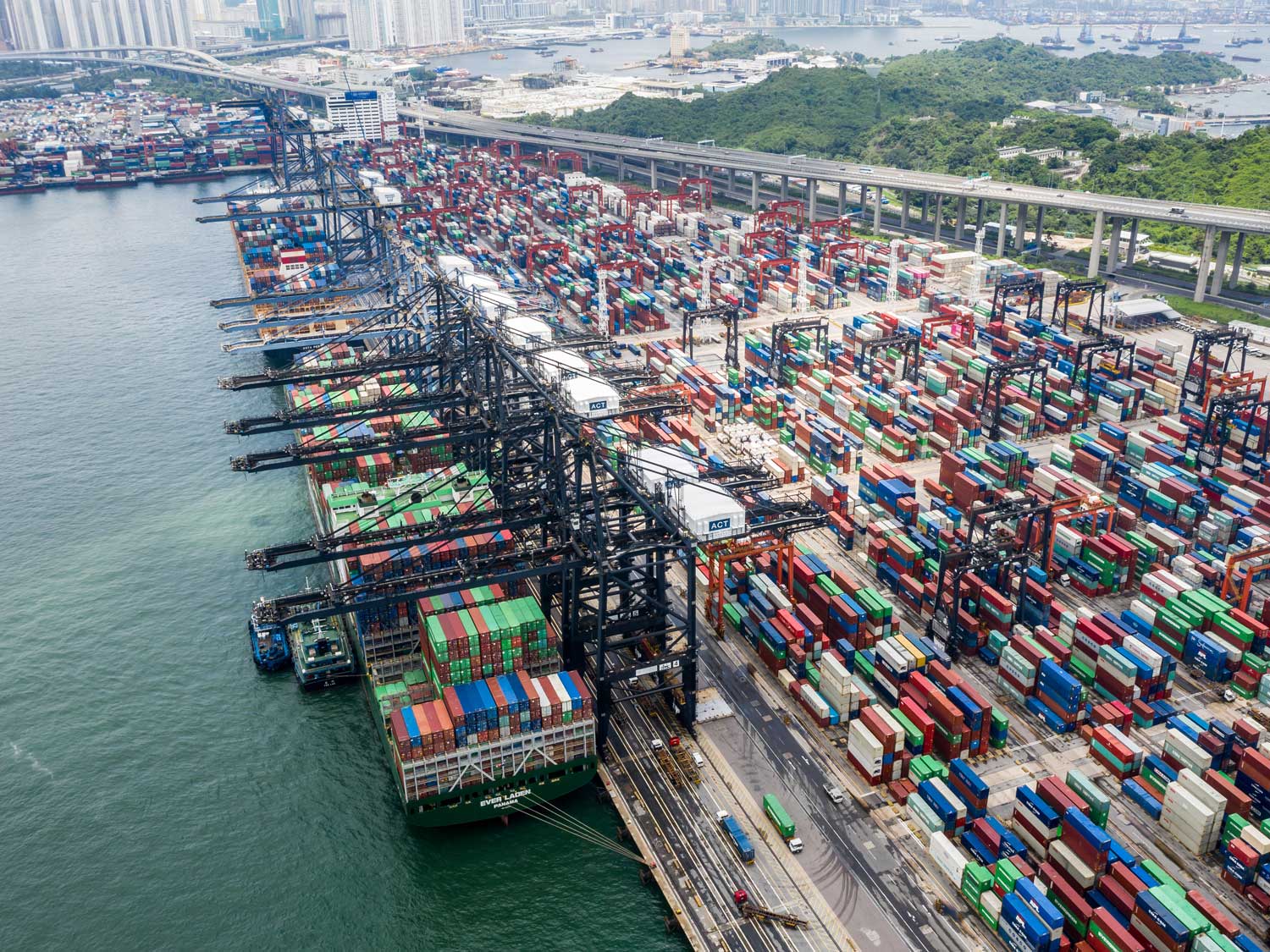

HKG port

Forecasting and protecting your Asia supply chain

Global sea freight operations have struggled with disruptions since the outbreak of the COVID pandemic over two years ago, and this has continued into 2022, with a peak shipping season this summer that is likely to be very chaotic.

China’s zero-COVID strategy lockdowns have slowed supply chains and Russia’s invasion of Ukraine has effectively ripped up any imminent recovery of the supply chain, which has been grappling to deal with the implications of these and many more disruptions. 

The two month lockdown in Shanghai and limited operations at the world’s busiest container port has severely limited the production and shipment of vast quantities of exports, which, with the lifting of lockdowns, could result in “panic shipping” following a build of filled containers destined for the West, which has been estimated at 260K teu.

The Shanghai lockdown is over but don’t expect business as usual. With factories and inland logistics returning to full staffing levels, everyone wants their purchase orders to be ahead of the peak season and make sure that their cargo reaches destination on time, which is likely to result in further price rises as importers scramble for equipment and vessel capacity. 

With carriers adapting schedules and diverting to other ports, in the wake of Shanghai’s lockdown, delays have been building up across Asia, with many ships waiting offshore and posing yet another challenge as Chinese manufacturing and exports reopen fully. 

In addition to Shanghai, Shekou, Hong Kong, Ningbo, Xiamen and Yantian are all seeing delays, with Rotterdam really struggling on the European leg. 

Container ships deployed on Asia/North Europe route currently need on average 101 days to complete a full round voyage, which means that they arrive on average 20 days late in China and is why congestion is forecast to continue long after volumes return to the market.

It is vital to note that the issues impacting China are being repeated across the Far East, South East Asia and the Indian Subcontinent into the UK and Europe.

The most effective option for importers that want to protect shipments from Asia and the ISC against the risk of delays due to capacity constraints, is sharing their upcoming order books for June and Q3, so that we can allocate the most appropriate space and protect equipment on our contracts.

The long-term fixed validity contracts we negotiate with all major carriers, across the three alliances, have proven benefits in consistency of service and capacity, but only when we have transparency of shippers’ requirements, as far in advance as possible.

Vessel bookings that are made 28 days before the cargo ready date give shippers the best chance of securing space and equipment and ensure that allocations are at the correct levels and at the correct origins.

The prudent shipper will share information on a weekly or fortnightly basis including:
Annual volumes in comparison to 2021 with indicative total TEU requirements
Six week or more rolling volume forecast
Per week / Per port of loading / Per container size

Sharing information greatly assists our efforts in keeping your supply chain moving, avoiding costs and minimising delays.

The long-term fixed price and capacity agreements we have in place with our partner carriers mean that we are well positioned to continue to deliver resilient, consistent and reliable supply chain movements, whatever challenges you face.

Metro’s cloud-based supply chain management platform, MVT, creates resilient and flexible supply chains, by making it easy to adapt and control milestones and participants in the supply chain, down to individual SKU level.

To discuss how our technology could support your supply chain, please contact Simon George our Technical Solutions Director or Elliot Carlile.

Oil platform

Oil supply threat to road freight

While there has rightly been much focus on driver shortages and spiking fuel costs, it is a shortage of engine oil and lubricants that is currently the biggest threat to the road transport of freight.

Road transport is an inherent component in almost every freight movement and the critical collection/delivery method for logistics operations and with EVs almost non-existent in commercial fleets, the cost and availability of fuel, engine oil and lubricants is essential for vehicle availability and operation.

Quite simply trucks are the mainstay of just about every developed economy, because just about every product you consume has been delivered by a truck, in at least one and probably multiple segments of the supply chain.

Soaring petrol and diesel prices have contributed to rising haulage costs which have risen by 16% over the last three years, but it is another type of oil that may finally bring the world’s commercial vehicle fleet to a (literal) grinding halt. 

When the Corona pandemic first spread, global demand for fuel for road traffic and especially paraffin for aviation collapsed, with demand for the latter falling by 82%.

In the refinery process a lot of paraffin is released and these large quantities cannot be stored so refinery capacity was reduced, which means that other refinery products, including the raw materials for producing base oil for lubricants, remain in short supply, which has led to a worldwide shortage of base oils.

In addition many crude oil producers postponed planned maintenance because of the pandemic and with many now shutting down to carry out critical maintenance activities, this has further reduced global supply. 

As the global economy began to recover, oil and fuel demand skyrocketed with shortages occurring everywhere. Almost every industry has been affected, and deficits are growing of the most common engine oils and lubricants, including 15W-40 and 5W-40 heavy-duty engine oils, full synthetic passenger vehicle oil, way oil, hydraulic oils, synthetic gear oils, and EP grease.

By 2021, lubricant manufacturers began to feel the pressure as base oil, and additive supply tightened worldwide. This strain caused seven record price increases from December 2020 to October 2021 for base oils and additives, compared to an average of just two annual price increases over the previous decade. These issues continue to plague the market in 2022.

Adding further turmoil supply chain bottlenecks were exacerbated by fierce winter storms that hit the US gulf coast, which had the effect of several major additive suppliers and their raw material suppliers invoking force majeure due to these extreme weather conditions.

This impacted supply of additives and chemicals for all lubricant categories. Then last summer, a massive fire destroyed Lubrizoil’s Chemtool grease and lubricant manufacturing facility in Illinois. 

Combined with increasing demand as countries (in some instances, temporarily) emerged out of lockdown, prices for both crude and vacuum gas oil (VGO, which is a mix of hydrocarbons produced during the extraction of crude oil) rose significantly, moving the price of lubricants up by a staggering 116% (140% for synthetics).

Supply is not going to increase any time soon. It is reported that suppliers are not just short supplying distributors’ orders but cancelling them altogether, often without notification. For some brands, distributors are finding that some of their suppliers are simply out of the product they need, with supply not being restored for at least six months.

But heavy engine oils and lubricants are not a discretionary purchase, they are essential for the reliable and ongoing use of light and heavy commercial vehicles and orders are being restricted to a limited allocation, with demand outpacing supply in the medium term.

There is one solution and that is not using heavy vehicles, which may well be the case in the US, as the country’s inventory levels of diesel have fallen to a 14-year low, with talk of diesel fuel rationing in some parts of the country.

Road transport cannot be avoided, as part of the international movement of goods, container movements and domestic haulage.

We work with a select number of strategically located long-term haulage partners, to give us access to the widest pool of equipment, where and when it is required

To learn more or to discuss any requirements, please contact Elliot Carlile or Simon Balfe, who leads our transport operations.

Yantian 3

China exports surge even as consumer demand weakens

Container volumes at eight of China’s top ports surged 25% to 16.8 million TEU in April, largely driven by consumers in Europe and the US, but manufacturers are anticipating weakening demand.

According to figures released by China’s Transport Ministry, only Shanghai recorded a decline in sea freight throughput in April, the first full month of the city-wide lockdown that has closed factories and slashed trucking capability and capacity, due to government restrictions in the movement of its Citizens.

Transport Ministry figures show month-on-month volumes at Shanghai fell 19% in April to 3.1 million TEU from 3.8 million TEU in March, while other ports, including Tianjin (+48%) Shenzhen (+43%), Guangzhou (+35%), Ningbo (+32%) and Qingdao (+31%) experienced double-digit increases.

Ningbo’s 32% increase in volumes, to more than 3 million TEU in April, was massively boosted as shippers diverted cargo, to avoid the disrupted trucking and port operations in Shanghai.

With Shanghai starting to ease lockdown restrictions carriers are reporting improving logistics and supply chain performance, with Maersk resuming operations at 25% of warehouses, including facilities in Pudong, the area closest to the main port areas at Yangshan and Waigaoqiao.

Despite the massive volumes moving through China’s ports, manufacturers are bracing for more pain as rising interest rates and inflation combine to increase prices and dampen US and European shoppers’ enthusiasm for goods, with many already shifting towards buying services than goods.

Some manufacturers are reporting that while overall demand remains robust, orders for delivery in the final quarter look weaker, with buyers becoming very tentative in restocking and ordering.

While some of the spending shift reflects a return to normal buying habits, some of it also reflects rising inflation and interest rates, fading government stimuli and volatile financial markets.

The slowdown isn’t a trade recession because underlying demand remains solid and consumers do have money to spend, but the downshift is notable and the WTO lowered its projection for growth in merchandise trade this year to 3%, down from its previous projection of 4.7%, while Asia’s manufacturing sector contracted in April for the first time since June 2020.

Evidence from South Korea, often seen as a bellwether for international trade, is showing an enduring slowdown in exports, with shipments from Taiwan also down and China’s lingering zero-COVID policy creating further hurdles.

While many financial indicators may point to risks in the global economy, amid recession warnings, we’re not there yet and any slowdown will enable global supply chains to shake off any lingering ‘performance’ issues, which in turn will ensure that the recovery, when it comes, will be super-charged by cost-effective and efficient global freight infrastructure.

Whatever challenges your supply chain may face, the long term fixed price and capacity agreements we have in place with our partner carriers mean that we are well positioned to continue to deliver resilient, consistent and reliable supply chain movements.

Metro’s cloud-based supply chain management platform, MVT, simplifies the most demanding global trading regimes, by making every milestone and participant in the supply chain transparent and controllable, down to individual SKU level.

To discuss how our technology could support your supply chain, please contact Simon George our Technical Solutions Director or Elliot Carlile.