Lines effectively write off 2020 peak season

Carriers stepping up Golden Week capacity cuts

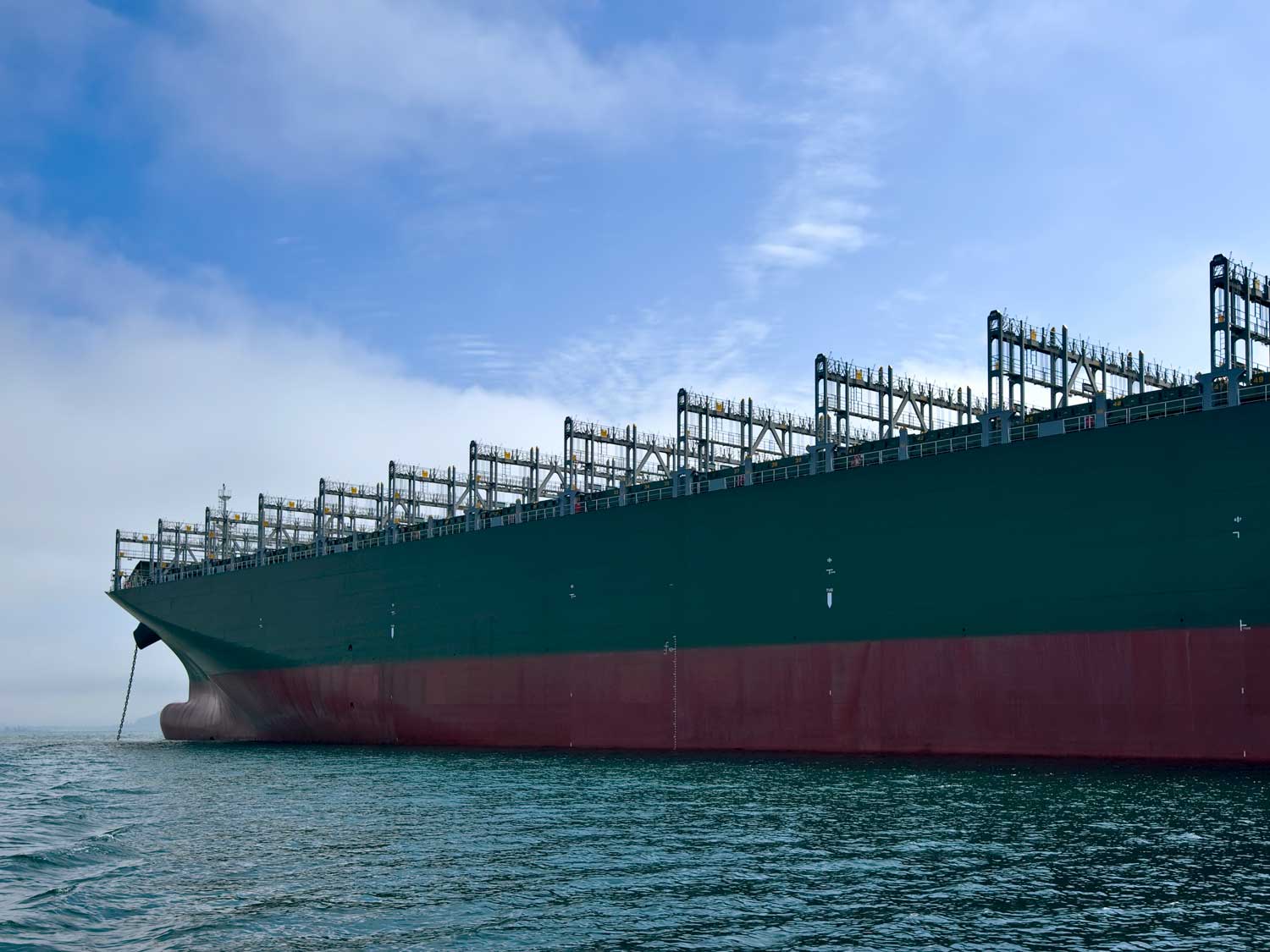
For much of the last two years, container shipping lines have struggled to maintain sufficient capacity to meet demand, but in recent months demand has fallen away, which means that some vessels are not fully utilised, with carriers blanking more sailings and reducing supply using various tactics.

As demand has weakened over recent months due to global events, a percentage of the world's container vessels have not been fully filled and freight rates have been under pressure, which would typically prompt tactical blank sailings, to reduce available capacity and support higher rate levels and reducing the erosion of rates on the spot markets.

Golden Week, which began on Saturday, is traditionally a time for lines to blank sailings as demand dips around the holiday, but carriers are cutting much more aggressively this year, as they attempt to artificially manage freight rates, in the face of diminishing demand. In fact some carriers have pulled whole services completely, in particular so far on the transpacific trade, but it is widely anticipated that this will be replicated with the Asia/ Europe trades in the coming weeks.

Post Golden Week capacity reductions on the Asia to North Europe trade lane are removing almost 20% of available volume, which is in line with 2019, but higher than the 2014-2018 average.

The carriers use blanking strategies, as a lever to reduce and increase capacity, but the demand outlook has deteriorated so significantly on transpacific trade lanes that lines are scrubbing services, with MSC suspending bookings for its express Ningbo and Shanghai to Los Angeles Sequoia service.

MSC’s announcement follows the closure of Matson’s China-California Express (CCX) service and suspensions of CU Lines TPX service and CMA CGM’s Golden Gate Bridge loop.

Maersk has suspended an Asia-US east coast service, with the last sailing of its TP28 pendulum service from Vung Tau, Vietnam, on the 13th October. The cut loop will be merged into Maersk’s TP20 pendulum service, with a revised rotation of: Jakarta-Vung Tau-Shanghai-Ningbo-Busan-Panama Canal-Mobile-Newark, returning to Jakarta via the Suez Canal.

Demand for US east/Gulf coast services has remained strong, with volumes up 12%, as cargo has shifted from congested west coast ports amid nervousness about the lack of a new west coast labour agreement and the continuing risk of labour dispute disruption.

Transpacific routes are barometers for North European trade lanes, which tend to mirror transpacific trends in the short term, so it is a little concerning to note that capacity reductions to the US east and west coasts range between 22% and 28% of deployed weekly capacity in the weeks following Golden Week, up 50% on 2019, and well over double the average of 2014-2018.

It is anticipated that the main container shipping lines will continue to use a variety of tools to balance supply versus demand, as the markets change at a pace not seen in recent years. We will continue to advise, report, make recommendations and advise all options available to ensure that cost effective and reliably consistent service continues, as changes continue to be made.

We negotiate long-term and FAK contracts with shipping lines across all three alliances to secure space and rates, to provide the best alternatives and options, whatever the situation. Over the last decade this has proven to be the best approach, especially during the pandemic where rates and capacity were at a premium.

By leveraging agreements across the alliances – and spot rates, when appropriate – we can often adapt port pairs and routings, to work around blanked sailings, to maintain resilient and reliable supply chains.
FXT dock

Shippers brace for Felixstowe and Liverpool walkouts – a double whammy

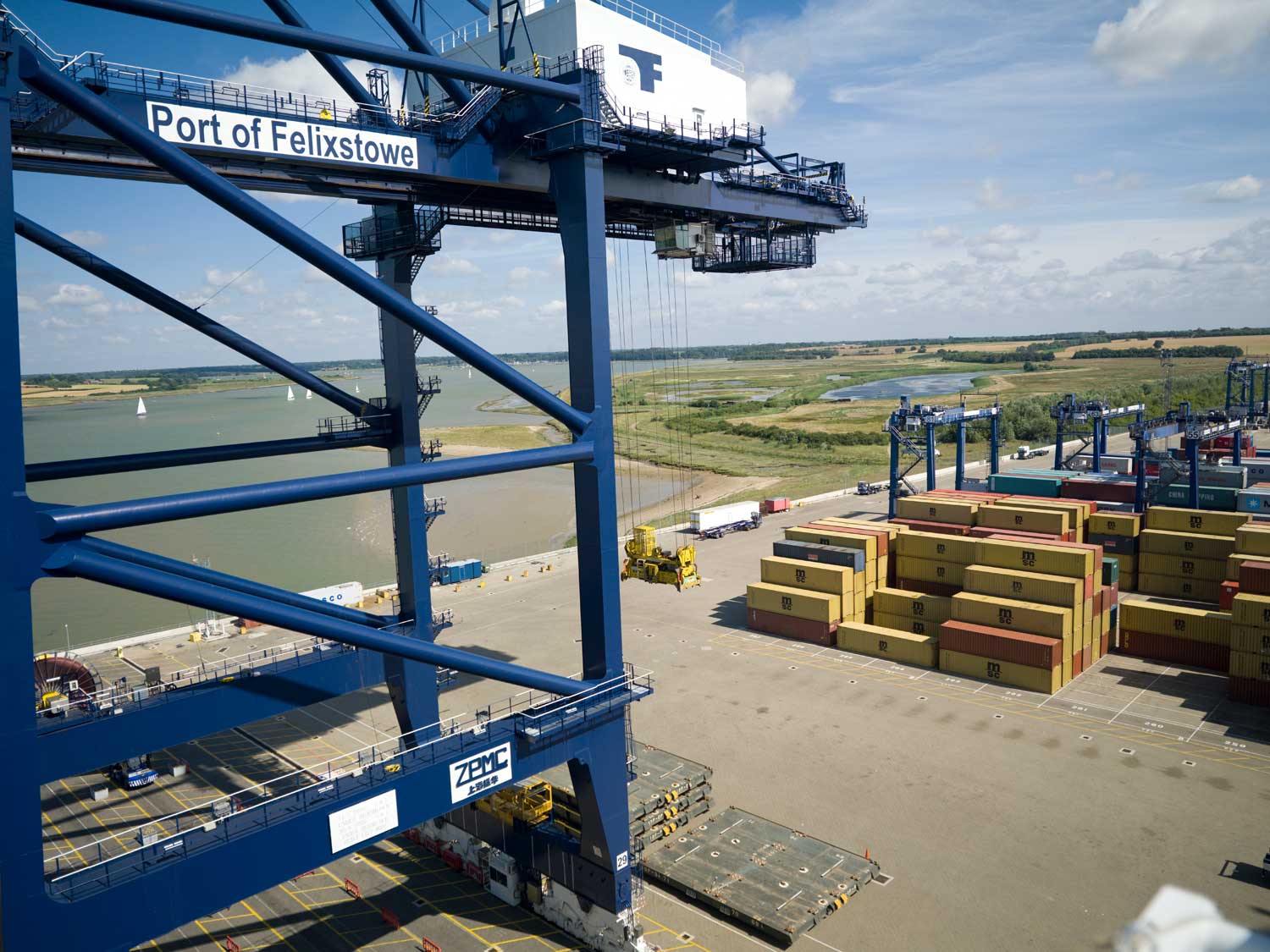
Strikes at the key container ports of Felixstowe and Liverpool commenced at the latter on the 19th September and will continue to the beginning of October, with dates overlapping for maximum disruption.

Dock workers began their planned two-week strike at Liverpool port on Monday, 19th September, while an eight-day at Felixstowe, the UK's busiest port, will begin on the 27th September.

The port of Liverpool strike will continue to the 3rd October, while the Felixstowe strike will run until the 5th October, which means that strike action will overlap for seven days, increasing the potential for disruption, while putting more pressure on London Gateway and Southampton.

The Unite Union blamed the Felixstowe Dock and Railway Company for unilaterally ending pay talks, after refusing to improve its pay offer and imposing a pay deal of 7% on the workforce.

The 7% increase was already rejected in August, which resulted in an eight-day strike at Felixstowe between Monday 22nd August and Monday 29th August.

Unite members at Liverpool port rejected a pay increase of 8.3% and a one-off payment of £750, stating that the wage increase would be a pay cut in real terms, with the union seeking a deal iro 20%.

Peel Ports argued that the basic pay of their Liverpool employees has increased above inflation by 16-26% every year for over a decade. 

The previous Felixstowe strike saw vessel calls drop from 29 to 5, with many carriers calling at alternative ports or just delaying calls to avoid disruption.

The first Felixstowe strike happened before peak shipping really got underway, but these walkouts in Suffolk and Liverpool coincide with the beginning of the peak arrivals, in late September and early October.

As with earlier disputes, we will be focused on clearing cargo from terminals ahead of strike dates. We will make use of London Gateway and Southampton when appropriate and consider alternatives like Rotterdam or Hamburg, should the situation warrant.

We are in continuous contact with all our shipping line partners to assess their contingency plans and mitigate the impact of these strikes.

We will continue to monitor and manage the emerging situation and will keep you updated should there be any significant developments.

As with previous industrial action, we are well prepared, with contingency plans in place to protect supply chains and work around points of disruption.

rail freight

Potentially disruptive rail strike averted in US, while, unfortunately, UK braces for more

President Biden’s administration has averted a rail strike that would have caused further issues within the country’s fragile supply chain infrastructure, while rail strikes will recommence  in the UK from October, following the recent deferment of the original announced action.

US shippers and retailers had warned of the negative effects of a rail strike and the ‘11th hour’ contract agreement brokered by Biden’s team shows that the White House was particularly sensitive to the issue, as any strike would have had a hugely negative impact on the pending midterm elections.

Freight railroads and unions reached the tentative contract agreement for 60,000 employees just hours before a strike or lockout could have happened from midnight last Friday.

The deal brokered by the Biden administration averts a strike that had the potential to impact the country’s supply chain, by disrupting the movement of containers inland and the positioning of products throughout the country.

Shippers are relieved that the devastating nationwide rail strike has been avoided, with many applauding the Biden administration’s intervention, at a time when high inflation and economic uncertainty are challenging consumer budgets and putting business resiliency at risk.

Confidence in rail freight transportation is higher in the wake of the tentative deal and with many of the biggest volume shippers moving freight worth billions of dollars via the rail network, their dependency on reliable services is absolute.

The tentative deal means railroads and ports can unwind the contingency plans they had begun to implement ahead of the strike deadline, with inland ports resuming normal operations.

However, train strikes are set to resume in the UK, after unions cancelled their most recent planned action following the Queen’s death, with ASLEF train driver members at 12 rail companies set to strike on Saturday 1st October and Wednesday 5th October. This does also effect the movement of containers throughout the UK and puts further pressure on the inland logistics required for export and import movements, including an upsurge in demand for pure road transport, especially if the strikes are longer than 24 hours.

The Rail, Maritime and Transport (RMT) union has also announced a strike for the 1st October among its members at Network Rail and 14 train companies.

Workers are striking over pay and conditions, with unions objecting to pay offers that sit well below inflation.

RMT general secretary Mick Lynch said: “We will continue to negotiate in good faith, but the employers and government need to understand our industrial campaign will continue for as long as it takes.”

Previous rail strikes have had restricted direct impact on our container movements, but we monitor the situation closely and our transport team work closely with our rail service providers, to work around potential disruption.

If you have any questions, concerns, or would like any further information regarding the situation in the United States, please don’t hesitate to contact Kevin Lake, who leads our North American operations. 

Mojave

US inland port will reduce pressure on Los Angeles and Long Beach

The Mojave Inland Port site is adjacent to the Mojave Air and Space Port, a fully operational airport capable of accommodating large cargo aircraft, with a Union Pacific rail line running through the site and the capacity to handle up to 3,600 trucks a day and three million containers per year once operational.

The project received approval from officials in California to move forward with the transportation and logistics hub, to provide a critical relief valve for the West Coast gateways, that have been continuing to choke with container traffic and have run out of land, to add capacity.

The Mojave Inland Port will be located 90 miles west of the ports in the Mojave Desert, on 400 acres of land, with the project costing an estimated $75 million, that is being privately financed.

The new inland port will save shippers time and money by moving their containers speedily, it is claimed inside three hours, instead of sitting in the port or terminals for days or weeks waiting to be transported.

One of the major causes of port congestion on the west coast is the number of containers waiting to be transported, with more than 33,700 designated for rail sitting on the Port of Los Angeles docks, nearly four times the number that would typically be waiting on a recent survey.

The Port of Los Angeles, America’s largest container port, handled 10.7 million container units in 2021, the busiest calendar year in the port’s 115-year history and Long Beach set a new record in 2021 by moving 9.38 million cargo containers, up 15.7% on 2020 volumes.

With no letup in container traffic since the beginning of the year, the ports reported record container movements in July which continued robustly in August, with both ports very interested in the project and encouraging of the development.

Mario Cordero, executive director of the Port of Long Beach, said he supports the Mojave Inland Port project. “The Mojave Inland Port is the type of innovative solution that will alleviate congestion and allow dockworkers to do their jobs more efficiently, getting goods to businesses and consumers faster.”

On the 9th August officials in Kern County, where the inland port site is located, issued permits for its zoning and site plans, with building permits the next step and a groundbreaking scheduled for next year. The desert port is scheduled to become fully operational in 2024.

The Mojave Inland Port will service containers transporting consumer goods from Asia, which represents 40% of the freight that moves through the ports of Los Angeles and Long Beach.

If this programme is successful we suspect that it will be emulated globally, including in Europe, to move container holding facilities inland. It is one that is worth noting and watching, for slicker supply chains reliant on an ocean freight model.

We always explore contingency opportunities that deliver product to market in the USA, avoiding congestion and delay. We will monitor the progress of this project and will engage with the executive team at an appropriate time.

If you trade with the United States and would like to explore our capability, please contact Kevin Lake, who leads our North American operations.