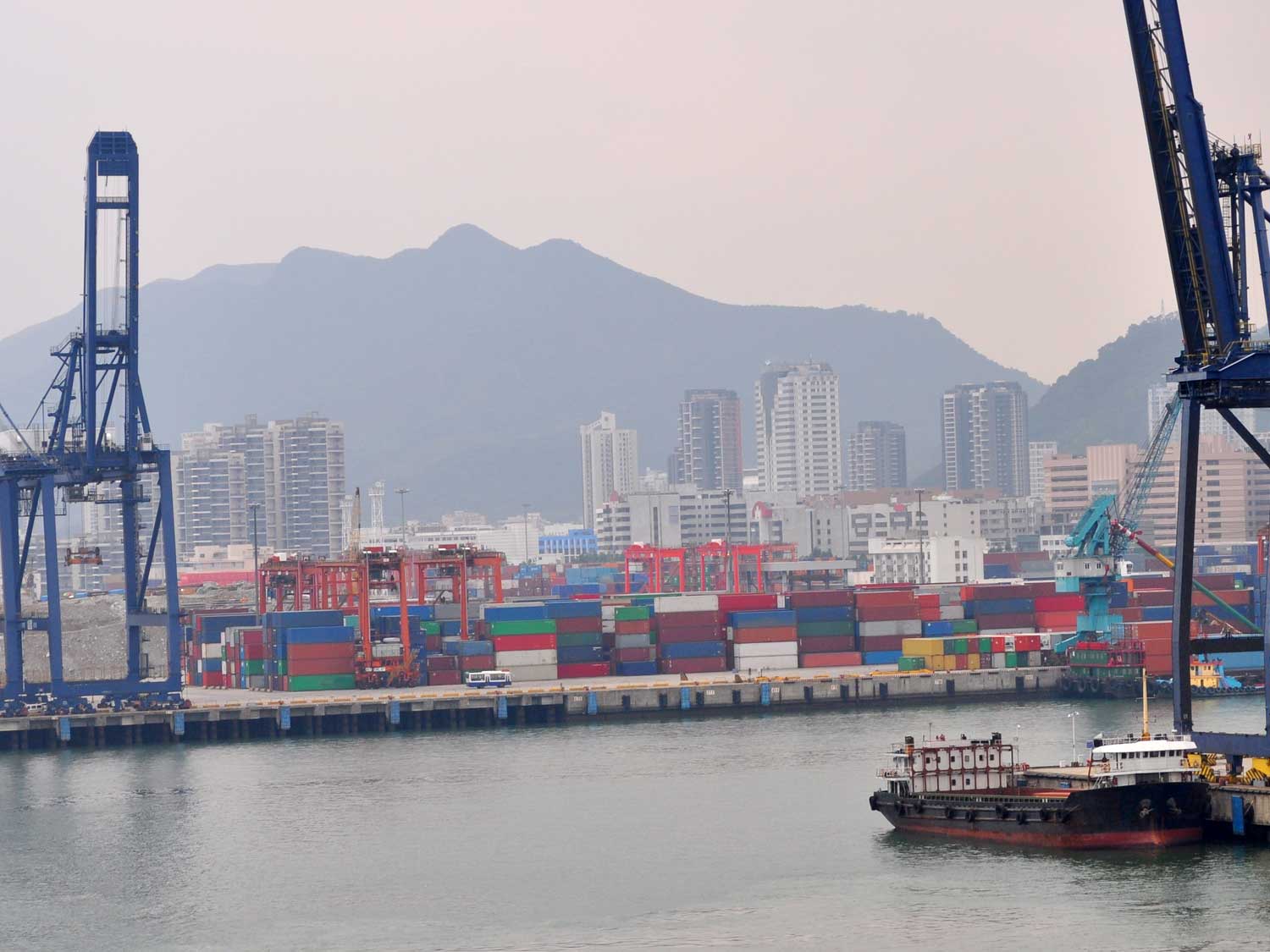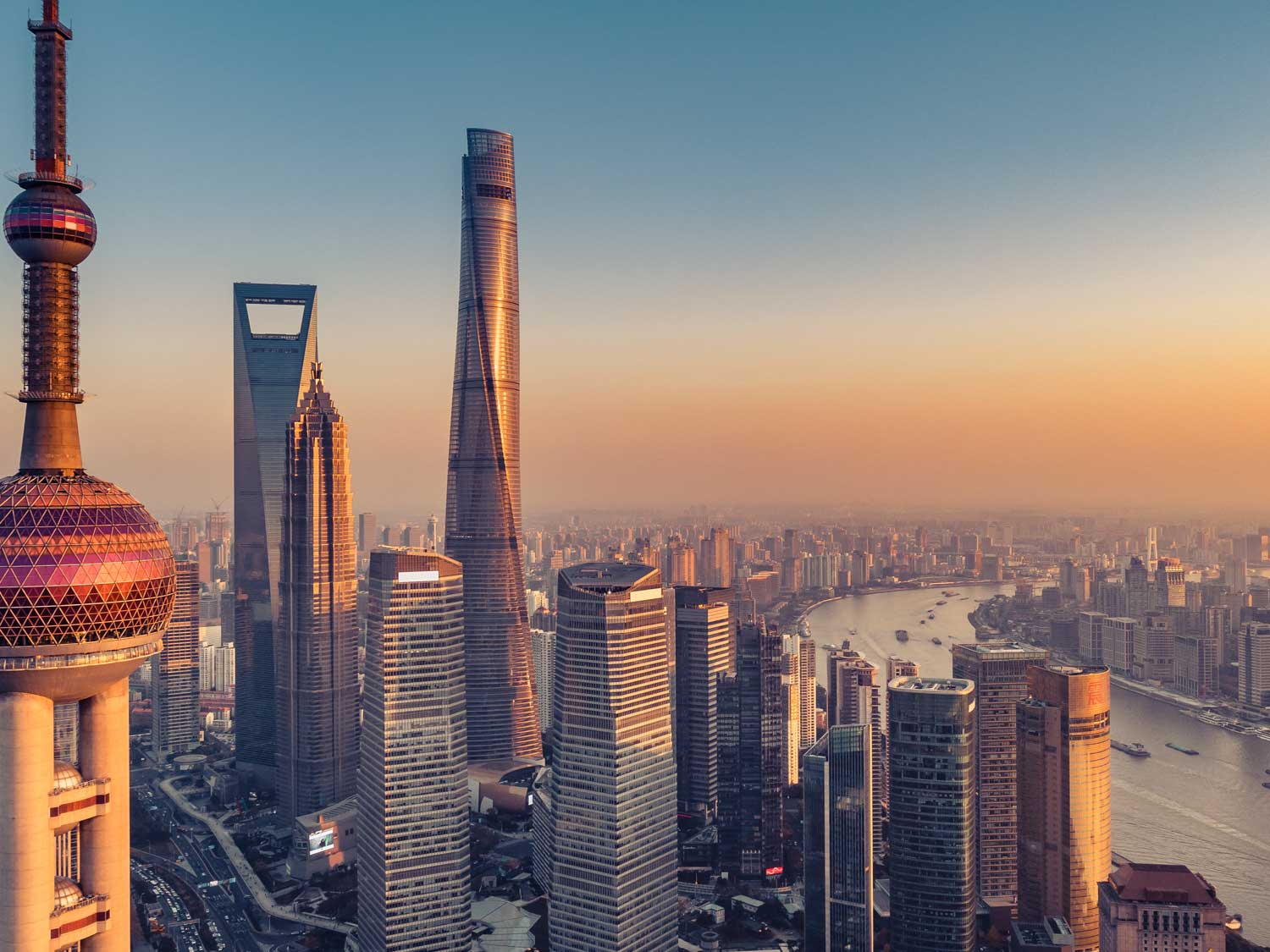
Shanghai

<strong>Brighter looking future for China and Asia</strong>

The sidewalk booths, where residents took compulsory COVID tests almost daily, have gone and queues are again forming outside restaurants, while face masks, which were omnipresent for nearly three years, have almost disappeared, but some challenges remain.

China’s Centre for Disease Control (CDC) said that there are no new COVID variants circulating in China and research published in the Lancet Medical Journal, confirmed that no new variants had emerged. Two weeks ago, the Communist Party of China declared victory over COVID-19 and the General Administration of Customs (GAC) announced last week, that they will no longer require COVID prevention measures for imports from the 1st March onward.

South Korea has already lifted testing requirements for travellers from China and from the 16th February, the EU phased out testing requirements that were imposed on travellers from China, with Chinese and foreign airlines increasing the number of international flights that link China with the rest of the world.

In view of the faster-than-expected recovery of consumption and other activities, rating agency Fitch has revised its growth forecast for China to 5.0% from 4.1%.

Shanghai will be a critical factor for reviving growth, as the city contributes more to China’s economy than any other and Shanghai is eager to court foreign business, with Apple’s CEO Tim Cook expected to visit in March.

Chinese factory owners and exporters are looking to woo back there overseas buyers, after three years of effective shutdown under Beijing’s zero-COVID policy, with delegations visiting trade shows across the US and Europe to drum up business.

Factory production was disrupted by rolling lockdowns, rising shipping costs delayed orders and geopolitical tensions, with China’s exports dropping 9.9% year on year in December, as global inflation and interest rate rises dampened demand.

The worst of the economic headwinds that faced Asia last year have started to fade and global financial conditions have eased, food and oil prices are down, and China’s economy is rebounding.

With growth across Asia set to accelerate to 4.7% this year from 3.8% in 2022, this will make it by far the most dynamic of the world’s major regions and a bright spot in a slowing global economy.

Despite their economic challenges, with pandemic supply-chain disruptions fading, China and India are expected to contribute more than half of global growth this year, with the rest of Asia contributing an additional quarter. 

Cambodia, Indonesia, Malaysia, the Philippines, Thailand, and Vietnam are already back to their robust pre-pandemic growth.

As new opportunities to trade with China, India and South East Asia emerge, we have fixed price and long-term capacity agreements in place with our partner carriers, to give you peace of mind, with resilient, consistent and reliable supply chain solutions.

Metro’s cloud-based supply chain management platform, MVT, simplifies global trading, by making every milestone and participant in the supply chain transparent and controllable, down to individual SKU level.

To discuss how our technology could support your supply chain, EMAIL Simon George our Technical Solutions Director or EMAIL Elliot Carlile to discover all options relating to current freight profile movements to and from China and Asia.
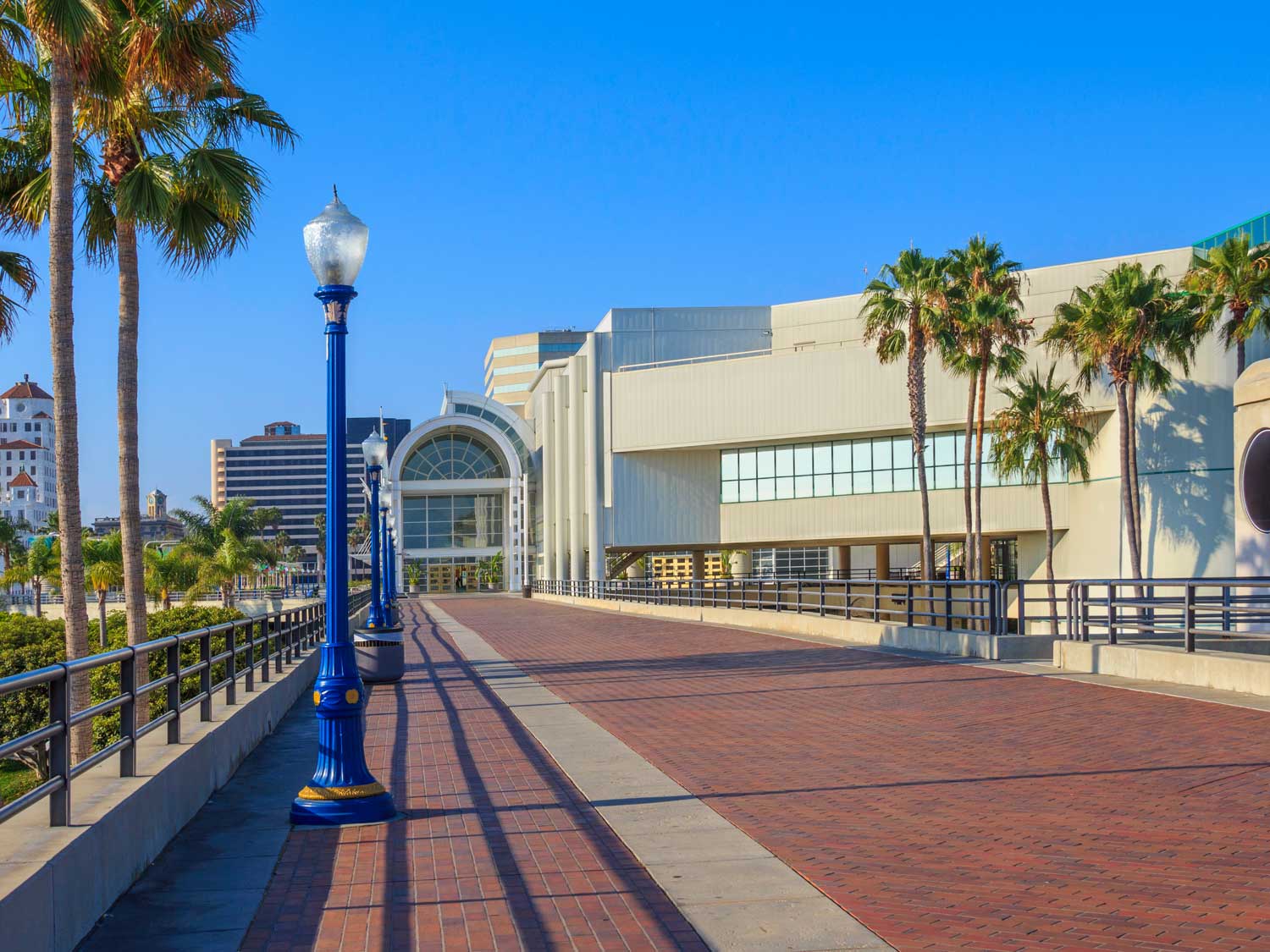
Long Beach Convention Centre

<strong>Making visibility a strategic tool</strong>

Now in its 22nd year, the annual TPM conference, in Long Beach California, considers the pressing supply chain and freight challenges affecting shippers globally. TPM attracts the most senior-level audience in the industry, including an executive team from Metro and is considered to be the ‘Davos’ of the shipping world.

Founded in 2001, TPM feature a rigorous program of topics and challenges, developed by specialised journalists covering international transportation and logistics. 

TPM annually presents the industry's most in-depth program, delving into the most pressing challenges affecting shippers and is a platform for a week of essential and intensive networking, negotiations, and relationship building among shippers, carriers, forwarders, technology providers, trucking operators, railroads, ports, terminals, and many other market participants.

Shippers who survived the pandemics’s supply chain disruptions did so by achieving visibility, but to improve their performance going forward, they must better manage the data they receive, participants in a TPM technology seminar agreed. 

Supply chain visibility became a priority challenge for importers during the pandemic, because many over-ordered merchandise, to provide buffer stock, against freight and logistics disruptions. 

With inventory held at origin, in containers, at transit points and warehouses throughout their networks, many shippers found they did not have the visibility they needed, at the locations where their inventory was being stored. 

While shippers may believe that their technology provider’s single platform collects all the data needed to track shipments throughout the supply chain, the reality is that the critical data generators are usually the shipping lines, airlines, logistics operators and warehouses moving or storing their cargo and that data is not being collated in real-time. 

Shippers learned over the past two years that they need an accurate view of their global supply chain, to overcome disruptions as they occur, using available information to make better, faster decisions and many technology providers were not up to the task.  

Metro is increasing use of predictive and AI technology, to collate real-time carrier updates, to maintain accurate vessel ETA’s, data for purchase order management, route optimisation and supply chain visibility. 

We are developing our telematics capability, to offer shippers a much more effective alternative to the data aggregators, who are quite simply compiling data from open APIs and screen scraping historic data. We favour the ‘smart container’ technology that a number of carriers are developing, and are actively involved with UN CEFACT in creating industry standards for sharing this data.

In addition to creating visibility along the supply chain, Metro’s technical solutions team have worked hard to ensure the quality of data and provide a suite of reporting tools that make it easier to interpret and implement actions in a meaningful way.  

To learn more or to arrange a demo EMAIL Simon George, Technical Solutions Director.

US graph

<b>US freight market round-up</b>

There was no pre-CNY transpacific rush this year and with China re-opening, factories are expected to open again in the second half of February, which is why carriers have tried to maintain rates. The CNY has given US ports a respite and most are now clear, with hardly any ships waiting outside West Coast ports and very few off the East Coast and Gulf.

Asia

The traditional ex-Asia space and volume crunch around Chinese New Year was extremely muted and market capacity remained higher than previous years, so we expect blank sailings to continue, as the lines attempt to stabilise rates.

Maersk’s 2022 Q4 volumes were down 14% on 2021 and it announced on Monday the “temporary suspension” of its TP20 transpacific loop, while OOCL’s North American liftings were down 16% over the year.

Despite US retail sales performing well in 2022, amidst higher inflation, global economic turmoil is adding to the uncertainty as to how strong demand from Asia will be in the second half of this year, with the lines struggling to balance transpacific capacity, if demand does not pick up in the summer-fall peak season. 

In the current transpacific environment in which spot rates and demand have fallen dramatically, the focus is now on cutting additional fees, such as detention charges for the late return of equipment, which can add hundreds of dollars to the total transportation cost. 

Shippers want more free storage days and the container shipping lines say (off-the-record) that they’re willing to be flexible on detention if they receive compensatory freight rates.

The container shipping lines claim that their problems have been amplified because their operational and administration costs increased significantly during the pandemic, and while freight rates have been dropping, the carriers’ per-unit costs have increased. On the eastbound transpacific trade-lane the lines claim units costs are up by >40% due to vessel backlogs and inland bottlenecks that add delays and costs to the supply chain, rising prices for bunker and diesel fuel, and administrative costs.

Detention charges normally kick in after four or five days and the daily costs for chassis, which the lines lease from intermodal equipment providers, vary depending upon the contractual relationship they have with the equipment lessor. Other costs are more nebulous, such as the potential revenue that is lost when the equipment sits idle at a warehouse for days or weeks. 

Carriers tend to be more bullish about demurrage charges, which are levied by the terminals when inbound loaded containers are left on the docks after their free days.

Transatlantic

The number of blank sailings from Europe to the U.S. has been minimal despite demand and rates softening and capacity is set to increase as MSC and Maersk are adding more vessels in the Mediterranean loops in the next few weeks.

Falling volumes has assisted the easing of congestion in U.S. East Coast (USEC) and U.S. West Coast (USWC) ports, with equipment availability getting better as congestion eases. 

Low empty stacks at inland depots are becoming established in some areas, but we still recommend equipment pick-up from the Port of Loading if possible and early shipment booking.

From the U.S. to Europe there is plenty of USEC capacity available, but services from Gulf and USWC ports remain tight and the market is stable. Gulf Coast to Europe services continue to have medium to high utilisation levels, though this is softening with the reintroduction of capacity.

ILWU

During the nine-month-long impasse in negotiations, between the International Longshore and Warehouse Union (ILWU) and the Pacific Maritime Association (PMA) dockworkers have engaged in unofficial actions at ports in Southern California, Northern California, and the Pacific Northwest that, although limited in scope and duration, have nonetheless caused disruptions in cargo handling. 

Shippers will continue to route cargo away from the West Coast, until the PMA and ILWU reach a contract settlement.  

Since last Autumn, Los Angeles-Long Beach and the Northwest Seaport Alliance of Seattle and Tacoma have registered year-over-year declines in imports from Asia, while imports through major East and Gulf coast ports have increased.

Air

Capacity from Asia continues to outstrip demand, which export demand from the U.S. remains steady to all markets, with airports running at a normal pace.

Capacity is opening up further, especially into Europe and rates remain stable week over week.

We negotiate long-term and FAK contracts with shipping lines across all three alliances to secure space and rates, so that we can provide the best alternatives and options, whatever the situation.

We have avoided huge detention and demurrage costs over the last few years for our customers, through slick entry to and from the USA markets and utilising our own facilities, or partner container yards, to limit the impact.

To learn how we can support your trade with the United States, or to learn more about our ocean and air solutions, please EMAIL our Chief Commercial Officer, Andy Smith. 

Yantian 3

<strong>Asia blanked sailings, rolled cargo and detours</strong>

Shipping lines have cancelled almost 30% of pre and post Chinese New Year sailings from Asia, with THE Alliance cutting 36% to Europe and diverting backhaul sailings around the Cape of Good Hope, which adds two weeks transit time to China. 

In a normal year, the weeks building up to China’s Lunar New Year holiday see a spike in export shipping demand from China to most global destinations, including the UK and Europe, as orders are shipped before the factories close and production halts. This year, however, there has been no demand spike and carriers across the three alliances have cut 15 westbound departures, with just 69 ships departing on a round-trip to North Europe or the Mediterranean since the beginning of the year and the start of CNY. 

In the period from 1st January to 17th February, Alphaliner calculated that the three big carrier alliances are planning to skip 27% of their originally scheduled Asia – Europe sailings.

Across the Alliances, there has been a 29% reduction in the number of 2M sailings in the first seven weeks of the year, while OCEAN Alliance has reduced the number of westbound voyages by 23% and THE Alliance has cut most sailings from the Far East to Europe, with a 36% reduction. This is partly due to the fact that their carriers are diverting more backhaul sailings from the Suez Canal to the Cape of Good Hope, which adds two weeks to vessel arrivals back in China.

The shipping lines have also been creating roll pools, so that vessels leaving during the CNY holidays have boxes to load, while factories are closed. This occurs every year but, with less demand, it is having less impact than the previous three to four years.

Despite all the cancelled sailings and diversions, Hapag Lloyd has announced a new Asia-Europe service, FE9, that is actually a slot charter agreement with an alliance competitor, CMA-CGM.

Prior to the current three alliance setup, the shipping lines operated a complex web of slot charter agreements and it seems likely that the current high sailing cancellation levels are reducing service coverage, and an obvious solution for a carrier is this type of cooperation, that we may see accelerate in the wake of the 2M break between MSC and Maersk as they part company at the end of their 10 year agreement.

The 2M break may even result in a reshuffle of alliances, as carriers reshape the industry over the coming years on all trades. Although the focus has always been on the lucrative Asian markets - the transpacific and westbound European trades are the largest volume global lanes- one thing is for sure, there will be a lot more change, as a consequence of the unravelling situation in container shipping. It looks like a case of 'from boom to bust’ – although hopefully not quite so dramatic as we saw with Hanjin in 2016.

We work closely with our partners in China to monitor which lines are rolling cargo, and use our space agreements across all alliances wisely to ensure our containers are always lifted, though expectations are that roll pools will be cleared through weeks 5 to 8.

To learn how we can help you avoid blanked sailings and rolled cargo, or to request our regular ocean market report, please EMAIL our chief commercial officer, Andy Smith, who can advise on the best solutions for your ocean supply chain. We will always deliver the most appropriate service in an ever disrupted market and provide all options available to ensure that your product reaches the right destination, at the right time and at the right cost. Considered solutions are what we achieve.