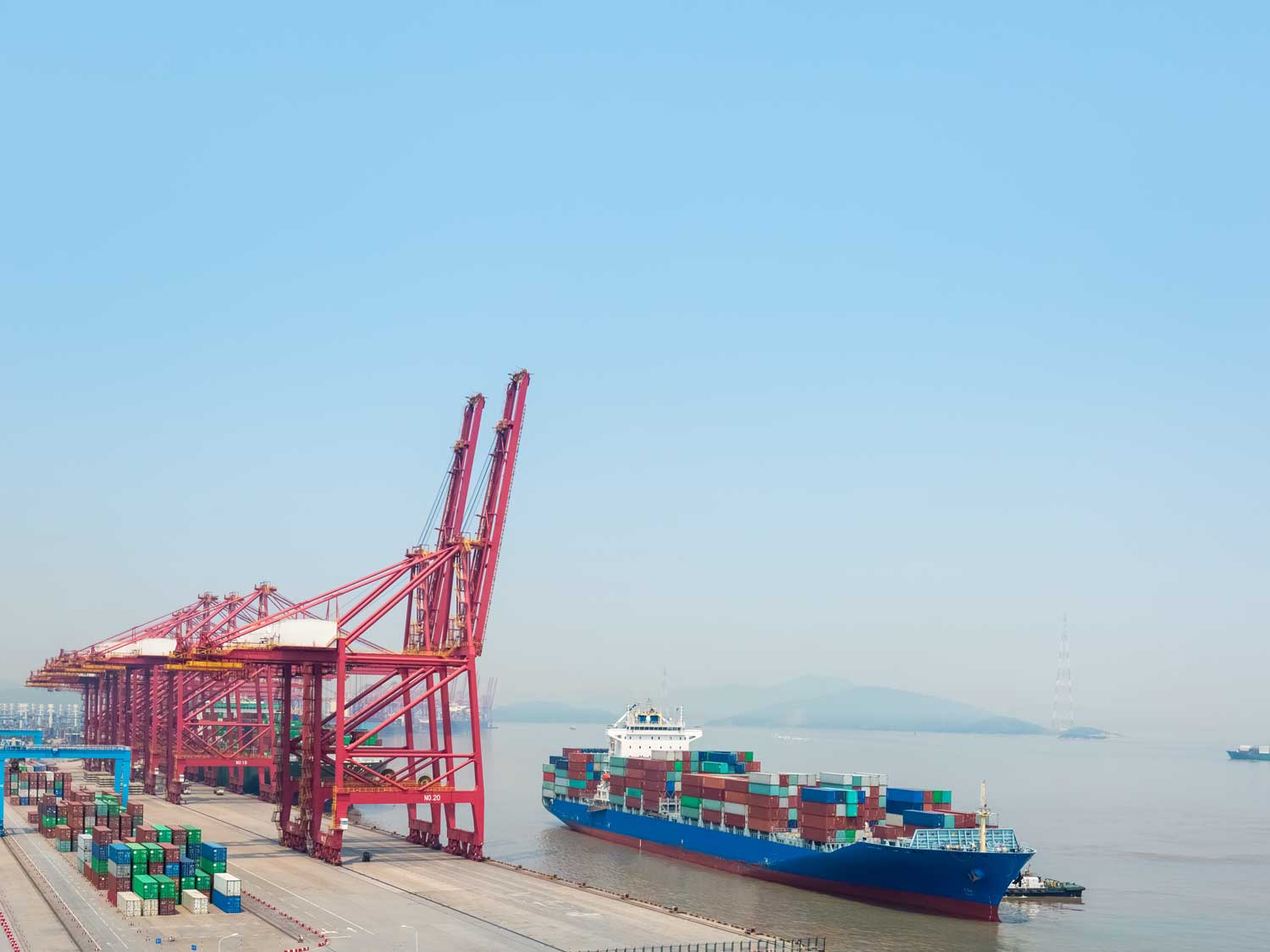
Ningbo

Port congestion eases, but challenges will continue to remain

Asias largest ports are showing signs that congestion is easing ahead of the Christmas holiday season, with Shanghai traffic declining 0.2%, Hong Kong ship count dropping 10.4% and Singapore dropping 14.7% according to an analysis by Bloomberg.

While any easing of volume is welcome, Bloomberg’s results are based on a single week’s traffic and the latest data from the World Container Index shows basically no changes in pricing at all compared to the previous week.

It would be great to think that Bloomberg’s advisory, that a drop in volumes, is the beginning of a large decline and a reversal to normal rate levels, but we would suggest caution in concluding this just yet. Or for the foreseeable future – as there are many mixed messages currently – and most are based on short term data and not considering the long term effects and impact, as an observation.

It seems more likely that the worst pressure on the trans-Pacific trade might have been alleviated, but the global capacity shortage persists and we cannot see a similar impact on Asia-Europe or Europe-North America.

Bad weather, accidents, COVID-related work constraints and increasing spending, due to COVID19 related consumer demand, have contributed to Chinese terminal lockdowns and logistical port challenges for almost two years, resulting in record levels of congestion, from manufacturing hubs in China to import gateways in the US and Northwest Europe.

Comparing levels of container congestion across China, 2021 started at similar levels to the previous two years, with the count of vessels waiting averaging just 88 per day between January and April. However, over the past six months, there has been a significant increase in the number of vessels waiting and numbers are still higher than they were at the beginning of the year.

Levels of congestion in China peaked at the end of July at 361 vessels, as typhoon In-Fa struck. With vessels unable to safely enter a port, queues built up and caused further disruptions to schedules. Since then, over the past three months, we have seen Container congestion gradually decrease in China, but there were still around 180 vessels, a total of 936,073 TEU, waiting off China at the end of last month.

Delays are still being felt in the UK, as retailers try to fill shelves in time for Christmas, with 40% of the UK’s containerised imports moving through Felixstowe alone.

The port has received around 45% fewer container ships this month compared to the same period in 2020, and around 50% less than the same period in 2019, which reflects carriers missing Felixstowe on rotation and suggests that the port is struggling with turnaround times, as a severe shortage of HGV drivers and terminal congestion means boxes are not leaving port quickly enough to clear space for the return of empty containers. None of this helps the disruption and challenges being experienced daily, which seem to be relentless.

While the current drop in Asian volumes is most likely a blip, it may be that we will see a lull in demand in the New Year, with the Christmas period ending and Chinese New Year.

This could ease congestion slightly, but if the high number of vessels waiting remains, it’s possible that clearing the backlog of vessels may extend into the second quarter of 2022.

Importers and especially those shipping via Felixstowe stand to benefit significantly from our new 750,000 sq ft and 100K pallet position mega distribution centre, located beside the container port.

The new Felixstowe Mega Distribution Centre offers the smart executive access to plenty of space and the opportunity to cut costs, simplify processes and improve cash flow. 

We are creative with our solutions, investments and customer engagement. So that is what you need, we deliver, to build satisfaction in the long and short term. 

Please contact Grant Liddell to discuss further – it will be productive and have a meaningful outcome.
4fold 1

Foldable containers may be cure. Just not yet…

The bulk of the world’s trade is shipped in intermodal shipping containers, which have remained largely unchanged since IMO standardisation 50 years ago, but innovation may be the key to reducing supply chain congestion. Is this a new era of global container shipping?

Few tools of the global economy have survived without major innovations as long as the shipping container and the continuing pandemic-linked supply chain disruption is presenting a significant opportunity to address that.

As ports, terminals and warehouses get congested with containers, both empty and full, the conditions are increasingly favourable for a product innovation that failed to catch on before the pandemic. Shipping containers that collapse to as much as one-fifth their usual size.

The cost of repositioning empty containers to places where they’ll be loaded is about $20 billion, according to the Boston Consulting Group and many will spend days and weeks taking up space in already-jammed holding areas and depots, compounding delays along supply chains.

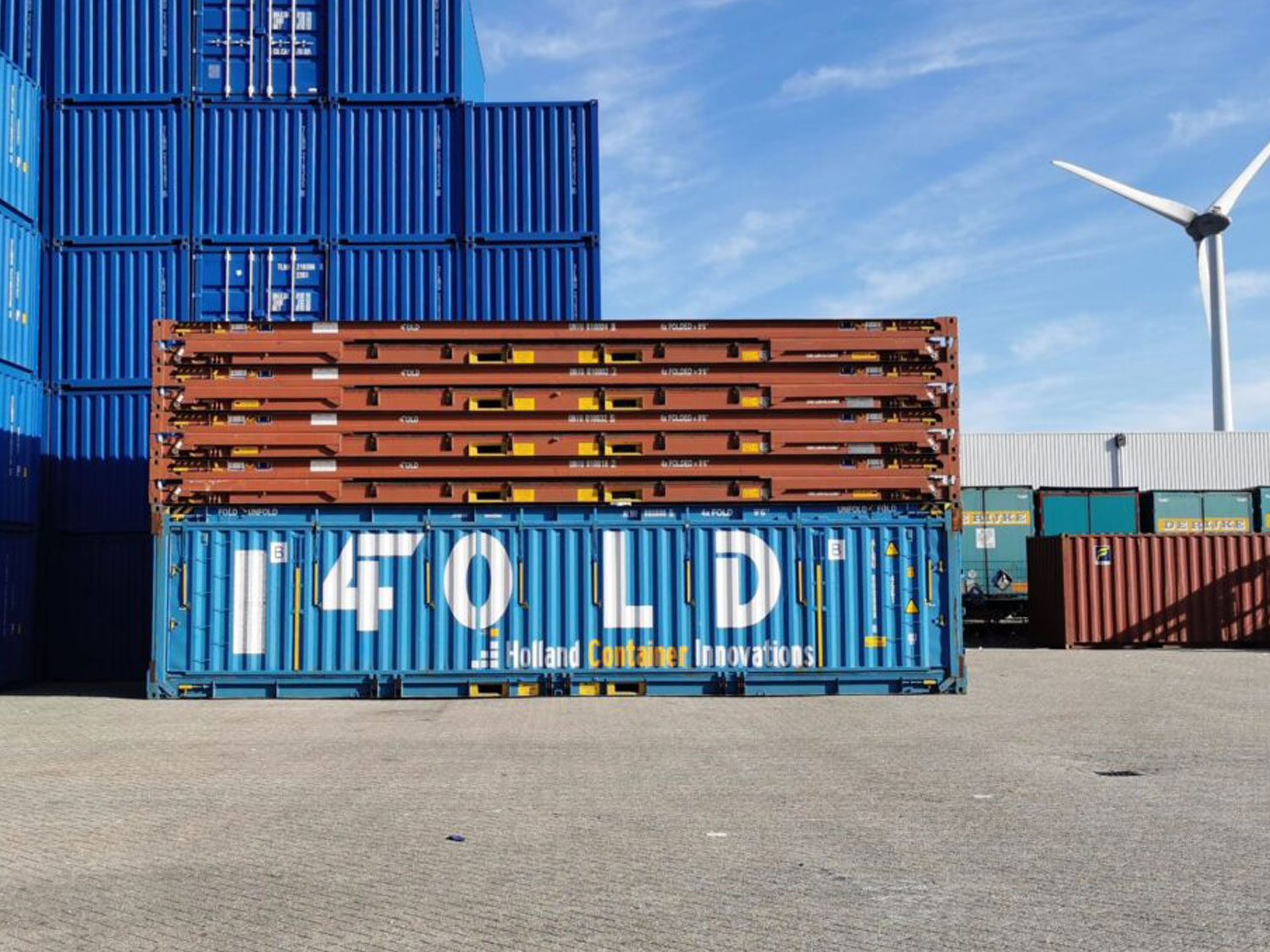
In 2013, the Dutch container company 4Fold’s 40-foot metal boxes became the first foldable units to get certification from the Container Safety Convention and International Organisation for Standardisation, meeting standards required by shipping lines, terminals and rail companies.

Today more than 15 carriers, shipping via 60 ports worldwide are testing the Delft, Netherlands-based company’s environmentally friendly containers that can be folded into a quarter of their volume, taking up less space on trucks, ships and docks.

The world’s largest shipping line, Maersk, has referred to foldable containers as the “dream of the shipping industry” and leading consumer-goods producers, including Procter & Gamble, are also testing the technology.

Despite sparking hope among carriers and shippers, as the answer to making equipment available more quickly, higher upfront costs and hesitancy to turn to a new business model have so far kept foldable containers from becoming mainstream.

As companies find themselves more pressed to find answers to supply-chain congestion, the trade-offs of investing in a new technology might become smaller. The US-based foldable-container company Staxxon LLC gained full certification for its 20’ product at the height of the pandemic and is planning to put them on the market next year, suggesting it has dozens of potential buyers who’ve indicated interest.

Carriers could save up to 57% in inland transportation costs by relying on foldable containers, according to Singapore University. And despite higher purchase and annual maintenance costs, foldable units would still be a more cost-beneficial option, their research found.

The challenge is defining the optimal mix of foldable and regular containers that carriers should maintain in their inventory.

Too many and the purchase costs could offset the benefits. Too few and you would struggle to find three other foldable containers to create the single unit, that generates efficiency and cost-savings.

Metro are innovators and we will be watching the development of this story with interest. And ready to actively participate in testing, evaluating or investing, in the best interests of our customers. 

We also own many of thousands of containers ourselves within our group of businesses – so know what we are talking about. Please direct any questions or requests for creative solutions to Elliot Carlile who is heading up the programme for Metro clients.

Header image courtesy of HOLLAND CONTAINER INNOVATIONS NEDERLAND B.V.

The state of sea freight

Ocean freight carrier profits grow as global supply chain woes continue

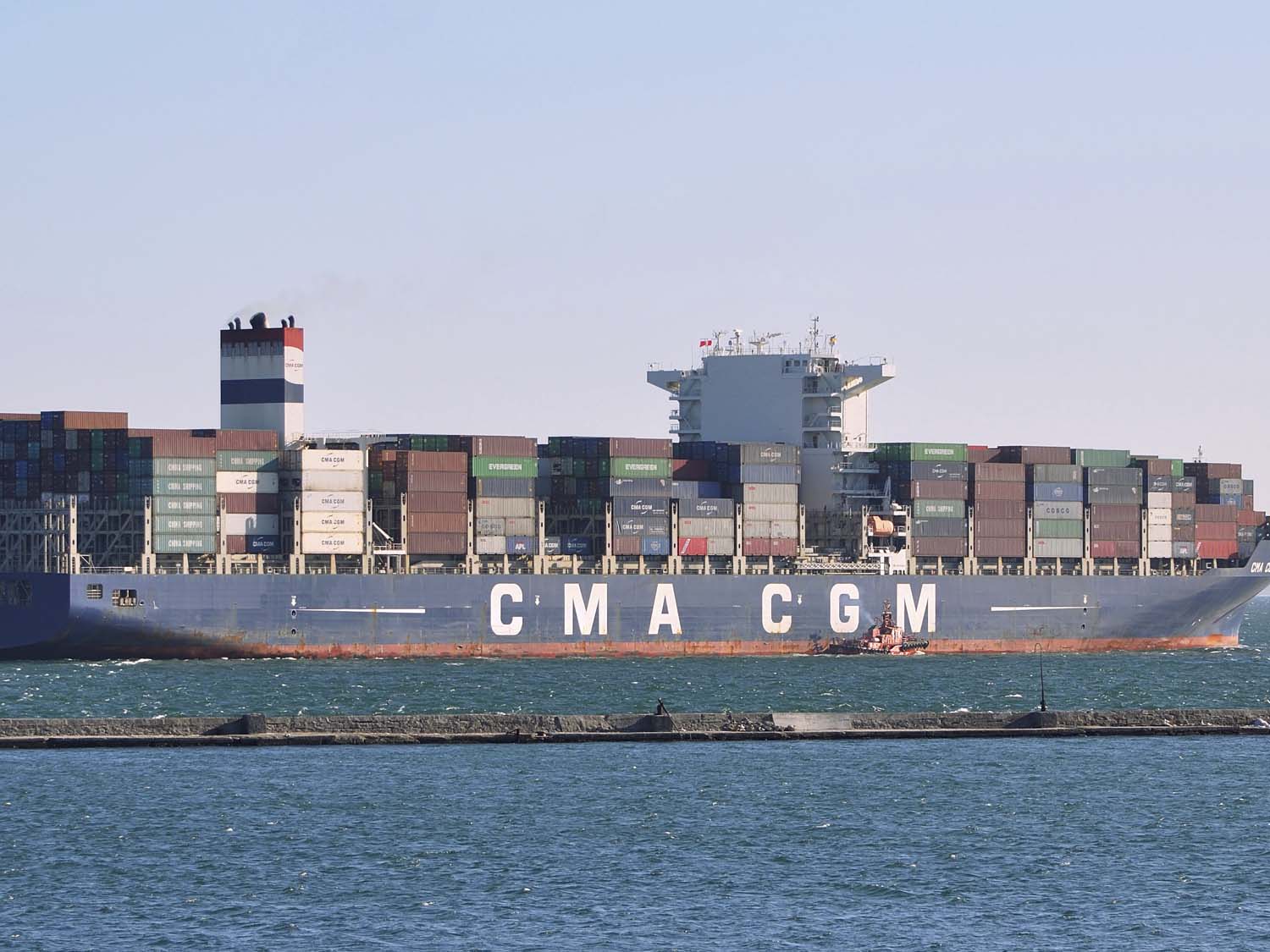
CMA CGM has published their Q3 results and in line with the other major Asia/Europe and trans-Atlantic carriers, they have made an extremely high degree of profit, due to the continued demand for space, exacerbated by global disruption diminishing the amount of vessel space available.

The CMA CGM group reported a net profit of USD 5.64bn for the third quarter, narrowly beating the Maersk group, currently the largest global container carrier.

Despite operating one million less teu than Maersk, the French line reported a greater increase in revenue versus the previous three months: group sales rose 23% quarter-on-quarter to USD 15.3bn; while Maersk reported a 17% revenue increase and a net profit of USD 5.46bn.

CMA CGM says it expects to achieve an even stronger financial performance in the fourth quarter.

Comparing performance between carriers based on Q3 2021 to Q3 2020: CMA CGM’s average revenue per TEU increased 107%; which is in line with Hapag-Lloyd which saw a 106% increase; and ahead of Maersk with a 90% increase; while ONE outperforms all with a 129% increase. Let’s conclude that asset owning shipping lines are reaping the benefits of their investments.

By contrast, the Global Freight Forwarding market contracted by -8.7% in 2020, recording its worst year since the 2009 financial crisis, as a direct result of the pandemic. The sea freight forwarding market contracted by -3.8% in 2020, but air freight forwarding suffered worse with a decline of -12.3%.

The freight forwarding market is expected to come back, with growth of 11.6% forecast for 2021, with an anticipated compound annual growth rate (CAGR) of 5% from 2020-2025, if and when volumes recover. This is without factoring in the impact of global macroeconomics and dynamics of consumer confidence, interest rate implications and available disposable income, in every country and territory.

The ocean carriers collectively are on a path for profits in excess of USD 150 billion this year, and higher from some sources, and the global container shipping market is anticipated to rise at a considerable rate between 2021 and 2025, progressing at a CAGR of 9% over the period, although this figure is likely to be exceeded by some margin.

Global supply chains are likely to be under intense and sustained pressure for some time yet, well into 2022 and beyond, and we will continue to share with you the most important developments so that you are informed and prepared to make critical decisions ahead of potential issues. 

We negotiate rate and volume agreements with carriers across all three alliances, which means we have the freedom to react to market conditions and changes. 

Please contact Elliot Carlile or Grant Liddell to discuss your supply chain expectations and deadlines to ensure your business is future proofed’ for the rest of 2021 and 2022.

container

Asia-Europe congestions adding to transit delays and schedule confusion

Congestion at both ends of the critical Asia-North Europe (this still includes the UK) shipping trade is wrecking vessel schedules, with the average delay of container ships completing a round-trip loop rising by over two weeks, as carriers skip congested ports at both ends, and quite often in between.

These extended transit time delays are removing much-needed capacity from the sea freight market, with analysts suggesting that the three alliances would need to add a further 44 ships of between 14,000 to 24,000 TEU to cover the delays and maintain a weekly sailing frequency on all 17 Asia-North Europe loops. 

In essence up to a quarter of total container shipping capacity has been removed, with the extended transit situation. The equivalent of parking up and idling 25% of the world’s global container shipping fleet to put it into perspective. Unbelievable a few years ago – but reality as of today.

Comparing the voyage durations for ships on the 17 Asia-North Europe loops arriving in Asia, for their next westbound sailing, during a week last month, shows that they needed up to 54 days additional time to complete a round trip, with delays averaging 18 days. This, therefore, affects both imports and exports – from and to everywhere – on the trade lanes between Europe and Asia. It is unavoidable not to.

Measuring the delays on a full round trip revealed the massive impact of port congestion on lines’ schedules, with an average of seven days’ delay for the OCEAN Alliance, 19 days for 2M, and 35 days for THE Alliance.

THE Alliance’s performance is particularly marked because it has not been skipping ports in Europe and trying to maintain its original rotation. But Rotterdam, Hamburg, and Antwerp have added significant delays because these ports were far more congested than smaller ports like Zeebrugge or Wilhelmshaven that are used by the OCEAN Alliance.

A significant and often overlooked factor in the operational stress that creates port congestion has been the excessive growth in call sizes over the past year and the sheer volume of containers that need to be loaded and discharged on a single vessel call.

While container ship volumes on the Asia-North Europe trade increased 11.3% year over year, this was just 2.8% above the 2019 total, but more vessels are also not a solution to the congestion. Due in part to the time between order, build and delivery of new vessels and in part because injecting more vessels would run the risk of simply compounding existing bottleneck problems. It’s a conundrum that is not easily solved.

Maersk warned, and other carriers followed, in an October market update that congestion would force them to join other carriers in implementing ad hoc port omissions, to try to maintain schedules, with extra loaders deployed to sweep up cargo and minimise the delays that customers are experiencing.

It does seem that decisions on port call omissions are not being communicated to freight booking desks and consequently, shippers are being offered space on sailings for which cargo may only arrive at the original destination port several weeks after the advertised date.

We have been offered space on MSC’s Shogun/Maersk’s AE1 sailing from China in early November, on the 19,224 TEU MSC Erica. MSC is advertising a transit time of 29 days to Felixstowe, while Maersk is quoting a transit time of 46 days for the same vessel.

We have seen similar errors from the Ocean Alliance and THE Alliance partners because their schedules have not been updated and it’s a major problem because shippers may make inventory calculations based on incorrect ETAs.

For the latest information and updates on your ocean freight planning and supply chain for the end of the year and 2022 please contact Chris Carlile or Grant Liddell for immediate advice and the latest intelligence relating to your global freight movements.