Outsourcing a crisis

The outsourcer’s outsourcers

We have been providing outsourcing services since our inception 40 years ago and this critical service has grown over four decades, with the development of our UK and two international business process outsource (BPO) operations.

Metro has spent 40 years managing and transforming the outsourced supply chains of ambitious globally trading businesses in the UK and overseas.

By taking responsibility for their supply chains our customers are free to concentrate on making their business successful, by seizing new sourcing opportunities, developing and creating new products, accessing new customers in new markets and generating economies of scale for further cost-saving. All unhindered with the complexities of how to transport their products around the world – that’s our contribution to their success!

Our documentation and process outsourcing solutions are entirely bespoke for each client, with a situation and needs analysis that reviews, audits and maps operations, financial and compliance tasks and requirements, to optimise documentation, streamline processes and, whenever possible, introduce digital efficiencies.

Paperless since the turn of the century, Metro’s ‘digital first’ mantra has seen the BPO team form very close links with their Technical Solutions colleagues, in seeking digital solutions for each new requirement.

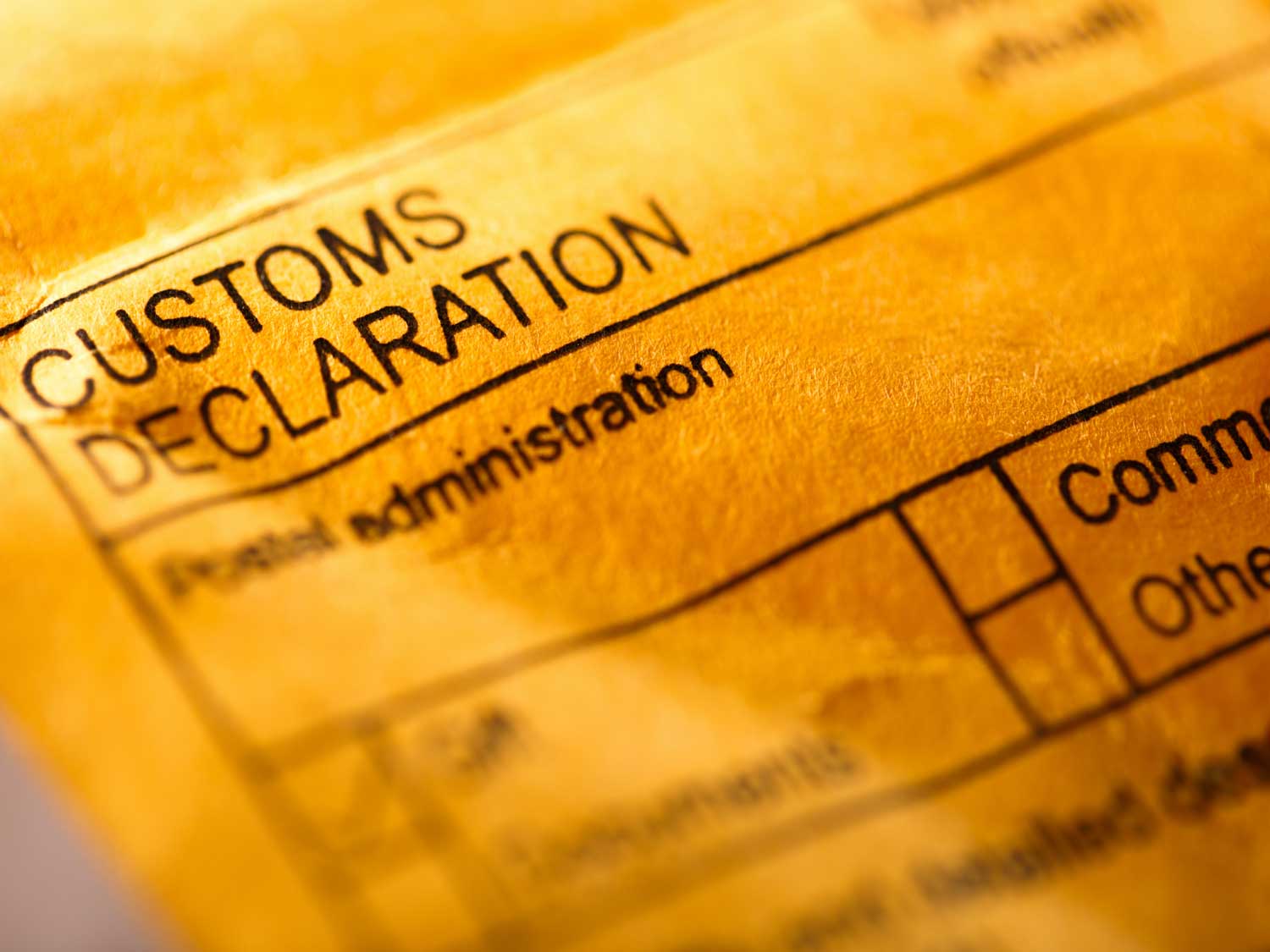
The correct paperwork and digital declaration is vital for every shipment and differs enormously by country, mode and product, so it is critical that we get it right, first time, every time, or we risk incurring delays, financial penalties, or worse. This has been magnified and become even more prevalent since leaving the EU, which Metro has developed a bespoke brokerage solution for, with many of our clients taking full advantage of our market leading customs solutions.

Our business process and outsource (BPO) function has grown consistently and currently completes in excess of 15,000 functions each week - equivalent to three-quarters of a million individual functions per annum - to expedite the global transport and border clearance of 1000’s of individual consignments of raw materials and finished goods every day.

The first Metro BPO operation was established in Malaysia in 1998 and absorbed into Metro, as MDATA in 2006. MDATA has since grown to over 30 team members, with more personnel scheduled to join with further expansion in 2021.

In 2018, following the EU exit referendum and in anticipation of the function capacity increase that Brexit would create, a further outsource operation, MISC, was added in India (now 40 strong and growing), together with a new dedicated BPO team in the UK, to coordinate activity and quality across the three sites.

Today the UKHQ based BPO team analyse new customer requirements, looking for  technical solutions that will streamline/standardise/digitise the process and then decide which location is best suited to process the functions.

In addition to devising, enhancing and allocating new process functions, UK BPO also ensure that workload capacity, customer requirements and quality are being met at each site and are in line with issued SOP’s and KPI’s. Every task is monitored and measured in real-time and where improvements can be made, they are.

Post-Brexit requirements have been particularly challenging, due to the massive surge of critical new and additional functions since the 1st January - requiring multiple shift patterns in three locations - complicated further by the COVID pandemic and the need to move all BPO personnel to home-working, at all locations globally. Even in those areas of India and Malaysia with limited digital infrastructure. 

By integrating systems and BPO team members in each location, we can digitise and automate function processing and data manipulation throughout the supply chain, to create the real-time visibility that improves agility, speed and quality, to optimise performance, drive productivity gains and cut operating costs.

We continue to invest in our global platforms and operations ensuring that we have 24 hour coverage every day of the week and year. Although this ‘unseen’ element of our model does not always get the recognition it should we are proud to have developed a Metro ethos and philosophy across the Globe in some of our major markets and lanes.

For further information please contact Andrew White or Simon George who will be delighted to discuss how we can assist you with your own requirements utilising our proven and established back office platforms.

Brokerage small

Using rules of origin effectively

Rules of origin determine where goods originate from and which are covered in preference agreements. It is not just where goods have been shipped or bought from, with the potential for multiple origins to consider and there can be severe financial penalties for getting it wrong.

The origin is where goods have been produced or manufactured and is the economic nationality of goods being imported and exported and applies, whether they’re covered by preference agreements, the Generalised Scheme of Preferences, or are non-preferential.

When two or more countries have been involved in production, the goods are deemed to have originated in the country or territory where they were last substantially worked or processed, with three specific rules (value-added, classification, specific processes) deciding if goods are sufficiently worked or processed.

Increasingly, clients with substantially transformed products are asking us to look closely at the rules to determine exactly how they qualify; to ensure they are obtaining the most favourable outcomes, while remaining compliant.

The value added rule sets a limit on the value of non-originating materials, which can be used before the finished product is considered as not originating, while the change of tariff classification rule states that goods cannot have the same tariff classification as any of the non-originating materials used to make the final goods.

And while these two rules are quite specific and may be easily applied, we are seeing increasing incidences where they might not be fully applicable and are checking the application of product specific rules, which specify the non-originating materials used in manufacture, and the processes which need to have taken place, in order to get originating status.

With thousands of entries being processed every week, it is critical that accurate data is maintained and that brokers retain up to date information. Our CuDos customs platform’s product library retain’s each client’s product codes and associated detail, which automatically ensures preference can be applied.

Preference is established following trade agreements with individual countries, like Japan, or trading blocs, like the EU. Our customs experts can advise which countries have trade with agreements with the UK, or when other commitments have been agreed.

On the 1st January 2021, the UK moved to trading with the EU based on a new Free Trade Agreement (FTA) - the Trade and Cooperation Agreement (TCA) - with tariff-free goods meeting preferential rules of origin, which means that wholly originating goods and certain manufactured goods qualify for zero tariffs. 

Rules are set out in the TCA to determine the origin of goods based on where the products or materials (or inputs) used in their production come from, to ensure that preferential tariffs are only given to goods that originate in the UK or EU and the percentage by value of non-originating material remains under allowable tolerance.

Goods that do not meet the EU rules of origin will be subject to ‘Most Favoured Nation’ tariffs in the UK Global Tariff, which for some goods may be low or zero, but for other goods they can be much higher.

The Generalised Scheme of Preferences (GSP) removes import duties from products coming into the UK from around 50 vulnerable developing countries, which the UN classifies as Least Developed Countries, to boost their economies and support a self-sustaining infrastructure.

Metro continue to monitor the evolving UK/EU customs regime situation, to offer advice and tailored customs brokerage solutions through our CuDoS platform.

We have extensive transport and customs brokerage solutions across the Continent and can assist you in ensuring that your supply chain remains agile and responsive, in moving your products into, out of and within Europe.  

The whole area of duty liability and compliance can be a ‘minefield’. Let metro provide advice and healthcheck on your current operations and review your current structure and assist you in developing the most beneficial platform to ensure that the best fit and most appropriate model is in place for your global trading and business.

For further information please contact Elliot Carlile or Grant Liddell to organise a full review and discussion relating to current issues that you may be facing.

Metro logo 40

The 40 year Metro journey

2021 should be a year of celebration for Metro, as it was officially our 40th birthday since commencing trading, but unfortunately, it also sees us dealing with the COVID pandemic and all its associated challenges. The continued home-working of many colleagues and the unprecedented supply chain disruption we are battling, means that we cannot celebrate as originally planned with our colleagues, customers, suppliers and friends!

When working-from-home measures came into force and the seriousness of the situation we faced globally became apparent, we decided that all anniversary plans would have to be put on hold until we can safely celebrate together.

However that does not mean we should not be marking this significant event and the achievements of our team over the last four decades.

1981, the year Paul Carlile launched Metro, above a night club and bar called Metro in Broad Street Birmingham, was quite a year: The first London Marathon was held; Bucks Fizz won the Eurovision song contest; Greece was the 10th country to join the European Economic Community; MTV launched; and Sinclair launched its ZX81 home computer (it had 1kb of internal memory).

Technology has changed dramatically in the last 40 years and as a digital innovator and paperless forwarder, since 2005, we have developed with it.

We have seen conventional mail replaced by fax machines and fax machines replaced by email, and shipping reports replaced by real-time shipment tracking through web platforms. We have gone from data transfer to system integration; and robotics and artificial intelligence (AI)  have been and continue to be embedded in the next generation of Metro digital tools.

Conference calls have been replacing face to face meetings; and Zoom, Teams, Skype and Hangouts are all familiar to us now. Unlike the shaking of hands as a greeting or goodbye gesture as business has be forced to further go ‘online’ due to current global events.

Metro are digital innovators and pioneers, leading the way, serving and supporting customers, creating the right technological solutions for them, for four decades.

Turning 40 is an achievement made possible by the support of our team, customers and partners and an event that we think should be celebrated by marking some of the most transformative events we have experienced over the years, including 10 significant growth milestones:

LAUNCH

1981 - Above a night club called Metro in Broad Street Birmingham – 6 employees – focused on export sea freight, as far away from any coastline in the UK as could be achieved!

GROWTH
  • 1984 Tri-State lines established – NVOCC
  • 1998 Global partnership with Fracht
  • 1998 First BPO operation - MData - launched in Malaysia
  • 2005 Global Partnership with Elite
  • 2010 Uniserve take stake in Metro
  • 2011 New UKHQ established in Birmingham
  • 2012 Birmingham airport superhub conceived
  • 2013 Heathrow office established
  • 2014 Metro first £100 million per annum turnover year recorded
  • 2018 Indian BPO team, M-ISC, launch
TECHNOLOGY
  • 2005 Became a paperless forwarder
  • 2008 MVT launch
  • 2012 Visibility tool becoming a digital forwarder rolled out to customers
  • 2018 BPO UK Set up in India Chennai
  • 2020 CuDoS Brokerage and Customs Solution designed, developed and created – in time for Jan 1st 2021

The past year has forced change on every business and the way we work in the future will no doubt be different. Will we want to return to the office, or travel for face-to-face meetings, or will we continue to use the technology that we have become so familiar with in the last year?

The answer is, it is for our clients to decide what is right for them. We think there is room for both ways of working and are excited to see what these new challenges will bring, to allow us to innovate and devise new solutions for our customers.

When we do finally get to celebrate our 40 years, it will be in person and in style with our fantastic team, customers and partners. All essential ingredients to our continued success and development for the next 40 years!

Visibility

Disruption highlights competitive advantage of supply chains

The COVID-19 pandemic has revealed key differences between “fit” and fragile” supply chains, says advisors Gartner, and how businesses deal with the disruption may provide competitive advantage across market verticals and specific industries.

While the most fragile focus on short-term survival, the fittest organisations see disruption as an opportunity to improve the value that their supply chain provides to the business, and ultimately their customers.

As a result, fit and functional supply chains are able to move ahead of the competition after dealing with high-impact events, but fragile supply chains find themselves falling behind.

Gartner, said: “Disruption is not a short-term situation, but a long-term trend that will most likely accelerate as we face climate change impacts, global power balance shifts and more.

“In the future, disruptions will occur more frequently and supply chains must be able to deal with whatever is coming next. Some supply chain leaders have understood that already and prepared their organisation accordingly.”

The most impactful disruptions for fit supply chains are those that involve “fundamental structural shifts” in the context of how the supply chain operates, such as new technologies, climate-driven transport evolution and changing competitive dynamics. 

More fragile supply chains are most impacted by operationally-focused disruptions such as demand and supply shifts. By focusing on these challenges, they often lose sight of their long-term goals and overlook how structural shifts could help them maximise value. 

It’s not the type of disruption that determines the supply chain impact. The type of supply chain determines the impact of the disruption.

Fit supply chains excel at focusing on the structural disruption and proactively translating those into competitive advantage. They are able to change their organisational design to capitalise on structural shifts and create new value for their customers.

How they approach long-term strategies and investments is another key difference between fit and fragile supply chains, Gartner found.

Most fit supply chains tended to maintain focus on the long term and preserve strategic investments during disruptive events, whereas fragile supply chains prioritised current-year performance and cut strategic investments.

During a disruption, supply chain leaders should try to avoid emergency cost cutting that put both short and long-term effectiveness at risk. Instead, cost optimisation should be an ongoing effort in the supply chain and cost decisions must take all the operating outcomes across fulfilment, reliability, risk and growth into consideration.

Metro power the supply chains of leading British and international brands, with our multi-award winning MVT supply chain platform.

Increasing speed to market, simplifying inventory management, streamlining product flow and driving down costs, with cloud-based solutions, that provide visibility and control of global product flows to individual SKU level, and beyond through intelligence and avoiding market issues, or at least anticipating them in advance and providing all available options before they occur.

From suppliers and manufacturers, to carriers, distribution networks and customers, the MVT platform harnesses every supply chain participant, process and milestone to provide the real-time visibility, control and intelligence necessary to create resilient, flexible and fit supply chains.

For further information on our MVT tool and to discuss how we can further enhance the management, visibility, transparency and controls within your supply chains please contact Grant Liddell or Simon George who will be delighted to discuss the detail.