Fears for exports to the EU

GVMS, your new frontier control mechanism – January 1st 2022

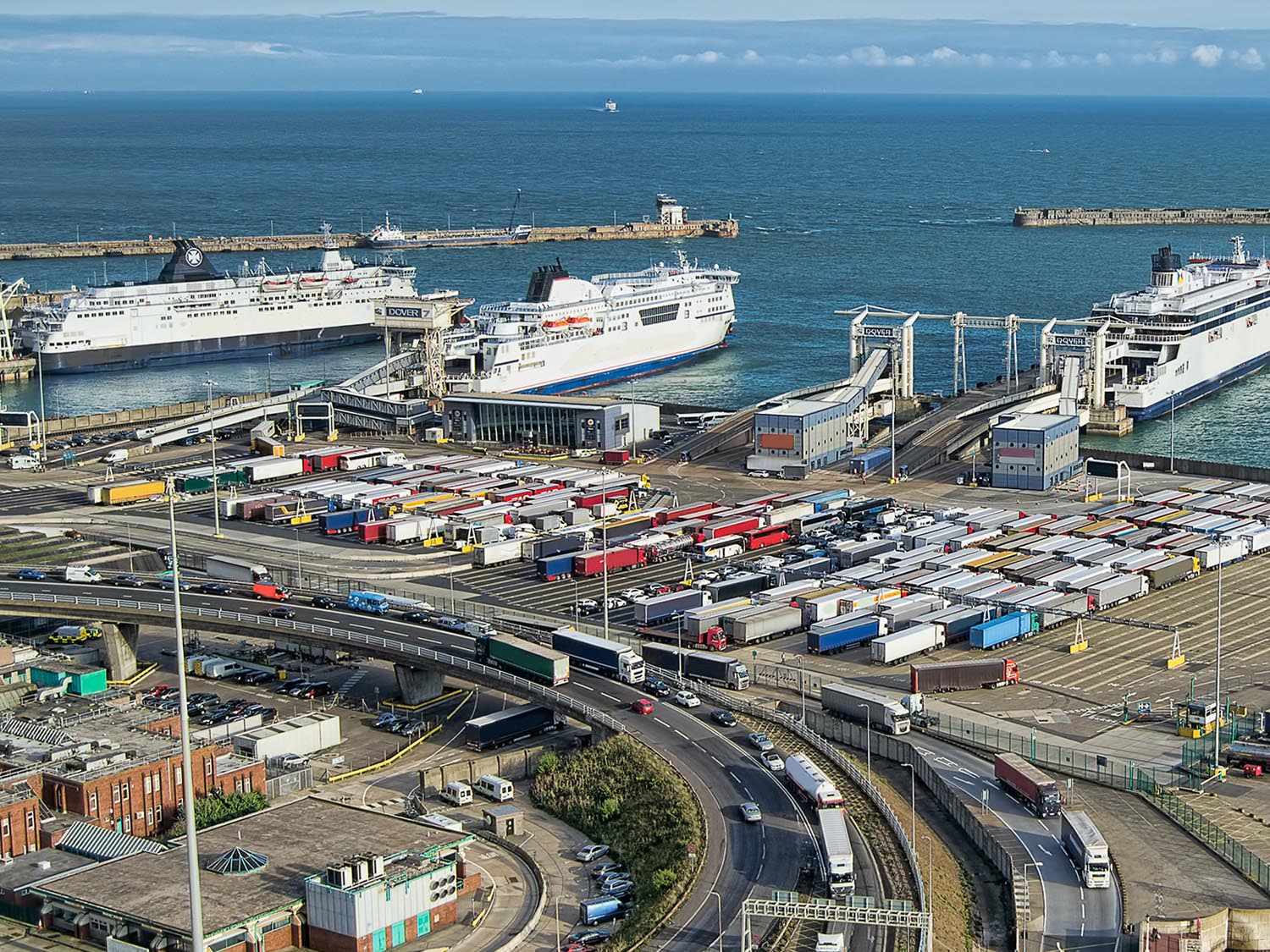
On the 1st January 2022 the UK is imposing full border controls and many short-sea ports, including Dover and Eurotunnel have opted to use Goods Vehicle Movement Service (GVMS) as the frontier control mechanism. We have been using it since its launch at the beginning of the year, for GB-NI movements and it works well. Are you familiar – if not you NEED to be. Read on…..

Shipments moving into Great Britain will need an MRN (Movement Reference Number) which must contain at least one of the following:

1. Deferred Entry - EORI number of the EIDR (Entry in Declarant's Records) approved trader who will enter details in their records and submit a declaration later.  We have this approval.

2. Simplified frontier declaration (SFD) - Entry number for the SFD. Note: Food, feed and controlled goods need an SFD even if using EIDR and this requires about 80% of the data normally required for a full declaration (normal SFD only requires 40%).

3. Full frontier declaration (FFD) -  Entry number for the FFD.  As the name suggests a full entry completes the importer's declaration to HMRC and requires no supplementary actions, unlike the Deferred Entry and SFD.

At the moment the pre-lodged import entry is not connected to the frontier and the truck is not delayed if the pre-lodgement is not ready in time. From the 1st January 2022, one of the above must be lodged on the GVMS system (for each consignment) in order to get a Goods Movement Reference (GMR) number or the driver will be unable to check-in at the EU port/terminal and the truck will not be allowed to board.

For vehicles checking at EU ports, the carrier will use GVMS to verify the GMR presented to them and cross-check the details on the GMR with the vehicle. Vehicles will be turned away at check-in if a valid GMR cannot be presented or if their registration number(s) do not match those on the GMR. 

GVMS allows for automatic arrival in HMRC’s declaration processing system CHIEF, as soon as goods board at the EU side, so that UK import declarations can be processed by HMRC en route to the UK.

Once the vehicle and/or trailers have embarked on the crossing, the status in GVMS will be updated to EMBARK. The platform sends an electronic notification through CHIEF when inbound goods are successfully cleared before they arrive in the UK, allowing them to quickly pass through customs.

If the GVMS determines that the movement requires inspection, a notification will be sent within 30 minutes after embarkation. Those vehicles must report to a customs inspection point upon arrival, where customs officials will update GVMS once the consignment has been cleared.

For transit shipments, the transit declaration will be automatically updated in the New Computerised Transit System (NCTS) on the basis of the Transit accompanying document (TAD) data entered in GVMS prior to departure in the EU.

Available to new and existing customers, the CuDoS customs brokerage platform automates and submits customs declarations, simplifying compliant border processing, in either direction. 

CuDoS safeguards our customers’ EU supply chains from the potential fallout of easement and regime changes, which means that their EU/UK movements will not be interrupted when full UK/EU border controls are implemented on the 1st January 2022.

To discuss your situation and to learn how we automate customs declarations for businesses of all sizes, please contact Elliot Carlile or Andy Fitchett who can talk you through the options.

warehouse full

Experts warn the UK is running out of warehouse space

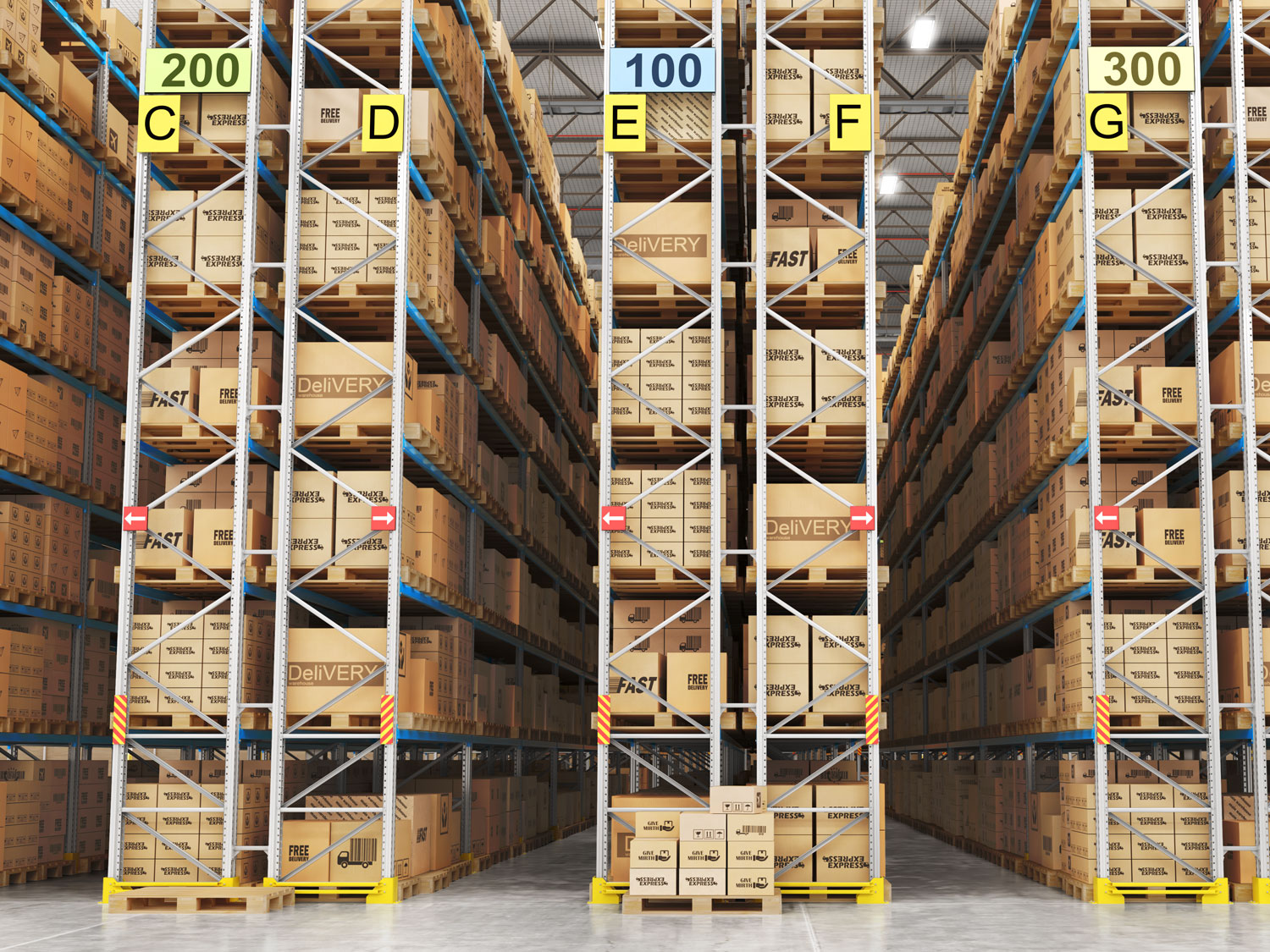
Leading commercial property agents have warned that the UK could run out of warehouse space within a year, following the surge in online shopping and supply chain disruption triggered by the COVID19 pandemic.

Demand for warehouses and vacant space is being driven by eCommerce, manufacturing and logistics support businesses that are having to hold inventory that cannot be consumed, due to technical component delays that are depleting stock and later than required consumer products, that are having to be ‘shelved’ until they can be brought to market at the right time of year. Raising the risk of the UK running out of available warehouse space, as has been widely reported in both the trade and national press.

Even though developers have been quick to respond to this demand, newly developed space is being taken up fast, keeping available stock low and falling below 50 million square feet (the lowest recorded) which is close to the same amount of space secured in the first nine months of 2021. Suggesting there may be less than a year’s supply available.

eCommerce, post and parcel providers took an average of 6m square feet p.a. between 2015 and 2019, rocketing to over 15m square feet p.a. in 2020 and 2021 – and continuing to grow exponentially.

The proportion of UK retail spend taking place online rose from 19.1% in February 2020, ahead of the first coronavirus lockdown, to a peak of 37.1% in January 2021, bringing forward by three years the date when the UK’s online sales are expected to overtake in-store sales.

Research by Retail Economics predicts that UK retailers will be the first across Europe’s biggest retail markets to make the shift, with 52% of all transactions set to occur online next year.

The pandemic has also highlighted the fragility of supply chains built for maximum efficiency, particularly some JIT (just in time models) encouraging executives to seek more storage space for safety stock. 

Having product and components where you can access them locally is becoming the normal approach, in a world of logistics and transit beset by uncertainty and chaos. Businesses are having to, or have already, adapted their supply chain strategies accordingly.

In the near term, the impact of high demand for warehouse space will be rising costs for those needing storage, which is likely to trickle down into price increases for consumers. Along with many other dynamics and variables that are changing on a monthly basis.

Leading commercial agents Cushman & Wakefield, told the Financial Times that developers had been fairly quick to respond to the shortage of warehouse space, but warned: “When you look at how quickly development is being taken up, there’s probably not enough.”

Cushman & Wakefield warned: “If anything, availability will get worse before it gets better.” Much like many other elements of the supply chain jigsaw puzzle, unfortunately.

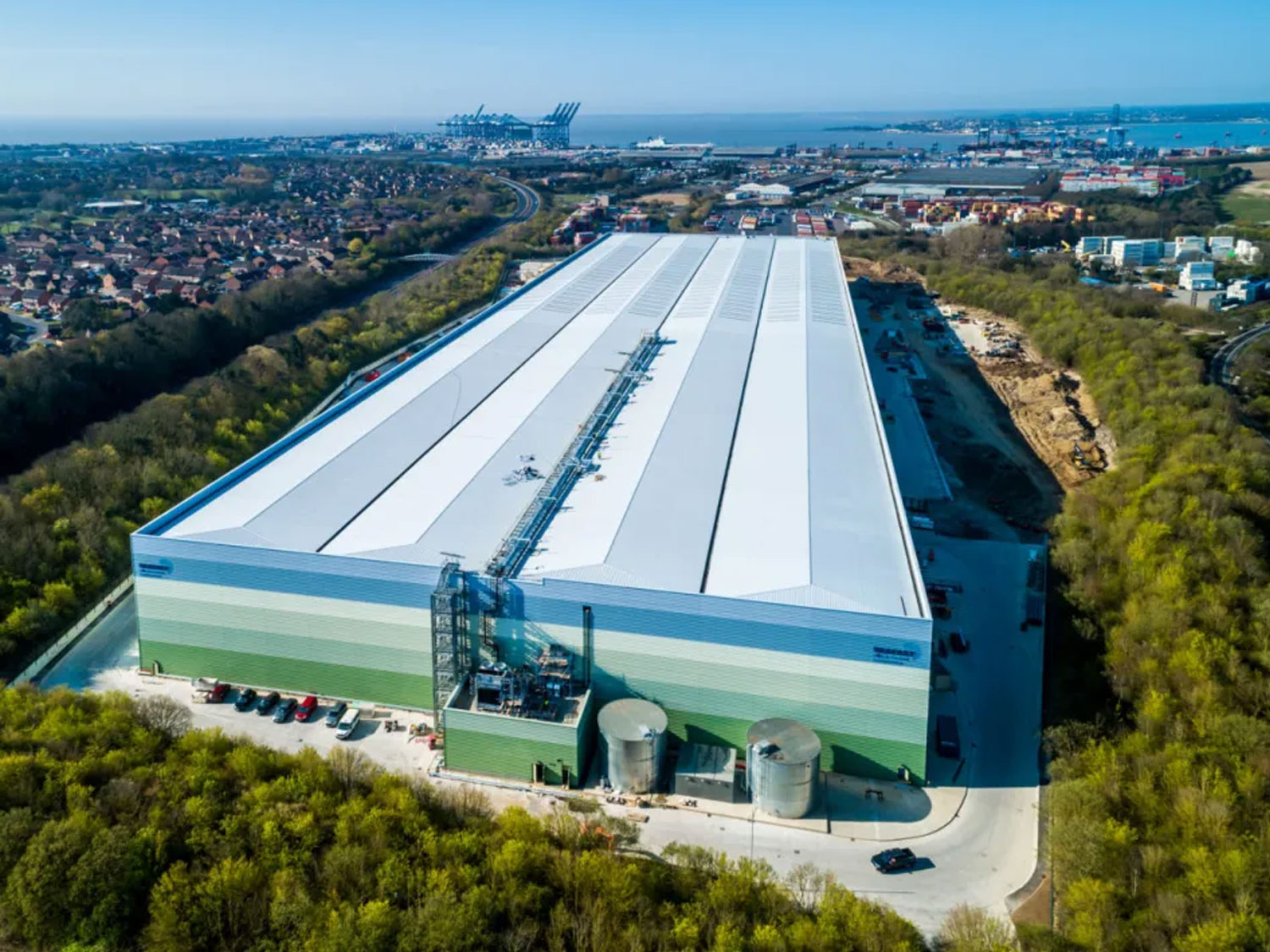
Metro’s customers are protected from the impact of this squeeze on warehouse space, with access to the group’s new 750,000 sq ft Mega DC. SEE MORE

Strategically located adjacent to the UK’s biggest container port, Felixstowe, the Mega Distribution Centre, offers the unique benefits of port-centric logistics alongside 18,000 pallet spaces of frozen storage and ambient storage space for 80,000 pallets.

ECO globe 2021

Supporting environmental transparency

Environmental reporting standards for business have been high on the agenda at the UN’s Climate Change Conference – COP26 – currently underway in Glasgow and Metro support the drive for businesses to be open about their impact on the planet, as transparency is an essential precursor for reaching global solutions to a global problem.

Companies’ response to climate change is arguably the most pressing issue facing society, which is why the UK government has joined 38 international partners to welcome the establishment of new international sustainability reporting standards at COP26. 

As a disclosing company, Metro is among the 13,000 corporations that have committed to environmental transparency, by disclosing our environmental impact and working to reduce greenhouse gas emissions, safeguard water resources and protect forests.

While world leaders gathered to discuss the future of climate change and their negotiating teams are hard at work at #COP26, we hope that our customers, and the wider industry, will also take action on climate change, because it poses a present and future risk to supply chains. 

It is only by measuring our environmental impact, that companies can understand and mitigate now, to prepare for the future and ultimately remain competitive – especially as there is increasing demand for goods, services and suppliers with a reduced environmental impact. 

Metro’s MVT Eco module monitors the energy emissions, emission costs and CO2 equivalent emissions, of each consignment we move, by every mode, which means that Metro customers can monitor the environmental impact of their supply chains and participate in offset projects that will eradicate their CO2 footprint.

The MVT ECO module is a cloud-based solution, that is available, free-of-charge, to all our shippers on their MVT dashboard, where they can view key eco statistics related to their movements, to see which areas will benefit most from emissions offsetting and where efforts can have the most impact.

To request a demo or discuss your requirements, please contact Simon George, who leads our technical solution team, or Claus Rasmussen to discuss carbon reduction strategies and the availability of offset projects.

VIEW MVT ECO WEB PAGE

MM 5

THE industry trade show returns – Multimodal 2021

After a break of more than two years the UK freight industry’s only dedicated conference and exhibition - Multimodal - has returned to Birmingham’s NEC centre and, as it is just down the road, we’ve popped in for a look around.

While the various COVID lockdowns and restrictions played out, Mutimodal suffered repeated postponements, denying the industry its annual opportunity to meet and greet.

Exhibitors are a mix of carriers, hauliers, ports, 3PL’s, trade associations and suppliers into the sector.

New for 2021 is the British International Freight Association’s (BIFA) village, designed to provide a marketplace for BIFA members to showcase the products and services they offer.

As a BIFA freight service award winner Metro were entitled to a free stand within the village but, due to the exceptional supply chain challenges we are currently facing, our priority is supporting our customers. Which meant we could not release senior team members for the three days that Multimodal runs, and have had to forego the opportunity to exhibit.

While we couldn’t spare colleagues for three full days, we have taken the opportunity to pop in for a quick look around, take these pics and see one of our team participating in one of the popular seminars.

This year’s seminar programme has been developed by Logistics UK, to share insight and best practice and “explore how technology, innovation and people power are driving a new business landscape.”

Day 3 of Multimodal  will see BIFA take the lead role in a seminar programme, supported by Metro’s Colin Smith (Training & Career Development Manager) that focuses on attracting young talent to the sector; with an examination of apprenticeships that are available; the trade association’s recently launched schools engagement programme, as well as the work being done by BIFA's Young Forwarder Network.

Feedback on the seminar sessions is interesting, particularly the most popular ones, as they explore the way forward for businesses in the supply chain. 

The most consistent theme is that supply chain has never been in the public eye, like now and it is critical that we raise the profile of the sector and it’s role within the wider economy and in particular to use this opportunity, as Colin highlights, to attract the next generation into the industry.

The HGV crisis came up consistently, but so too did sustainability and the need to look at every supply chain element, because we need to protect the future.

And in protecting the future, there were calls to ensure that EU suppliers and operators are fully prepared and ready for the 1st January 2022, as businesses will not be able to delay making import declarations and if you use ports that operate the pre-lodgement model or the Goods Vehicle Movement System (GVMS), full import declarations will be required before the UK Border.