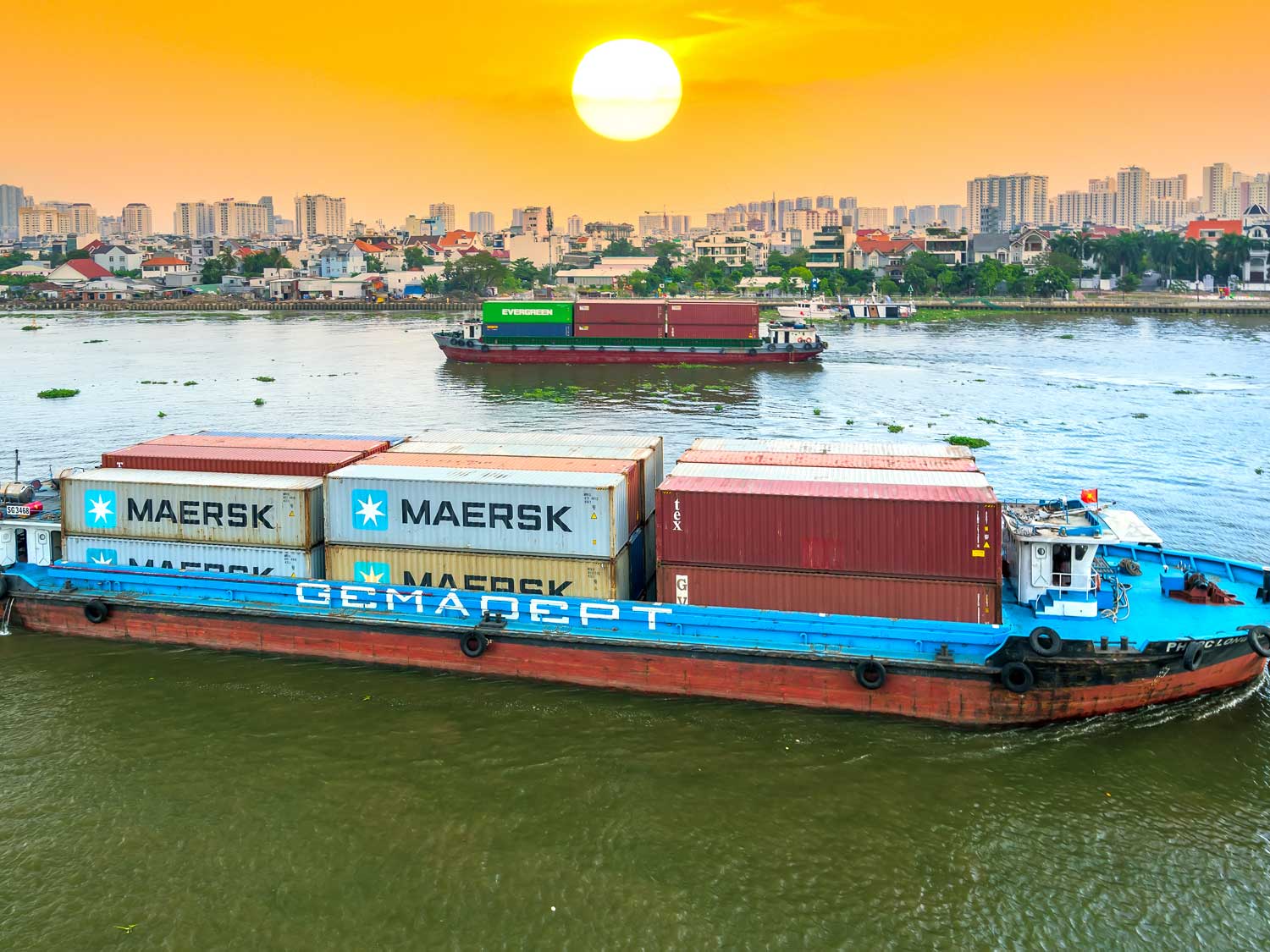
barge in Vietnam

Container ocean freight update; another week in sea freight

Sea freight spot rates have surged further on the trans-Atlantic trade and routes ex-Asia, as a month of port restrictions, congestion and disruption across south China ports diminishes container shipping’s already severe global capacity and equipment shortages.

Shortages of space and equipment continue, as market demand exceeds supply and rates keep climbing, with blank sailings in June and July compounding the issue. Challenges continue in almost every trade lane, regardless of the continent to which they are destined.

Carriers already have a massive backlog, due to recent disruption and port congestion, which is why they are not able to accommodate their current booking requirements. The issues at Yantian and surrounding ports have created even more disruption, with the resulting omissions and diversions to alternative ports adding to the carriers problems, as they try to rectify their schedules and improve reliability and predictability of container movements.

And following a significant round of general rate increases (GRI) on the 15th June by many shipping lines, there is every expectation that rates will go up further imminently, with Maersk confirming last week that the availability of empty containers in southern China was a mounting problem.

In a customer’s advisory the  Danish carrier highlighted the need for shipper flexibility in selecting equipment. “We see 40’ GP and 40’ HC empty supply is negatively impacted with massive vessel delays and omissions in Yantian and Shekou. Customers are encouraged to amend to 20’ GP as an alternative in Yantian and Shekou.”

Maersk added a note of caution on the reopening of Yantian: “Productivity is gradually set to increase as more workers return and more berths reopen, but the damage has already been done. The current estimated wait is over a fortnight, causing many carriers to divert vessels to other ports.” This creates additional supply chain disruption as a consequence.

Ocean freight spot rates on major East-West trades have seen further significant rises and double-digit percentage rises on transatlantic lanes, with further rises expected this week contributed to by the demand versus supply imbalance.

Continuing strong demand from Asia to Europe saw rates rise further, with average spot rates on Shanghai-Rotterdam gaining a further 7%, over the week, more than seven times their level last year and spot rates on Shanghai-Genoa increasing a further 6%, which is 540% higher than the same period in 2020. To use a maritime phrase its unfathomable where this will lead to next and eventually stop and retreat.

And this is before additional premiums are taken into account in order for cargo owners to get any kind of certainty of their boxes being moved promptly.

With demand outstripping capacity, several sources indicate that the real price to move a box urgently is now around twice the listed publicised index level – with thousands of dollars additionally required per container in the form of premiums and surcharges often necessary just to secure a booking.

Although transpacific freight rates were relatively stable, they have spiked since the disruptions at Yantian began and Asia-US East Coast prices increased nearly 40% last week, with backhaul rates from the US to Asia climbing 30% as capacity tightens and further increases may take hold soon.

Our commercial and operations teams are monitoring the improving Yantian situation and the port congestion that continues across much of Southern China and in many other regions globally.

We remain hopeful that the global situation will begin to improve, but as we enter peak season for container demand uncertainty remains, which is why we will continue to keep you updated as the situation evolves.

Please do continue to send us your forecast data and order information, at the earliest opportunity, so that we can manage cargo bookings and transit deadlines, to meet your expectations.

If you have any questions, concerns, or would like any further information regarding the situation in China, please don’t hesitate to contact Elliot Carlile or Grant Liddell.
Challenging shipping and supply chains

Carriers profits soar, but shippers are distressed as a consequence

Rising shipping rates, sea freight disruption and port congestion, will only come to an end when global consumer demand eases, shipping lines believe. But as demand continues to outstrip supply, shippers are already in for a bumpy and expensive summer, with backlogs of growth and inventory stocking leading to an earlier and longer period of peak pressure for capacity placed on vessel space.

Container shipping is expected to see an extended peak season this year, with no signs of a slowdown in demand and the likelihood that if demand remains strong over the customary third-quarter peak season, it could extend beyond the traditional Golden Week slowdown, which is early in 2022 beginning on 1st February potentially further exasperating the impact.

BBC NEWS - “We're trying to do the best we can, but this is crippling us”

Illustrating the impact of the current shipping turmoil, the BBC spoke with Scott Humphreys, boss of Peppermill Interiors, which supplies furniture for homes and trade.

Like many importers, Peppermill is feeling the effects of serious bottlenecks in global container shipping, which have led to delays and pushed up prices more than sixfold.

Although it does use suppliers in the UK, roughly half of its stock is imported from East Asia, mainly from China, and it will typically bring in between 200 and 250 containers each year.

The rise in shipping costs is taking a heavy toll on the business, which can't absorb the extra costs and have to pass them.

Illustrating their problem. A single armchair used to cost us £12 to bring in from China. It now costs £100 to import, so the price they have to sell the chair has gone up, but that isn't extra profit and makes the product much more expensive.

And some of cheaper items have doubled in price. So there’s no point bringing them in any more, he said.

Mr Humpherys makes it clear who he blames. "It's all going to the shipping lines. They're working together. It's like a cartel out there.” And while their customers have faced delays in receiving their shipments or struggled to book space aboard vessels at all, the carriers own earnings have not suffered.

Eleven of the biggest carriers made a combined operating profit of $16.2bn in the first three months of 2021, which was significantly more than they generated across the entire second half of last year.

One importer, a housewares supplier, told the BBC consumers were in for a shock over the coming months.

"There's going to be a shortage of products, and prices will be much higher", he said. "We start shipping now to get stocks in for Christmas.

"Prices for houseware, giftware and so on - they'll be going up, maybe as much as 40%."

Demand is still strong, unlikely to change soon and inventories are low, which is why shippers are eager to get their orders on the water, but even when we finally move beyond the pandemic, business will need to increase inventory, so we won’t see the tap turned off, rather than a steadily decreasing demand.

With the global supply chain and logistics market staying strong for an extended period, the current delays, congestion and disruption in the supply chain will remain unless more capacity can be added across all modes of transport. And that’s without the inland domestic issues of driver shortages and other challenges which are being experienced in every corner of the world. It is not unique to The UK.

The lines maintain they have done all they could and can and will be able to do, to add more capacity, with new ships chartered and being built, at very expensive rates, millions of new containers added to their inventory and new vessels on order, but demand is simply outpacing supply.

Metro negotiate rate and volume agreements with a wide range of carriers across all three alliances, which means we can access the widest pool of equipment and offer shippers the biggest range of service offerings, port pairings and rates.

Our fixed validity contracts provide supply chain security and peace of mind, but with space and equipment in such short supply, we recommend a minimum of four weeks visibility and booking window, to secure space on the vessel and get the right equipment positioned.

Coronavirus update 27th March

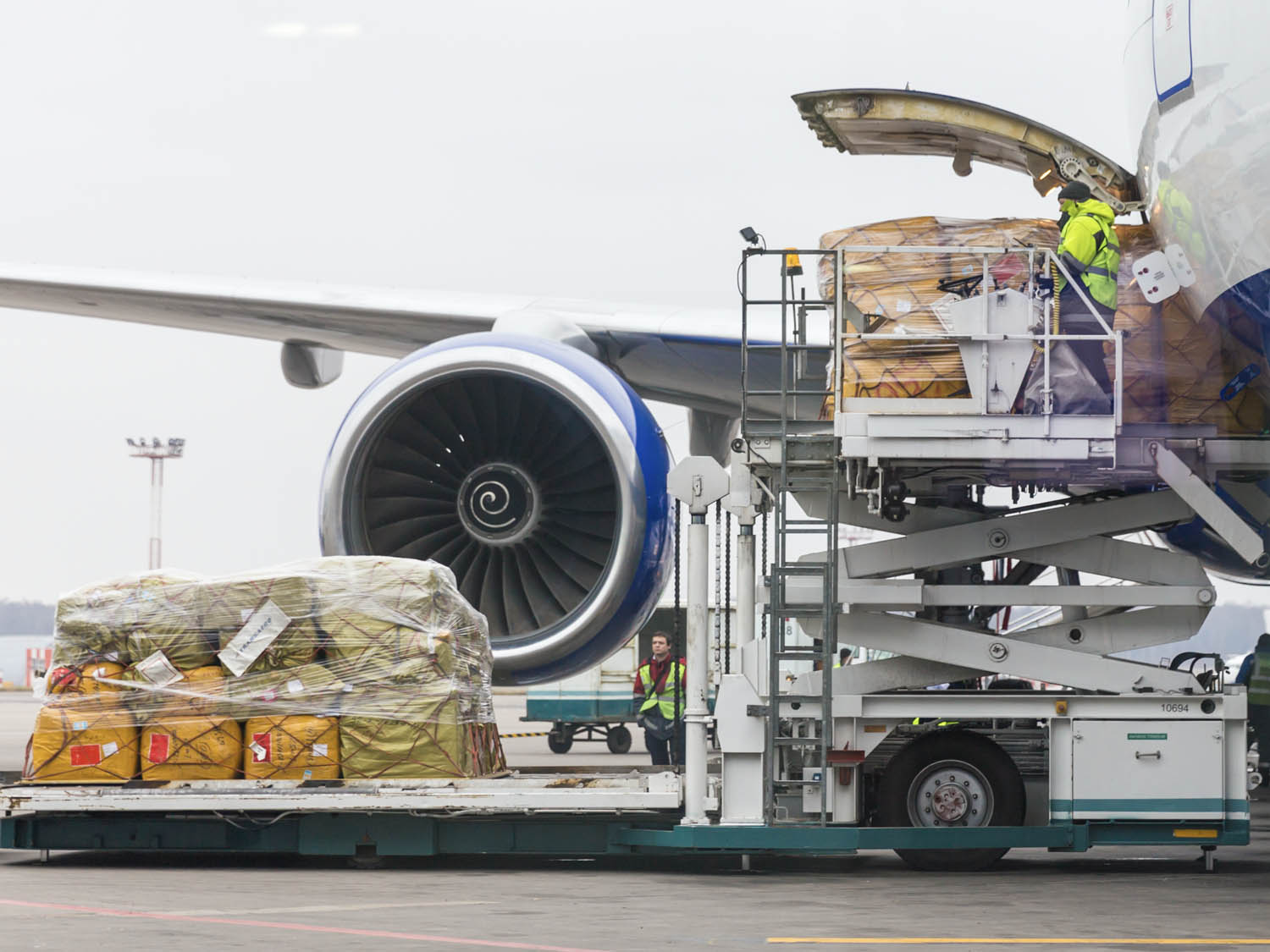
Air cargo peak season starts early with no end in sight

Chaotic sea freight markets are driving delayed distressed planned ocean cargo over to faster air freight, creating an artificial early peak season, in which massive global demand meeting limited capacity, means that only the highest paying cargo will make it out of Asia on a flight, regardless of destination. ‘Pay to play’ seems to be the driver behind the current market dynamics.

The highest bidders see their shipments loaded to the aircraft, mirroring the current commoditisation of sea freight, as congestion and equipment imbalances have created a massive shift by shippers to secure any available capacity, in a peak season without end, as record pricing levels and demand significantly outpaces available ocean freight integrity within a normal environment.

Simply. The price shippers are willing to pay will determine whether their cargo is loaded onto an aircraft. If you pay the right price, there are aircraft available to be activated and driven by the demand and economic viability.

Pricing strength continues to be seen out of China and Hong Kong to the US and Europe, and from Europe to the US, with all three trade lanes seeing price increases in May over April, although prices peaked in early May and have fallen away in recent weeks. But this is expected to be short term with a peak season and huge spike yet to come in the second half of the year.

Even so, the air freight market continues to be strong from Asia and globally in general, and this is likely to continue for some time as demand in every market continues to outstrip supply as eCommerce traffic increases and economic activity strengthens with the opening up of regional economies as lockdowns continue to lift through the vaccine roll-outs worldwide.

Comparing air freight rates this year with those of pre-pandemic 2019 gives a clear indication of the pricing strength of the market, with rates on Shanghai-North Europe routes up 193% in 2019. This is during the traditional slack period, where airlines usually scramble for support to fill their scheduled aircraft and incentivise shippers with low-cost options.

Keeping rates elevated is sky-high demand for air freight space and tightly constrained capacity, with nearly all long-haul below deck cargo space unavailable in the bellies of grounded passenger planes that simply cannot operate as their main revenue stream is subdued or non-existent.

Continued port congestion that has further escalated at Yantian International Container Terminals in the port of Shenzhen in late May after a COVID-19 outbreak hit an all-time high of 20 days delay last week, and the congestion has spread to ports through Southern China, pushing more containerised cargo over to air freight or other faster modes of transport including rail and sea/air routes. These alternatives are also now becoming in high demand with widespread challenges in the rail sector into Europe.

Our advice for shippers with export cargo from China is to share their requirements at the earliest possible opportunity, so we can book ocean shipments as soon as possible and to consider air cargo as a fall-back solution. Most ocean freight carriers on the westbound trade to Europe are already booked through the whole of July into August, regardless of the premium costs.

The two main air freight peak season months from China would typically be October and November, but with low inventory levels and so many distressed orders driving the early peak, we anticipate a busy second half of 2021, with high volumes through the fourth quarter. That is without the relentless demand for consumer goods which will only increase as the year progresses and Christmas comes into the logistics equation.

We work closely with leading airlines, cargo carriers and key hub partners to offer the widest range of time-sensitive solutions, routes and transit times at the most competitive rates available in the current market. 

We are looking at adding significant additional capacity with dedicated charter operations in Q3 and Q4 to support our customers during what is anticipated to be a very demanding air freight market.

We welcome expressions of interest and will share further information as we develop our plans to deal with ‘peak season’ demand.

If you have urgent or time-sensitive consignments and would like to explore options, transits and costs, please contact Elliot Carlile or Grant Liddell for all options available to ensure that deadlines are always met.

Yantian 4

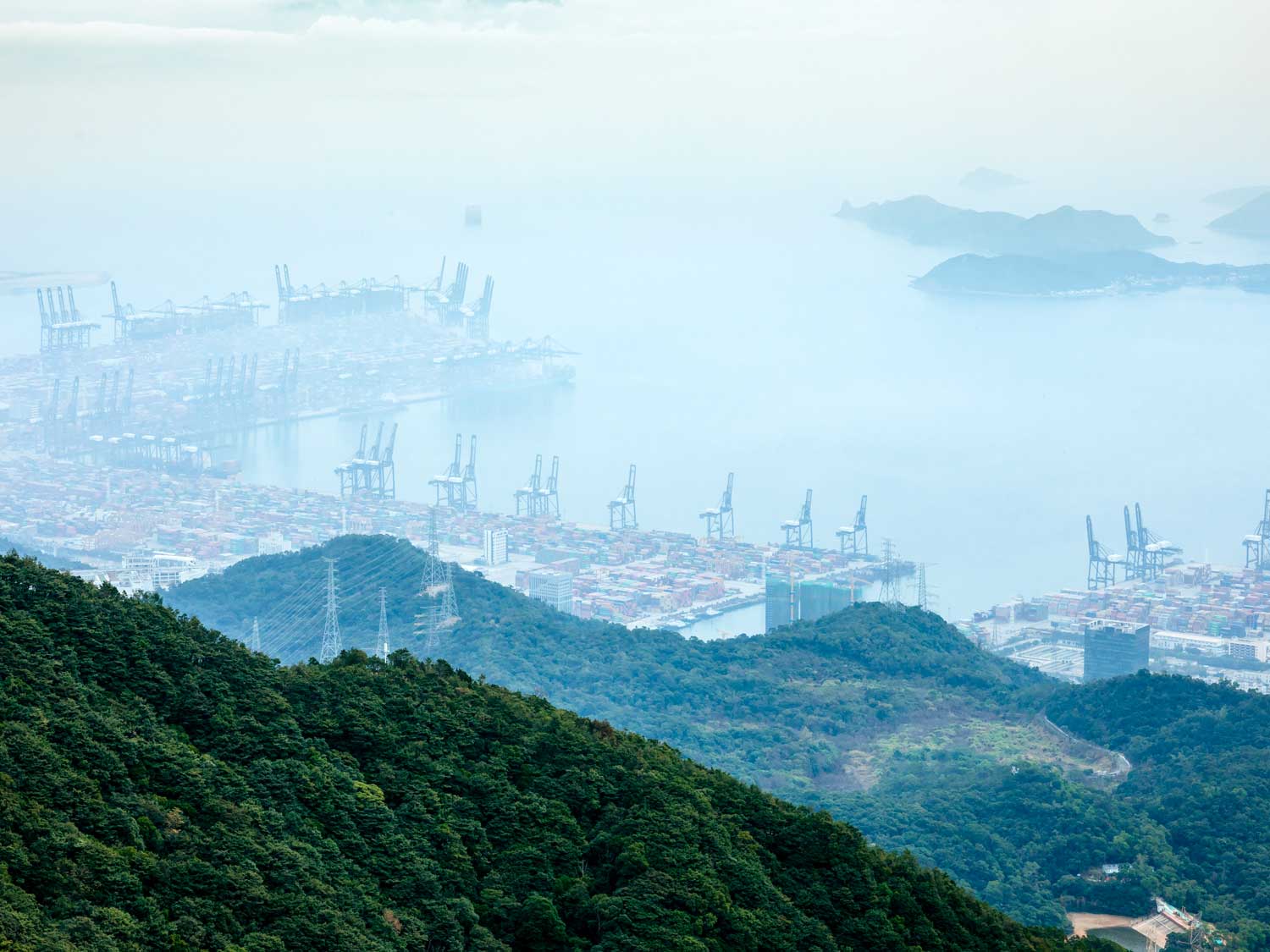
Yantian port looking to resume full container operations

Hutchison Port’s Yantian International Container Terminal (YICT) have announced that they will resume full operation from 00:00 on the 24th June, with effective controls of COVID-19 in place in the port areas and daily handling capacity increasing to 27,000 teu’s when all 11 berths return to normal operating levels.

All berths, including those in the west port area, which was closed for three weeks from the 21st May until the 10th June, will resume normal operations.

The number of laden gate-in tractors will increase to 9,000 per day and the pick-up of empty containers and import laden containers operate as normal.

The conditions of accepting export laden containers will return to normal, within seven days of the vessel’s stated ETA.

Since from the COVID outbreak was confirmed in the Yantian port area on the 21st May, operational port capacity declined to 30% of the normal levels, with more than 100 vessel calls omitting the port, in disruption described as being much bigger than the closure of the Suez Canal by the Ever Given grounding earlier this year.

Delays for berthing at Yantian continue to be reported at 16 days or longer, and congestion is growing at the nearby ports of Shekou, Hong Kong, and Nansha, which was reported as being two to four days on Monday.

Ocean Network Express (ONE) has omitted over 40 calls at Yantian and transferred nearly 10 calls to the Port of Nansha, while 2M have so far cancelled 64 calls at Yantian and Shekou port. Hapag-Lloyd has omitted eight calls at Yantian port.

While the hope is that YICTs operational capacity will quickly rise from its low point of 500 containers today, other terminals including Shekou and Chiwan are struggling with surge traffic and yard density well over 90%.

Even with Yantian resuming full operations the congestion backlog will take weeks to clear and carriers omitting calls at the port is a big issue because congestion has now spread to Nansha and Shekou ports and even with the promised resolution, the effects will linger.

YICT STATEMENT

With the full support of relevant government departments and on the premise of strict epidemic prevention, Hutchison Ports YANTIAN (YANTIAN) has taken proactive measures to steadily resume normal terminal operations. Currently, COVID-19 has been effectively under control in the port area, and the operational capacity of the terminals have steadily recovered. It is now decided that from 00:00 on June 24, YANTIAN will resume full operations.

1. All berths (including the West Port area) will essentially resume normal operations;

2. The number of laden gate-in tractors will be increased to 9,000 per day, and the pickup of empty containers and import laden containers remain normal.

3. The arrangements of accepting export laden containers will resume normal with ETA - 7 (within 7 days of the vessel’s ETA) .

While the Yantian situation may begin to ease over the coming weeks, port congestion continues across Southern China and in many other regions globally. Hopefully this will begin to subside as we enter peak season for container demand – we will continually, daily and fastidiously update all our clients and partners on the real situation.

Our commercial and operations teams continue to monitor the evolving situation, overcoming challenges as they arise or mitigating their impact and providing alternative solutions where it is appropriate or necessary. It’s what we do and ensures we are ahead of the market.

Please continue to send us forecast data and order information, at the earliest opportunity. This is an essential ingredient in managing cargo bookings, cargo transit, deadlines and your expectations.

If you have any questions, concerns, or would like any further information regarding the situation in China, please dont hesitate to contact Elliot Carlile or Grant Liddell.