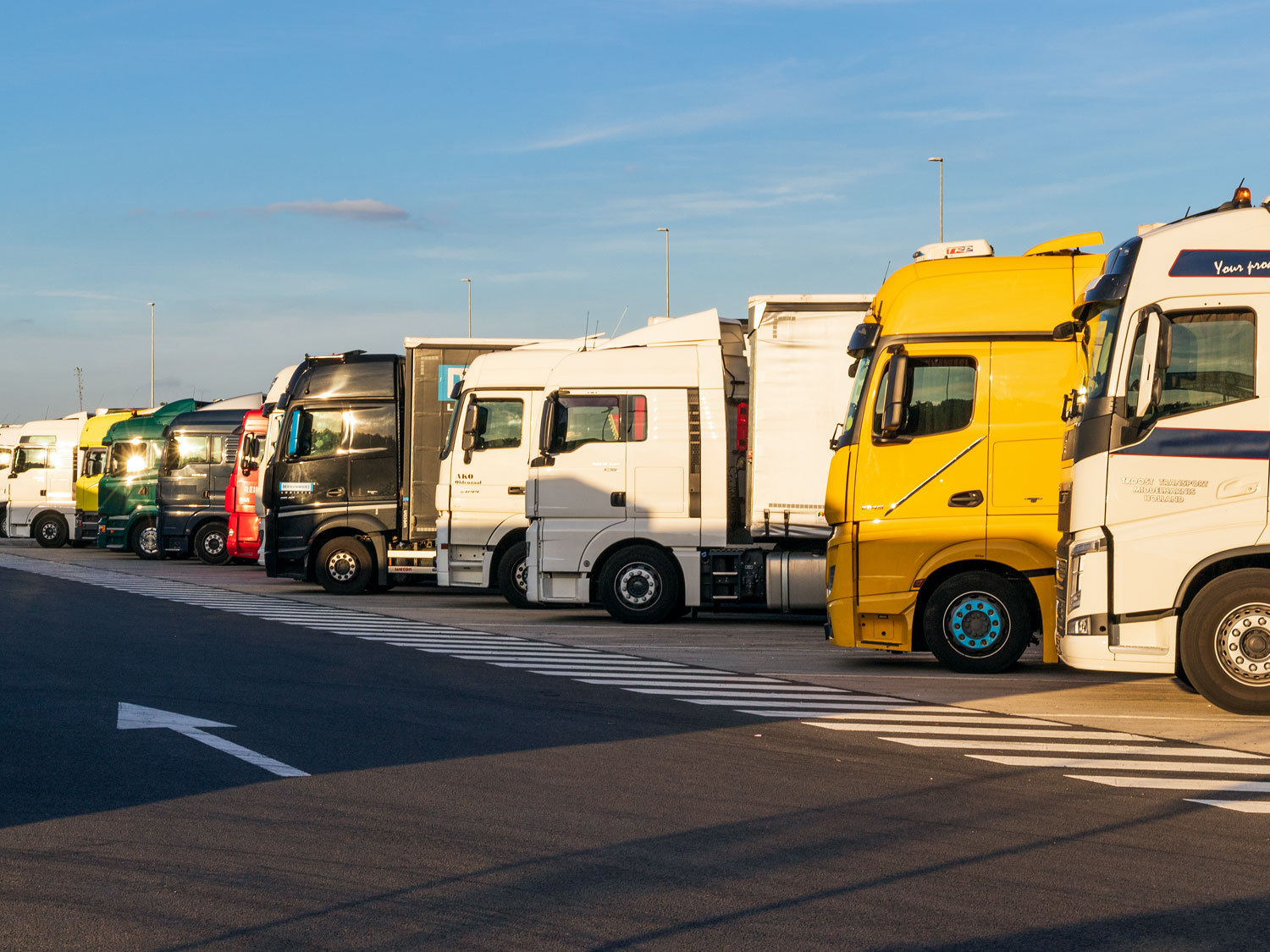
Lorry park

Road transport supply chains under threat

As the first wave of the COVID pandemic took hold in March the International Road Transport Union IRU estimated a decline in global road transport activity of up to 20% and a global loss in operator revenues of up to $1 trillion.

Despite maintaining supply chains, especially for essentials such as food and medical items, government financial packages are failing the sector which will “collapse” without targeted action.

The production and distribution of almost every good on the planet is dependent at some point, on services provided by road transport operators. 

Nearly 6% of all people in employment worldwide work in road transport logistics, largely in small and medium sized firms that, due to their size, cannot easily cope with external shocks such as the economic impacts of COVID. They are a scarce resource, that is becoming scarcer.

According to the IRU. Ranked on a risk scale from one to ten, all regions of the world are standing at the highest levels, nine or ten. This points to a looming wave of financial issues in road transport, which will have a devastating effect on the global economy and its ability to recover from the pandemic. 

IRU secretary general, Umberto de Pretto, commented: “The vast majority of the over 3.5 million road transport companies that we represent are small and medium sized firms, and they are the glue that holds global supply chains and mobility networks together. Most of them are struggling to pay their bills. This is a huge threat to the global economy.”

IRU said the research also showed that global losses have escalated to US$679 billion for goods transport and is particularly disastrous for Europe, where forecast losses for goods transport operators have soared by two thirds since the summer to US$125 billion. 

If no immediate action is taken, these losses are expected to spiral further during the second wave of the pandemic.

The IRU’s General Assembly backed “an urgent call for action to governments worldwide” with help it noted being particularly crucial in three areas: cash grants to address liquidity, insurance premium flexibility, and waiving taxes and charges.

“Without immediate government action, a shocking number of road transport operators will go bankrupt in the coming months, causing irrevocable damage to supply chains and mobility networks, and therefore devastating the global economy,” de Pretto concluded.

At Metro, our experienced operations team embrace all modes of intermodal transport, providing the most appropriate mode or mix of modes to support our customers’ domestic, European and international supply chains.
Rates are not guaranteed to do anything

Shippers switching to air to escape sea freight hell

With sea freight rates reaching some of the highest levels ever seen, along with equipment shortages, late vessels and still no guarantee of uplift, some shippers are starting to switch to air, driving up rates on a mode that had been enjoying some stability.

The current lack of container line consistency and reliability, is unparalleled, with some lines seemingly moving to a transactional model, leaving analysts to point out the folly of a business model built on the backs of other market participants and ultimately the shipper.  

Given the continuing unpredictability of the container shipping lines, it is increasingly difficult for many forwarders to provide adequate service levels to customers, as the carriers actively manage capacity and yields by exploiting the ad hoc market.

Quoting in the trade press, one forwarder said. “Carriers are failing, neglecting customers, providing a sub-acceptable service and yet increasing rates daily. At least the air freight sector is not being this abusive and customers tired of rising ocean freight rates and falling service levels are electing to switch to air freight, even at $7 a kilo, for a level of security and certainty, that is simply not available on the ocean.”

Air capacity from Asia to Europe is still constrained, which means this increase in demand has already led some airlines to reject bookings or demand a higher rate to uplift cargo.

Scheduled freighter operators are full and many have a backlog of cargo and sea-air demand is also rising, but several airlines have “withdrawn their preferential rates without much advance notice”, though expect this to be a temporary problem that will be resolved by the second half of December.”

The rising air rates does appear to be attracting more capacity to the markets, with KLM, Qatar and Lufthansa increasing the number and frequency of flights, although many are already booked.

Heathrow and Benelux hubs remain congested and Shanghai also faced some delays for large shipments.

In the strangest of markets, it is no longer just about rates, it is about making sure  customers get their goods and keep their supply chains running.

On some routes, rates don’t even matter at the moment, the priority is to try and get the cargo on a ship, even if that means premiums, for the most critical consignments.

Signalling a move to air freight, our partners confirm the market is getting busier and that the airlines are starting to raise rates once again, after two weeks of stability.

Falling service levels and rocketing sea and rail freight rates are encouraging many shippers to switch to air, including large volumes.

Recent developments have seen shipping lines cancelling confirmed bookings from the middle of this month, signalling a $1,000 per teu increase from December, while saying that no bookings can be confirmed.

Capacity will continue to be tight throughout December and even up to Chinese New Year. If volumes rise further, as a result of the critical ocean situation, it could become a very heavy and sustained peak.

Metro work very closely with the world’s largest cargo airlines to offer consistent and reliable transits at competitive rates. 

If you have any questions regarding these developments or the general market and would like further information, updates, or the latest market pricing please contact Chris Carlile or Grant Liddell.

FXT BBC 2

National press highlight Felixstowe port chaos

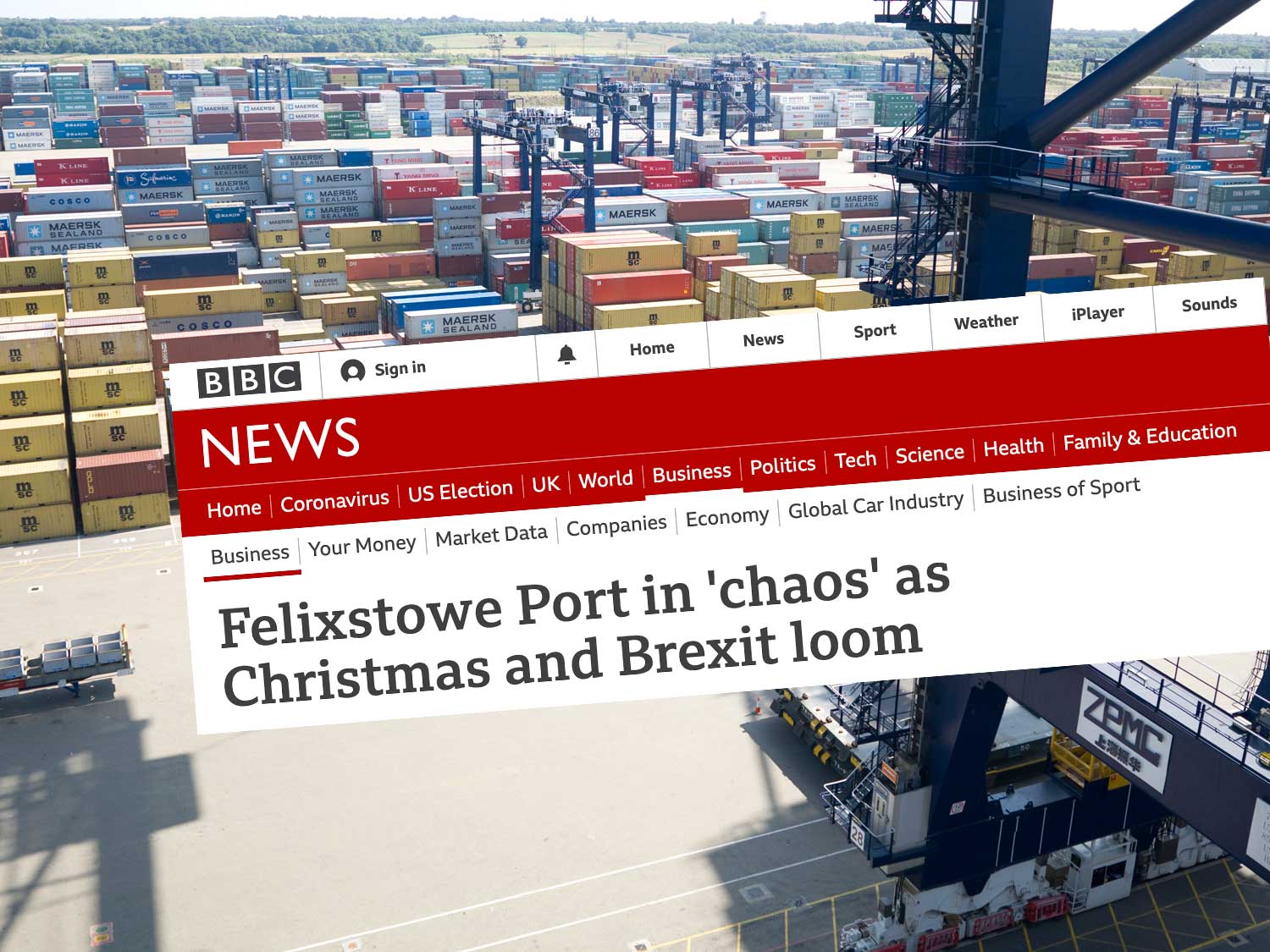
With disruption at the Port of Felixstowe branded “a mess”, the national press is now also reporting on global port disruption, as retailers express concerns about product shortages in the run-up to Christmas. 

As Metro has been reporting regularly in recent weeks, the impact at Felixstowe along with other serious challenges is also having an effect on other major UK and European ports which are facing similar issues as vessels remain off schedule, with unprecedented high volume along with additional delays created by COVID related processes. 

Every regular shipper, particularly from Asia, will have recently experienced changes to a vessel schedule on which they have cargo, which is unsurprising when schedules show that half of the global fleet are running at least four days behind.

The majority of these occurrences are triggered by delays that the shipping lines are already carrying into Europe. These are then exacerbated by congestion and operational challenges and issues at UK ports and throughout Europe. 

The following is part of a transcript of the BBC News story; Felixstowe Port in 'chaos' as Christmas and Brexit loom

Retailers, shipping and haulage companies have complained of "chaos" at Felixstowe Port in Suffolk, affecting goods in the run-up to Christmas.

One ship due to be unloaded at the port last week was redirected to Rotterdam because of "unacceptable" delays.

The owner, Hutchison Ports, blames pre-Brexit stockpiling and the pandemic.

Port users have warned that "if the chaos continues, increased shipping prices will be passed on to consumers".

"It's delaying freight going into shops for consumers to buy," they said. "Shops are struggling anyway at the moment because of the impact from the coronavirus.

Part of the problem is a shipment of 11,000 containers of PPE ordered by the government that is clogging up the port.

Last week, Taiwanese shipping firm Evergreen directed one of its ships to bypass Felixstowe because of "serious port congestion".

The ship's cargo was unloaded in Rotterdam instead and ferried back to the UK via London's Thamesport.

An Evergreen spokesman said the firm had been told by Felixstowe's owner that a berthing slot - where cargo is unloaded - would not be available for up to 10 days after the ship's scheduled arrival.

"Such a delay is totally unacceptable," he said.

In a statement, Hutchison Ports UK said: "The imbalance in UK trade and Brexit stockpiling exacerbate current operational challenges and we are working with our customers and stakeholders to get through the current congestion.

"Performance at the port remains under pressure due to the Covid pandemic, high levels of import traffic, the large number of empty containers and a large amount of unusually long-stay containers held at the port."

But in an operational note posted on its website, the company said delays at Felixstowe would continue "at least into December and possibly through into the New Year" - potentially causing havoc for firms still waiting on pre-Christmas stock.

In a sign of the company's woes, Hutchison Ports UK recently reinstalled its former boss Chris Lewis as chief executive. He came out of retirement to take up the role for a second time, having last led the firm in 2010.

For months, hauliers have complained about Felixstowe's Vehicle Booking System (VBS) which lorry drivers must use to gain ticketed entry to the port. Freight manager Mr Hudson says in recent weeks, the situation has become worse.

"There are more containers waiting on the port while all trucking companies are logging on trying to get a slot. Sometimes the port cancels some of the VBS [slots] when drivers are actually on port waiting," he said.

"We need to see improvement quickly. It's ruining a lot of people's businesses."

A spokesman for Hutchison Ports UK disputed the claims about the VBS, pointing out that in recent days, empty slots have been available and that improvements to the system are under way.

Logistics UK, the trade association representing supply chain firms, said there had been a huge spike recently in the volume of cargo entering the UK.

Part of that dates back to the summer, when the UK's first lockdown eased and firms increased stock orders as the economy started to pick up. More recently, businesses have been looking ahead to 1 January and preparing for uncertainty at the end of the Brexit transition period.

Metro has strong working relationships directly with the ports, carriers and haulage partners, that ensures we are informed and can react swiftly to any issues the ports may face. 

Keeping our customers informed through their account management team and via our award winning MVT supply chain visibility tool means we can limit the issues they face, to keep supply chains moving and avoid unnecessary costs. 

Cut and run

Critical situation: Vessels skipping UK ports on daily basis

Container ships, including the world’s largest, are skipping UK ports entirely, or leaving only partially discharged and without collecting export containers, in what is fast becoming a daily occurrence.

COVID-safe working practices and extensive deep-cleaning at shift handovers, continues to cause huge issues at UK ports and in particular at Felixstowe, that have been struggling since the summer.

Felixstowe has not recovered from a 30% spike in import volumes in early September which, combined with the new working practices, means that it’s taking a lot longer to unload vessels and the ships are often leaving before the terminal operators finish offloading or loading all the export and empty containers, so they don't miss the next berthing spot on their schedule. 

Last week, LNG-fuelled CMA CGM Jacques Saade, currently the worlds largest container vessel and the carriers new flagship ultra large container vessel (ULCV) made its inaugural call at Southampton, but departed the port without unloading all its import containers.

The line confirmed that “CMA CGM Jacques Saade has cut and run with import containers remaining on board – these containers will be discharged on the second call which currently has an eta of 15 November, subject to change.”

Evergreen’s 20,400 teu Ever Grade skipped its scheduled call at Felixstowe on Saturday and headed straight for Rotterdam on the Ocean Alliance’s FAL6 Asia-North Europe service.

The shipping line said that UK consigned containers would be unloaded at Rotterdam and then sent by feeder vessel to Thamesport, leading importers to scramble for increasingly scarce haulage.

Incidences are affecting Felixstowe, Southampton and London Gateway and while Metro has been remarkably untouched, we do have 20 boxes remaining on a vessel that cut and run from Gateway to Morocco for discharge, with the overdue containers being shipped back on split Bills of lading. The vessel did call at closer ports Antwerp and Marseilles, but due to labour shortages also impacting these ports, the carrier decided that UK freight still on board, will be better offloaded in Tangiers North Africa and then feedered back.

We are aware of big volume shippers that have been particularly badly hit, including one that had 500 boxes due in this week and only 400 have been unloaded in the UK, due to skipping ports and partial offloads.

The issue is prevalent with all lines and ports, including those across the Channel and North Sea, and in fact on a global basis, who continue to struggle with COVID working practices, labour shortages, congestion and terminals full of containers with PPE, that domestic health services can’t process, as they in turn are overwhelmed!

Keeping our customers informed of this fluid and fast-changing situation, through their account management team and via our award winning MVT supply chain visibility tool, means we can limit the issues they face, to keep supply chains moving and avoid unnecessary costs. 

If you have encountered any issues relating to the above situation, we would of proactively have communicated these to you. For further advice and updates please call your day to day operational contact or Grant Liddell and Ian Barnes, who will discuss the action we have taken to try to avoid in future.