2023 Year of the Rabbit

<strong>Chinese New Year + COVID escalation = supply chain disruption in Asia</strong>

If travel for the Lunar New Year holidays increases COVID transmission, we will see large numbers of infected workers having to quarantine, which will delay their return to work and factories, hauliers, terminals and ports that would traditionally restart operations by mid-February could be shut significantly longer, with export and supply chain delays.

This Sunday, the 22nd January marks the start of the Lunar New Year and is the trigger for Chongqing-Chunyun, the Chinese New Year Migration, which is the largest annual human migration on earth, with hundreds of millions of people, working out of their hometowns, hurrying home to be with their families for the two-week holiday.

Factories and most other parts of Chinese society close down for the duration of the holiday (which is based on the lunar cycle), causing a pause in exports leaving the country, which is why traditionally we would see a spike in freight volumes - and particularly - air in the run up to CNY. 

China’s economic growth of 3% in 2022 was the weakest since 1976, prompting the abrupt lifting of China’s strict zero-Covid policy in December. Unforeseen by many although encouraged for a long time.

With the recent rapid dropping of COVID restrictions across China, workers are more free to travel than they have been since 2020, which has led, predictably, to a surge in infections and with high levels of COVID in travellers leaving China for business and vacation, countries including the UK have introduced testing for incoming flights from China. Restrictions haven’t just been ‘eased’, but they have been withdrawn entirely in some areas. This is rapid deployment of the new measures.

If New Year’s travel does lead to increased transmission across the country, which logic dictates it is hard to avoid - large numbers of infected workers will need to quarantine, delaying their return to work, with means that supply chain infrastructure and factories that would traditionally restart operations by mid-February could be side-lined for significantly longer, resulting in export order and shipping delays.

Some importers are still carrying plenty of inventory and may not be impacted, but for those with products that are selling well, they may get caught up in the shortfall and a scarcity of bestsellers.

At the end of December, China stopped publishing daily COVID transmission data, possibly to conceal negative information about the pandemic circulating. But shippers will probably know sooner than just about anybody, when they don’t get the deliveries they were expecting out of China.

We have seen many factories and manufacturing sites throughout China shutting early this year already, either because they were quiet, or to give workers an extended break. This has contributed further to the lull in container movements, in what should traditionally be a peak week prior to the CNY celebrations. 

There is, as a consequence, a huge number of shipping line schedule changes, blanking’s, suspensions and withdrawals over coming weeks and months, that will impact on vessel departures and planning reliability in China and across Asia. As a result, it could take a long time to unwind, with return eastbound voyages in March and possibly beyond.

Economists have warned over the state of the global economy in recent months and the International Monetary Fund (IMF) has urged Beijing to continue reopening its economy.

The IMF believe that if China stay the course - and do not re-impose COVID restrictions - by mid-year or there around, they will turn into a positive contributor to average global growth.

However, the full reopening of China's borders is likely to be delayed until international restrictions against China-originated travel are dropped.

On the upside with travel restrictions from and to China being relaxed the air cargo market is likely to see benefit with belly-hold capacity returning to pre-pandemic levels, as tourists look to travel once again, on passenger flights being re-introduced on routes that have been closed and which should result in reduced air freight costs, to and from the region.

As China emerges from its COVID stasis, we have fixed price and long-term capacity agreements in place with our partner carriers, to deliver resilient, consistent and reliable supply chain solutions.

Metro’s cloud-based supply chain management platform, MVT, simplifies global trading, by making every milestone and participant in the supply chain transparent and controllable, down to individual SKU level.

To discuss how our technology could support your supply chain, please contact Simon George our Technical Solutions Director or Elliot Carlile for all options relating to current freight profile movements to and from China.

Beijing street

<strong>China’s Zero-COVID release may boost global economy</strong>

The move by President Xi Jinping to lift China’s zero-COVID strategy and ease travel restrictions has raised hopes that it may soften the blow of higher global interest rates, unleashing production lines and unlocking supply chains after a turbulent three years.

From the 8th January 2023 travellers arriving in China will not have to quarantine and people are free to move internally in a series of steps to reopen the country, which bankers estimate will lead to GDP growth above 5% in 2023 and 4.2% in 2024.

Beijing’s streets are jammed with traffic again, there’s been a surge on foreign holiday bookings and business activity is picking-up, but removing restrictions has also led to a surge in COVID-19 infections, which will increase in the weeks ahead, as virtually every country that has transitioned away from restrictions has suffered an “exit wave” of infections.

Despite caution on the increased challenges to China’s medical system, domestic and international airlines are likely to benefit from the boost in travel and regional economies will also benefit from Chinese business travellers and tourists, as well as the easing of cross-border supply chains.

We have seen that, with greater stability going forward, Chinese manufacturing will return to pre-pandemic reliability, with stable component and raw material flows, which will have a positive effect on shipping and logistics from the region.

However, we have definitely seen a migration of business to other regions and areas over the last 12 months, which will likely disperse some of the sourcing that has been focused through China over the last decade, bringing new opportunities and dynamics to supply chains, as a result of the Draconian measures taken to restrict the virus spreading domestically. This will become evident in 2023 as traders reassess their manufacturing and global sourcing strategies.

China’s rapid reopening is reflationary for the global economy, which means that faster growth in China should also lift world GDP. But the benefits are unlikely to be felt evenly, because China exports more than it imports, which means western consumers, actually consuming, are critical to keep growth on track. However as widely reported in the international press consumer sentiment in Europe and the USA is subdued adding another variable into the recovery mix.

Within a day of Beijing lifting restrictions, a Zhejiang trade delegation departed for Europe to grab export orders, while the Suzhou Bureau of Commerce planned to charter flights to Europe after a trip to Japan returned with orders worth more £140 million.

In a bid to boost activity Alibaba, China's biggest eCommerce platform, is launching "Digital Hybrid Trade Shows”, with plans for 100+ overseas exhibitions, covering more than 10 trade target markets, including the UK, United States, Japan, Singapore and Australia.

Expectations for higher growth in China are encouraging some of the world’s leading fund managers to ease recession expectations, with inflation expected to fall very quickly in the US in 2023, half in the UK and fall a little more slowly in Europe.

Also considering the huge reduction in freight rates and the stabilisation of foreign Exchange (FX) over recent months the world certainly appears to be returning somewhere resembling normality, at least until the next challenge and change of events hits supply chains. But for now predictability and consistency are in a reasonable place in relation to supply chain and logistics strategies and planning with ASIA.

As new opportunities to trade with China emerge, we have fixed price and long-term capacity agreements in place with our partner carriers, to give you peace of mind, with resilient, consistent and reliable supply chain solutions.

Metro’s cloud-based supply chain management platform, MVT, simplifies global trading, by making every milestone and participant in the supply chain transparent and controllable, down to individual SKU level.

To discuss how our technology could support your supply chain, please contact Simon George our Technical Solutions Director or Elliot Carlile for all options relating to current freight profile movements to and from China.

Suspension of Transit

<strong>Schedule reliability and port congestion in decline</strong>

The latest, market leading source, Sea-Intelligence schedule reliability figures show a slight decline of 0.7% in September to 45.5%, which is the first fall since reliability began to trend upwards in April and follows the year’s largest reliability increase of 5.8% in August.

The average delay for late vessel arrivals has been dropping consistently since the start of the year and In September improved once again, albeit slightly, dropping by -0.10 days, bringing the average delay to 5.81 days and is the second consecutive month that the delay has dropped below the 6-day mark since April 2021. Pre-Covid pandemic situation this would have been deemed completely unacceptable. But transits and measurements have changed over the last few years and many traders would like to slow down their products in transit in the current global environment so it is actually, by some businesses adjusting their supply chains in line with current consumer demand, considered a benefit we have observed.

With schedule reliability of 53.2%, 2M was the most reliable carrier in September 2022, followed by CMA CGM with 45.5%, with another four carriers recording schedule reliability of 40%-50% and the remainder at 30%-40%, or lower, it has been widely reported in the trade news.

Yang Ming recorded the lowest schedule reliability of 35.1%. In September 2022, once again, most of the carriers were very close to each other, with the difference between Yang Ming at the bottom and CMA CGM at second, a little over 10 percentage points.

Despite schedule reliability improvements global port congestion remains an issue with ~11% / 2.8m TEU of capacity tied up due to bottlenecks, labour shortages, industrial disputes and other post-pandemic disruptions.

The overall trend is on a downward trajectory, as congestion is starting to ease across the main hotspots in the US and Europe, though there was a small increase in vessels waiting at Chinese ports, due to weather related issues and isolated COVID lockdowns.

US East Coast port congestion is improving, with Savannah remaining the most congested port with 33 vessels recently waiting at anchor. US West Coast congestion is now almost cleared with only a handful of vessels waiting in the San Pedro Bay area.

The situation at the main European ports remained largely unchanged, although dockworkers at the Port of Liverpool began their second strike last Monday and are set to continue through this week, and with no agreement reached with the Unite union at Felixstowe, there is a risk of further industrial action at either port before Christmas.

We are working closely with our offices and network partners to monitor the situation throughout US and European ports, with contingency plans to ensure product is delivered to market, without delay, until congestion finally subsides.

To learn how we can help you avoid disruption and port congestion, or to request our regular ocean market report, please EMAIL our sea freight director, Andy Smith, who can advise on the best solutions for your ocean supply chain. 

The freight market is changing every week, across all modes – we have the latest intel and will share our recommendations on the coming months and into the New Year of 2023 – a NEW challenge approaches. You are in safe hands to ensure you have the options available to achieve your future plans. Across the board we try to future proof all aspects of global trade to ensure that you achieve, as an agile leader and ambitious partner to your business.

Lines effectively write off 2020 peak season

Carriers stepping up Golden Week capacity cuts

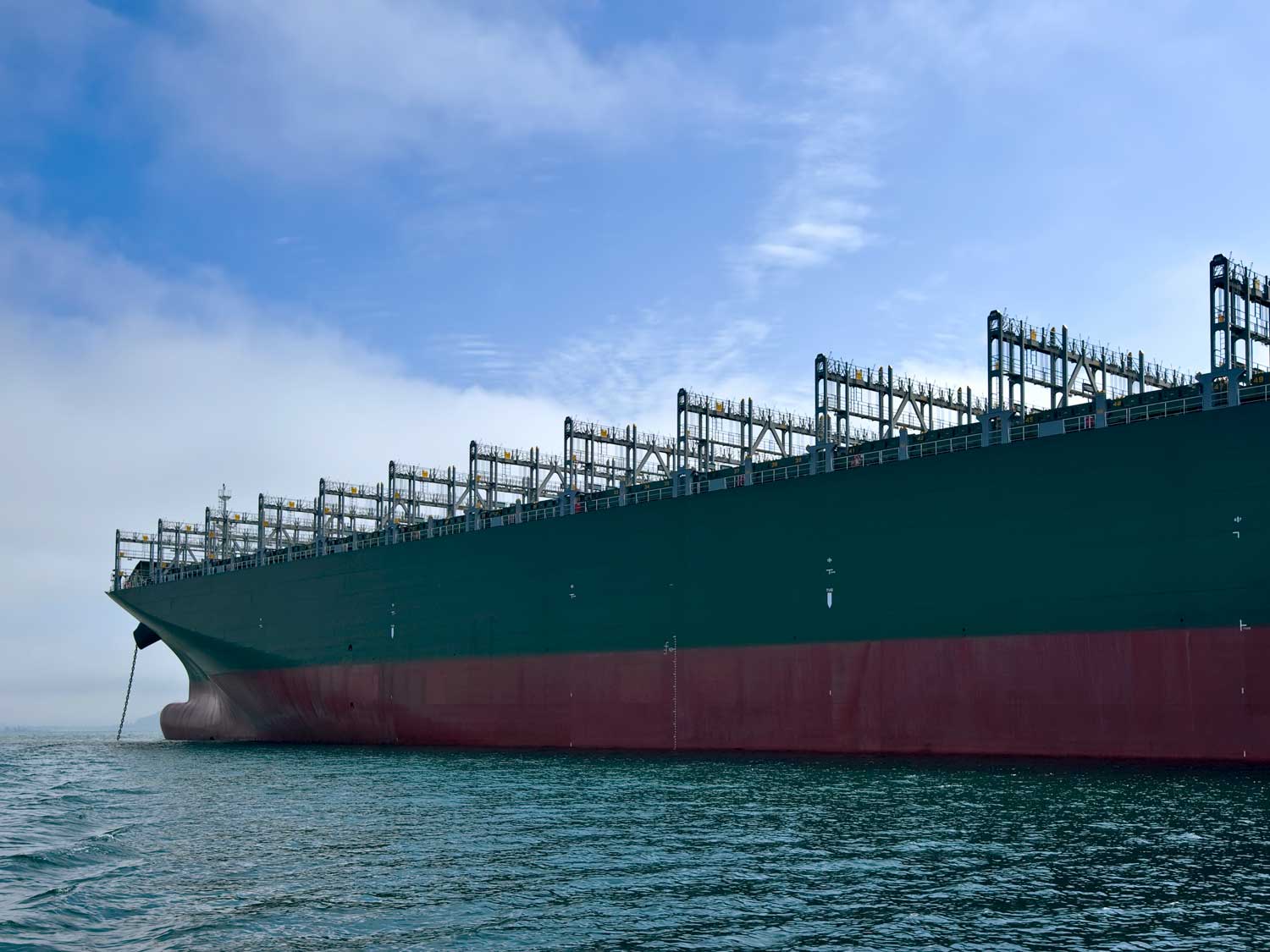
For much of the last two years, container shipping lines have struggled to maintain sufficient capacity to meet demand, but in recent months demand has fallen away, which means that some vessels are not fully utilised, with carriers blanking more sailings and reducing supply using various tactics.

As demand has weakened over recent months due to global events, a percentage of the world's container vessels have not been fully filled and freight rates have been under pressure, which would typically prompt tactical blank sailings, to reduce available capacity and support higher rate levels and reducing the erosion of rates on the spot markets.

Golden Week, which began on Saturday, is traditionally a time for lines to blank sailings as demand dips around the holiday, but carriers are cutting much more aggressively this year, as they attempt to artificially manage freight rates, in the face of diminishing demand. In fact some carriers have pulled whole services completely, in particular so far on the transpacific trade, but it is widely anticipated that this will be replicated with the Asia/ Europe trades in the coming weeks.

Post Golden Week capacity reductions on the Asia to North Europe trade lane are removing almost 20% of available volume, which is in line with 2019, but higher than the 2014-2018 average.

The carriers use blanking strategies, as a lever to reduce and increase capacity, but the demand outlook has deteriorated so significantly on transpacific trade lanes that lines are scrubbing services, with MSC suspending bookings for its express Ningbo and Shanghai to Los Angeles Sequoia service.

MSC’s announcement follows the closure of Matson’s China-California Express (CCX) service and suspensions of CU Lines TPX service and CMA CGM’s Golden Gate Bridge loop.

Maersk has suspended an Asia-US east coast service, with the last sailing of its TP28 pendulum service from Vung Tau, Vietnam, on the 13th October. The cut loop will be merged into Maersk’s TP20 pendulum service, with a revised rotation of: Jakarta-Vung Tau-Shanghai-Ningbo-Busan-Panama Canal-Mobile-Newark, returning to Jakarta via the Suez Canal.

Demand for US east/Gulf coast services has remained strong, with volumes up 12%, as cargo has shifted from congested west coast ports amid nervousness about the lack of a new west coast labour agreement and the continuing risk of labour dispute disruption.

Transpacific routes are barometers for North European trade lanes, which tend to mirror transpacific trends in the short term, so it is a little concerning to note that capacity reductions to the US east and west coasts range between 22% and 28% of deployed weekly capacity in the weeks following Golden Week, up 50% on 2019, and well over double the average of 2014-2018.

It is anticipated that the main container shipping lines will continue to use a variety of tools to balance supply versus demand, as the markets change at a pace not seen in recent years. We will continue to advise, report, make recommendations and advise all options available to ensure that cost effective and reliably consistent service continues, as changes continue to be made.

We negotiate long-term and FAK contracts with shipping lines across all three alliances to secure space and rates, to provide the best alternatives and options, whatever the situation. Over the last decade this has proven to be the best approach, especially during the pandemic where rates and capacity were at a premium.

By leveraging agreements across the alliances – and spot rates, when appropriate – we can often adapt port pairs and routings, to work around blanked sailings, to maintain resilient and reliable supply chains.