Government support vital UK ferry routes

Dover braces

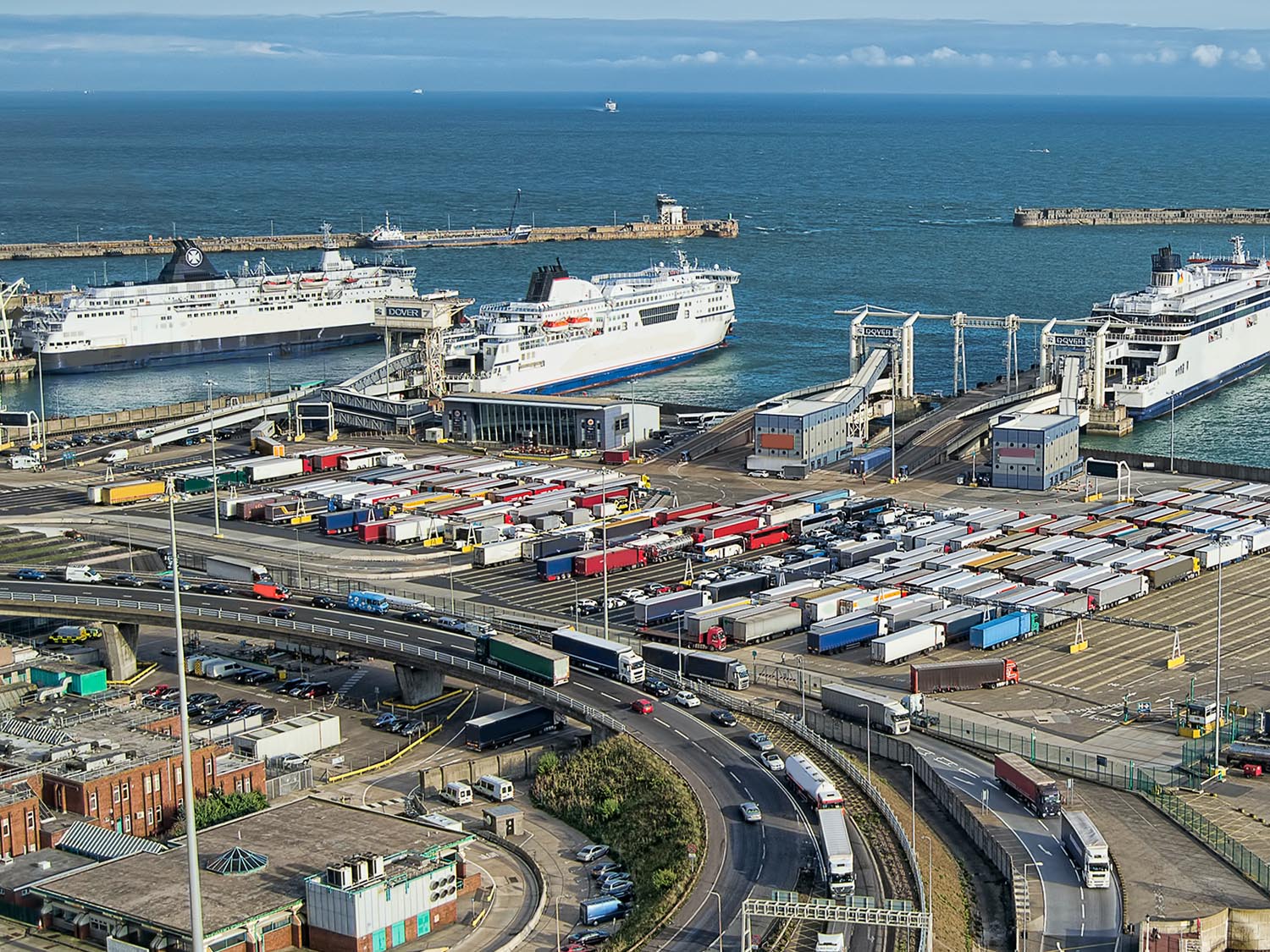
Since the end of the Brexit transition period on New Year's Eve, new customs paperwork is required for lorry drivers, that is in addition to the recent requirements imposed by France to have a negative Covid test result. However, so far things appear to have been running fairly smoothly at the Channel ports.

The amount of freight Ro/Ro and Eurotunnel traffic has dropped quite sharply since New Year’s Eve and is currently about 60% below normal levels, though Brexit stockpiling will be a contributory factor in this shortfall.

Lower volumes means very few lorries were being directed into the new Inland Border Facility near Ashford, but there are worries that as freight traffic picks up over the next few weeks, there could be problems. 

Not an issue for our shippers, but for shippers without a forwarder partner there really is a huge shortage of customs agents and whilst this might not be visible just yet, it will become obvious, as there is massive pressure on getting export documentation right first time. We understand that French authorities have already started to send vehicles back for not having the correct documentation.

Without a forwarder partner like Metro, it’s critical that shippers understand what their hauliers need to have in place before they try to enter Kent, so they’re Border Ready when they get to the Eurotunnel or Dover. Which is why the government’s publishing of more than 300 pages of updated advice on the new trade border with the EU, just hours before it came into force, has led leading business groups to plead for leniency in enforcement in the coming months.

The eleventh-hour document published on New Year’s Eve included 70 pages of case histories and complex flow diagrams explaining the new trade processes required to export goods to Europe.

The forwarding industry and hauliers have repeatedly requested clarity from the government over new processes which came into force on Friday, adding over 200 million customs declarations a year. 

The late release of critical advice is unwelcome in a sector that needs to plan operations and not leave anything to the very last minute.

The combination of pre-Christmas stockpiling and some operators staying off the roads until new processes have settled down is expected to minimise immediate problems at the Channel, but the risk of disruption in the first three months of 2021, as businesses adjust, remains.

The document sets out in immense detail the new processes that will be required to move goods across the border, which will now include customs forms, export health certificates for animal and plant products and a host of other regulatory documentation.

To ensure goods are safely received, the company will need an EU EORI number from the importing member state, and for animal products, a Common Health Entry Document and an entry into TRACES, the EU certifying system.

At the same time the haulier will need to have completed an Entry Summary Declaration in order to pre-declare the inbound consignment with EU customs and must apply for a Kent Access Permit to travel to the Channel ports. Drivers are notified during the crossing if they must stop for inspection on arrival.

Goods coming from the EU will be subject to controls phased in over a six-month period as part of a unilateral UK measure to try to maintain the flow of traffic and give businesses time to adjust. 

British exporters of food and drink products will be particularly hard hit by the new rules, but manufacturers will also need to comply with a long list of new requirements in order to demonstrate that their products comply with EU rules and are sufficiently UK-made to qualify for zero-tariff entry into the bloc’s single market.

Despite pleas from business group leaders for the deal to include grace periods, the new rules will come into force immediately on the EU side, leading to calls for a flexible approach from the enforcement authorities on both sides of the channel.

Metro has dedicated significant resource and capability over the last two years, to ensure that our customers’s European supply chains continue to operate unheeded, following the end of the Brexit transition period.

Our bespoke technology and dedicated European brokerage team of 28 colleagues - in the UK and overseas - process the vast new volumes of required declarations, to  maintain efficient import and export operations, while maximising the cashflow benefits of HMRC’s ‘light-touch’ regimes.

Metro’s innovative Customs Documentation Service - CUDOS - provides a simple way to submit import and export customs declarations, with machine learning capabilities that accurately process commercial invoices without the need to re-enter data manually.
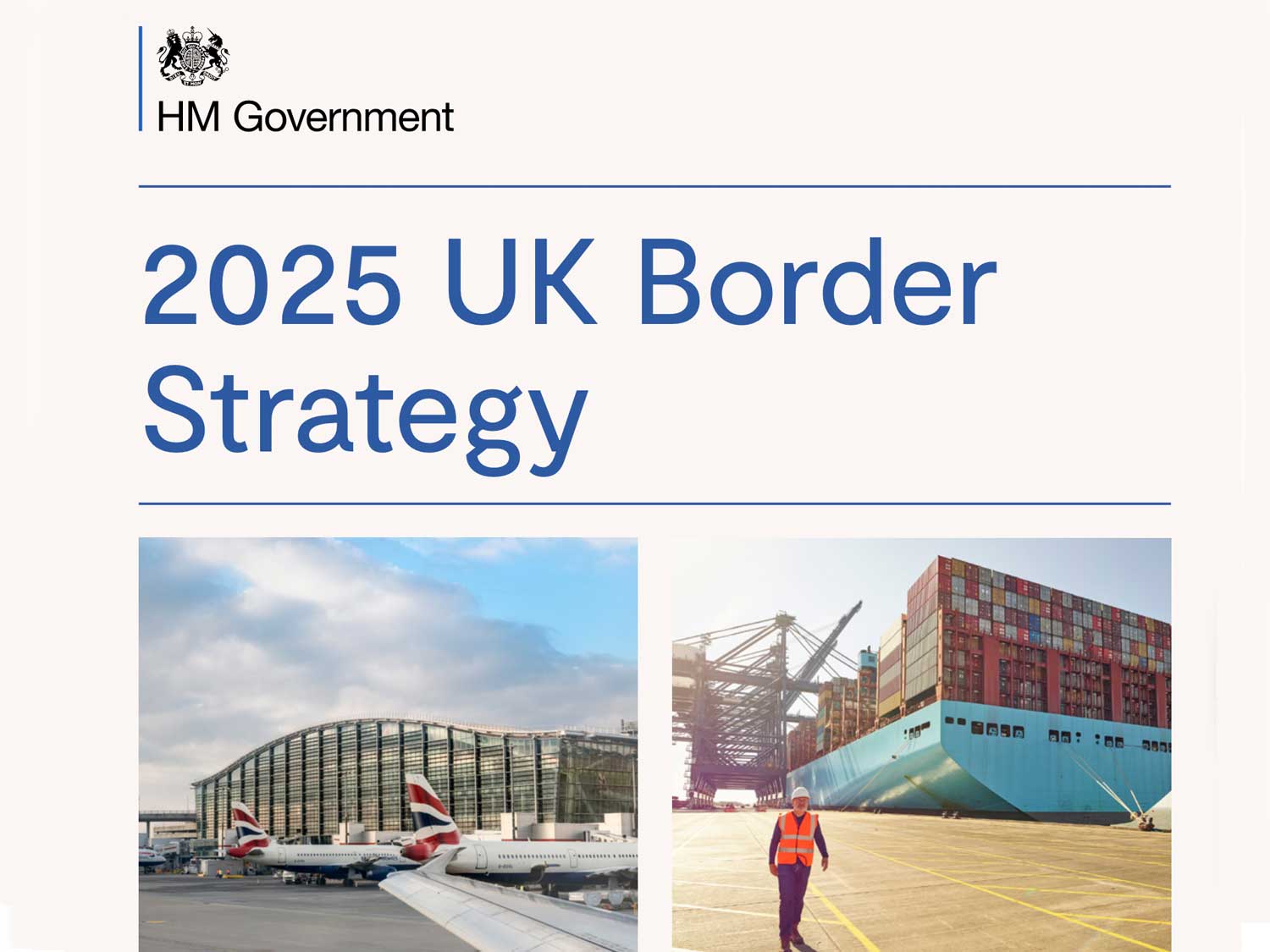
UK border strategy

Metro’s role in government border strategy

On the 17th December 2020 HM Government (HMG) released its 2025 Border Strategy document, which outlines its intentions for modernising the UK frontier and embraces many technologies and ideas pioneered by Metro.

The 2025 UK Border Strategy sets out the government’s vision for the UK border to be the most effective in the world, with innovations that simplify processes for traders and improves the security and biosecurity of the UK.

This new strategy sets out how the government will work with industry to harness innovative technology to help UK businesses take full advantage of new trading relationships with the rest of the world.

The government is committing to working in partnership with the border industry and users of the border to design, deliver and innovate the border strategy, including the development of upstream compliance, e-documents and a ‘single window’ to avoid duplication of data submission from traders into government.

Metro’s technical team conceive and develop our award-winning MVT supply chain platform and proprietary solutions that keep us at the forefront of our industry, by quantifying and embracing the emerging technologies that add value for our customers.

Metro’s IT experts are actively involved in the development of data exchange standards, including UN/CEFACT projects and were key technical partners in the EU funded CORE project (Consistently Optimised Resilient Secure Global Supply-Chains), to prove the concept and convince the UK Government to adopt a more efficient and modern way of border operation.

It was CORE that ultimately got HMG’s attention and initiate a proof of concept (PoC) to take data from commercial systems for the benefit of government.  

The PoC’s data - including participation by Metro’s MVT platform, involving a number of key clients - was shared across government agencies, who responded positively, recognising the benefits of engaging with commercial systems like MVT, that will play a big role in the future border of 2025.

The UK Border Strategy, 2025 says that new data pipelines (such as those demonstrated by MVT) will enable direct ingestion of industry data from participating traders to automate data submission and that they will leverage existing data pipelines to enable the direct ingestion of industry supply chain data into government systems. 

The Single Trade Window will be at the heart of this approach, ultimately acting as the point of entry for these data pipelines into government. It is critical that we improve and expand the systems and data pipelines that allow us to share information with our international partners. This is essential for keeping the UK secure. 

Successful implementation will smooth trade flows, reduce administrative burden and improve the UK’s position as a global trading nation.

Underpinning this will be a new design authority for the border that will bring together all public sector bodies who design and deliver the border across the UK Government, with expert insight from industry, to take a coordinated approach to border design going forward.

DOWNLOADS

Future Borders - Proof of Concept

2025 UK Border Strategy 

Tariff 2

Tariff code continuity post-transition is good news

The Department for International Trade has confirmed that current commodity codes will continue to be used for trade between Great Britain and the EU, when transition ends on 31st December and the UK has left the Single Market and EU Customs Code.

From the start of 2021, the UK will apply a new tariff to imported goods when the UK Global Tariff (UKGT) replaces the EU’s Common External Tariff (CET).

The government says that the UKGT is simpler, easier to use and lower tariff regime than the EU’s Common External Tariff (EU’s CET) and will be in pounds, not euros. It will scrap red tape and other unnecessary barriers to trade, reduce cost pressures and increase choice for consumers.

Commodity codes are 10-digit numbers allocated to goods to classify them for import and export purposes and to identify the correct duties payable.

On the 1st January the current commodity codes will continue to be used for trade between Great Britain and the EU and the Rest of the World, for trade between GB and Northern Ireland, and from NI to the Rest of the World.

The UK government’s commodity look-up tool on gov.uk has also been updated, with more information about commodity codes post-31st December here. https://www.gov.uk/government/collections/exporting-and-importing-businesses-prepare-for-1-january-2021

Changing the commodity code structure would have been hugely problematic as there would have been insufficient time for traders to reclassify thousands of products.

We think that UK importers will have enough changes to deal with after the end of the EU transition period and welcome the news that the UK’s commodity codes will remain the same from the 1st January onwards.

The government ran a consultation, that generated 1,394 responses from businesses, business representatives, consumers, civil society groups, associations and other interested individuals and organisations, to inform development of the UKGT.

UKGT will apply to all goods imported into the UK – unless the country from which the imports originate has a trade agreement with the UK.

Other exceptions include tariff suspensions or goods that originate in countries that are part of the Generalised Scheme of Preferences.

The UKGT simplifies and liberalises many tariffs on goods imported into the UK.

For more information see the government's guide

Metro’s post Brexit Task Team are working tirelessly to ensure we minimise disruptions. 

Please contact Jade Barrow or Andrew White for further information. 

EU exit 2

Brexit politics round-up 10th December

As Boris’ dinner with Ursula von der Leyen, the European Commission President, fails to end Brexit trade deadlock, the deadline for the end of the transition period is looming, and it’s looking likely that any deal needs to be struck by Sunday, or the UK is leaving the EU without one.

Despite the Prime Minister sending his Brexit negotiator, Lord Frost, to Brussels on Sunday for 48 hours of "intensive" discussions with Michel Barnier and concessions from both sides, sticking points remained, which Johnson and von der Leyen failed to overcome last night.

Failure to agree on new trading arrangements by Sunday will mean the UK leaving without a deal and trading on WTO terms, which would introduce tariffs and quotas.

Medicines are not subject to tariffs under WTO rules, but agricultural and manufactured goods such as cars would become more expensive. The price of cars could increase by 10% while some foodstuffs such as cheese and beef could see a 50% price hike.

‘Yellowhammer’, the leaked Whitehall document outlining the possible worst-case no deal scenarios, predicts a three-month "meltdown" at UK ports and significant tariffs on manufactured and agriculture exports after the UK leaves the EU.

There is some hope that the European Commission may implement contingency plans to smooth out significant disruption albeit on a temporary, unilateral basis. But even this is unlikely, unless it is in the EU’s interest. 

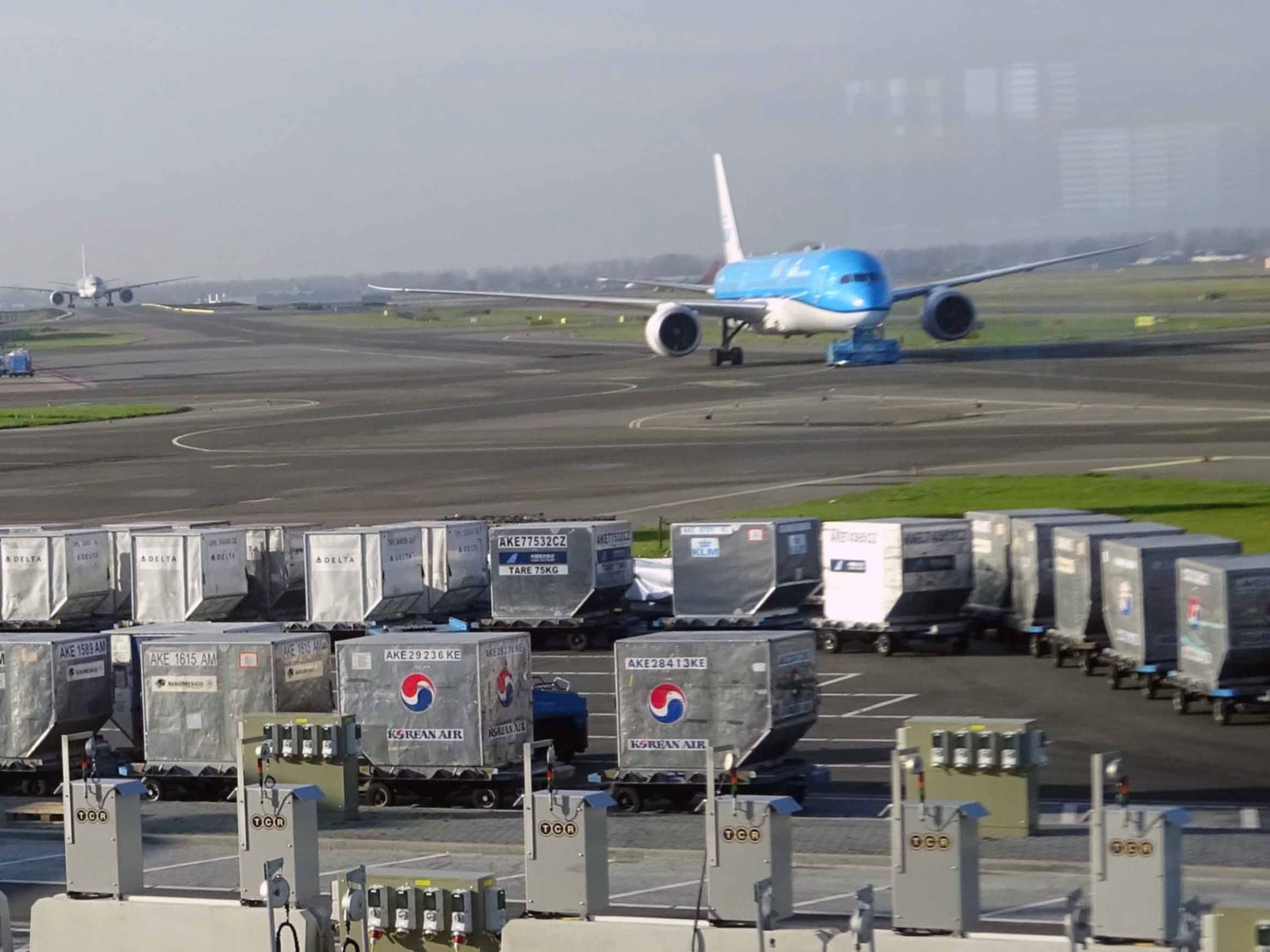
For example, the last time no-deal appeared to be a possibility the commission made plans for bare bones transport connectivity, which gave UK aircraft temporary but limited permission to land in EU airports.

Government ministers are trying to reassure the public that “extensive plans” are in place to guarantee vaccines will still come in from Europe, even in the result of a no-deal Brexit.

The Office for Budget Responsibility (OBR) warned that no-deal would leave the UK worse off to the tune of 1.75% in terms of real GDP next year and that unemployment could reach 8%, while the Bank of England fears that a no-deal Brexit would do more long-term economic damage to the UK than the coronavirus pandemic.

No deal is not sustainable for the long term and eventually the two sides will need to return to the negotiating table. 

Metro’s post Brexit task team are working tirelessly to ensure we minimise disruptions. 

Please contact Jade Barrow or Andrew White for further information.