Inland Border Facility

New inland border facilities

As part of their preparation for the UK’s new EU trading relationship the government committed to build new inland border facilities, to carry out customs compliance, transit, and Sanitary and Phytosanitary checks, including one facility opened beside Metro’s midland freight hub. 

Seven inland border facilities have been operational from the 31st December 2020, so that customs and document checks can be effected by HMRC, the Department for Transport (DfT) and the Department for Environment, Food and Rural Affairs (Defra) away from port locations.

The locating of one of these critical inland customs facilities alongside our Birmingham air freight facility and just minutes from our UK headquarters, provides Metro customers with unique access to a critical resource for inbound and outbound European movements.

New rules, that came into force on the 1st January, require additional customs and transit checks and with restricted space at ports for new border infrastructure, the Government  sought approval to build new inland border facilities where inbound checks and other activities will take place.

The facilities will act as a Government office of departure and destination, where hauliers can start and end journeys when moving goods, under the Common Transit Convention with Transit accompanying documents (TAD). 

They can also be used for Admission Temporaire or Temporary Admission (ATA) Carnets, Transport International Routiers (TIR) Carnets and Convention on International Trade in Endangered Species of Wild Fauna and Flora (CITES) checks

Lorries and their drivers should be “custom-ready” before entering these sites and those who haven’t completed the “Check an HGV” service’s questionnaire or haven’t received a green or amber light from the service may not be allowed entry, with checks expected to take up to two hours.

The inland border facilities are located at:

  • Ashford - Savington
  • Ashford - Waterbrook
  • Birmingham
  • Ebbsfleet
  • Manston
  • North Weald
  • Warrington

Metro European transport solutions include road, short-sea and intermodal, providing the most appropriate mode or mix of modes to support our customers’ domestic, European and international supply chains.
AEO UK

Custom’s accreditation changes

Internationally recognised as a mark of security and quality excellence, Authorised Economic Operator (AEO) status is an independent endorsement that our international supply chain processes are secure and that our customs controls and procedures are efficient, effective and legally compliant.

In June 2005 the World Customs Organisation (WCO) adopted the SAFE Framework of Standards to Secure and Facilitate Global Trade (SAFE Framework) to provide a defend against international terrorism and facilitate trade worldwide.

The Authorised Economic Operator programme is a core part of SAFE; creating Customs-to-business partnerships that secure the supply chain and facilitate trade flows. Metro recognised the benefits15 years ago and were one of the first successful applicants in the UK to gain approval. Following Metro’s successful accreditation, our other brands Elite UK and Fracht UK have attained their own AEO status.

After the 1st January 2021 our EU AEO status has been transferred from the EU to UK AEO authorisation, under the control of HMRC, who will perform the regular audits that confirm the integrity of our internal controls and systems to protect our business and customers supply chains from any risks and that our staff screening and training and Customs procedures are effective and compliant.

Metro’s AEO accreditation means fewer physical and documentary examinations, priority use of non-intrusive inspection techniques, when examination is required, and priority processing by Customs whenever security awareness is heightened and Preferred or Trusted Trader status becomes decisive.

AEO status, combined with our electronic links to HMRC and CUDOS brokerage platform simplify the importation and exportation process, bringing faster and more efficient clearance of goods at Customs frontiers, to keep your European and global trade moving.

Dover queue 2

The lull before the storm ends – European Overland and Customs Update Week 2

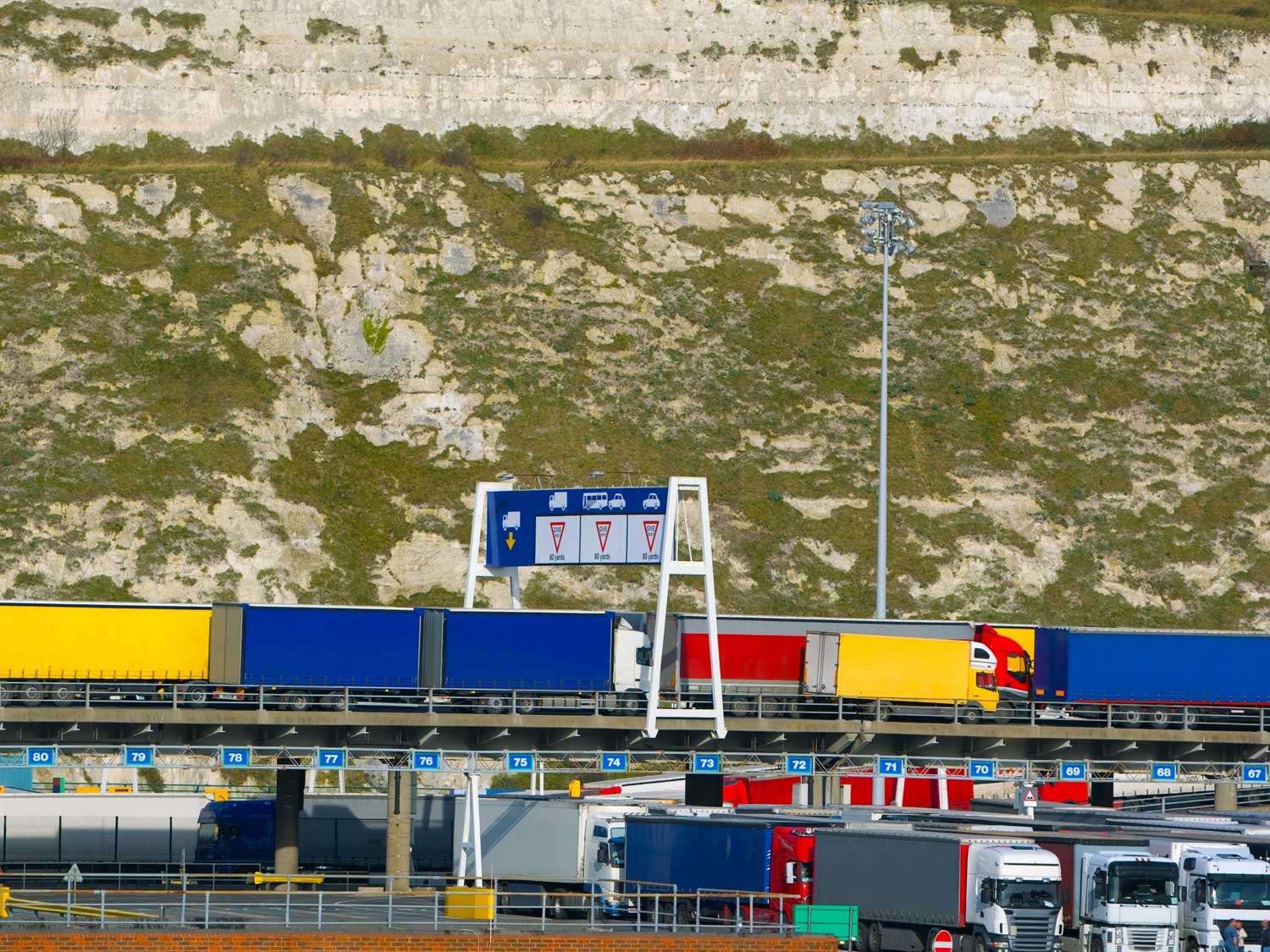
While reports of free-flowing freight traffic at Dover may suggest everything is hunky-dory in the nation’s supply chain, after the end of transition, the reality is that there are problems, delays and disruption, it’s just taking place elsewhere and disruption is imminent. 

Dover’s quiet, not because post-transition processes work, but because just a fraction of the normal freight movements have been transiting and it is anticipated that volumes will start to increase from this week as business’ replenish depleted stock levels. 

Even in this ‘quiet’ period we have witnessed significant teething problems, which will get worse, before they improve over the coming months. 

Ashford, the closest inland border facility to Dover, is already experiencing delays of five hours to print documentation and our brokerage team are spending hours processing movements, that should take a fraction of that time, because so much critical information is missing or incomplete.

There are a lot of changes post-transition, and many of the problems we detail below, may seem complex, which is why we would urge shippers to contact us for guidance and to notify us at the earliest opportunity of import and export movements (per point 7) via our CuDoS portal.

Most businesses and many hauliers remain uncertain about requirements and processes for inbound and outbound cargo, which we are seeing manifested in six key areas.

1. HAULAGE: Drivers are a critical component in European supply chains and their ignorance of the new UK/EU processes is particularly pronounced at the moment. It will dissipate over time, as they become more familiar with the new requirements, but right now we are seeing import trailers moving directly to destination, because the right procedures are not being followed. 

2. TAD: The Transit Accompanying Document (TAD) expedites transport across European borders and accompanies uncleared goods during their journey from one authorised location to another. 

But some drivers are not collecting these critical transit documents, failing to get them scanned/stamped en-route and often failing to discharge them on arrival, which potentially leaves the shipper (guarantor) liable to tax penalties. 

There is also a lot of confusion surrounding the important LRN (local reference number) that needs to be quoted by the driver at the nominated UK customs point to receive their TAD. Too many drivers are turning up without the correct LRN, creating a situation that can  take hours or days to resolve, as illustrated by the current five hour queue at Ashford’s Inland Border Facility for TAD’s. In a further complication we are also aware that there are incidences when the incorrect TAD’s are issued, even when officials have been provided with the correct LRN.

Critical information in the production of a TAD is the vehicle/trailer number and nationality and the customs office of destination as advised by the consignee.

3. GUARANTEES: The Common Transit Convention (CTC) allows importers to make customs declarations and pay import taxes and duties, when goods travelling under TAD arrive at their final destination in the EU (or UK). 

Traders exporting goods under transit need to provide a guarantee to cover any potential customs duties and import VAT. Businesses using transit should apply to be authorised to use Customs Comprehensive Guarantee (CCG) and once approved, obtain a guarantee from a bank or financial institution. 

4. DUTY: A recurring issue that is impacting traffic in both direction is providing a declaration of origin for the goods. All goods with a UK or EU origin require a declaration of origin included on the commercial invoice to benefit from preferential tariff rates. Failure to provide this origin declaration means that the importer is liable for duty at the prevailing rate. It is not widely understood but all non-EU or UK origin or majority assembled goods are liable for full duty rates both in The EU and UK regardless if duty has already been paid in The BLOC or UK previously. This will lead to the doubling of duty rates potentially.

5. VAT: The existing rules for imports from non-EU countries now apply to imports from the EU, but with ‘postponed accounting’ for import VAT on goods brought into the UK with effect from 1 January 2021. For exports UK businesses continue to zero-rate sales and EU member states will treat goods from the UK as goods entering from other non-EU countries, which means import VAT and any customs duties (tariffs) are due when the goods arrive in the EU. 

British and EU exporters must register to pay VAT in their respective territories, which has prompted a number of companies to halt their cross-border trade, until the processes are clearly defined and understood.

6. CUSTOMS: Inbound processes at Ro/Ro ports like Dover and Eurotunnel are designed to expedite movement (not inventory linked), which means there is limited control over arrivals, who are usually free to leave the port, without any oversight, and is the reason why our head office staff have arrived to find a European trailer in the car park on more than one occasion.

The primary problem in the UK, is that import clearance is not being effected or documents discharged, while trailers are arriving at destination, that have had no prior notification. This is because UK facing EU ports are not insisting on an import movement reference number (MRN) prior to shipment.

7. DATA: The accuracy and timeliness of information sharing is paramount. It will do more than anything to resolve the issues outlined above and ensure smooth process flows. If we are acting in a pure brokerage capacity without carriage then we must have all documentation and data in advance of movement – without this we have no transparency and we are unable to prepare and present the correct submissions for either import or export customs formalities. Metro, as is the industry as a whole, are being presented with huge challenges from insufficient paperwork – if you need clarification please contact the customs team for clarification.

It is apparent that many importers and exporters are still evolving their processes and are only now beginning to understand the need for information in advance of dispatch or arrival. 

In every case, regardless of import or export, we need:

  • EORI Numbers
  • Commercial invoice, incorporating an origin declaration, values and description of goods
  • Packing lists/CMR with gross and nett weights
  • Incoterms
  • Commodity codes (which must be 10 digits)
  • Supplementary quantities must be advised

Although the operating environment will improve as the processes are better understood and teething problems addressed, we suspect this will not be for some months and the landscape has changed permanently compared to the last few decades of trade with mainland Europe. Please assist us to assist you and provide the above information.

If you have any queries or would like any further information on our customs and documentation solutions (CuDoS) please contact Andrew White, who is leading this business unit on development.

UK EU flags

Finally; Brexit trade deal welcomed

The logistics industry has welcomed the signing of a Brexit trade deal between the UK and the EU. Running to 1246 pages the deal covers the rules relating to products which will allow them to be freely traded, and market access rules for air and road transport.

The freight sector responded positively, with Logistics UK “optimistic” about the Free Trade Agreement (FTA) but warning that there is still much to be done to protect the nation’s supply chains, and the economy as a whole.

For its part, the Road Haulage Association (RHA)  said that after many months of uncertainty, the announcement that the UK is to leave the EU with a deal comes as “welcome news.”

Chief executive Richard Burnett commented: “There are, of course, many details to be finalised and confirmed but UK traders and hauliers, will still be hit by vast amounts of new paperwork processes and of border checks.”

The “Deal” changes very little in terms of border procedures, as opposed to “No Deal” and whilst there may be tariff free and quota free access for goods moving between the EU and UK, all other border controls and customs procedures, as detailed in legislation and international convention remain in place.

The Agreement does not provide information regarding detailed frontier procedures including customs entries, transit, licences and SPS checks.  

From the 1st January 2021 the UK will phase in customs entry requirements and SPS checks over a 6th month period up until 30th June 2021.

The EU will implement full formalities with immediate effect from the 1st January 2021.

Air Freight; the Agreement allows basic market access and Airlines have the right to overfly one another’s territory. For all cargo services a UK carrier can fly to an EU destination, collect cargo and then fly on to a destination outside the EU. Similarly, EU carriers can fly to the UK, collect cargo and then fly to, for instance, the USA.

Road Freight; as of 1 January 2021, UK companies will no longer hold an EU licence or be able to perform transport services within the EU as part of the Single Market. The draft agreement provides for quota-free point-to-point access for operators transporting goods by road between the EU and the UK. 

UK and EU trucks will also be able to perform up to two additional operations in the other party's territory, once they have crossed the border. This will allow EU hauliers that carry a load to the UK to perform two cabotage operations in the UK, thus limiting the risk of having to travel back to the EU without a load.

It is widely reported and anticipated that the real impact of the changes in protocol will become evident towards the end of this week as overland transport begins to return. 

Metro are monitoring the cross-channel situation hourly and we have already had a stream of both import and export customs transactions that have been successfully submitted.

Metro’s post-Brexit transition task team and our Customs Brokerage team are managing and optimising our clients’ European supply chains through this critical period. Our CuDoS (Customs Documentation Solutions) software is key to the success during the initial phase of the transition to the new era of processes and adjustments in the UK logistics model.

Please contact Jade Barrow or Andrew White for further information.