ULD on tarmac

Airport congestion stunting air cargo growth

Disrupted cargo handling and congestion on the ground muted air cargos growth in November, with volumes falling by -1.2% in a month that is traditionally one of the busiest, in the peak build-up to Christmas. 

Last month’s fall in volumes compared to October 2021 came despite a +0.5% rise in capacity, but overall air cargo rates remained buoyant at +159%.

Capacity versus two years ago was -12%, with Europe to North America capacity down 7.3% and air freight rates for this market increasing. Any hope that the opening up of transatlantic services would offer some relief to the cargo market was quickly eradicated by increased volumes of passenger baggage.  

While the congestion at several airports, notably Amsterdam and Chicago O’Hare has eased, many more including Heathrow, Frankfurt, Schipol and Liege remain massively challenged and handlers claim one of the biggest issues is cargo not being picked up by forwarders as quickly as it could be.

From Metro’s perspective weekend collections are not an issue and something that is always undertaken, when the conditions, or logistics requirements are appropriate.

We would expect November volumes to be higher than October volumes, but we started to see growth slowing down at the end of October. 

This unexpected contraction is not due to a lack of demand, it is almost certainly because cargo cannot be pushed efficiently through the system, causing delays at origins and effecting the uplift of urgent air cargo. 

There are also many other dynamics and variables effecting critical movements globally currently, including the continued reduction (compared to pre-pandemic) of passenger flights and local restrictions on handling and ad hoc charter flights.

COVID-related labour shortages and restrictive safe-working practices are a factor in all sectors, but it is having a particularly profound impact on labour-intensive cargo handling, with images of large amounts of cargo sitting airside at Heathrow circulating widely on social media. 

In fact all modes can and are effected by the slowdown of processes: from loading to unloading at warehouses; availability of personnel at each touch point; and port/ airport productivity.

Just 18 months after IAG Cargo said it would make 500 staff redundant, it has announced that it is to hire 500 people to meet increased cargo demand. This is a situation that has been seen across the whole logistics sector, during a turbulent and unpredictable period.

The current inefficiencies on the ground, reflect the change from regular passenger arrivals to more ad-hoc freighter traffic and are incurring massive opportunity costs for airlines, forwarders and shippers, because inbound cargo cannot be collected, or exports are missing flights.

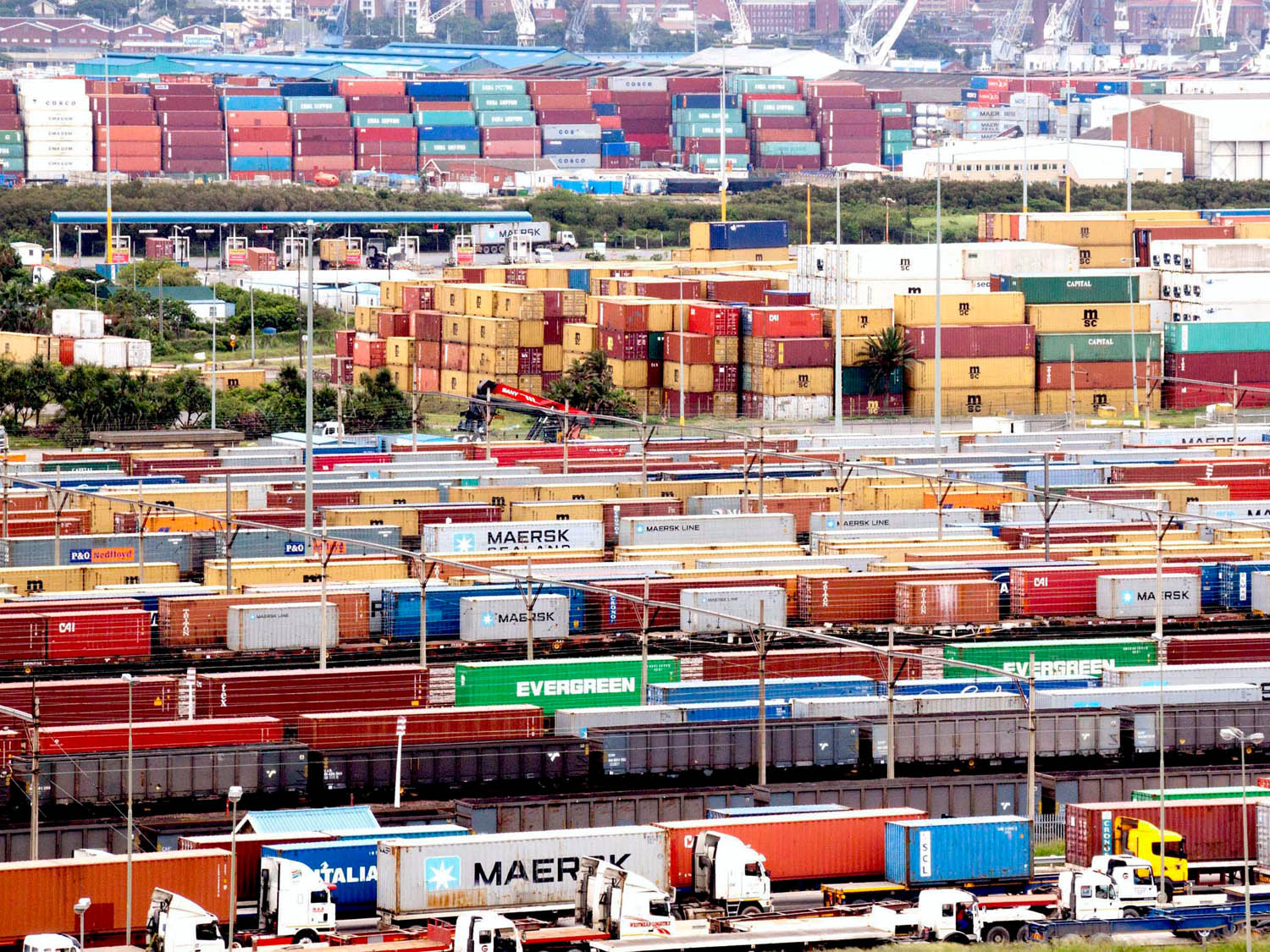
We saw the air cargo market as ‘fragile’ heading into the peak season, and this fragility is now being highlighted across social media, with pictures of countless pallets and ULDs waiting on the tarmac. And that’s without the well reported surface freight situation creating additional demand through dysfunctionality and failures. 

But Metro are ‘dealing with it’ daily and in an agile way to ensure products and components are in the right place at the right time with the right focus!

Despite the massive challenges, our air freight team continue to find solutions for urgent and time-sensitive shipments, to every destination. 

We work closely with our global network to monitor market capacity and identify service opportunities that might benefit our customers.

Evaluating and blocking space on viable services early, is a critical factor in achieving deadlines based on customersrequirements and expectations, including the constant recalibration of our hybrid sea/air platforms and hub services. 

Please call Elliot Carlie or Grant Liddell for insights and advice. 

Cut and run

Maersk ‘blanking’ Felixstowe until March from/to Asia

Delays in receiving and turning vessels around, apparently due to continuing land-side operational disruptions, has prompted 2M partners Maersk and MSC to extend Felixstowe’s omission from the AE7/Condor loop until next March.

The world's largest container shipping alliance, 2M, has announced the removal of the Port of Felixstowe from its AE7/Condor service's rotation until March 2022, but some influential industry voices wonder if the nine premier shipping lines are treating the UK differently to their north and south European calling points, because they intend to cut the UK from direct calls.

The alliance, which comprises Maersk and MSC, said it is implementing the measure to improve the schedule reliability on its Far East Asia to North Europe network, in light of ongoing network issues and as a result of exceptional waiting times in the port.

"The current supply-chain bottlenecks in the United Kingdom continues to challenge our service reliability," stated Maersk in an announcement.

The announcements impact nine sailings departing from the Chinese port of Ningbo, that will omit Felixstowe, on departures between the 28th November 2021 and the 23rd January 2022.

Maersk said that until then, Felixstowe import containers would continue to be over-landed at Wilhelmshaven and relayed via a shuttle service.

It is our understanding that MSC’s UK boxes will be landed at Antwerp and forwarded by feeder vessel to Felixstowe.

With its impending Zeebruge merger, Antwerp will eclipse even Europe’s largest port, Rotterdam in volumes, as it positions itself to be the UK’s European gateway and another hub gateway for deep sea services.

Brexit has had a significant effect on ro-ro traffic on the island of Ireland, with demand for the UK/ROI land-bridge falling 20% on 2019, while direct ROI-EU traffic has grown from six to thirteen services.

The 2M AE7/Condor loop has also been omitting Hamburg on its North European voyage, but the German port was recently reinstated, after operational capacity “ improved significantly.

Maersk said it was facing “high yard density and multiple delays into virtually all main ports” in North Europe, but described Felixstowe as the “most critical” hub in its network, with vessel berthing delays in excess of three days making its ‘global red list’.

Industry press reports suggest that contacts at Felixstowe port are questioning whether the berthing delays are as bad as the carriers are indicating and that the problem is that vessels are turning up way off-schedule and then expect to be worked on arrival, with a huge exchange of containers. They are not prepared to wait their turn and, because we can’t give them any guarantees, they then skip future calls,” said an industry source.

The effectiveness of relay operations for UK cargo ex-Wilhelmshaven and Antwerp have also been questioned, with shipped onboard feeder information criticised as “sketchy at best”.

Furthermore, the news for north European importers in general from Maersk’s latest market outlook is that, at least until February’s Chinese New Year, there is unlikely to be any respite to delays to cargo arrivals across its Asia-North Europe network.

The carrier said it had suffered “accumulated delays” on its AE1, AE6 and AE55 loops and had, therefore, rolled the voyage numbers “to match the actual departure weeks and to improve schedule visibility”.

These schedule “slidings” are effectively enforced blankings by carriers, that further restrict capacity and drive high container spot rates in the market.

Global freight operations are transforming, as the intense and sustained pressure that supply chains have been subjected to, expose weaknesses and inefficiencies.

We will continue to use our market knowledge, extensive industry contacts and global network, to share the most important perceptions and developments, so that you have the insights required to make the most critical decisions. 

We negotiate rate and volume agreements with carriers across all three alliances, which means we have the freedom to react to market conditions and changes. 

Please contact Elliot Carlile or Grant Liddell to discuss your supply chain expectations and deadlines to ensure your business is future proofed’ for the rest of 2021 and 2022.

Coronavirus Shipping from Wuhan

Supply chains face Omicron challenge both in UK and globally…

The Omicron variant is likely to be another test of supply chain resilience and could pose a threat to global economic recovery, particularly if China enforces its zero-COVIDpolicy, to prevent cases entering.

Yesterday evening’s announcement by the prime minister, Boris Johnson, of a new work from home directive and further actions to try and stymie any escalation in the new more transmissible variant, will impact supply chains, and it is likely that further global escalations will follow in many regions and territories.

Shippers, businesses and consumers have been affected by global supply chain disruptions for close on two years and the new Omicron Covid variant is likely to unleash new challenges on already-stressed supply chains. It’s not going away, as many had hoped or expected.

While there have been no reported cases of Omicron in mainland China and the country’s top respiratory expert stating: "We don't need to be afraid of Omicron”, China’s ‘zero-COVID’ policy has in the past included mass lockdowns, enforced quarantines and strict checks at ports. Which have significant knock-on effects both up and downstream in supply chains, as demonstrated by the shutdowns in Yantian and Ningbo earlier in 2021.

If this does happen, logistics operations and shipping by all modes will be constrained, shortages of manufacturing components will likely grow and extended order backlogs for core electronic, automotive and consumer products are inevitable, as a consequence.

The pandemic triggered the shift in spending from services to goods, which has been one of the key drivers of the demand boom causing bottlenecks in the supply chain. If Omicron leads to a new wave of the pandemic, it is likely that consumer demand will remain on goods, maintaining intense pressure on global supply chains.

Across the G20, the OECD raised its inflation forecast for 2022 from 3.9% in its September predictions to 4.4% now, with inflation in the UK forecast to rise by 4.4% next year. Which seems a very tame notion considering all the cost increases to commodities, energy, logistics, salaries and at every point within the supply chain, that are being felt globally.

Laurence Boone, chief economist of the OECD, told the FT that the Omicron variant was “adding to the already high level of uncertainty and that could be a threat to the recovery, delaying a return to normality or something even worse”.

International air travel capacity and demand has been increasing on the back of rising vaccination rates and deceasing air travel restrictions, but this upswing may be short-lived, if international travel bans are imposed by countries responding to Omicron. 

(Which they already are in the last week and the risk is travel sentiment may subsequently decline back to the levels seen earlier this year.)

Airlines in countries with large, strong domestic markets like the United States, China and Russia are better shielded from the greater uncertainties of international travel and U.S. carriers have not yet changed their scheduled capacity, which is running at 87% of 2019 levels.

Major European airlines are far more dependent on international travel, especially on the more profitable long haul routes outside of Europe, placing them more at risk of fallout from the Omicron variant. Including a restriction in the belly hold capacity of aircraft that are predominantly passenger reliant for their revenue streams, further impacting air cargo options on uplift.

In The Asia Pacific region, countries like Australia, Japan, Singapore and Thailand had only begun to cautiously lift border restrictions in recent weeks and passenger numbers remained at fractions of pre-pandemic levels before the Omicron variant was discovered.

Renewed restrictions and flight cancellations could have ramifications for air freight, with cargo capacity potentially decreasing by 30%, particularly on the key trade lanes between South Africa and North America, Europe and Asia. Due to strong demand, spot rates are also likely to increase, until the end of the year, in the extended peak shipping season.

Omicron is just one of thousands of mutations already discovered and the likelihood is that we will see the emergence of more variants going forward, with their impact dependent on the political and behavioural response of consumers.

Outside China, regional governments are likely to resist re-imposing severe restrictions, but the bottom line is that supply chains will remain under pressure while the Omicron and COVID threat persists. This will impact internal regional logistics, global shipping and supply chains we suspect in the coming weeks and months. 

We will always ensure that we have the latest information and make the correct decisions to ensure that products and cargo continue to flow whatever the circumstances. In an agile way in a changing situation.

The supply chain impact of Omicron and further future variants can be profound, which is why we monitor the emerging situation locally, through our operations teams and globally, with our network partners.

We remain hopeful that resulting issues will be limited, although we suspect that any impact will differ significantly, by region and we are likely to feel any effects for weeks to come.

As we receive further news, updates and developments, we will share anything of relevance, to keep you advised of the situation. Covering ocean, air and overland movement of your goods, during a challenging time.

For further information please contact your Metro account manager or Grant Liddell, if you require escalation for any urgent shipments, or simply want to discuss the daily evolution and development of events impacting global logistics. It’s what we do…..

Ningbo

Port congestion eases, but challenges will continue to remain

Asias largest ports are showing signs that congestion is easing ahead of the Christmas holiday season, with Shanghai traffic declining 0.2%, Hong Kong ship count dropping 10.4% and Singapore dropping 14.7% according to an analysis by Bloomberg.

While any easing of volume is welcome, Bloomberg’s results are based on a single week’s traffic and the latest data from the World Container Index shows basically no changes in pricing at all compared to the previous week.

It would be great to think that Bloomberg’s advisory, that a drop in volumes, is the beginning of a large decline and a reversal to normal rate levels, but we would suggest caution in concluding this just yet. Or for the foreseeable future – as there are many mixed messages currently – and most are based on short term data and not considering the long term effects and impact, as an observation.

It seems more likely that the worst pressure on the trans-Pacific trade might have been alleviated, but the global capacity shortage persists and we cannot see a similar impact on Asia-Europe or Europe-North America.

Bad weather, accidents, COVID-related work constraints and increasing spending, due to COVID19 related consumer demand, have contributed to Chinese terminal lockdowns and logistical port challenges for almost two years, resulting in record levels of congestion, from manufacturing hubs in China to import gateways in the US and Northwest Europe.

Comparing levels of container congestion across China, 2021 started at similar levels to the previous two years, with the count of vessels waiting averaging just 88 per day between January and April. However, over the past six months, there has been a significant increase in the number of vessels waiting and numbers are still higher than they were at the beginning of the year.

Levels of congestion in China peaked at the end of July at 361 vessels, as typhoon In-Fa struck. With vessels unable to safely enter a port, queues built up and caused further disruptions to schedules. Since then, over the past three months, we have seen Container congestion gradually decrease in China, but there were still around 180 vessels, a total of 936,073 TEU, waiting off China at the end of last month.

Delays are still being felt in the UK, as retailers try to fill shelves in time for Christmas, with 40% of the UK’s containerised imports moving through Felixstowe alone.

The port has received around 45% fewer container ships this month compared to the same period in 2020, and around 50% less than the same period in 2019, which reflects carriers missing Felixstowe on rotation and suggests that the port is struggling with turnaround times, as a severe shortage of HGV drivers and terminal congestion means boxes are not leaving port quickly enough to clear space for the return of empty containers. None of this helps the disruption and challenges being experienced daily, which seem to be relentless.

While the current drop in Asian volumes is most likely a blip, it may be that we will see a lull in demand in the New Year, with the Christmas period ending and Chinese New Year.

This could ease congestion slightly, but if the high number of vessels waiting remains, it’s possible that clearing the backlog of vessels may extend into the second quarter of 2022.

Importers and especially those shipping via Felixstowe stand to benefit significantly from our new 750,000 sq ft and 100K pallet position mega distribution centre, located beside the container port.

The new Felixstowe Mega Distribution Centre offers the smart executive access to plenty of space and the opportunity to cut costs, simplify processes and improve cash flow. 

We are creative with our solutions, investments and customer engagement. So that is what you need, we deliver, to build satisfaction in the long and short term. 

Please contact Grant Liddell to discuss further – it will be productive and have a meaningful outcome.