India factory

Sourcing insight; Buyers strategically moving production from China to India

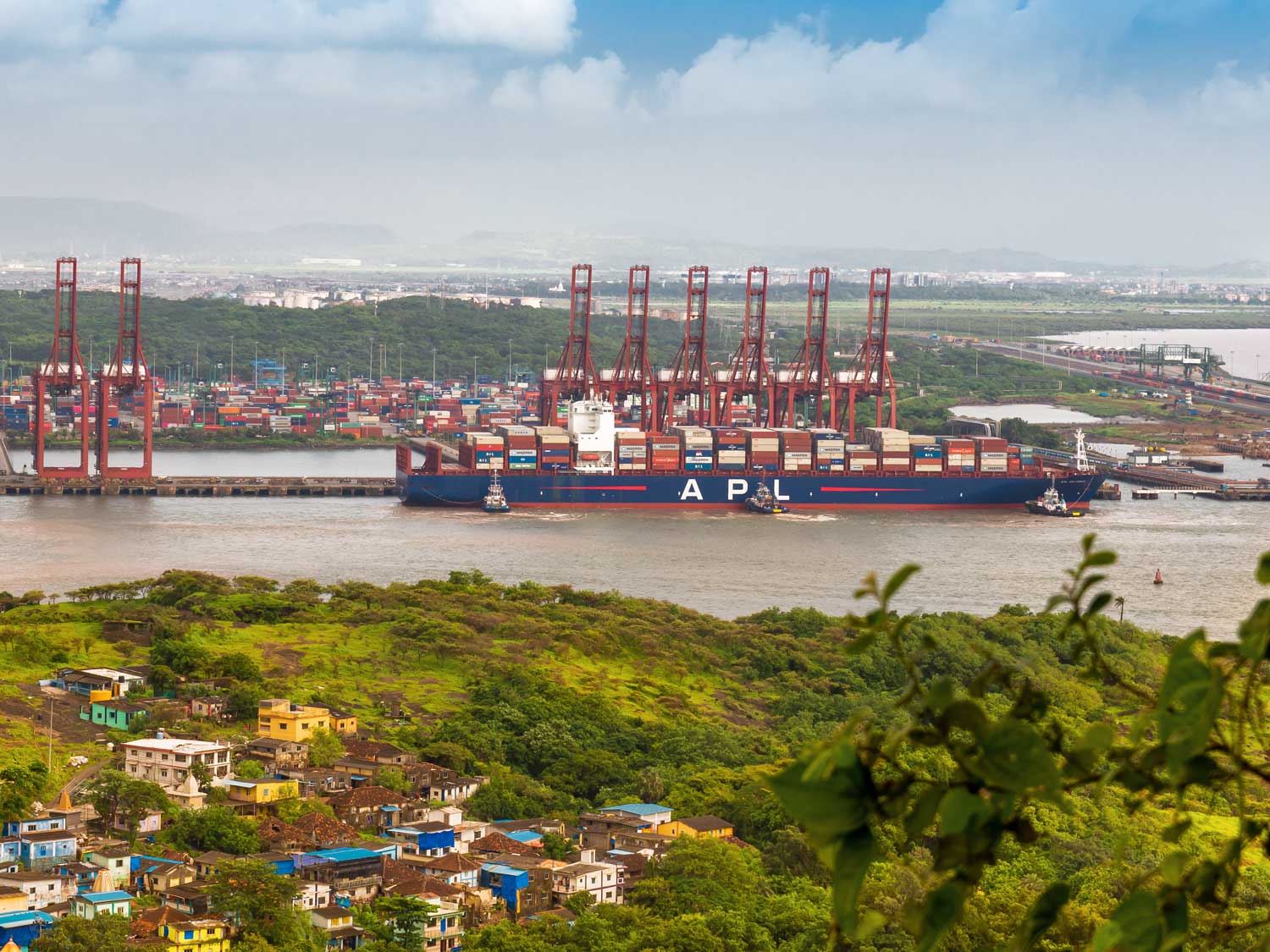
Post-pandemic globalisation is not dead, but as China’s zero-COVID strategy continues it is evolving, as buyers reassess China sourcing risks and diversification and the alternative production capacity that India offers is badly needed, particularly given that Vietnam and much of Southeast Asia are hitting their limits.

As widely reported in the international media this week, new COVID outbreaks are creating further lockdowns in China and this quote from The Loadstar outlines the logistics impact, as of yesterday.

‘’Lockdowns in key Chinese port cities are again hampering supply chains, despite a “muted” peak season and President Xi gave no indication of a change to China’s zero-COVID policy at the Communist Party Congress this week, where he is expected to obtain a record third five-year term in office.

Indeed, in what has now become a regular occurrence, COVID restrictions are impacting supply chains in Ningbo, Shanghai, and Tianjin. Ningbo is the worst affected, with forwarders reporting disruption to the area around the port going into lockdown.’’

Apple has already moved 5% of its iPhone 14 production to India and US importers are increasing their sourcing from the country, with inbound shipments from India rising over 12% in 2022, though this growth is eclipsed by the UK’s goods imports from India, which grew by over 50%.

Apple has been manufacturing iPhones in the southern Indian state of Tamil Nadu since 2017 and by 2025, analysts expect a quarter of all iPhones to be produced in India, as trade tensions between Beijing and Washington show no signs of letting up.

Over 5% of the UK’s importers - >14,000 - are already importing from India and the number is likely to grow exponentially, as many companies looking to "de-risk" global supply chains are looking at alternative supply sources, because of political uncertainty and China's "zero-Covid" policy.

China’s zero-COVID strategy for eradicating the pandemic has already led to factory closures and large-scale supply chain disruption, with buyers  increasingly adopting a “China plus one" strategy, or avoiding the country entirely and re-engineering their supply chains.

The trend towards dual and omni-sourcing is clearly good news for emerging manufacturing power-houses like India, Vietnam, Turkey and Mexico.

Metro’s footprint in India continues to grow, to meet our customers demand, with our expanding team of 50 relocating to a much larger, custom-built, facility in Chennai next year, driven in part by the government’s commitment to building manufacturing capability.

Prime Minister Modi's government is offering financial incentives to companies that are keen on making India their production hub, which is attracting foreign investment in sectors such as manufacturing and electronics, including semi-conductors, which are critical components for many of our customers.

Encouraged by these production-linked incentives a renowned mining conglomerate is investing £17bn to set up a semiconductor plant in India in collaboration with the Taiwanese electronics manufacturing giant Foxconn, taking India a step closer to its own 'Silicon Valley’.

The ascendancy of India as a sourcing region, mirrors near-shoring activity closer to home and in particular within the EU, sub-Saharan Africa and Turkey, where we have integrated transport networks, designed to support JIT manufacturing requirements.

These transport networks are ideally positioned to support new sourcing requirements, de-risking and simplifying a critical strategic decision.

If you would like to discuss our India capability, or learn how we can assist your ability and strategy to source from the EU and Turkey, or other evolving global manufacturing  regions, EMAIL Elliot Carlile to arrange a consultation and scoping discussion. We have it covered from a logistics perspective with immediate ability, agility and results to ensure you have a streamlined supply chain regardless of where you are sourcing your products. It’s what we do…...

Lines effectively write off 2020 peak season

Carriers stepping up Golden Week capacity cuts

For much of the last two years, container shipping lines have struggled to maintain sufficient capacity to meet demand, but in recent months demand has fallen away, which means that some vessels are not fully utilised, with carriers blanking more sailings and reducing supply using various tactics.

As demand has weakened over recent months due to global events, a percentage of the world's container vessels have not been fully filled and freight rates have been under pressure, which would typically prompt tactical blank sailings, to reduce available capacity and support higher rate levels and reducing the erosion of rates on the spot markets.

Golden Week, which began on Saturday, is traditionally a time for lines to blank sailings as demand dips around the holiday, but carriers are cutting much more aggressively this year, as they attempt to artificially manage freight rates, in the face of diminishing demand. In fact some carriers have pulled whole services completely, in particular so far on the transpacific trade, but it is widely anticipated that this will be replicated with the Asia/ Europe trades in the coming weeks.

Post Golden Week capacity reductions on the Asia to North Europe trade lane are removing almost 20% of available volume, which is in line with 2019, but higher than the 2014-2018 average.

The carriers use blanking strategies, as a lever to reduce and increase capacity, but the demand outlook has deteriorated so significantly on transpacific trade lanes that lines are scrubbing services, with MSC suspending bookings for its express Ningbo and Shanghai to Los Angeles Sequoia service.

MSC’s announcement follows the closure of Matson’s China-California Express (CCX) service and suspensions of CU Lines TPX service and CMA CGM’s Golden Gate Bridge loop.

Maersk has suspended an Asia-US east coast service, with the last sailing of its TP28 pendulum service from Vung Tau, Vietnam, on the 13th October. The cut loop will be merged into Maersk’s TP20 pendulum service, with a revised rotation of: Jakarta-Vung Tau-Shanghai-Ningbo-Busan-Panama Canal-Mobile-Newark, returning to Jakarta via the Suez Canal.

Demand for US east/Gulf coast services has remained strong, with volumes up 12%, as cargo has shifted from congested west coast ports amid nervousness about the lack of a new west coast labour agreement and the continuing risk of labour dispute disruption.

Transpacific routes are barometers for North European trade lanes, which tend to mirror transpacific trends in the short term, so it is a little concerning to note that capacity reductions to the US east and west coasts range between 22% and 28% of deployed weekly capacity in the weeks following Golden Week, up 50% on 2019, and well over double the average of 2014-2018.

It is anticipated that the main container shipping lines will continue to use a variety of tools to balance supply versus demand, as the markets change at a pace not seen in recent years. We will continue to advise, report, make recommendations and advise all options available to ensure that cost effective and reliably consistent service continues, as changes continue to be made.

We negotiate long-term and FAK contracts with shipping lines across all three alliances to secure space and rates, to provide the best alternatives and options, whatever the situation. Over the last decade this has proven to be the best approach, especially during the pandemic where rates and capacity were at a premium.

By leveraging agreements across the alliances – and spot rates, when appropriate – we can often adapt port pairs and routings, to work around blanked sailings, to maintain resilient and reliable supply chains.

FXT dock

Shippers brace for Felixstowe and Liverpool walkouts – a double whammy

Strikes at the key container ports of Felixstowe and Liverpool commenced at the latter on the 19th September and will continue to the beginning of October, with dates overlapping for maximum disruption.

Dock workers began their planned two-week strike at Liverpool port on Monday, 19th September, while an eight-day at Felixstowe, the UK's busiest port, will begin on the 27th September.

The port of Liverpool strike will continue to the 3rd October, while the Felixstowe strike will run until the 5th October, which means that strike action will overlap for seven days, increasing the potential for disruption, while putting more pressure on London Gateway and Southampton.

The Unite Union blamed the Felixstowe Dock and Railway Company for unilaterally ending pay talks, after refusing to improve its pay offer and imposing a pay deal of 7% on the workforce.

The 7% increase was already rejected in August, which resulted in an eight-day strike at Felixstowe between Monday 22nd August and Monday 29th August.

Unite members at Liverpool port rejected a pay increase of 8.3% and a one-off payment of £750, stating that the wage increase would be a pay cut in real terms, with the union seeking a deal iro 20%.

Peel Ports argued that the basic pay of their Liverpool employees has increased above inflation by 16-26% every year for over a decade. 

The previous Felixstowe strike saw vessel calls drop from 29 to 5, with many carriers calling at alternative ports or just delaying calls to avoid disruption.

The first Felixstowe strike happened before peak shipping really got underway, but these walkouts in Suffolk and Liverpool coincide with the beginning of the peak arrivals, in late September and early October.

As with earlier disputes, we will be focused on clearing cargo from terminals ahead of strike dates. We will make use of London Gateway and Southampton when appropriate and consider alternatives like Rotterdam or Hamburg, should the situation warrant.

We are in continuous contact with all our shipping line partners to assess their contingency plans and mitigate the impact of these strikes.

We will continue to monitor and manage the emerging situation and will keep you updated should there be any significant developments.

As with previous industrial action, we are well prepared, with contingency plans in place to protect supply chains and work around points of disruption.

rail freight

Potentially disruptive rail strike averted in US, while, unfortunately, UK braces for more

President Biden’s administration has averted a rail strike that would have caused further issues within the country’s fragile supply chain infrastructure, while rail strikes will recommence  in the UK from October, following the recent deferment of the original announced action.

US shippers and retailers had warned of the negative effects of a rail strike and the ‘11th hour’ contract agreement brokered by Biden’s team shows that the White House was particularly sensitive to the issue, as any strike would have had a hugely negative impact on the pending midterm elections.

Freight railroads and unions reached the tentative contract agreement for 60,000 employees just hours before a strike or lockout could have happened from midnight last Friday.

The deal brokered by the Biden administration averts a strike that had the potential to impact the country’s supply chain, by disrupting the movement of containers inland and the positioning of products throughout the country.

Shippers are relieved that the devastating nationwide rail strike has been avoided, with many applauding the Biden administration’s intervention, at a time when high inflation and economic uncertainty are challenging consumer budgets and putting business resiliency at risk.

Confidence in rail freight transportation is higher in the wake of the tentative deal and with many of the biggest volume shippers moving freight worth billions of dollars via the rail network, their dependency on reliable services is absolute.

The tentative deal means railroads and ports can unwind the contingency plans they had begun to implement ahead of the strike deadline, with inland ports resuming normal operations.

However, train strikes are set to resume in the UK, after unions cancelled their most recent planned action following the Queen’s death, with ASLEF train driver members at 12 rail companies set to strike on Saturday 1st October and Wednesday 5th October. This does also effect the movement of containers throughout the UK and puts further pressure on the inland logistics required for export and import movements, including an upsurge in demand for pure road transport, especially if the strikes are longer than 24 hours.

The Rail, Maritime and Transport (RMT) union has also announced a strike for the 1st October among its members at Network Rail and 14 train companies.

Workers are striking over pay and conditions, with unions objecting to pay offers that sit well below inflation.

RMT general secretary Mick Lynch said: “We will continue to negotiate in good faith, but the employers and government need to understand our industrial campaign will continue for as long as it takes.”

Previous rail strikes have had restricted direct impact on our container movements, but we monitor the situation closely and our transport team work closely with our rail service providers, to work around potential disruption.

If you have any questions, concerns, or would like any further information regarding the situation in the United States, please don’t hesitate to contact Kevin Lake, who leads our North American operations.