FRBNY

Supply chain pressure index falling

Tensions across the Taiwan Strait are not good news for global supply chains, but after what has arguably been the most challenging 18 months ever, recent data suggests that supply chains could be returning to calmer conditions.

Since early 2020 shippers, carriers and 3PLs have battled with a continuity of supply chain shocks from COVID19 slashing carrier capacity, pandemic lockdowns, surges in consumer demand, the blocked Suez Canal, upstream and downstream disruption and most latterly industrial action.

The cost of container shipping is coming down on some trade lanes and the number of vessels queueing outside ports is largely falling, while delivery times for air cargo are improving too.

The Global Supply Chain Pressure Index (GSCPI), from Federal Reserve Bank of New York, uses data from shipping, purchasing managers' index surveys and manufacturing to chart disruption across the globe. 

The index is down 57% in July from its peak, with businesses in most large economies reporting an easing in delivery times of inputs and materials in July and a lack of materials and equipment is no longer a factor limiting production for Europe-based manufacturers.

Supply chain pressures were so serious that businesses were stopping production and shortages meant prices were shooting up, but now that goods can get to where they need to be, the system of international trade is dynamic and can recover.

Many hope to see pressures ease further in the coming months, but the impact of the Felixstowe strike and other current disputes have yet to be analysed by the index.

On the face of it, any spot of calm amid wave after wave of geopolitical turmoil should be a good thing for the world economy.

However, the trend may just reflect weakening demand for goods, as high inflation, which has, in part, been driven by the surge in the cost of shipping and materials since 2020.

The purchasing managers’ index (PMI) polls for July reported falling orders and a drop in backlogs, which is further evidence that weaker demand is opening up some spare capacity and allowing supply conditions to improve.

Many, though sadly not all, logistics hubs, ports and airports have adapted to the strains placed on them and are now able to process cargo more efficiently, by better managing the capacity they do have.

Nor is it just China’s wrangling with Taiwan and its disruption to commercial shipping that is cause for concern. There’s also Beijing’s insistence that its zero Covid stance remains the best strategy — a policy that has already led to multiple port and factory closures.

We may have taken a step forward, but disruptions are likely to be with us, for months and maybe years.

Global Supply Chain Pressure Index (GSCPI)

With fluctuating supply chain challenges around the globe, we work closely with our offices and network partners to monitor evolving situations and find solutions for our customers, including the most time-sensitive and urgent shipments. 

For the latest market insights and to review your supply chain situation please contact Elliot Carlile, who will outline how we can protect your supply chain in these volatile times.

If you would like to receive our regular market intelligence updates covering all things logistics please call Elliot Carlile and we will ensure that you receive this once issued.
Union Pacific

Supply chain disruption may soak up sea freight capacity on major Asian container trades

Capacity from Asia to the West Coast will be 20% higher through September, than last year, but inland supply chain disruption is continuing and threatens to wipe out any benefit from the increased capacity.

Carriers serving the US West Coast will have 20% more peak-season capacity from Asia, compared to the same period in 2021, by the first week of October and we are watching developments closely, as what transpires on trans-Pacific routes tends to be mirrored on the European lanes within weeks. The trades are thoroughly interlinked with trends and how they operate, quite often one event on the route effecting the other routes from Asia to Europe.

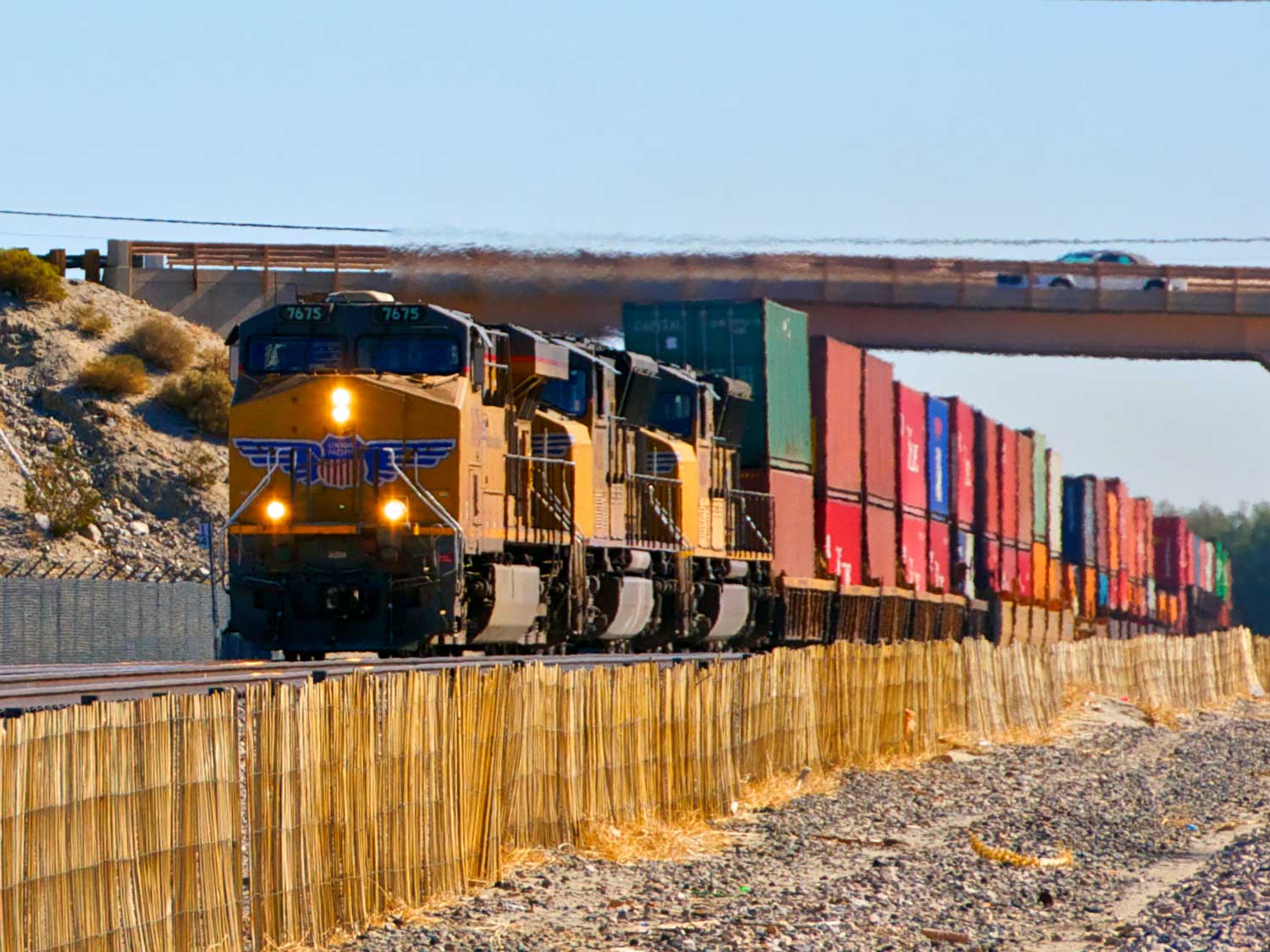
Despite the ability of Los Angeles/Long Beach to process boxes from ship to shore, the uplift in capacity may be significantly diminished, because there are insufficient railcar assets at terminals to bulk move containers away from the ports. Container dwell times at the West Coast ports shot up to a record 13.3 days in June, when the average dwell time should be no more than three to four days to prevent stacked containers from compromising operations.

A fortnight ago Long Beach had 12,650 rail containers on dock, while Los Angeles had 31,186, of which 23,880 were sitting on the terminals for nine days or longer, when there should be none.

Chassis providers complain that shippers are taking twice as long to release marine chassis, compared with pre-pandemic, while other shippers are simply leaving import containers in rail and marine terminals because they have inventory clogging their warehouses.

Much of the blame for the current situation is being laid on the biggest retailers, who are not keen on taking in more inventory amid slowing sales, because they do not have available storage space, which means backlogs build back from their warehouse doors, through the inland transport ecosystem.

In other developments, despite the Ocean Shipping Reform Act of 2022 becoming law in mid-June, to provide oversight of container storage fees and revised rules on loading exports, calls are growing to end the antitrust immunity currently enjoyed by container lines. 

The lines warn that the benefits of more services to more places, delivered more efficiently, would be undermined if legal certainty for operational agreements were removed. FMC chairman, Daniel Maffei, has floated the idea of increased monitoring of alliances and has also warned that shippers would suffer without the vessel-sharing agreements.

The International Longshoremen’s Association has also voiced support of vessel-sharing agreements because they provide more frequent service at a lower cost, which includes calls at small and medium-sized ports, that would no otherwise be served.

The ILWU and marine terminal employers have reached a tentative deal on health benefits for West Coast dockworkers, which is a positive move towards an overall agreement on a new labour contract.

Sources close to the negotiations believe that the likelihood is growing that a deal will be reached in August or September with little disruption occurring on the docks.

It is interesting to observe the North American markets as often many of these situations are emulated in The UK and Europe a few weeks later. Due to the shorter quay to quay transit times on the Transpacific routes its acts as a barometer on the Asia/ Europe trade so it is well worth following the market in USA and Canada and Americas as a whole as they are as significant in Boston in Lincolnshire as they are in Boston in Massachusetts.

We are working closely with our offices and network partners in North America to monitor these developing situations, set up contingency platforms and ensure product is delivered to market, without delay, however the peak season develops. 

Our services continue to be among the most reliable in the market, thanks to our fixed validity contracts and access to our own dedicated fleet of vessels to further enhance access to container slots.
 
Contact Elliot Carlile to learn more about our US capabilities, or to discuss your supply chain requirements, as we enter peak season, so that we can ensure you are prepared for the increased market activity.

Shipping line CEO sees signs of June recovery

The world’s largest container shipping lines – and there are not that many!

With around 80% of global trade transported by sea and three major shipping alliances controlling 95% of the critical trade lanes from Asia to North America and Europe, a handful of shipping lines have massive influence over the cost and effectiveness of international trade.

The three major shipping alliances - 2M, THE Alliance, and Ocean Alliance - were formed in 2017 to support economies of scale, low prices and broad service coverage. These three alliances account for 80% of the global container market, with greater market share on many trade routes.

The high fixed-cost structure of shipping lines is one of the main arguments for shipping lines to collaborate. The rationale being that each liner service requires investment in a number of vessels to complete round trip voyages between different ports, which will sail on fixed dates regardless of how much cargo they are carrying, often leading to very poor utilisation, which is cost ineffective and environmentally unfriendly. 

However, allowing collaboration between carriers, means that the alliance partners can agree to operate a liner service along a specified route using a specified number of vessels. It is not necessary for each alliance member to allocate equal numbers of vessels, because the space that is available for loading and discharging at each port of call is shared between the partners.

The amount of space that each partner gets may vary from port to port and could depend on the number of vessels which are operated or placed by the different partners within the agreement and means that the partners have flexibility to meet demand and increase utilisation rates, which reduces operating costs and boosts efficiency.

Collaboration in this way has allowed the alliances to leverage each partner’s geographic strengths to develop more comprehensive global shipping networks, which have extending coverage and provide more routes, which improves the service offerings for their customers.

Entering alliances seems to be a good fit for smaller lines, that benefit from the extended service coverage and larger shipping lines who can bleed their assets. This is demonstrated in the different strategies of MSC and Hapag-Lloyd, with the former focused on organic growth and the rapid growth of its fleet, while Hapag-Lloyd has been collaborating in partnerships since 1989 and has only recently committed to the acquisition of the mega-ships, that have become synonymous with the rise of the alliance on the trade lanes from Asia.

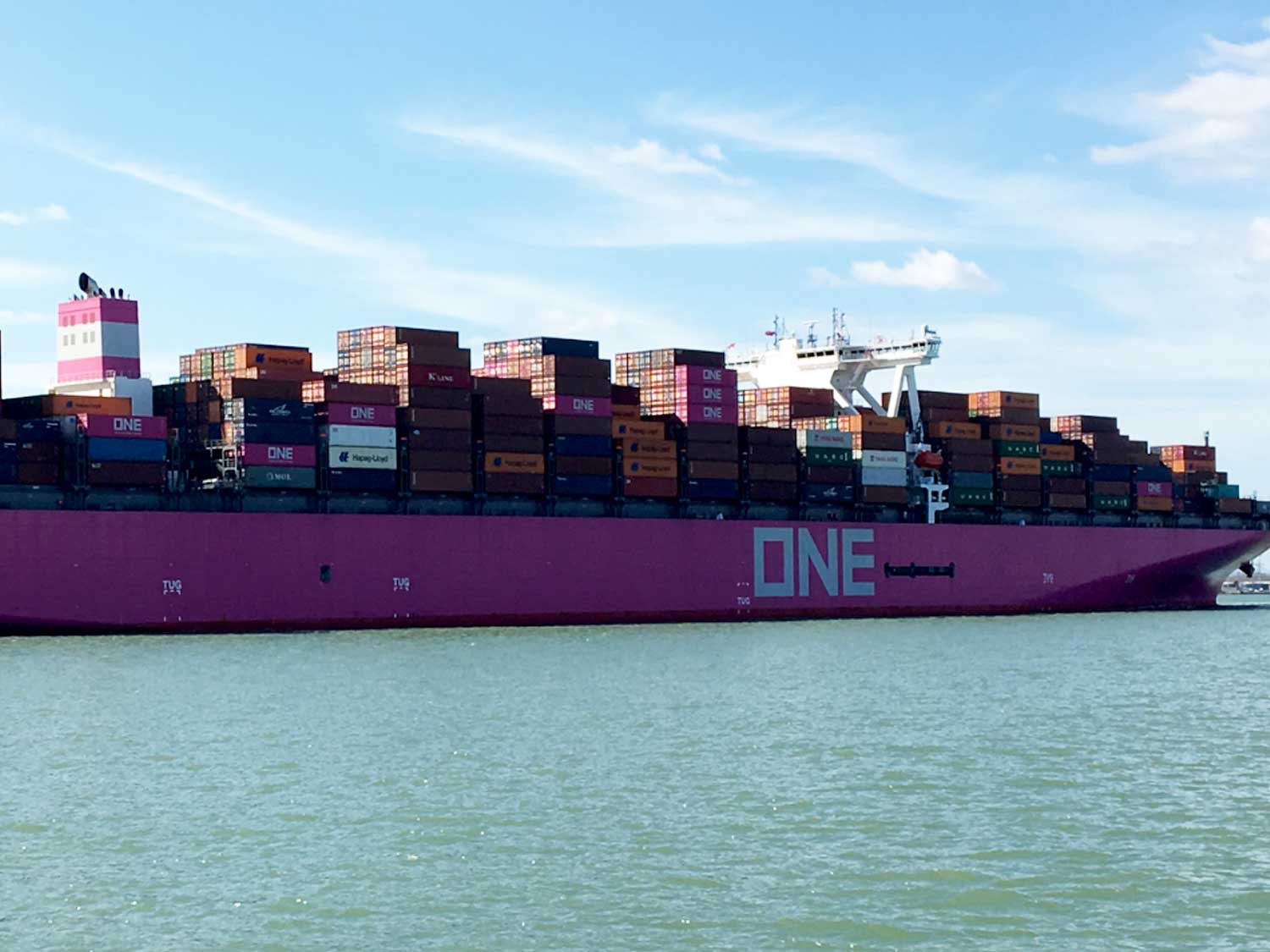
The three major shipping alliances collectively account for 80% of the shipping market and include all of the biggest container lines:
2M Alliance: Maersk and MSC
Ocean Alliance: COSCO, OOCL, CMA CGM, and Evergreen
THE Alliance: Hapag-Lloyd, ONE, Yang Ming , HMM

Courtesy of Alcott Global - alcottglobal.com

Metro leverage opportunities across the shipping alliances, with long established relationships across a portfolio of carrier partners, to give our customers access to new solutions and the widest range of service offerings, port-pairings and rates.

By working closely with our global network and inland logistics partners we deliver a range of upstream and downstream value added services, initiatives and solution innovations, which the carriers cannot match. 

Our bespoke solutions are always driven by our customers’ requirements and expectations. For further information contact Elliot Carlile, who would be delighted to talk to you about your requirements. 

HKG truck

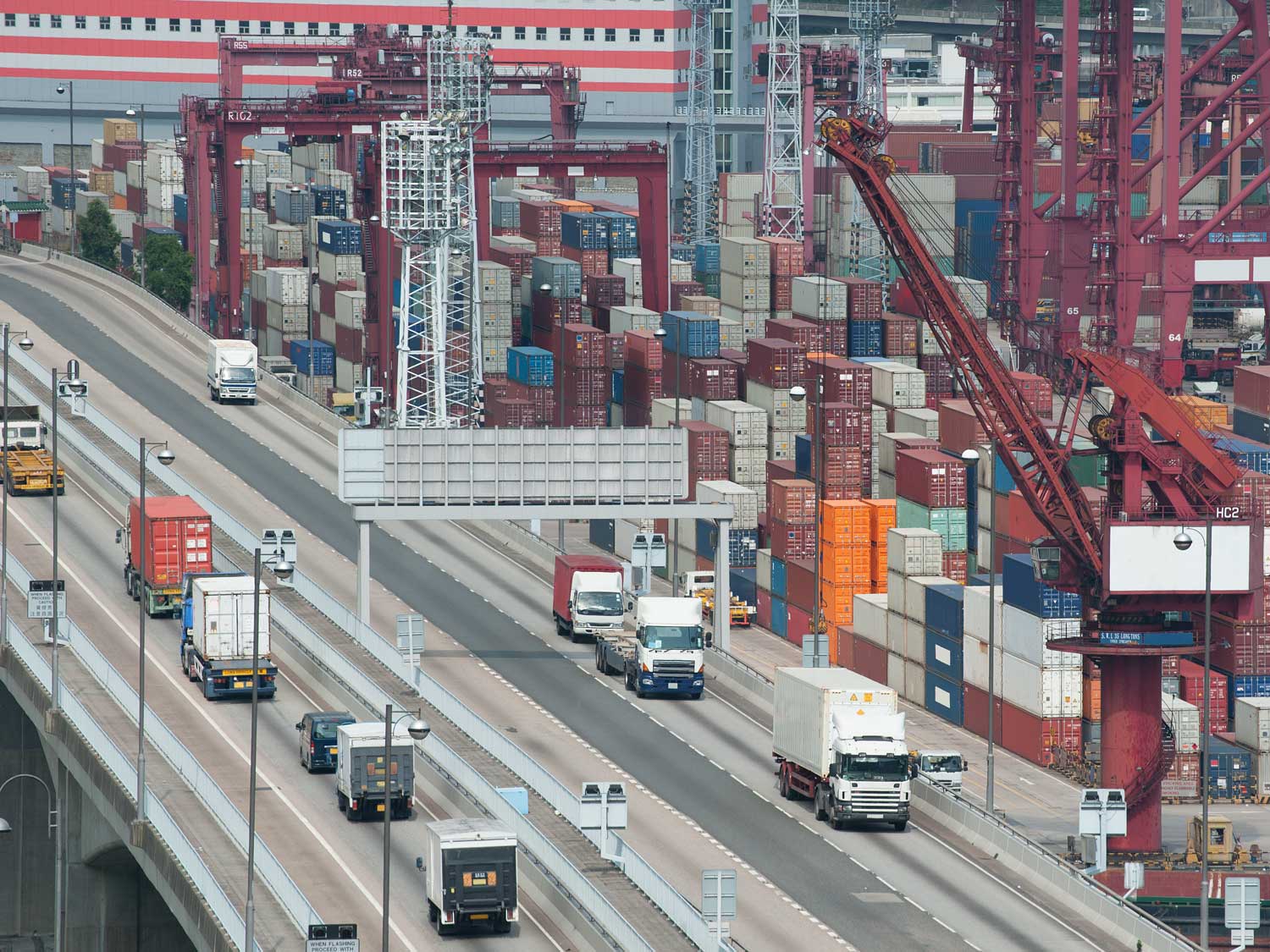
China/Hong Kong update; cross-border trucking capacity cut

Increasing COVID case numbers in China are cutting cross-border trucking capacity, prompting carriers to drop calls at Hong Kong, raising fears that the city is losing shipping line favour as a transhipment hub.

With almost one million people in lockdown in Wuhan, where COVID was first detected, the Politburo confirmed last Thursday that China will maintain its “zero-COVID” policy. And with increasing numbers of COVID cases on the mainland, regional authorities have cut cross-border truck movements with Hong Kong, from 3,500 to 1,500 a day until further notice.

The significant reduction in trucking capacity and stricter testing policies (with truck drivers required to show proof of a negative test result within 24 hours, rather than 48 hours)  is creating substantial fluctuations in cross-border traffic and we are expecting to see demand for feeder, barge and air solutions spike again.

Hong Kong is moving toward greater relaxation of COVID restrictions, but this may not align with mainland requirements, which complicates the situation and reduced capacity may extend lead times for any shipments coming over the border, to ship from Hong Kong.

The number of ships calling at Kwai Chung container terminal fell 21% in the first quarter, compared to 2021, while the number of Hong Kong calls for Europe services dropped 36%, with a 22% drop on intra-Asia services and calls on trans-Pacific trades down nearly 5%, prompting fears that Hong Kong will lose its position as a leading transshipment hub.

Hong Kong handled about 17.8 million TEU last year, of which around 60% was transshipment. But with so much cargo now shipping through terminals in China or, for regional cargo, transshipping at other ports, Hong Kong may see less transshipment cargo, which would mean fewer calls and fewer calls would mean even less containerised cargo, in a downward spiral.

Container exports are down 12% and imports down 6.6% year on year through June which, terminal operator (and Felixstowe port owner) Hutchison Port Holdings said, negatively affects shipping lines’ preference to use Hong Kong as one of their hubs for transshipment.

In a possible demonstration of this new reality, Hutchison said throughput at Shenzhen’s Yantian International Container Terminal was up 7% year-on-year, but volumes at its Kwai Tsing terminals in Hong Kong were down 7%, which it attributed to “lower local and transhipment cargo”.

We will continue to monitor the situation with our local colleagues and offices throughout China and keep you advised immediately of any new lockdowns or COVID related events that may have an impact on global logistics and your supply chains. We are very close to the market and the intelligence available and will share updates as they occur.

Cuts to Hong Kong border trucking capacity reflect an ongoing situation, with curbs and relaxations fluctuating constantly, that our local team have become adept at handling. 

Despite these challenges we continue to secure trucking capacity and barge capacity is currently sufficient, but if the situation does deteriorate delays to transit times may increase to around five-to-six days.

Our cloud-based supply chain management platform, MVT, makes every milestone and participant in the supply chain transparent and controllable, which means you can adapt and flex your supply chain, to react to local changes dynamically. 

To discuss how our technology could support your supply chain, please contact Simon George our Technical Solutions Director or Elliot Carlile.