Nhava Sheva

Nhava Sheva congestion may last till November

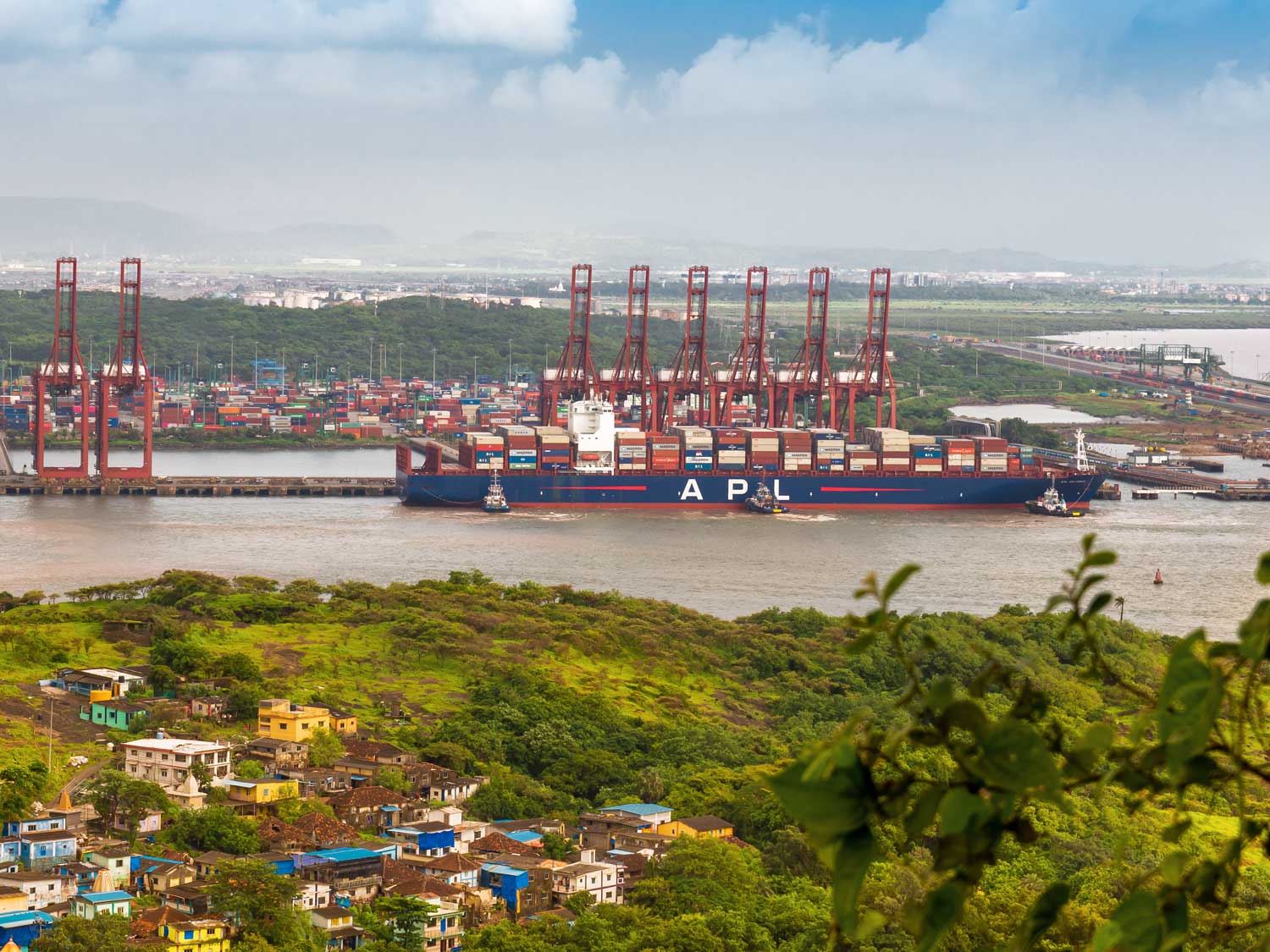
The port of Nhava Sheva, is the second largest container port in India and repairs and replacement of gantry cranes are reducing terminal capacity by 50%, which is expected to possibly last until October or November.

Container traffic through India's Nhava Sheva Port (JNPT) is facing bottlenecks due to a significant capacity reduction, which has been fuelled by the closure of a berth operated by APM Terminals (APMT) Mumbai, also known as Gateway Terminals India (GTI), to upgrade and replace gantry cranes.

As part of a US$115-million investment programme APMT are installing six ship-to-shore cranes and three larger rail-mounted quay cranes in place of the existing QCs, which will improve their ability to handle larger vessels and enhance container handling capacity to 2.2 million TEUs.

In addition to APMT, the port has two terminals operated by DP World, one by PSA and one by a new consortium led by CMA Terminals.

The number of weekly vessel calls that GTI is able to accommodate has fallen to six, from the normal 13 and carriers are facing challenges securing berthing windows, which is forcing them to change gate cut-off hours for cargo carting, with terminals facing congestion from increased volumes.

As a result of the congestion, move counts are limited and concerns are growing that vessels may miss connections and cargo roll-overs for exporters may follow, if the congestion escalates.

Export gate-in times may be reduced and waiting times will increase due to road congestion and a shortage of containers is possible as empty discharge from vessels will be limited.

We have seen the situation worsen over the last fortnight, with traffic congestion building on approach roads to every terminal. See our gallery images below.

It can take some drivers up to 10 hours to reach the entry gate due to the traffic, which is  why export containers are being shut out, import containers delayed and long waits for empties.

Our vehicles cannot avoid the congestions, but we are liaising with port officials to ensure that import deliveries are effected within the terminal’s free period and export containers are gated-in before cut-off, to connect with their respective vessels.

We are monitoring the evolving situation and working closely with our local network partners, to protect our customers’ supply chains. If you are currently shipping through Nhava Sheva, or are thinking of developing business in the Indian subcontinent, please EMAIL Elliot Carlile, who will be able to offer guidance and recommendations.

Our network and expertise extends across the ISC, with established operations in Pakistan, India, Sri Lanka and Bangladesh, supporting customers across a variety of verticals, who are sourcing from and exporting to the region.

shopping 2

<strong>Supply chains returning to just-in-time focus</strong>

The Chartered Institute of Procurement & Supply’s (CIPS) Procurement Futures conference brought together the most influential procurement professionals to figure out how to make supply chains more resilient, as buyers consider returning to just-in-time strategies, as port congestion eases.

The disruption of the past two years shifted supply chain operations to’ just-in-case’ (JIC) procurement strategies, but this focus is changing as port congestion and supply chain disruption has cleared and buying teams now consider how to deal with inventory levels.

Speaking at the conference, the CIPS chief economist confirmed that supply chains are increasingly moving back to ‘just-in-time’ (JIT) from ‘just-in-case’, but with significant overstocking in the UK, Europe and North America, many distribution centre's are full. 

In the worst case, merchants still hold inventory across their supply chain, with stocks at ports, or 3rd party storage facilities, although CIPS expect those stocks will work through the system by quarter one, or quarter two, after which supply chains will be fluid again.

With China opening up, the manufacturing capability for ‘just in time’ is returning but, while COVID19 turbulence and uncertainty has diminished, climate-related disruptions, tensions between the United States and China, and the war between Russia and Ukraine raise another question mark over how buyers might manage risk. 

These disruptions are tempting some to still maintain lots of inventory, to ensure business continuity, but that would be a mistake, as JIT remains the most efficient system. With interest rates rising, returning to JIC and adding inventory, harms performance and raises costs without necessarily improving resilience.

For businesses struggling with excess inventory and overstocked warehouses, the lean JIT operating model makes sense, and on many key routes and modes the concept of ordering inventory to arrive ‘just in time’ is viable again.

The supply chain is a system of deadlines, actions, processes and participants and no one can control the end-to-end supply chain, without visibility and the means to manage those four critical elements. 

Instead of living on hope, traders can use our supply chain management platform, MVT, to remove supply chain risk, by evaluating their supply chain and determining where to locate and manage strategic capacity and inventory, to support changing demand patterns. 

In challenging economic conditions, smart executives use MVT to manage their supply chain effectively and tighten their control over inventory in their supply chain, while adapting their supplier footprint to meet customer conditions. 

MVT helps companies offshore, reshore or nearshore their vendors and production, by expanding procurement control and adapting supply chains to match the future.

Metro’s MVT supply chain platform reduces the cost, time and risk of re-sourcing to new vendors and locations, with PO management, visibility and communication tools that onboard and integrate new suppliers into the supply chain.

To learn more or to arrange a demo EMAIL Elliot Carlile.

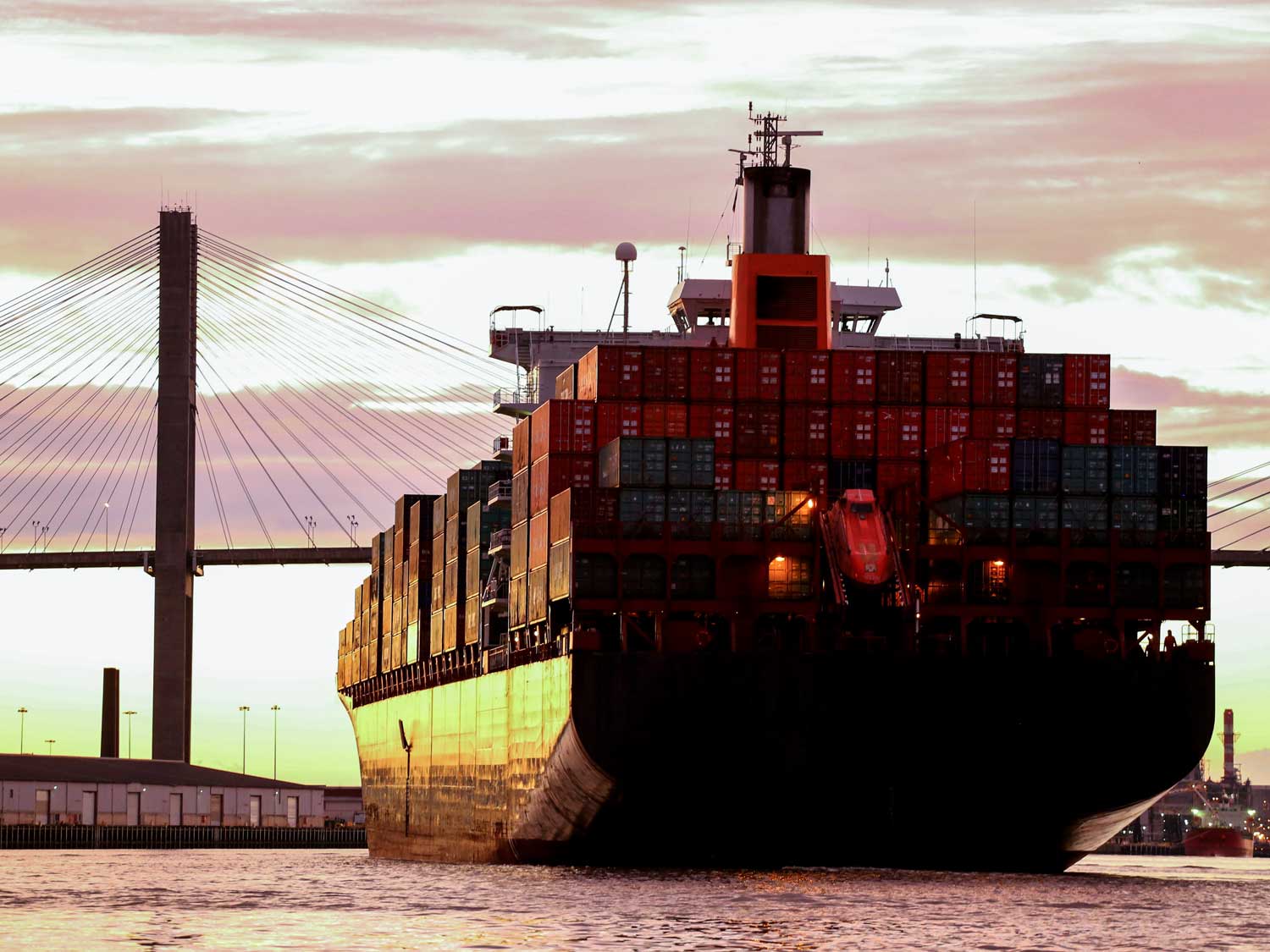
Savannah Port

<strong>US West Coast volumes drift to South and Southeastern ports</strong>

Negotiations between the International Longshore and Warehouse Union (ILWU) and West Coast port employers, represented by the Pacific Maritime Association (PMA) began last May and while talks continue, both are hopeful of reaching a deal soon, as US importers continue to divert cargo to Eastern and Southeastern ports.

The ILWU represents 22,000 port workers in California, Oregon, and Washington, while the PMA negotiate on behalf of 29 West Coast ports, including Los Angeles and Long Beach, which handle over 30% of US containerised imports.

Negotiations on new labour contracts began on the 10th May 2022, with the last deal expiring at the start of July, and while the PMA and ILWU are eager to stop West Coast cargo erosion to East Coast and Gulf Coast ports, maintaining productivity levels and issuing positive statements has failed to stop volume drift.

Despite 2022 imports from Asia into the US being broadly similar to 2021, Southeast ports - Savannah, Norfolk, Charleston, Wilmington, Jacksonville, Everglades, and Miami -saw a 5.2% increase In volumes, while West Coast volumes declined by 6.1% over the same period.

Savannah was the biggest Southeast winner, with a 6.1% rise in volume, with Charleston’s shipments spiking 14.6% in shipments and Norfolk’s volumes rising just 0.2% year over year. 

The initial shifting of volume from the West Coast created backlogs and delays at East and Gulf Coast ports, but as demand and volume declined over the last two quarters, most ports have cleared backlogs and have worked to improve efficiencies, implementing enhancements that will accommodate additional volumes over the long term.

How much of this growth will continue to flow through Southeast ports, when risk is reduced after the ILWU and PMA agree on a new contract is uncertain. 

Moving cargo from Asia through the West Coast provides lower ocean freight rates and transit times, but if cargo is destined for the East Coast, it may make sense for importers to use ports like Charleston.

The ILWU and PMA have reached agreement on some issues and while talks continue, they are keenly aware about West Coast cargo erosion to East Coast and Gulf Coast ports. They issued a joint statement last month, in which they said both sides “remain hopeful of reaching a deal soon” and both want to work with West Coast ports to recover lost volumes and move forward with market growth.

We negotiate long-term and FAK contracts with shipping lines across all three alliances to secure space and rates, that provide the best alternatives and options, whatever the situation.

We leverage agreements across the alliances and work with smaller niche shipping lines, when appropriate, to access specific regional ports that offer efficiencies, or to work around bottlenecks, to maintain resilient and reliable supply chains.

To learn how we can support your trade with the United States, or to learn more about our ocean solutions, please EMAIL our chief commercial officer, Andy Smith. 

China exports

<strong>Supply chain shock absorber</strong>

The COVID-19 pandemic turned the public gaze towards supply chains and a previously unrecognised business sector became a household name, but after two plus years of navigating monumental challenges, supply chain executives, are faced with more challenges and need to secure their supply chains before the next shock hits.

Even as shippers try to make sense of the most tumultuous period ever seen in global supply chain management, the market is changing so rapidly that no matter how difficult the past few years have been, the future is once again taking centre stage.

Global container and air freight markets are shifting on multiple levels. Quickly moving on from the pandemic period and moving into a phase that had been expected to be a return to the pre-pandemic status quo, but is instead entirely new and unpredictable.  

Today’s supply chains are operating in a radically altered geopolitical and economic environment and a soon-to-be altered industry structure, with the impending breakup of the 2M Alliance likely to entirely transform the global container shipping market.  

Even as rates fall from their historic highs and port congestion and delays are fading, shippers need to recognise that the new era will have its own challenges, which need to be acknowledged, for the avoidance of risk.  

For the last 30+ years supply chains have been defined by opportunity to drive down cost and improve efficiency. Reliability was taken for granted and risk was an abstract that was rarely built into the business strategy and disruptive events were easily isolated, or avoided, because they were not part of the operating environment.  

All this has now changed and unpredictability has to be anticipated, even if there are no apparent triggers, because even if the industry looks normal, operational impacts will follow from a heightened perception of risk. 

This is demonstrated by the much greater than expected diversions from the West Coast to avoid ILWU labour disruption if contract negotiations stuttered or failed, as happened during earlier negotiations. 

And on top of unpredictable risk factors, shippers are balancing supply chain complexity against geopolitical demands over supply sources, but which is more resilient, having two suppliers for a critical component, or one that’s not ‘political’, It’s a really tough situation.

Metro’s MVT supply chain platform reduces the cost, time and risk of re-sourcing to new vendors and locations, with PO management, visibility and communication tools that onboard and integrate new suppliers into the supply chain.

To learn more or to arrange a demo EMAIL Simon George, Technical Solutions Director