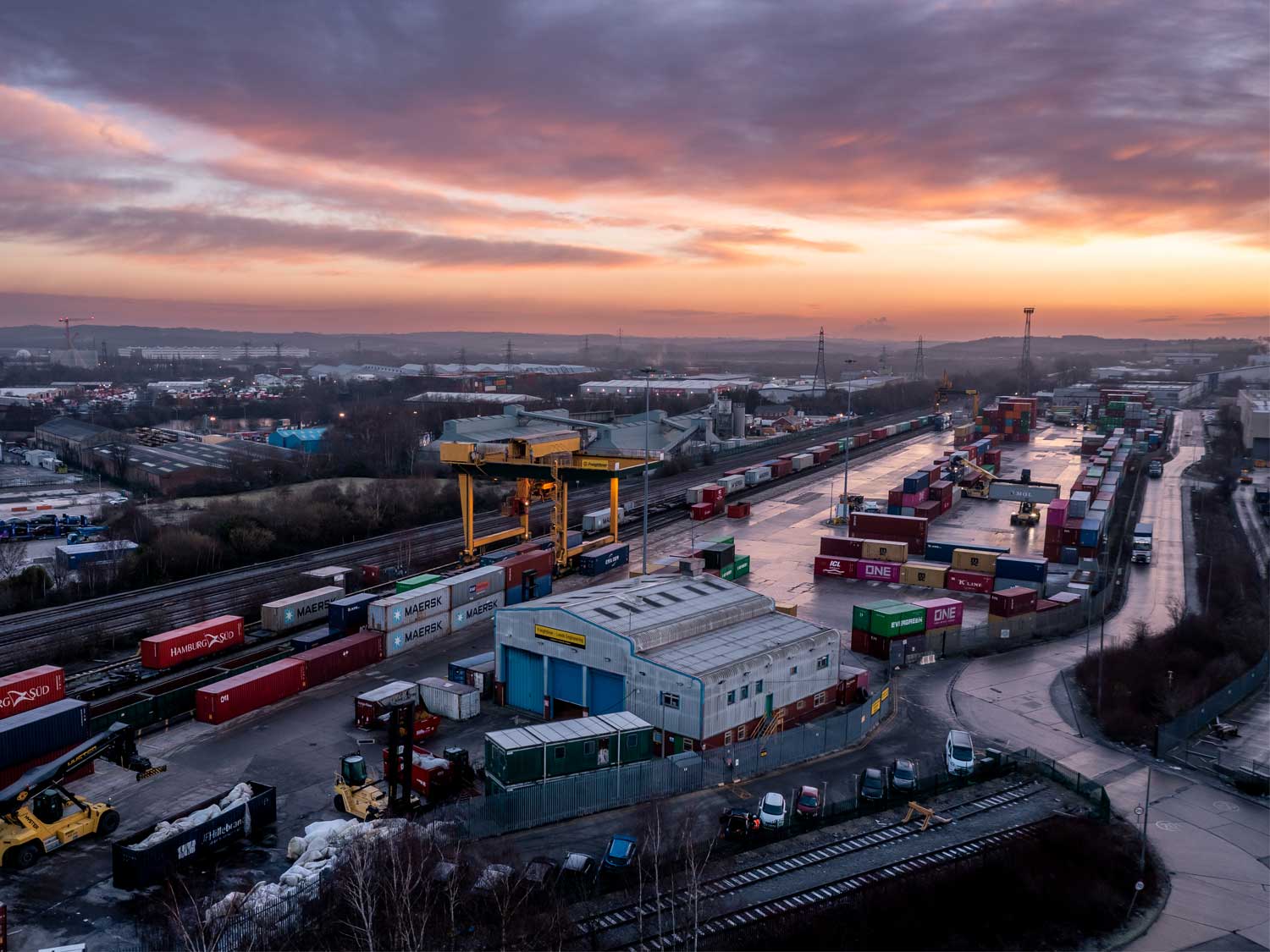
Savannah Port

<strong>US West Coast volumes drift to South and Southeastern ports</strong>

Negotiations between the International Longshore and Warehouse Union (ILWU) and West Coast port employers, represented by the Pacific Maritime Association (PMA) began last May and while talks continue, both are hopeful of reaching a deal soon, as US importers continue to divert cargo to Eastern and Southeastern ports.

The ILWU represents 22,000 port workers in California, Oregon, and Washington, while the PMA negotiate on behalf of 29 West Coast ports, including Los Angeles and Long Beach, which handle over 30% of US containerised imports.

Negotiations on new labour contracts began on the 10th May 2022, with the last deal expiring at the start of July, and while the PMA and ILWU are eager to stop West Coast cargo erosion to East Coast and Gulf Coast ports, maintaining productivity levels and issuing positive statements has failed to stop volume drift.

Despite 2022 imports from Asia into the US being broadly similar to 2021, Southeast ports - Savannah, Norfolk, Charleston, Wilmington, Jacksonville, Everglades, and Miami -saw a 5.2% increase In volumes, while West Coast volumes declined by 6.1% over the same period.

Savannah was the biggest Southeast winner, with a 6.1% rise in volume, with Charleston’s shipments spiking 14.6% in shipments and Norfolk’s volumes rising just 0.2% year over year. 

The initial shifting of volume from the West Coast created backlogs and delays at East and Gulf Coast ports, but as demand and volume declined over the last two quarters, most ports have cleared backlogs and have worked to improve efficiencies, implementing enhancements that will accommodate additional volumes over the long term.

How much of this growth will continue to flow through Southeast ports, when risk is reduced after the ILWU and PMA agree on a new contract is uncertain. 

Moving cargo from Asia through the West Coast provides lower ocean freight rates and transit times, but if cargo is destined for the East Coast, it may make sense for importers to use ports like Charleston.

The ILWU and PMA have reached agreement on some issues and while talks continue, they are keenly aware about West Coast cargo erosion to East Coast and Gulf Coast ports. They issued a joint statement last month, in which they said both sides “remain hopeful of reaching a deal soon” and both want to work with West Coast ports to recover lost volumes and move forward with market growth.

We negotiate long-term and FAK contracts with shipping lines across all three alliances to secure space and rates, that provide the best alternatives and options, whatever the situation.

We leverage agreements across the alliances and work with smaller niche shipping lines, when appropriate, to access specific regional ports that offer efficiencies, or to work around bottlenecks, to maintain resilient and reliable supply chains.

To learn how we can support your trade with the United States, or to learn more about our ocean solutions, please EMAIL our chief commercial officer, Andy Smith. 

China exports

<strong>Supply chain shock absorber</strong>

The COVID-19 pandemic turned the public gaze towards supply chains and a previously unrecognised business sector became a household name, but after two plus years of navigating monumental challenges, supply chain executives, are faced with more challenges and need to secure their supply chains before the next shock hits.

Even as shippers try to make sense of the most tumultuous period ever seen in global supply chain management, the market is changing so rapidly that no matter how difficult the past few years have been, the future is once again taking centre stage.

Global container and air freight markets are shifting on multiple levels. Quickly moving on from the pandemic period and moving into a phase that had been expected to be a return to the pre-pandemic status quo, but is instead entirely new and unpredictable.  

Today’s supply chains are operating in a radically altered geopolitical and economic environment and a soon-to-be altered industry structure, with the impending breakup of the 2M Alliance likely to entirely transform the global container shipping market.  

Even as rates fall from their historic highs and port congestion and delays are fading, shippers need to recognise that the new era will have its own challenges, which need to be acknowledged, for the avoidance of risk.  

For the last 30+ years supply chains have been defined by opportunity to drive down cost and improve efficiency. Reliability was taken for granted and risk was an abstract that was rarely built into the business strategy and disruptive events were easily isolated, or avoided, because they were not part of the operating environment.  

All this has now changed and unpredictability has to be anticipated, even if there are no apparent triggers, because even if the industry looks normal, operational impacts will follow from a heightened perception of risk. 

This is demonstrated by the much greater than expected diversions from the West Coast to avoid ILWU labour disruption if contract negotiations stuttered or failed, as happened during earlier negotiations. 

And on top of unpredictable risk factors, shippers are balancing supply chain complexity against geopolitical demands over supply sources, but which is more resilient, having two suppliers for a critical component, or one that’s not ‘political’, It’s a really tough situation.

Metro’s MVT supply chain platform reduces the cost, time and risk of re-sourcing to new vendors and locations, with PO management, visibility and communication tools that onboard and integrate new suppliers into the supply chain.

To learn more or to arrange a demo EMAIL Simon George, Technical Solutions Director

Shanghai

<strong>Brighter looking future for China and Asia</strong>

The sidewalk booths, where residents took compulsory COVID tests almost daily, have gone and queues are again forming outside restaurants, while face masks, which were omnipresent for nearly three years, have almost disappeared, but some challenges remain.

China’s Centre for Disease Control (CDC) said that there are no new COVID variants circulating in China and research published in the Lancet Medical Journal, confirmed that no new variants had emerged. Two weeks ago, the Communist Party of China declared victory over COVID-19 and the General Administration of Customs (GAC) announced last week, that they will no longer require COVID prevention measures for imports from the 1st March onward.

South Korea has already lifted testing requirements for travellers from China and from the 16th February, the EU phased out testing requirements that were imposed on travellers from China, with Chinese and foreign airlines increasing the number of international flights that link China with the rest of the world.

In view of the faster-than-expected recovery of consumption and other activities, rating agency Fitch has revised its growth forecast for China to 5.0% from 4.1%.

Shanghai will be a critical factor for reviving growth, as the city contributes more to China’s economy than any other and Shanghai is eager to court foreign business, with Apple’s CEO Tim Cook expected to visit in March.

Chinese factory owners and exporters are looking to woo back there overseas buyers, after three years of effective shutdown under Beijing’s zero-COVID policy, with delegations visiting trade shows across the US and Europe to drum up business.

Factory production was disrupted by rolling lockdowns, rising shipping costs delayed orders and geopolitical tensions, with China’s exports dropping 9.9% year on year in December, as global inflation and interest rate rises dampened demand.

The worst of the economic headwinds that faced Asia last year have started to fade and global financial conditions have eased, food and oil prices are down, and China’s economy is rebounding.

With growth across Asia set to accelerate to 4.7% this year from 3.8% in 2022, this will make it by far the most dynamic of the world’s major regions and a bright spot in a slowing global economy.

Despite their economic challenges, with pandemic supply-chain disruptions fading, China and India are expected to contribute more than half of global growth this year, with the rest of Asia contributing an additional quarter. 

Cambodia, Indonesia, Malaysia, the Philippines, Thailand, and Vietnam are already back to their robust pre-pandemic growth.

As new opportunities to trade with China, India and South East Asia emerge, we have fixed price and long-term capacity agreements in place with our partner carriers, to give you peace of mind, with resilient, consistent and reliable supply chain solutions.

Metro’s cloud-based supply chain management platform, MVT, simplifies global trading, by making every milestone and participant in the supply chain transparent and controllable, down to individual SKU level.

To discuss how our technology could support your supply chain, EMAIL Simon George our Technical Solutions Director or EMAIL Elliot Carlile to discover all options relating to current freight profile movements to and from China and Asia.

Long Beach Convention Centre

<strong>Making visibility a strategic tool</strong>

Now in its 22nd year, the annual TPM conference, in Long Beach California, considers the pressing supply chain and freight challenges affecting shippers globally. TPM attracts the most senior-level audience in the industry, including an executive team from Metro and is considered to be the ‘Davos’ of the shipping world.

Founded in 2001, TPM feature a rigorous program of topics and challenges, developed by specialised journalists covering international transportation and logistics. 

TPM annually presents the industry's most in-depth program, delving into the most pressing challenges affecting shippers and is a platform for a week of essential and intensive networking, negotiations, and relationship building among shippers, carriers, forwarders, technology providers, trucking operators, railroads, ports, terminals, and many other market participants.

Shippers who survived the pandemics’s supply chain disruptions did so by achieving visibility, but to improve their performance going forward, they must better manage the data they receive, participants in a TPM technology seminar agreed. 

Supply chain visibility became a priority challenge for importers during the pandemic, because many over-ordered merchandise, to provide buffer stock, against freight and logistics disruptions. 

With inventory held at origin, in containers, at transit points and warehouses throughout their networks, many shippers found they did not have the visibility they needed, at the locations where their inventory was being stored. 

While shippers may believe that their technology provider’s single platform collects all the data needed to track shipments throughout the supply chain, the reality is that the critical data generators are usually the shipping lines, airlines, logistics operators and warehouses moving or storing their cargo and that data is not being collated in real-time. 

Shippers learned over the past two years that they need an accurate view of their global supply chain, to overcome disruptions as they occur, using available information to make better, faster decisions and many technology providers were not up to the task.  

Metro is increasing use of predictive and AI technology, to collate real-time carrier updates, to maintain accurate vessel ETA’s, data for purchase order management, route optimisation and supply chain visibility. 

We are developing our telematics capability, to offer shippers a much more effective alternative to the data aggregators, who are quite simply compiling data from open APIs and screen scraping historic data. We favour the ‘smart container’ technology that a number of carriers are developing, and are actively involved with UN CEFACT in creating industry standards for sharing this data.

In addition to creating visibility along the supply chain, Metro’s technical solutions team have worked hard to ensure the quality of data and provide a suite of reporting tools that make it easier to interpret and implement actions in a meaningful way.  

To learn more or to arrange a demo EMAIL Simon George, Technical Solutions Director.